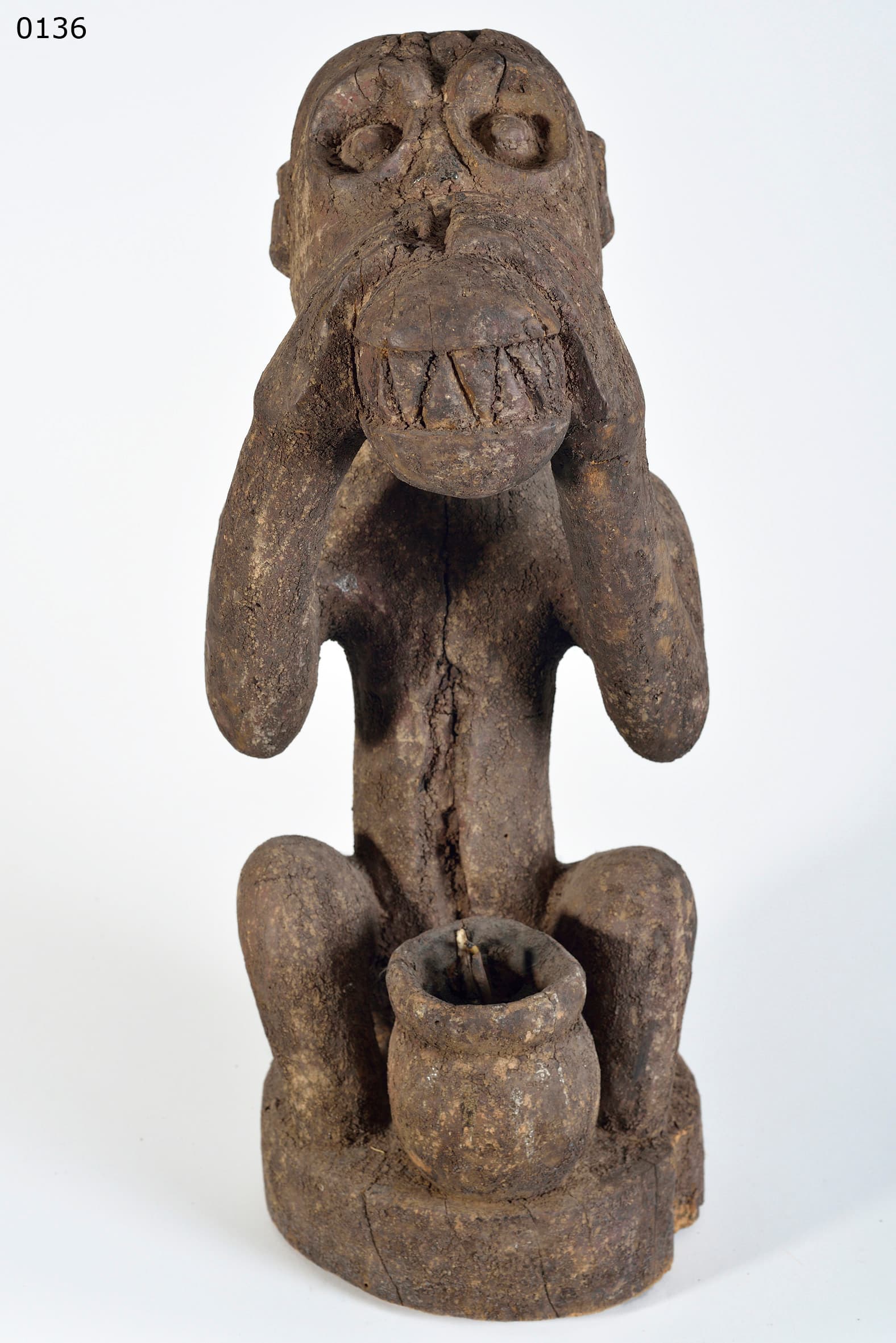
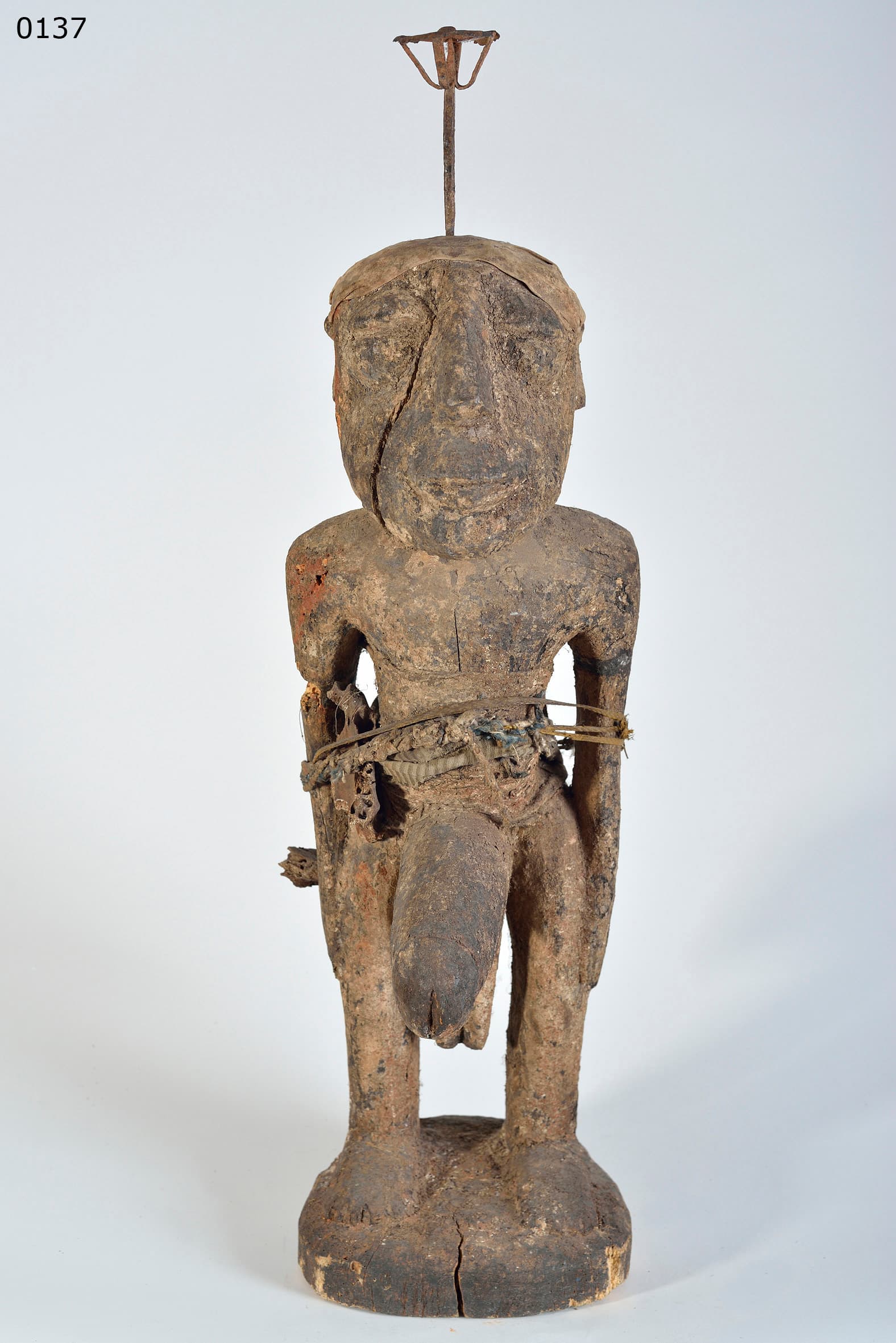
This terrifying, highly encrusted wooden figure features an abbreviated human anatomy with an oversized head. The body is tightly bound with forged iron rings and attachments. The entire object is engulfed in a remarkably thick, dark, and highly friable accumulation of rusty, sacrificial encrustation.
1. Aesthetic style and regional traits
This figure embodies the raw, defensive aesthetic of Dahomeyan (Fon) Bocio (empowered bodies). The carver has completely rejected refined, courtly beauty, intentionally creating a rough, intimidating, and chaotic silhouette. The wooden armature serves merely as a foundation for the accumulation of magical materials. The iron rings driven into and bound around the torso are critical; in Voodoo cosmology, iron is hot, dangerous, and aggressive. Its addition visually and magically arms the figure, transforming it into a bristling, impenetrable shield.
2. Ritual function and secret society context
Bocio are the frontline defensive weapons of traditional Fon communities. Planted into the earth near a doorway or shrine, they are active spiritual traps designed to absorb, deflect, and retaliate against malevolent sorcery, curses (gbo), and illness. The priest (bokonon) activates the figure by binding the iron and continuously "feeding" it with violent sacrifices. The aggressive energy of the iron combined with the sacrificial blood creates a volatile, supernatural force field protecting the lineage.
3. Physical patina and age indicators
The dense, crusty surface of this figure is consistent with a 19th-century origin and active shrine use. The wood and iron are covered beneath a massive, layered, and deeply blackened patina of coagulated palm oil, animal blood, rust, and earthen powders. This dense, friable encrustation has chemically bonded with the oxidizing iron rings, creating a thick, unified matrix of decay that suggests decades of continuous, intense ritual feeding in the humid climate of the Republic of Benin.
Summary
This Fon Bocio figure is a striking manifestation of West African defensive Voodoo magic. Its aggressive iron bindings and profoundly thick, blackened sacrificial crust are characteristic of an active instrument of spiritual warfare.
Written with AI assistance from the collection appraisal, object photography and our own research; editorially reviewed. Mistakes are possible — corrections are welcome. How we work →

rare power figure (used in VOODOO ceremonies)
simian shrine figure
BOCIO statue (used in Voodoo ceremonies)
