This highly encrusted, peg-like wooden figure is mounted on a long, rusted iron spike, heavily coated in black, coagulated sacrificial matter with an iron crescent protruding from its head. The wood is almost entirely obscured by decades of organic offerings.
1. Aesthetic style and regional traits
In Fon Vodun culture, bocio (empowered objects) are deliberately unrefined, prioritizing spiritual efficacy over aesthetic beauty. The form is brutal and raw, with the human figure reduced to a geometric cylinder, serving merely as an armature for the application of magical substances and iron hardware. This anti-aesthetic is itself an aesthetic position — a deliberate rejection of the courtly polish characteristic of nearby Yoruba sculpture, reframing roughness, accretion, and bristling iron as the true visual register of operational magic.
2. Ritual function and defensive mechanics
Bocio figures are active agents of defensive magic. Planted into the earth at thresholds, crossroads, or shrines via their iron spikes, they serve as spiritual decoys to absorb malevolent forces, illness, or witchcraft directed at the owner. The iron crescent on the head invokes Gu, the deity of iron and war, adding aggressive protective power. Their efficacy was understood to derive from the priest's activation rituals rather than from craftsmanship — the bokonon's prayers and sacrificial libations transformed an inert peg of wood into an active spiritual instrument.
3. Physical patina and indications of age
The defining feature of this piece is its pronounced, blackened patina — a thick, carbonized crust of blood, palm oil, and libations built up over generations. The deep oxidation and pitting on the hand-forged iron tang are consistent with a 19th-century origin, suggesting its long life in an active shrine. Hand-forged iron of this type exhibits an irregular, fibrous corrosion pattern (versus the uniform rust of modern industrial iron) that is consistent with the pre-industrial Vodun ritual economy.
Summary
A 19th-century Fon Bocio that encapsulates the visceral intensity and protective mechanics of Vodun spiritual practice. Its heavy ritual encrustation and hand-forged iron armature are consistent with a historically significant power object.
Written with AI assistance from the collection appraisal, object photography and our own research; editorially reviewed. Mistakes are possible — corrections are welcome. How we work →

rare power figure (used in VOODOO ceremonies)
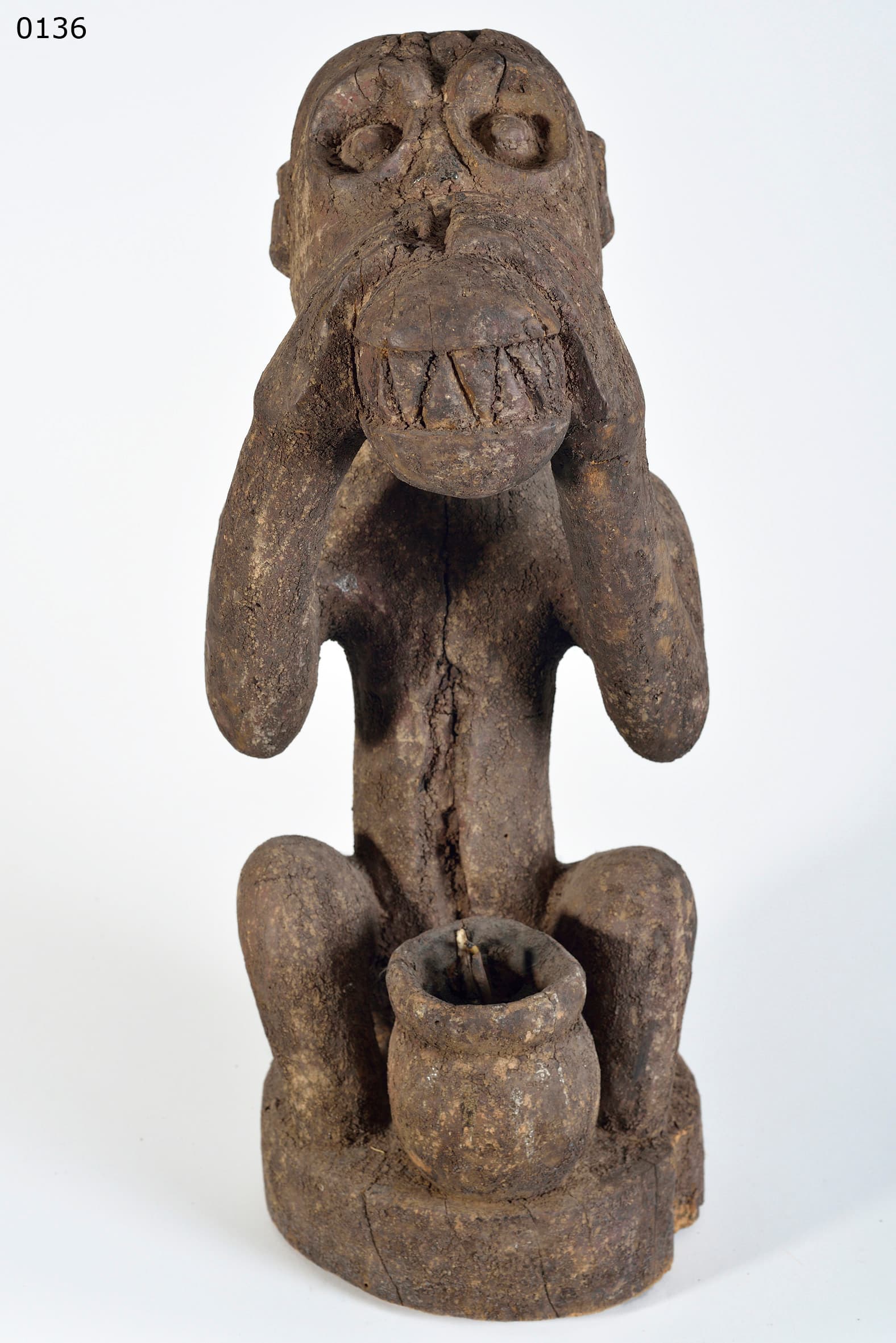
simian shrine figure
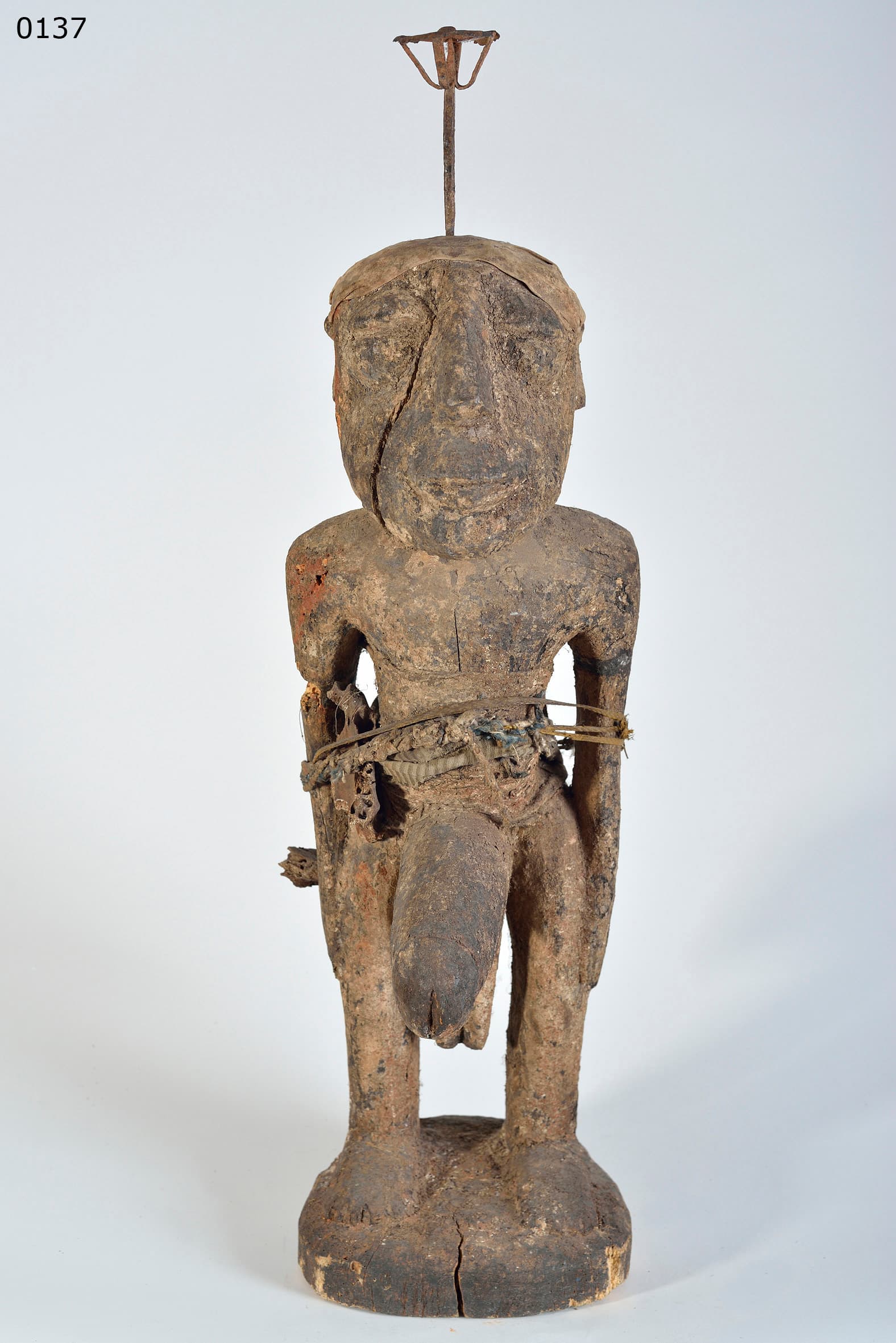
BOCIO statue (used in Voodoo ceremonies)
