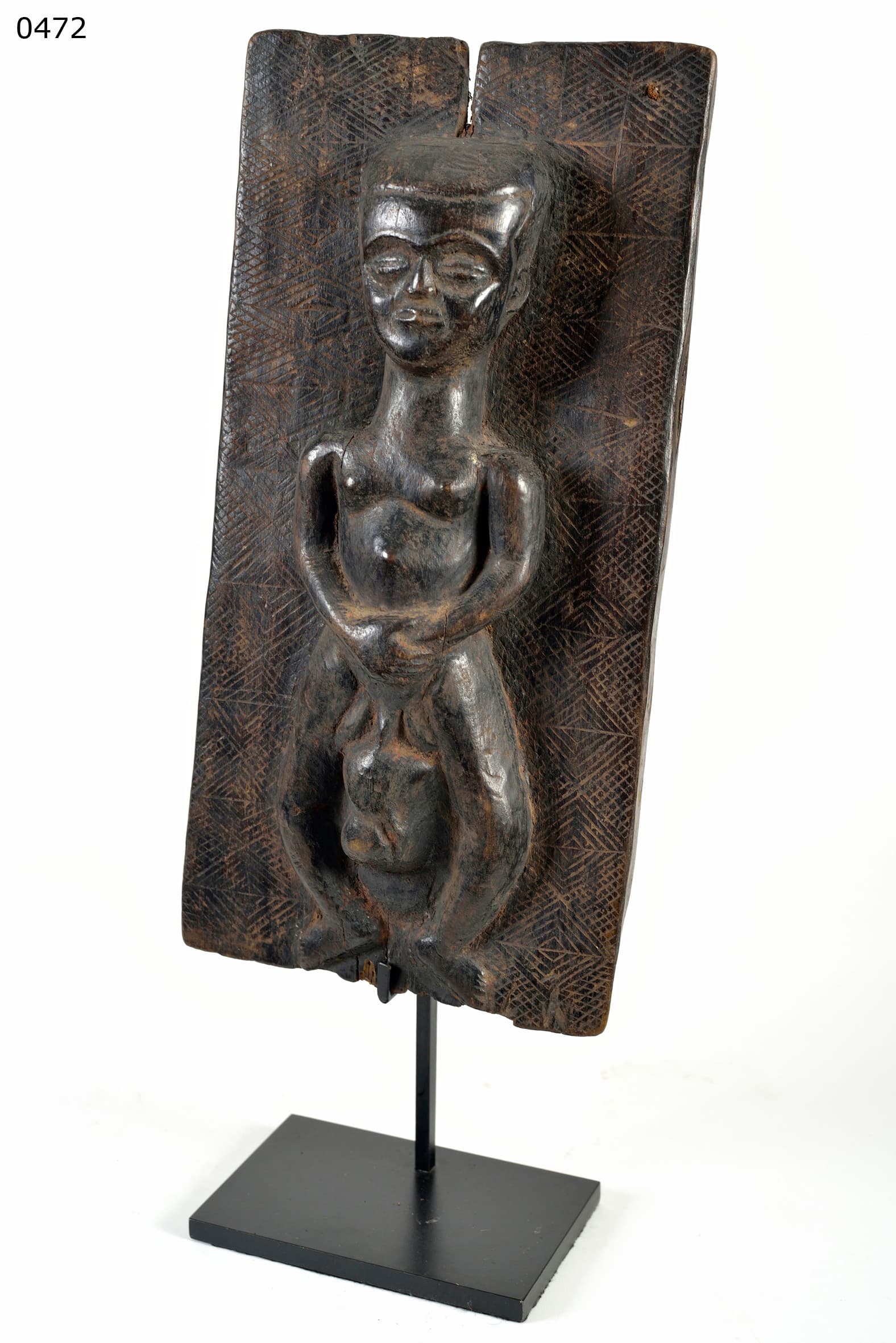
A truncated wooden female torso, devoid of arms and legs, featuring prominently carved, rounded breasts and deeply incised pubic and abdominal scarification patterns. The wood has a dry, matte, earth-toned patina with localized handling wear.
1. Aesthetic style and regional traits
The Kuba are known for carving traditions that emphasize surface decoration and geometric precision. By truncating the limbs and head, the carver directs focus toward the reproductive and nurturing centers of the female form. The intricate abdominal scarification reflects Kuba body modification practices, denoting beauty, lineage affiliation, and societal integration — the body becomes a textual surface as much as a sculptural one, in keeping with the broader Kuba tradition of treating geometric pattern as the central visual language across textiles, masks, and architecture.
2. Ritual function and instructional use
This torso is traditionally understood not as a standard shrine figure but as an instructional tool used in initiation contexts, likely within the Mukanda (boys' initiation) or specific female societies. It served as a tactile, visual aid for teaching initiates about sexual education, fertility, and the sacred, life-giving role of women in the matrilineal Kuba society. The deliberate fragmentation — limbs removed, focus narrowed — supported its didactic function: initiates were meant to study these zones in isolation, not to read the figure as a full human portrait.
3. Physical patina and age characteristics
The dry, worn patina features localized areas of smoothing — specifically on the breasts and lower abdomen — consistent with repeated ritual touching and handling by initiates and instructors. The subtle, natural desiccation cracks along the grain are compatible with an early 20th-century age. The localization of wear precisely on the iconographically loaded zones (rather than on edges or carrying surfaces) supports its attribution as an instructional rather than decorative object.
Summary
An educational and ritual torso from the Kuba kingdom, focusing the human form on its essential reproductive elements. The handling wear and precision of the scarification are consistent with its use as an ethnographic instructional piece.
Written with AI assistance from the collection appraisal, object photography and our own research; editorially reviewed. Mistakes are possible — corrections are welcome. How we work →