A wooden scepter featuring an elongated shaft with an attached miniature human figure, terminating in the stylized, curved head of a horned animal (antelope or ram) with a large, oxidized iron ring piercing its snout.
1. Aesthetic style and regional traits
The makpo or recade is a primary emblem of the Fon kings of Dahomey. The zoomorphic imagery at the apex is traditionally linked to the specific emblem of a monarch. The horned animal, combined with the subservient human figure clinging to the shaft, reinforces the narrative of the king's dominance and the power of the royal lineage. Each Dahomean king adopted a personal animal emblem, and recades carried during his reign would feature the corresponding animal — making the iconography a key reference for art historians attempting to date such works.
2. Ritual function and the delegation of power
These staffs were not merely decorative; they were functional tools of statecraft carried by royal messengers. In the highly centralized Dahomey kingdom, presenting the recade was legally and spiritually equivalent to the physical presence of the king himself. It commanded immediate obedience, safe passage across territories, and the power of life and death over subjects. The recade thus functioned as a portable extension of sovereignty, allowing royal authority to operate as an extension of the king's physical presence.
3. Physical patina and material history
The physical materials are consistent with the object's active use. The hand-forged iron ring passing through the animal's snout is heavily oxidized and pitted, suggesting significant age. The wooden shaft features a deep, rich, sweat-polished patina — consistent with being gripped by officials traversing the kingdom over many decades. The hand-forged iron exhibits a fibrous corrosion structure characteristic of pre-industrial metalwork.
Summary
A Fon prestige staff that evokes the power and complex statecraft of the Dahomey kings. The combination of zoomorphic symbolism, heavy ironwork, and a rich handling patina make it a compelling historical artifact.
Written with AI assistance from the collection appraisal, object photography and our own research; editorially reviewed. Mistakes are possible — corrections are welcome. How we work →

rare power figure (used in VOODOO ceremonies)
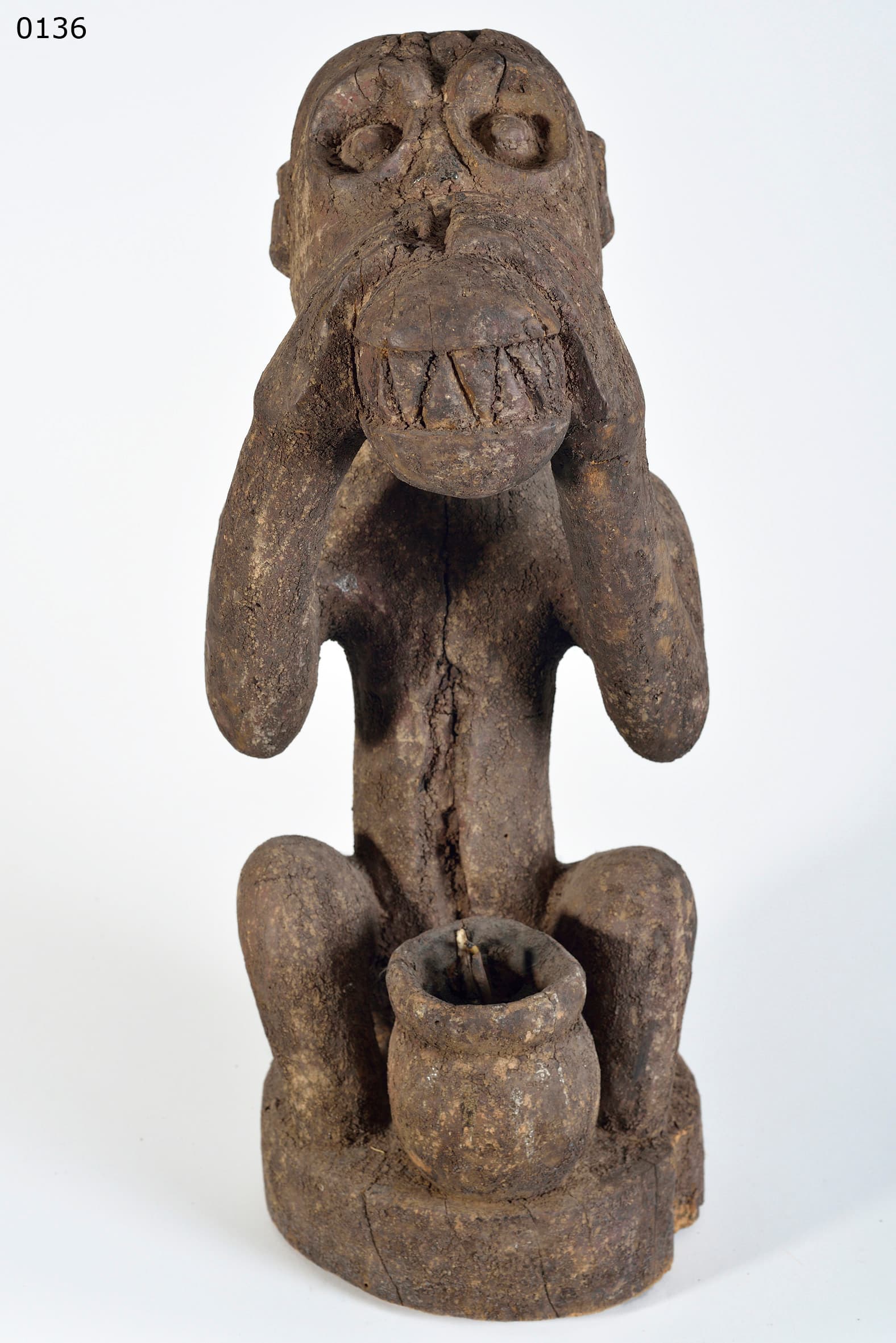
simian shrine figure
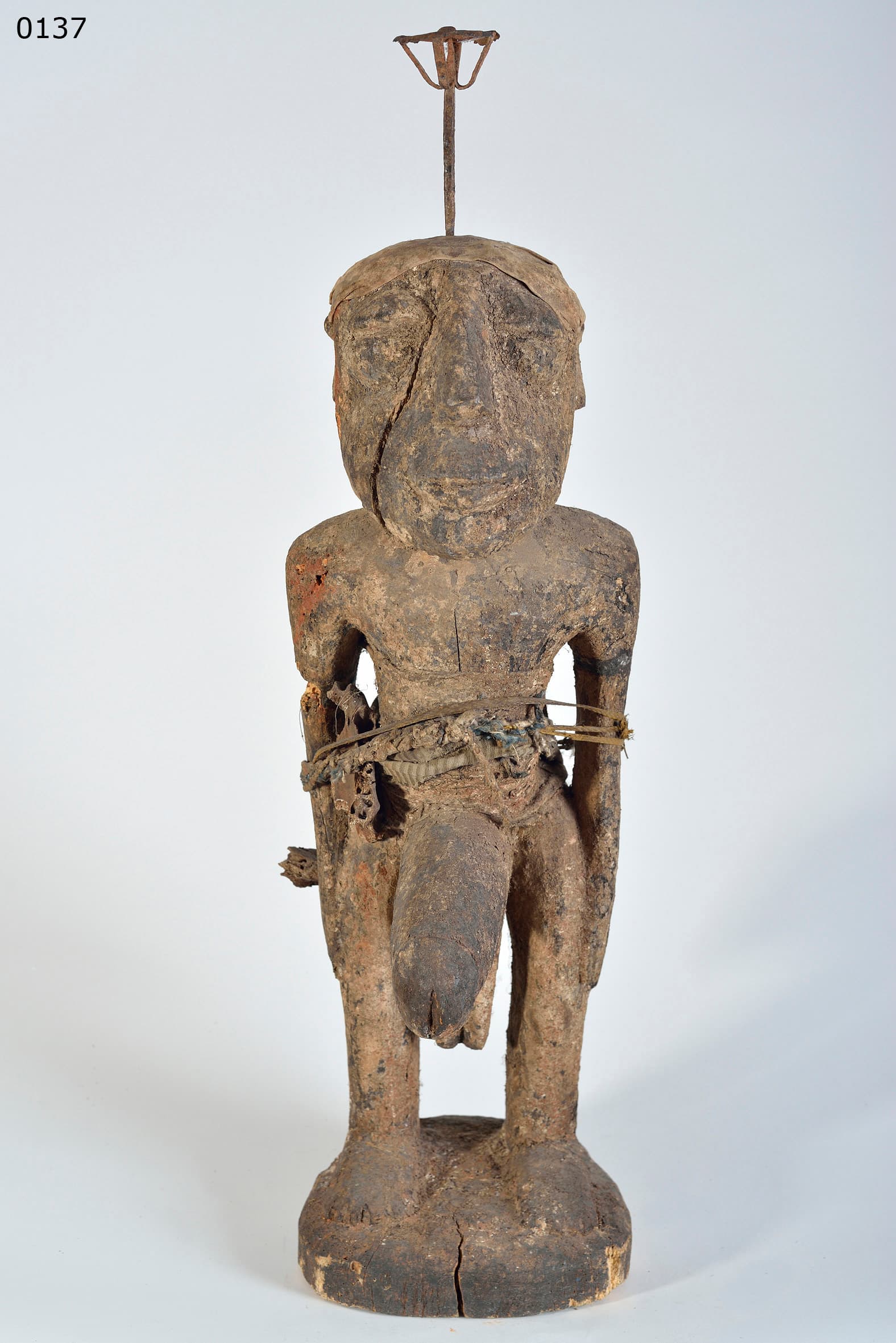
BOCIO statue (used in Voodoo ceremonies)
