A massive, severely degraded, and truncated wooden head featuring blocky, abstract facial features. The wood shows immense cellular breakdown, deep desiccation fissures, and significant insect erosion, particularly at the neck.
1. Aesthetic style and regional traits
Stripped of all decorative ornamentation, this Bocio head is consistent with the raw, visceral aesthetic of Dahomean Vodun. The facial features are minimally carved into the heavy block of wood, emphasizing psychological intensity and raw spiritual mass over artistic refinement. This intentional roughness is traditionally associated with the efficacy of Vodun power objects, where refinement is often understood to weaken the figure, as certain Vodun aesthetic traditions treat beauty and operational power as opposing forces.
2. Ritual function and threshold guardianship
Large, truncated Bocio heads like this were typically utilized as major boundary markers or central altar pieces to ward off catastrophic evil. They are often understood to reference historical practices of capturing the ase (life force) of enemy warriors or serving as localized protectors of the royal compound or a priest's domain. The truncation at the neck is itself iconographically significant, evoking the severed enemy heads associated with historical accounts of Dahomean military and ritual practice.
3. Physical patina and age indicators
The physical state of this carving shows significant weathering. The severe cellular breakdown, the deep, jagged termite damage at the base, and the dry, crusty erosion across the entire surface are consistent with a 19th-century origin. It shows wear consistent with generations of exposure to the elements of an outdoor Vodun shrine. The pattern of insect damage at the neck, combined with the structural drying of the body, suggests a multi-decade exposure history.
Summary
An imposing Fon Bocio head that recalls the unvarnished, powerful aesthetic of West African Vodun. Its profound structural erosion and severe weathering support an attribution to the 19th-century Dahomey kingdom.
Written with AI assistance from the collection appraisal, object photography and our own research; editorially reviewed. Mistakes are possible — corrections are welcome. How we work →

rare power figure (used in VOODOO ceremonies)
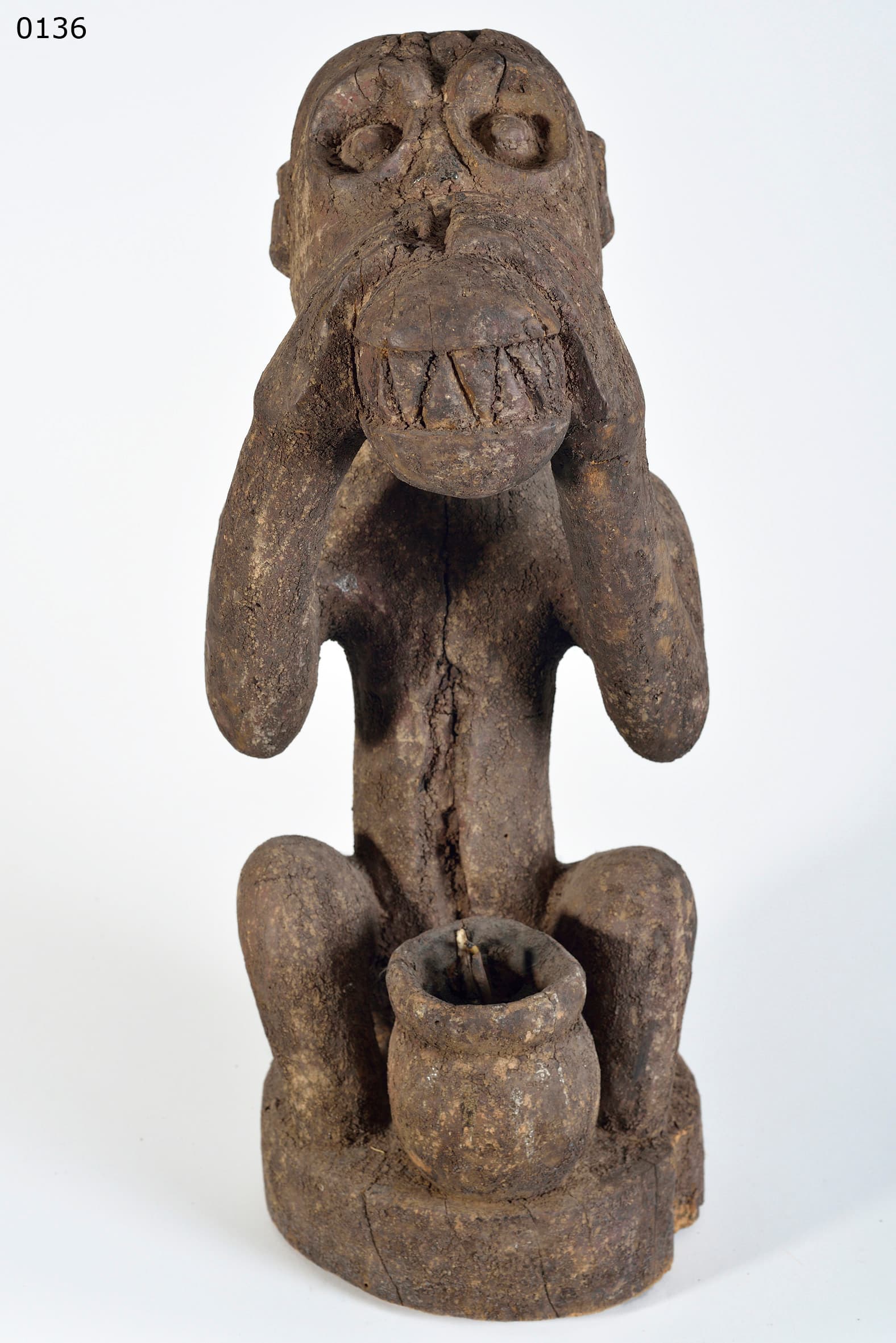
simian shrine figure
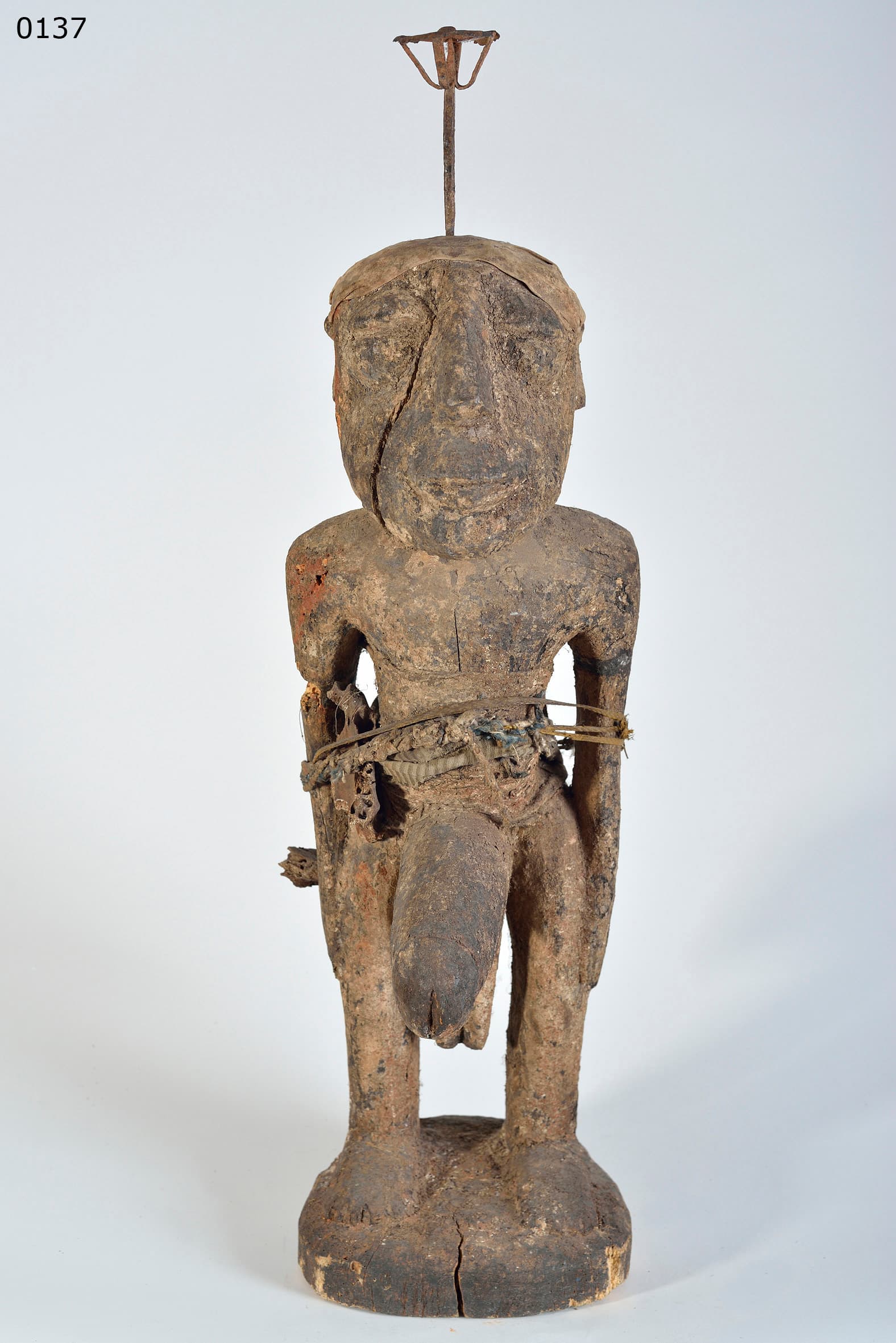
BOCIO statue (used in Voodoo ceremonies)
