A dense, accumulative power object featuring a wooden figure almost entirely obscured by a massive central bundle bound with rough cords, feathers, and sacrificial crust. The figure is mounted on an oxidized metal coil and spike.
1. Aesthetic style and regional traits
This bocio is a highly developed example of Vodun accumulative art. The aesthetic impact does not come from the underlying wood carving, but from the terrifying, chaotic mass of bound materials applied to it. This deliberate concealment creates a visual language of hidden danger, secrets, and raw, unpredictable power that commands immediate respect and fear from the viewer. The carved figure beneath is in this sense an ingredient rather than the work — the work is the assembled, consecrated assemblage as a whole.
2. Ritual function and binding magic
The heavy cords wrapping the massive central bundle are the physical manifestation of bo (Vodun magic) at work. The act of binding is literal and spiritual: it is designed to "tie up" the tongues of enemies, trap malevolent witchcraft, and secure the protective medicine against the figure. The feathers and animal matter empower the object with the attributes of the natural world, while the iron spike grounds it to the earth. Each component contributes a discrete operational element to the object's overall magical program.
3. Physical patina and indications of age
The entire object is unified by a dark, crusty, and sticky patina of repeated libations. The coagulated blood, palm oil, and earth applied to the surface feed the spirit residing within. The deep oxidation on the iron coil and the brittle, aged state of the binding cords suggest its use as an active magical agent through the first half of the 20th century. The cords' brittleness is consistent with multi-decade tropical aging.
Summary
A powerful and complex Fon bocio that relies on heavy binding and sacrificial accumulation to project intense Vodun power. Its oxidized iron hardware and deep, active patina make it a compelling ethnographic document of West African defensive magic.
Written with AI assistance from the collection appraisal, object photography and our own research; editorially reviewed. Mistakes are possible — corrections are welcome. How we work →

rare power figure (used in VOODOO ceremonies)
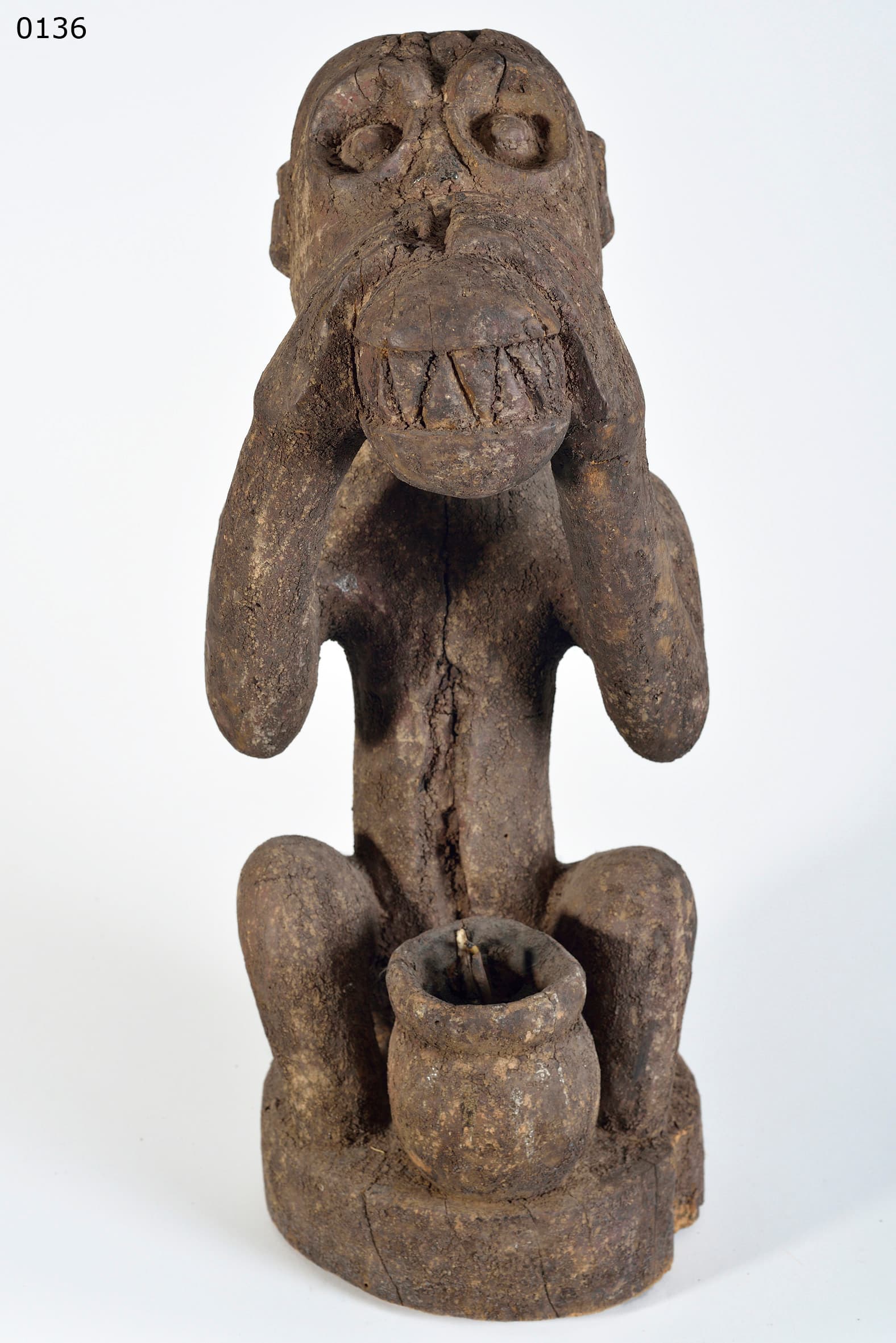
simian shrine figure
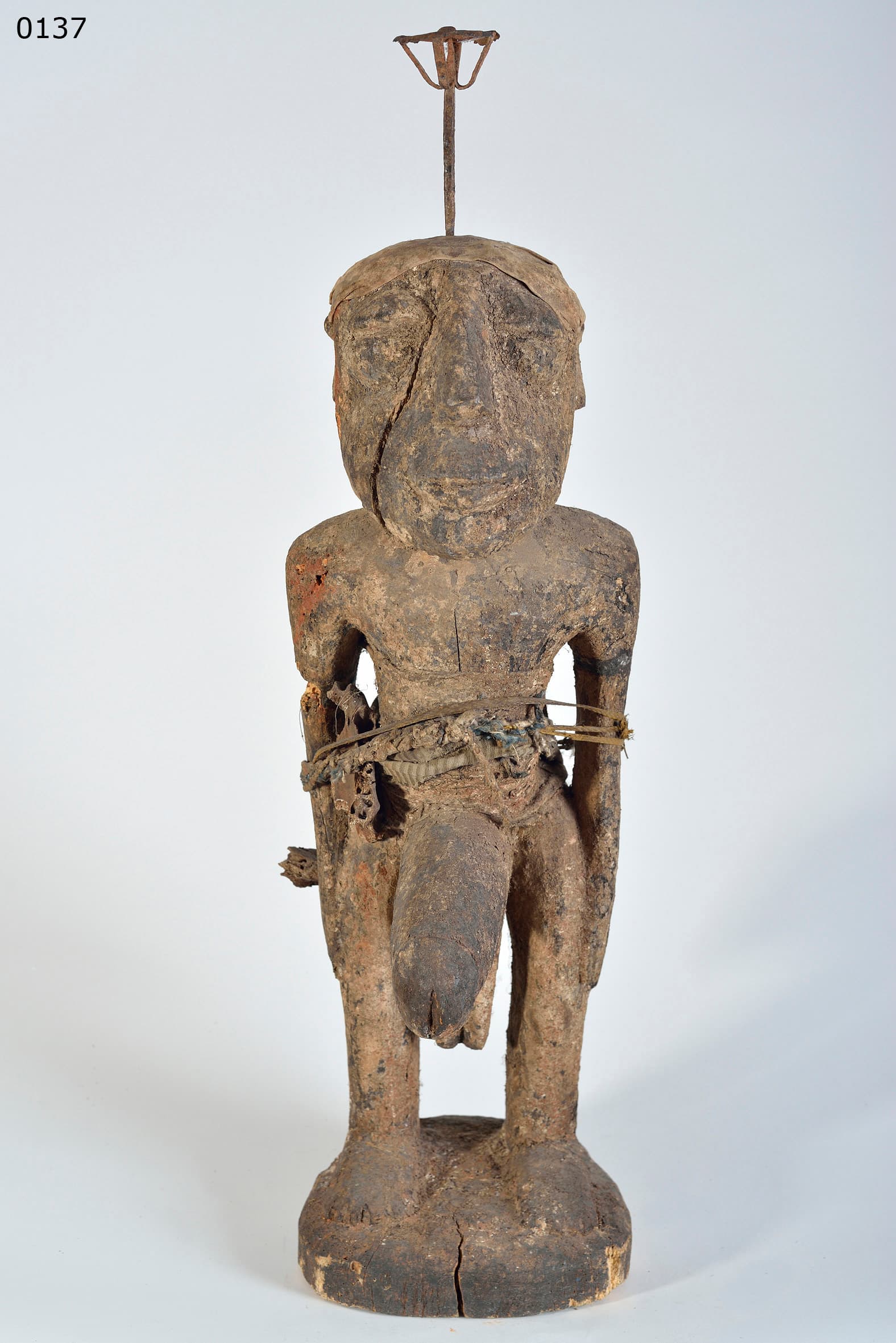
BOCIO statue (used in Voodoo ceremonies)
