An exceptionally eroded, slender wooden female figure featuring an elongated, pointed chin, a sagittal crest, and a columnar torso with subtle breasts. The surface is entirely stripped of polish, presenting a dry, pale, and deeply fissured texture.
1. Aesthetic style and regional traits
This carving relies on the stark, geometric formalism central to early Senufo artistry. The face projects forward with an extreme, jaw-heavy prognathism, balanced by the sweeping verticality of the crested coiffure. This creates an aerodynamic profile that prioritizes supernatural severity and timelessness over human warmth or anatomical naturalism. The Senufo idiom is generally split between a more polished portraiture register and this archaic geometric register; the present figure clearly belongs to the latter, more ritually charged class.
2. Ritual function and society use
Small, highly formalized figures like this were utilized by the Poro men's society or the female Tyekpa association. They served as physical receptacles for ancestral spirits, brought out during nocturnal funeral ceremonies to honor deceased elders, or kept in sacred groves to maintain the fragile equilibrium between the village community and the perilous, untamed forces of the bush. Their role required them to be visually severe rather than charming — these were institutional ancestors, rather than domestic figures.
3. Physical patina and age indicators
The visual identity of this piece is defined by its significant environmental degradation. The cellular breakdown of the wood, the soft, abraded edges, and the deep, longitudinal desiccation cracks running through the core suggest it was exposed to the elements or stored in a traditional, dry environment for generations. It stands as an un-restored relic consistent with early 20th-century animist practice.
Summary
This Senufo altar figure is a haunting expression of geometric abstraction and ancestral authority. Its severe structural desiccation and dry, weathered patina support its attribution as a deeply venerated, archaic shrine object.
Written with AI assistance from the collection appraisal, object photography and our own research; editorially reviewed. Mistakes are possible — corrections are welcome. How we work →
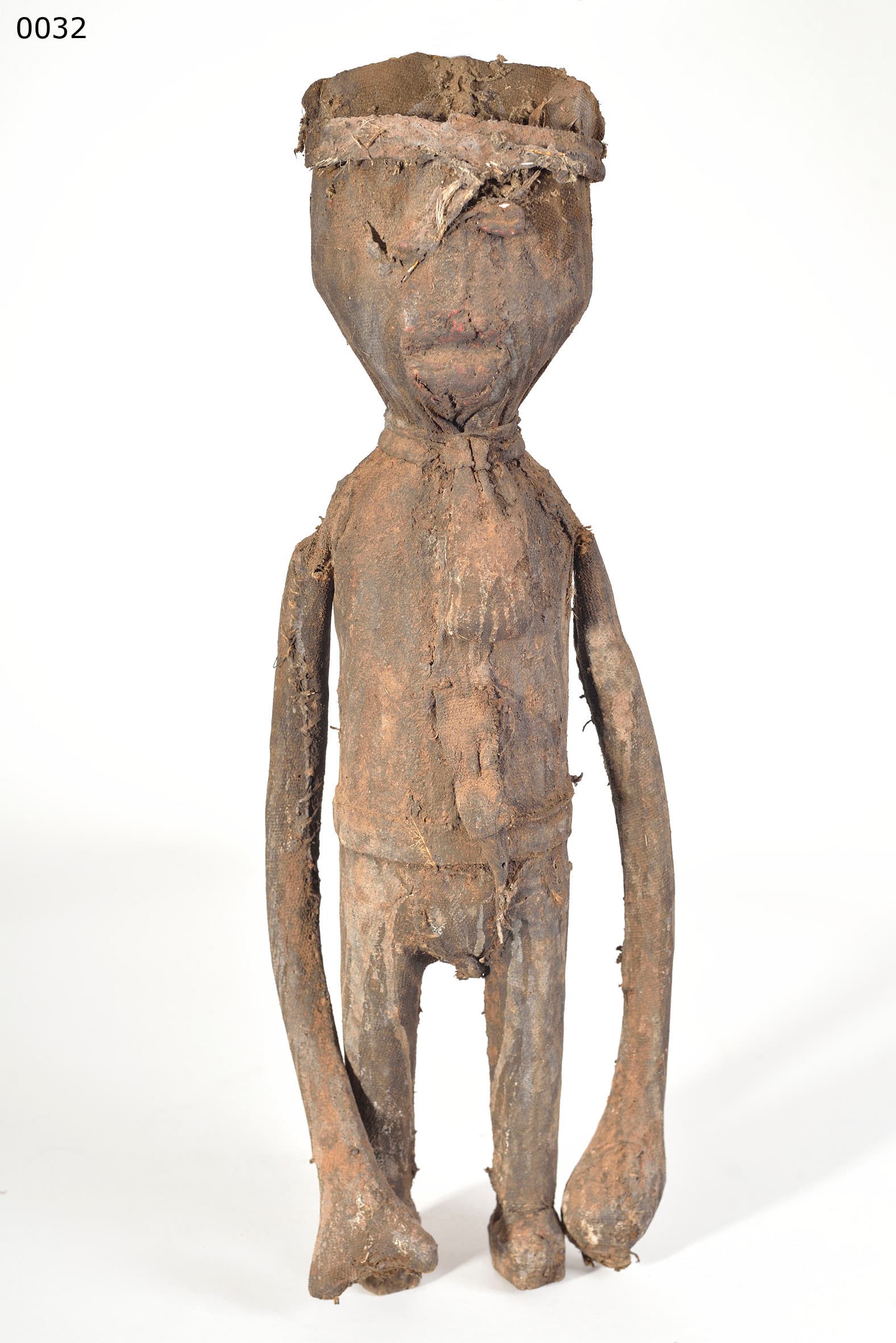
power figure (called KAFIGELEDJO)
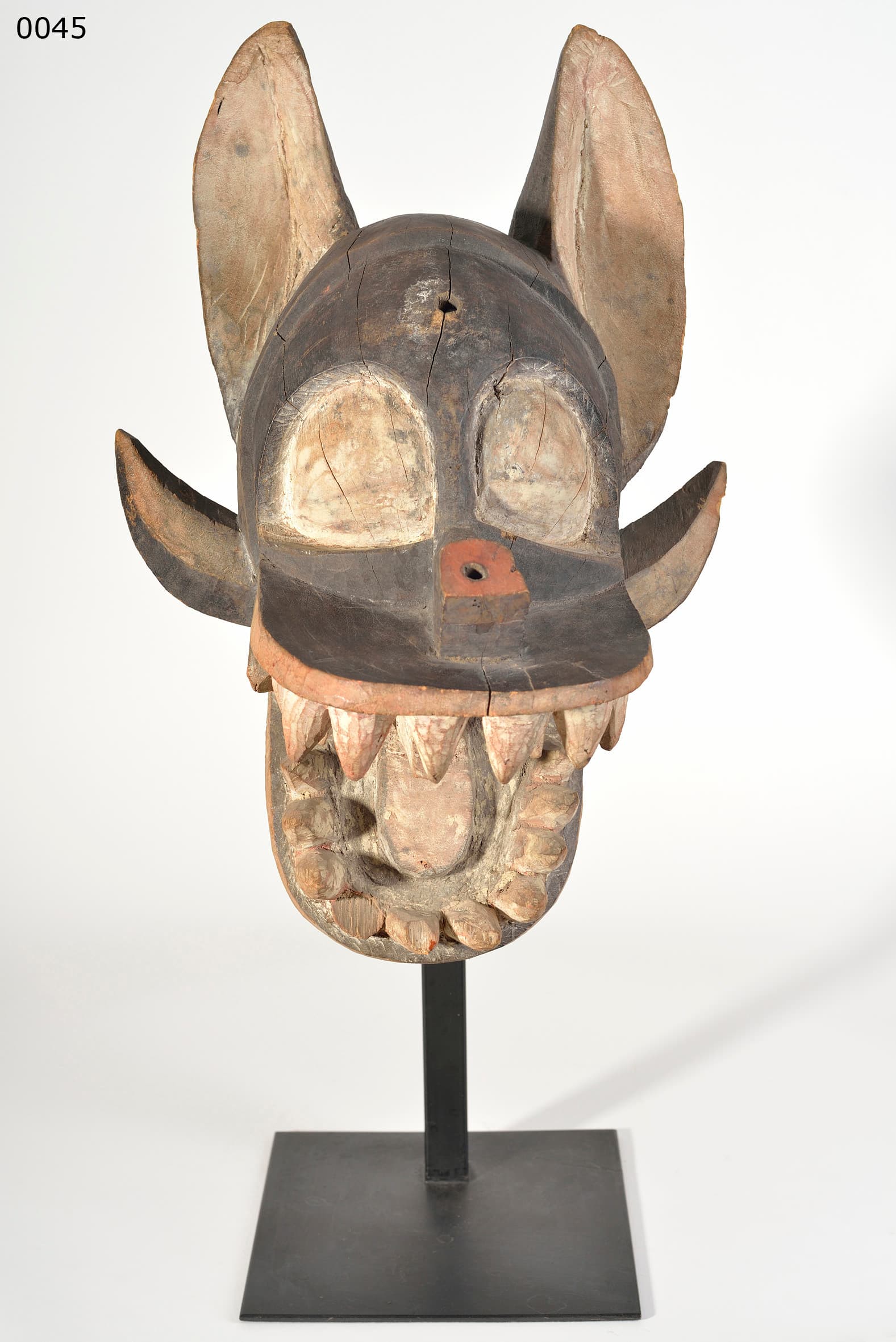
headcrest mask
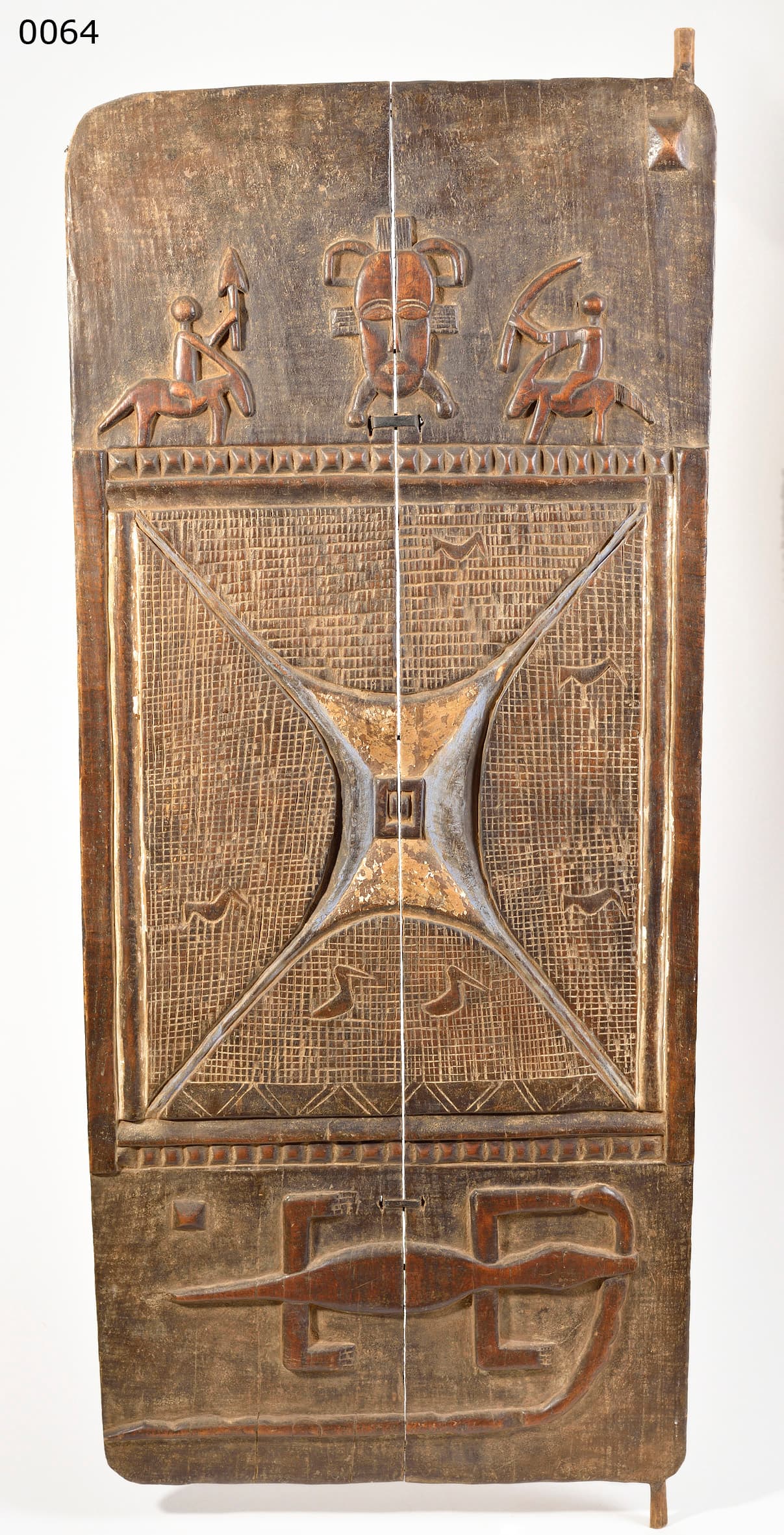
door
