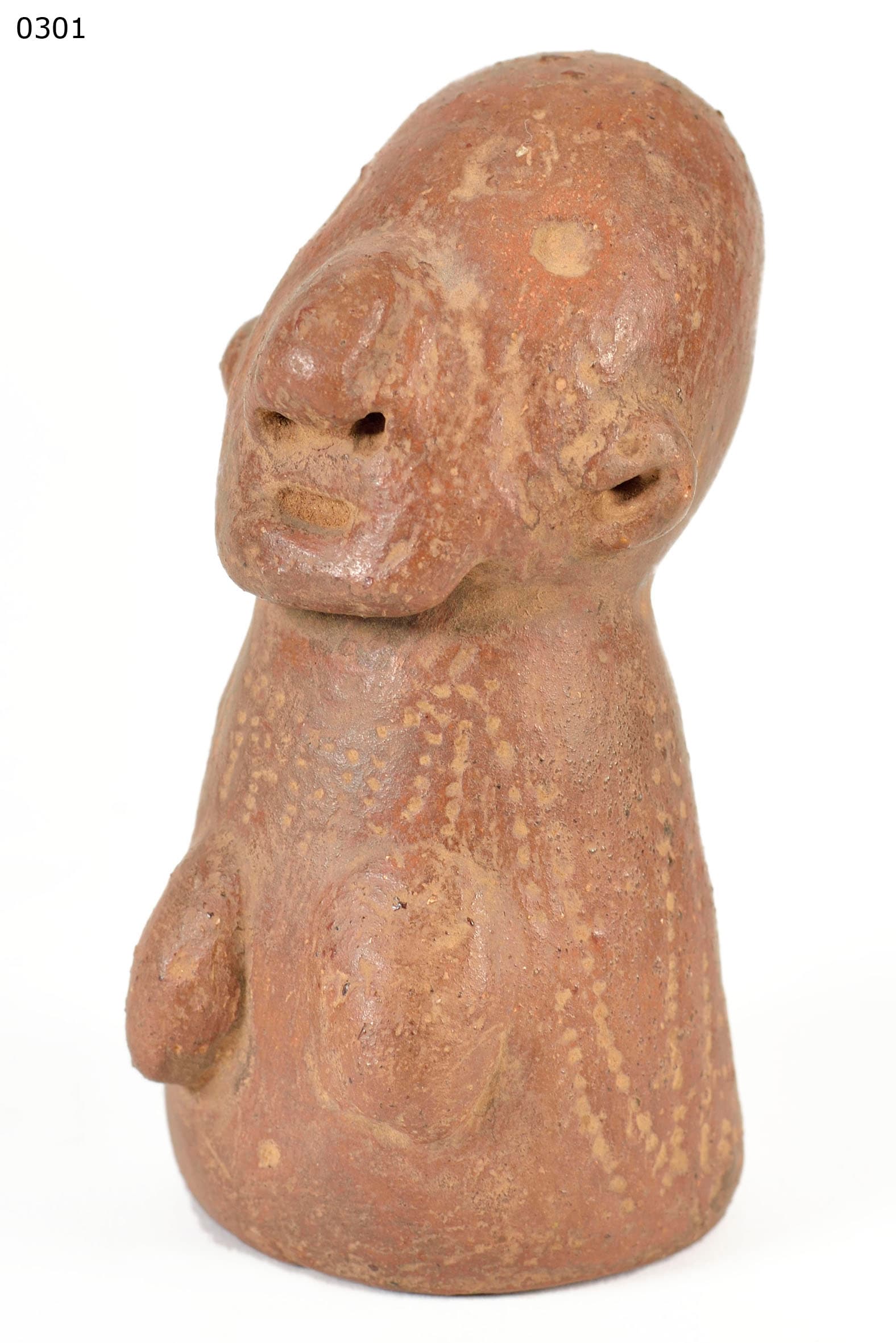
A tiny, ancient bronze figure depicting a seated or kneeling woman with an elongated face, prominent, bulging eyes, and hands resting on her legs. The surface is heavily degraded, with fine details lost to thick layers of earthen encrustation and green oxidation.
1. Aesthetic style and regional traits
This miniature bronze is highly characteristic of the distinct, attenuated formalism of the Inland Niger Delta (Djenné) style. The head is radically elongated and tilted upward, characterized by heavily lidded, protruding eyes and a prominent chin. This surreal elongation moves away from portraiture, creating a transcendent, almost reptilian or otherworldly visage that signifies deep spiritual clairvoyance and communion with the divine. The upward-tilted face is a posture of address to higher powers — a positional iconography rather than naturalistic depiction.
2. Ritual function and earth-shrine deposition
The humble, seated posture — often interpreted as an attitude of prayer, submission, or mourning — suggests this was a votive figure. In the ancient medieval cities of Mali, thousands of small terracottas and bronzes were deposited in communal earth shrines, foundations, or city walls. They acted as permanent, localized intercessors, offering constant prayers to the earth spirits to prevent famine, drought, or societal collapse. Their deposition was permanent — once installed, the figure remained in service indefinitely on behalf of the community.
3. Physical patina and surface condition
The extreme weathering of this figure is consistent with its proposed age. The bronze has lost its original metallic sheen, replaced by a crust of oxidized copper (malachite) and hardened mud. The blurring of the hands and facial features is consistent with chemical breakdown during prolonged subterranean burial, compatible with the 12th–16th century archaeological horizon. The detail erosion appears to follow the chemistry of natural buried-bronze decay rather than a pattern of human handling.
Summary
An intimate and highly evocative ancient Inland Niger Delta votive figure, capturing the culture's classic elongated proportions and spiritual submission. Its extreme weathering and thick archaeological encrustation make it a poignant fragment of medieval Malian history.
Written with AI assistance from the collection appraisal, object photography and our own research; editorially reviewed. Mistakes are possible — corrections are welcome. How we work →