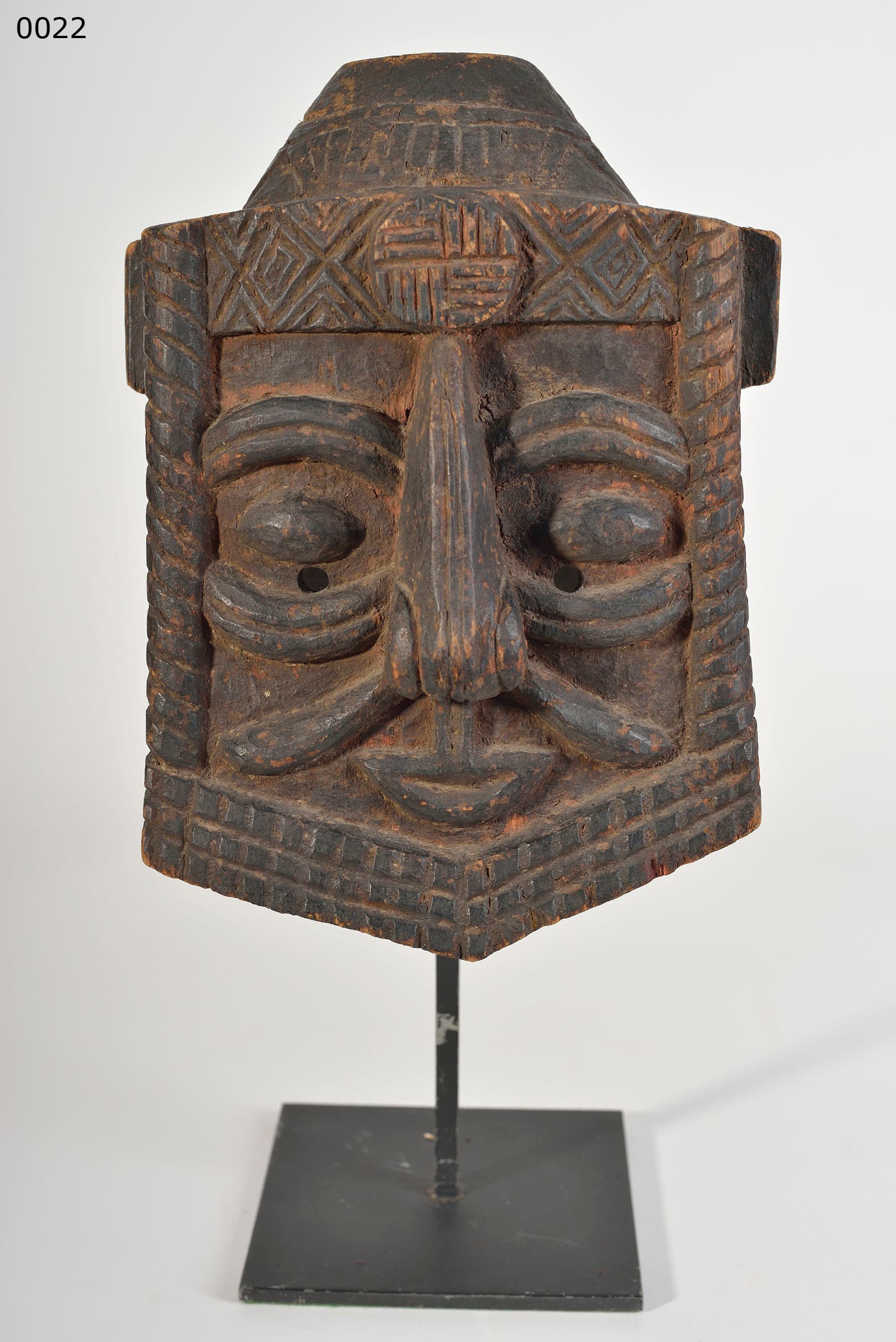
Sculpted in the form of a human head, this wooden vessel features exquisitely incised geometric patterns across the forehead and neck, mimicking aristocratic scarification. The rich, lustrous dark brown patina highlights the deep relief of the carving.
1. Aesthetic style and regional traits
The Kuba Kingdom is renowned for its highly developed court art, where personal prestige objects like this cephalomorphic (head-shaped) cup reflect the status of titleholders. The vessel shares the serene, aloof facial expressions and precise hairline demarcations seen in royal ndop statues. The intricate interlace patterns (known as bwoom or imbol) are not merely decorative but act as a visual vocabulary denoting the owner's high rank, lineage, and initiation within the sophisticated Kuba social hierarchy. The Kuba tradition is notable for distributing high-canon court iconography across utilitarian objects rather than reserving it for shrine sculpture alone.
2. Ritual function and palm wine hospitality
In Kuba society, elaborately carved cups were utilized during important social gatherings and initiation ceremonies for the consumption of palm wine (maluvu). Sharing wine from such a prestigious, anthropomorphic vessel was a highly ritualized act of diplomacy and male bonding among the Bangende and other elite groups. The act of drinking from the "head" of the vessel symbolically transfers the ancestral wisdom and life force associated with the carved effigy to the consumer. The vessel thus served as both implement and ritual technology — its iconography did social work alongside its practical function.
3. Physical patina and age indicators
The deep, glassy patina of the wood is consistent with decades of handling, anointing with palm oil, and use in ceremonial contexts. The slight abrasions and softened edges of the geometric incisions support its status as an heirloom object passed down through generations. Such surface oxidation and handling wear are compatible with prolonged indigenous use and support an attribution to the 19th century.
Summary
Featuring a refined synthesis of geometric precision and portraiture, this Kuba vessel, attributed to the 19th century, is a notable example of Congolese courtly art. Its rich, handled patina and aristocratic motifs are characteristic of this tradition of functional sculpture.
Written with AI assistance from the collection appraisal, object photography and our own research; editorially reviewed. Mistakes are possible — corrections are welcome. How we work →