Overview
The Kwere, known as Ngh'wele in the linguistic and ethnographic proper name and as Wakwere in the Swahili foreign name characterised by administrative and colonial discourses, form a highly distinct ethnolinguistic entity within the Eastern Savannah Bantu (specifically the Ruvu subgroup). Their primary indigenous settlement area, which is characterised by a complex ecological and geographical transition between the maritime area of influence and the drier inland, extends primarily over the districts of Bagamoyo, Kisarawe and Chalinze in the Pwani region on the East African coast of Tanzania. Historical and topographical analyses locate the core space of this habitat in an axis that extends from the Bagamoyo hinterland in the east to the Wami River in the north and westwards to the urban peripheries of Msata, whereby the territory functioned as an essential historical transmission belt between the cosmopolitan Swahili coast and the inland markets.
The demographic recording and statistical quantification of the Kwere is historically characterised by considerable empirical discrepancies, fluid ethnic boundaries and methodological inconsistencies in data collection. The source situation is ambiguous as far as the recent, exact population size of the Kwere is concerned, as modern census data is often based on regional rather than strictly ethnic parameters. While colonial census data under British administration in 1957, for example, only documented 39,199 Kwere individuals (the majority of whom were located in the western Bagamoyo district at 29,705 people), ethnographic surveys estimated the population at around 98,000 by the end of the 1980s. More recent project-based databases extrapolate the population size in the 21st century to up to 330,000 individuals. The official Tanzanian national census of 2022 records massive population growth to over 2 million inhabitants for the entire Pwani region and an increase to over 5.3 million for the neighbouring metropolitan region of Dar es Salaam. However, this macro data does not break down the exact ethnicity in isolation, meaning that the exact demographic dividing line to strongly assimilated neighbouring populations in these urban agglomerations remains a statistical approximation.
The social structure of the Kwere is essentially acephalous and strictly matrilineal, which means that in the pre-colonial era there was no superordinate, centralised political or state authority that went beyond the kinship groups. The archaic and recent social order is organised into a large number of exogamous matri clans (lukolo), which are made up of several specific matri lineages (tembe). This kinship structure is primarily coded territorially, economically and ritually. Each matri lineage owns and manages collective land rights over defined agricultural plots, which historically often comprised areas of around 500 acres. Administrative and ritual leadership is the responsibility of a lineage leader (mndewa) elected by the elders. This leader is given a special lineage name through his election, which identifies him as the institutional custodian of the lineage-specific traditions, land allocations and taboos. Although these formal leadership positions are usually held by men, field research documents that in specific contexts women were also able to occupy these positions of power, especially in connection with spiritual skills such as rainmaking or direct communication with the spirit world. Another stabilising sociological element is the ugongo, an institutionalised joking relationship between certain clans, which serves as a preventive social cement for conflict resolution and as a guarantor for mutual ritual obligations at funerals and offerings.
| Demographic & Structural Parameters | Kwere (Ngh'wele) |
|---|
| Primary Settlement Areas | Pwani Region (Bagamoyo, Kisarawe, Chalinze), Msata |
| Linguistic classification | Eastern Ruvu subgroup (Bantu), Swahili as a lingua franca |
| Kinship system | Strictly matrilineal (lukolo and tembe) |
| authority structure | Akephal; local lineage leaders (mndewa) |
| Population estimate | Historically ~39,000 (1957); recently estimated at approx. 100,000 to 330,000 |
The subsistence strategy of the Kwere is highly diversified and demonstrates a deep ecological adaptation to the East African coastal hinterland. It is primarily based on the agricultural cultivation of maize, rice and millet. This agricultural base is complemented by the breeding of goats, sheep and poultry as well as opportunistic hunting and fishing practices. This economic interdependence has always required a high degree of interaction and diplomatic exchange with neighbouring ethnic groups. The direct neighbours with whom the Kwere share intensive trade relations and partly overlapping cultural practices include the demographically dominant Zaramo in the south, the Doe and Zigua in the north and the Luguru in the west.
A central controversy in the ethnological and institutional classification concerns the historical, linguistic and cultural independence of the Kwere. Due to intensive marriage networks, shared linguistic East Ruvu roots and visually congruent ritual institutions (such as female initiation), the Kwere were often summarised in early Africanist research - for example by Ladislav Holy (1967) - as a peripheral subgroup of the Zaramo. Modern structuralist analyses, however, emphasise fundamental differences in social resilience: While the Zaramo, who today make up over 98% of the population in Dar es Salaam, were massively assimilated by the Sunni Islam of the Shafi'i school and had to strongly adapt their matrilineal structures to patrilineal Islamic legal norms, the Kwere (as the only non-primarily Islamised ethnic group in the coastal region) have preserved their autochthonous religious and legal matriarchal structures in a much more residual and archaic way. This systematic misclassification led to a historical "collection nomenclature drift" that has only been corrected in recent decades. Institutions such as the Fowler Museum at UCLA or the National Museum of African Art in Washington have been forced to explicitly re-attribute hundreds of catalogue numbers, which were previously undifferentiated as "Zaramo" or even wrongly declared as Central African, to the Kwere on the basis of new field research in order to acknowledge their independent institutional and aesthetic profile.
Cultural context
The cosmological and religious system of the Kwere operates at the complex interface between a distant, unapproachable creator authority and a highly active world of spirits and ancestors that constantly intervenes in everyday life. At the head of this pantheon is a distant creator god, who is usually referred to as merungu or mulungu. This creator has initiated the universal order and the physical laws of the world, but does not enter into direct, supplicatory interaction with the living. Instead, the direct spiritual authority, jurisdictional power and causal responsibility for disease, fertility and ecological balance lies with the ancestral spirits (mizimu). In the matrilineal society of the Kwere, both the maternal and paternal ancestral lines have very specific but strictly separate areas of responsibility in the cult, which generates a dualistic spiritual dependency that enforces the social cohesion of the exogamous clans.
The cosmological order of the Kwere does not separate the world dichotomously into a profane and a sacred space, but assumes a permanent permeability and osmosis between physical reality and the ethereal sphere. A central and highly dangerous element of this permeability is revealed in the concept of birth. Newborns are not regarded by the Kwere merely as new biological entities, but as border crossers who pass from the spiritual realm of the ancestors into the physical world. This transitional phase is considered highly vulnerable, as angry or yearning ancestral spirits may try to pull the child back into the spiritual realm (which manifests physically in infant death). Ritual protective measures are therefore imperative: Kwere mothers and their infants must remain in strict isolation within the hut until the umbilical cord physically falls off to ensure the child's liminal transition into human society.
Ritual authorities among the Kwere differ greatly from the hierarchical priestly castes of West and Central African peoples. They primarily include diviners and healers (mganga), the lineage leaders (mndewa) and especially female elders (mulala, "old woman", or kungwi), who wield unprecedented power in ancestor worship. The Kwere also differentiate their spirit world into specific entities such as pango and upungi spirits, each of which requires its own cult practices. While pango spirits represent the entire paternal and maternal clan lineage and are invoked by the mganga in times of existential crisis (such as epidemics or collective droughts), upungi spirits are purely female entities of the matrilineage. The rituals for the upungi spirits are conducted exclusively by a high-ranking female elder and are essential for safeguarding rites of passage (initiation), for agricultural sowings and for blessings before marriages.
Central to the social and biological reproduction of the Kwere are the highly elaborate initiation and transition rituals of women, known as mwali. The biological maturation process is flanked by strict ritual instructions (kukowa). In the Kwere taxonomy, a girl is referred to as kihinza before she develops breasts; as soon as her breasts begin to grow (a stage metaphorically referred to as "having milk"), she advances to kigoli and enters the preparatory phase of initiation. The initiate's isolation (seclusion) in a special hut, which historically could last up to six years, is closely monitored by the female elders. They instruct the girl in sexual maturity, maternal duties and strict food taboos (for example, the ban on eating eggs or meat from cave animals for fear that the future foetus could "crawl back" into the womb like such an animal). The supplicatory prayers to the ancestors often take place under the mkole tree, which is considered the primary botanical symbol of matrilineality, menstruation and fertility in the entire East Ruvu region.
In recent anthropological research, there is a sharp theoretical controversy regarding the sociological interpretation of these female initiation rituals. The dating and categorisation of pre-colonial cosmologies remains ambiguous, leading to divergent academic readings. Author Marja-Liisa Swantz dates the origins of the rites deep into the proto-Bantu period and argues (1970, 1986) that these rituals are structurally designed to "protect, support, nurture and affirm" women's social power, ritual autonomy and fertility in an inherently empowering matrilineal order. Swantz emphasises the central power of women, who acted as custodians of the medicine basket (mkoba) and spiritual tradition (jadi) and had exclusive access to trance cults. This contrasts sharply with more recent postcolonial analyses, which argue that these institutions were frozen and perverted by the colonial system. From this perspective, the often years-long ritual isolation (seclusion) historically meant a massive restriction of personal freedom of action and systematically prevented girls' access to formal, western education, whereby the tradition unintentionally contributed to the marginalisation of women in modern Tanzania.
Structurally, this religious system differs significantly from that of its neighbours. While the Zaramo had to massively synchronise their traditional practices with Islam - which, according to Swantz, led to the institutional importance of women decreasing and men developing a sense of superiority - the Kwere women maintained their unchallenged position as priestesses of the Upungi spirits. The material manifestation of this female-dominated cosmology is being researched worldwide in institutions such as the Rietberg Museum in Zurich, where the spiritual dimension of the mwana hiti initiation figures is not exhibited as trivial dolls, but as sacred carriers of female ancestral power.
Aesthetic features
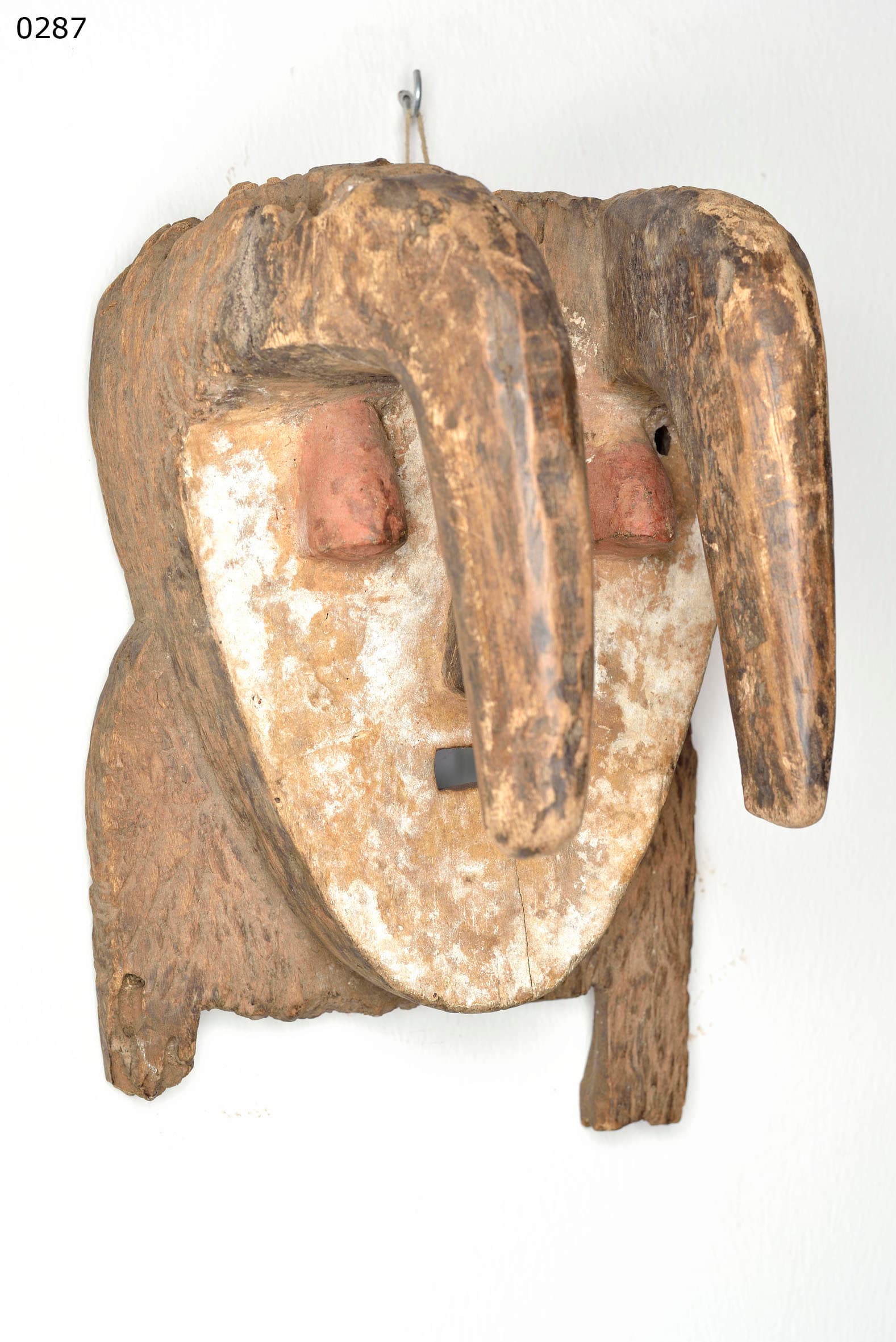
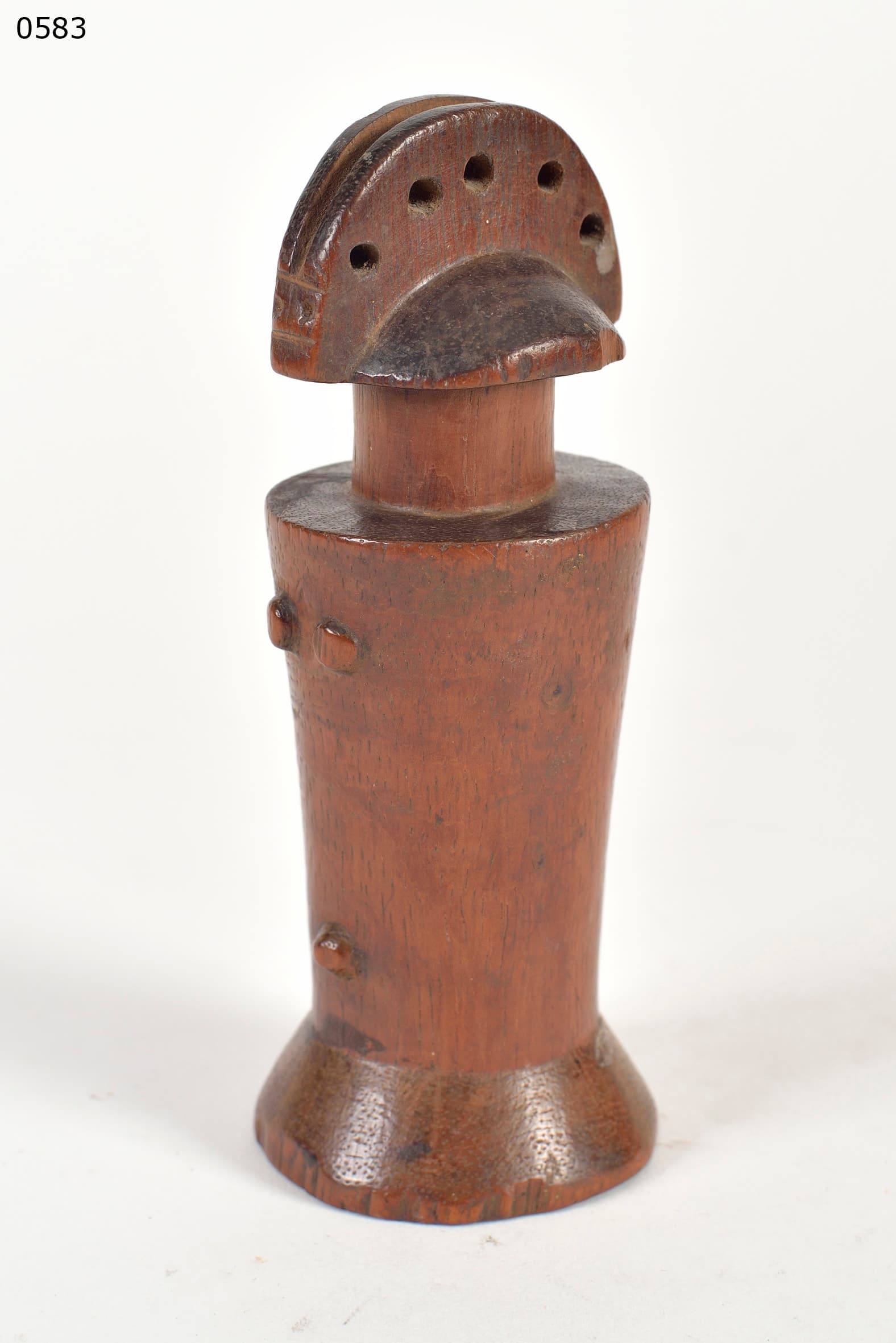
The visual and material culture of the Kwere is almost exclusively defined by sculptural works that have a direct, utilitarian connection to the life cycle, ancestor worship and the matrilineal initiation complex. In contrast to the mask-centred art of West Africa (such as that of the Yoruba or Dan), the East African hinterland is characterised by a figurative tradition. The absolute canonical object typology of the Kwere is dominated by the mwana hiti figure (literally translated from Swahili and local dialects: "child made of wood").
These anthropomorphic, primarily female sculptures exist within Kwere culture in several strictly defined subtypes, each with their own iconographic and ritual codes:
- Autonomous initiation dolls: Mobile, fully sculpted figures that serve as spiritual altar attendants in mwali initiation.
- Prestige staffs (kome or kifimbo): Sceptre-like staffs carried by lineage leaders (mndewa) and often crowned by a mwana hiti bust, which legitimises matrilineal authority.
- Medicine jars (mwana sesele): These are often calabashes (gourds) sealed with a figurative wooden stopper in mwana hiti form. These objects contain magical substances and are used in healing rituals.
- Memorial sculptures (vinyago): Monumental wooden grave markers or memorial posts that often appear in pairs or as abstract solitaires to fix the Pango ancestral spirits in a specific place.
Iconographically, the mwana hiti figures of the Kwere follow a highly regulated canon of proportions. A cylindrical or strictly geometricised torso, on which arms and legs are often completely missing or only indicated as minimally raised reliefs, carries a disproportionately dominant head. The most striking iconographic feature is the strongly abstracted hairstyle, usually split down the centre (double-comb or triple-comb hairstyle), which falls over the head into the neck. The physical attributes of female fertility - in particular accentuated breasts and a pronounced umbilical hernia - function as primary iconograms, visualising not individual portraits but the idea of matrilineal continuity and ancestral reproduction. The size spectrum is highly context-dependent and ranges from tiny miniature amulets (under 10 cm), to standardised initiation figures (12-20 cm), to monumental vinyago grave posts that can reach heights of over 80 cm to 1.5 metres.
The exact iconographic attribution of these objects was the subject of one of the most vehement controversies in African art history. Until the late 1980s, almost all stylised figures with split hairstyles from the East African coastal hinterland were indiscriminately and sweepingly attributed to the "Zaramo" on the Western art market and in the inventory catalogues of most museums. The Belgian ethnographer and collector Marc L. Felix revolutionised this classification in 1990 with his standard work on the art of the matrilineal Bantu.
Controversy of attribution: Felix (1990) vs. historical museum curators (e.g. Ladislav Holy, 1967). Through the systematic application of Frans Olbrechts' triangulation method (the comparison of known styles at geographical vertices to determine an unknown centre), Felix empirically demonstrated that the Kwere workshops cultivated a highly distinctive style of their own.
A systematic morphological comparison clarifies these taxonomic boundaries: While Kwere carvings are characterised by an "idealised realism" with softer facial features, organic torso contours and very specific regional scarification patterns, Zaramo figures follow an "extreme stylisation" characterised by harsher, purely geometric abstractions of the cylindrical torso and the dominant split hairstyle. A delicate diagnosis of eye shape, ear placement and incisions enabled Felix, for example, to clearly re-identify a 154 cm high staff in the National Museum of African Art (Smithsonian), which had previously been absurdly attributed to the Ovimbundu from Angola or the Bijogo from Guinea-Bissau, as a Kwere mother-child artefact.
The choice of material is highly relevant for the aesthetic effect, but above all for the ritual integrity of the objects. Canonically, the extremely hard heartwood of Dalbergia melanoxylon (African grenadilla or locally called mpingo) is favoured. This material has an extraordinarily high density and is naturally highly resistant to African termite species (specifically Coptotermes formosanus) as well as white and brown rot fungi.
The fundamental ontological difference between a ritually activated object and a profane, purely decorative carving is revealed in the patina. A profane object is only characterised by the smooth wood polish of the master carver. A ritually activated mwana hiti or vinyago, on the other hand, accumulates a complex, multi-layered patina over the years: it consists of sweat and body oils from the constant wearing of the initiates, from rubs with castor oil to "care" for the ancestor doll and from encrusted, sometimes sticky sacrificial layers of togwa (fermented grain drink) and animal blood.
As the seemingly simple geometry of the Kwere figures is easy to copy, forgery criteria are highly relevant for the private art market. Authentic historical pieces must have genuine, oxidised heartwood cracks. In addition, forensics often expose modern forgeries by analysing feeding galleries: Genuine termite feeding on D. melanoxylon only removes the softer sapwood, but fails on the toxic, resin-rich heartwood. If, on the other hand, softer substitute wood was used, which was artificially darkened and then perforated by insects, this is unmistakable proof of a forgery, a parameter that is now used as standard for verification in provenance departments such as the one at the Musée du quai Branly.
Ritual practice
The ritual activation and performative use of the Kwere sculptures follow a strict protocolual cycle that transforms the material entities from the sphere of mundane wood into highly charged vessels of spiritual presence. The lifecycle of the canonical mwana hiti initiation doll illustrates the complex cosmological interaction between the paternal and maternal lineage of the Kwere. Although the social structure is strictly organised along matrilineal lines, paradoxically the mwana hiti is usually commissioned by the paternal line (patri-clan), ritually activated by their elders through consultation with ancestral spirits and only then handed over to the matrilineal girl. This ritual practice is based on the complex Kwere belief that although the organic, physical continuity of the flesh comes from the mother line, the spiritual essence and form-giving identity must be transferred through the paternal line.
During the initiation rite (mwali), which begins immediately after menarche, the kwere girl (kigoli) is isolated in a special hut or secluded area. In this phase of seclusion, the mwana hiti does not function as a profane toy for practising profane maternal roles, but as a portable altar and often as the sole physical companion in the darkness. The ritual performance requires the initiate to treat the wooden figure as a living vessel for ancestral spirits and as a manifestation of her own future children: she must ritually bathe the mwana hiti, rub it with vegetable oils, ritually "feed" it with food and adorn it with seed beads on its neck or hips. Through this constant performative supplementation and physical closeness, the fertility of the ancestors is transferred to the girl. At the end of the isolation period, which is much shorter nowadays, the mwana hiti is presented to the village as proof of maturity at a public "coming out" dance.
The deactivation or disposal of these initiation figures is ethnographically complex. The sources are ambiguous regarding exact universal disposal norms: While some reports suggest that the figurines are desecrated after marriage or passed on to younger sisters, field research documents that many women take the figurines deep into their married lives in order to continue to address fertility prayers to them in times of crisis. Other specimens are confiscated by clan leaders and archived as ancestral repositories in the collective shrine, where they accumulate an increasingly thick ritual patina over time through offerings.
An even more dramaturgical and exclusive ritual practice concerns the pango spirits represented by the monumental vinyago memorial sculptures. When a Kwere matrilineage is threatened by extreme crises such as chronic disease outbreaks, unexplained deaths or severe droughts, the lineage elder orders a profound pango healing ritual. This ritual never takes place in the profane village centre, but is performed in secret liminal zones - preferably on the seashore, in mangrove forests or in close proximity to ancient baobab trees, which are regarded as the physical residences of the ancestral spirits.
The physical construction of the altar requires the utmost choreographic precision. The patient for whom the ritual is performed is wrapped in a special black cotton cloth (kaniki). They must enter the altar site backwards; this act of spatial inversion is regarded as the ultimate symbol of respect and submission to the pango spirits. The vinyago wooden figures are placed in the sand or ground in the centre of the square. The mganga (ritual healer and spiritual guardian of the clan) initiates the activation by calling out the names of at least twelve specific, historical ancestors of the lineage and begging for repentance and healing for the patient.
The offerings (tambiko) on these nightly occasions are strictly regulated. Traditional, unfermented millet beer (togwa) is poured over the vinyago sculptures, an act that is accompanied by deafening blasts from cow horns and circular dances by the clan members around the figures. The climax is an animal sacrifice - almost exclusively chickens. The meat is ritually consumed by the community to renew the bond. However, the bones of the sacrifice must not be disposed of in a profane manner, but are placed in a special ritual clay vessel (lutambikilo), which acts as an exclusive "gift to the Pango spirits".
The deactivation of this temporary healing altar is linked to a final act of divination: The vessel containing the bones is left at the ritual site. If the spirits (in physical manifestation often through wild animals or birds) "remove" the bones within a period of exactly three days, the sacrifice is considered ritually accepted and the sick person is expected to recover. However, the wooden vinyago are not disposed of or burnt at the end of the sequence, as is customary among many Central African peoples. Instead, they are stored in special cotton bags and kept by the highest-ranking clan member as sacred relics until the next family crisis requires them to be reactivated. Such intensively used vinyago with dense, encrusted togwa remains now form the scientific core of the material analysis departments in museums such as the Royal Museum for Central Africa (RMCA) in Tervuren.
Historical context
The historical localisation of the Kwere begins with the enormous migration history of the East African Bantu expansion. Archaeological indicators and glottochronological models (often accompanied by dating controversies around proto-Ruvu vocabulary) place the gradual arrival of the Kwere ancestors from the southern continental area (today's northern Mozambique) on the coast of present-day Tanzania around the year 1000 AD. In this coastal hinterland, they displaced indigenous San hunter-gatherer populations and soon established complex, ambivalent trade relations with the emerging Islamic-Arabic Swahili cultures of the Indian Ocean. In diametric contrast to their direct neighbours, the Zaramo, the Kwere resisted complete cultural Islamisation for centuries, which enabled them to preserve their deeply rooted matrilineal system, characterised by female authority, largely intact until the colonial era.
The radical break in civilisation came with the violent colonial encounter with the German Empire (German East Africa) from the late 1880s onwards. The impact of colonial history on the sociological structure and artistic production of the Kwere was devastating. Researchers, civil servants and military officers such as the zoologist and ethnographer Franz Stuhlmann carried out extensive "punitive expeditions" and collecting trips through the Bagamoyo hinterland, often accompanied by violence. Sacred objects - including early vinyago grave goods and mwana hiti figures kept in secret - were systematically extracted from their highly sensitive ritual context and shipped as imperial trophies to European metropolises, mainly to the Ethnological Museum in Berlin.
Today, modern historians and African anthropologists explicitly classify this systematic removal of initiation objects as a form of "colonial ethnocide". The theft of the original objects, which in Kwere cosmology represented irreplaceable containers of accumulated ancestral power, massively destabilised the women's formal educational and spiritual transmission system. In addition, the introduction of Western colonial education systems, monetary tax systems and the Christian civilising mission forced Kwere families to compress the traditional isolation periods of female initiation, which once ensured the cognitive maturation of women, from several years to a few months.
The market history and academic reception of Kwere art in the West are characterised by a long phase of structural ignorance and colonial arrogance. Until the late 1980s, the sculpture of East Africa was strongly marginalised by Western collectors and curators in comparison to the expressive mask art of West and Central Africa (e.g. Congo or Ivory Coast). Leading anthropologists such as Ladislav Holy (1967) made the sweeping statement that the regions of Tanzania had "no unity" and that their art was of inferior quality compared to the West African civilisations.
The turning point in perception was marked by visionary American collectors such as Ernst Anspach and Robert and Nancy Nooter, who recognised the aesthetic density and minimalist appeal of Tanzanian art as early as the late 1960s and later donated large parts of their Kwere holdings to institutions such as the National Museum of African Art and the Metropolitan Museum of Art (Met). However, the definitive international breakthrough on the global art market did not come until 1990 with Marc Felix's groundbreaking publication (Mwana Hiti: Life and Art of the Matrilineal Bantu of Tanzania) and the associated exhibition at the Fred Jahn Gallery in Munich. This intellectual revaluation culminated in 1994 in the monumental exhibition Tanzania: Masterpieces of African Sculpture, which was shown at the Haus der Kulturen der Welt in Berlin and the Lenbachhaus in Munich and finally elevated East African wood sculpture to the canon of world art.
| Historical Milestone | Central Actor / Institution | Market & Research Implication |
|---|
| 1890s | Franz Stuhlmann / Ethnol. Museum Berlin | First documented colonial-ethnographic extractions of Kwere burial artefacts (vinyago). |
| 1960s-1980s | Robert & Nancy Nooter / Ernst Anspach | Targeted development of private American reference collections; later donations to the Met and Smithsonian. |
| 1990 | Marc L. Felix / Galerie Fred Jahn (Munich) | Typological differentiation of the matrilineal Bantu; establishment of the Kwere/Zaramo attribution model. |
| 1994 | Haus der Kulturen der Welt / Lenbachhaus | Breakthrough exhibition Tanzania, initiator of a significant price development on the international auction market. |
This new scientific discovery and the resulting exponential price development on the art market (where Kwere masterpieces now fetch five-figure sums) drastically exacerbated the problem of forgery. As the minimalist geometry of Kwere carvings appears relatively simple in terms of craftsmanship, massive numbers of forgeries were produced for export in coastal towns from the 1990s onwards. Today, authenticity criteria are therefore based on highly complex forensics and material analyses. An authentic historical mwana hiti must not only have a haptically dense patina from ritual use, but also show legitimate oxidative ageing cracks in the extremely hard Dalbergia melanoxylon wood. A striking detail for undoubted authenticity is the entomological analysis of feeding galleries: True termite feeding by the species Coptotermes formosanus, which in East Africa wears away the softer sapwood but fails on the toxic heartwood, is a reliable indicator of an object that stood for decades in ground use in an African shrine. The examination of such microstructural damage is now part of the standard repertoire of renowned museums and collectors in order to separate the ritually highly charged originals of the Kwere from profane souvenir production.