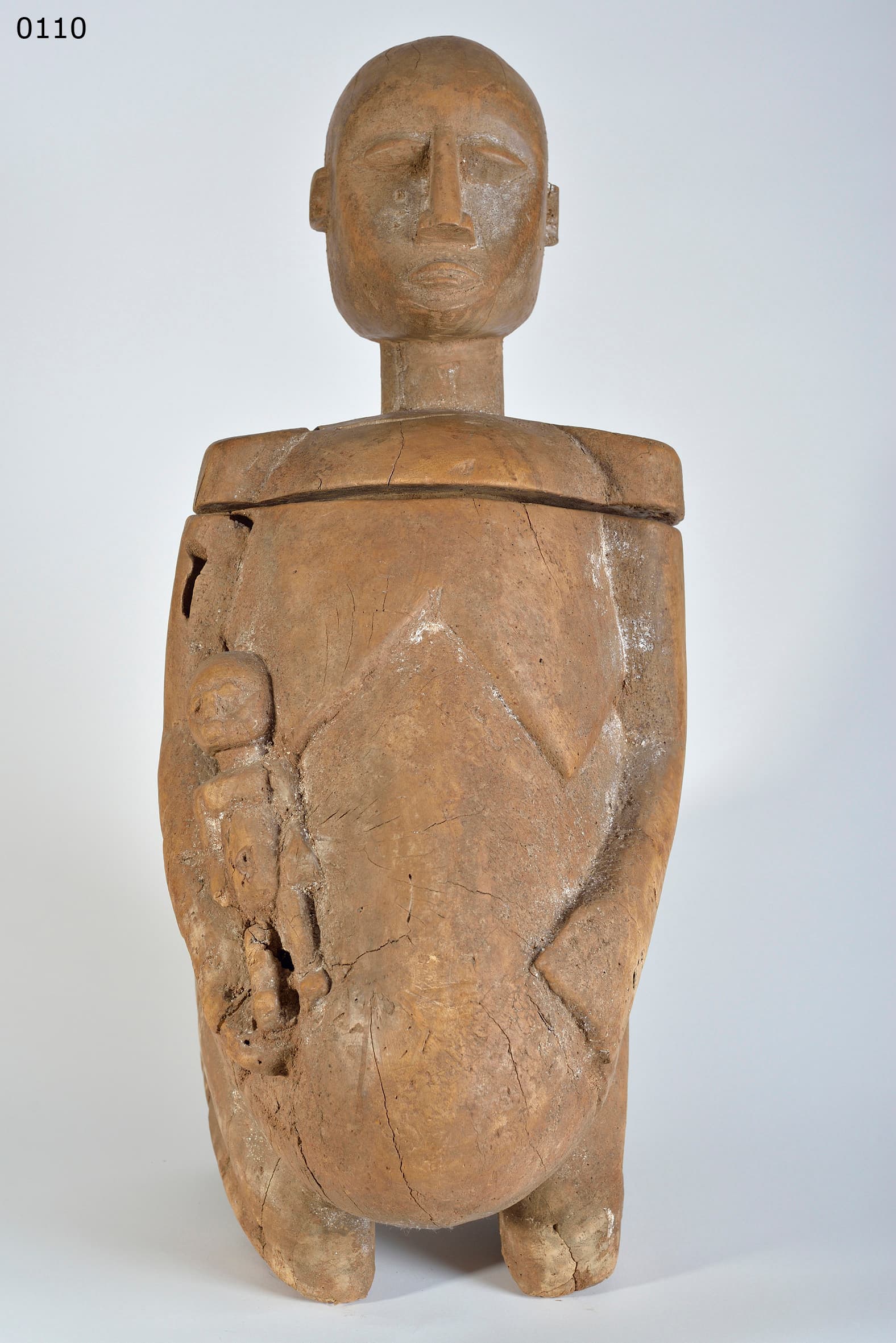
Ein fein geschnitzter männlicher Bateba aus Holz (wohl 1. Hälfte 20. Jh., 81 cm) von den Lobi aus Burkina Faso - das rechte Bein strukturell ersetzt durch den Körper eines kleineren Kindes, das sich an die Taille des Vaters klammert, eine Kaurimuschelkette um den Hals.
1. Die Seltenheit der Vaterschaft in der afrikanischen Kunst
Mutterschaftsfiguren sind in der westafrikanischen Skulptur allgegenwärtig; Vaterschaftsfiguren sind äußerst selten.
- Verschiebter Schwerpunkt: Anstelle der biologischen Geburt geht es bei dieser Schnitzerei um gesellschaftliche Kontinuität und Schutz.
- Die Pflicht des Vaters: Sie dramatisiert die männliche Rolle bei der Erziehung der nächsten Generation von Jägern, Bauern und Kriegern - eine Dimension, die bei Schreinfiguren normalerweise fehlt.
2. Bildhauerischer Einfallsreichtum: Die lebende Stütze
Die Lösung des Schnitzers ist strukturell bemerkenswert.
- Sohn als Säule: Anstatt dass der Vater den Sohn nur hält, ersetzt der Sohn physisch das Bein des Vaters.
- Umkehrung der Stütze: Der Vater trägt nun das Kind, aber die visuelle Metapher ist, dass das Kind die buchstäbliche Säule ist, die die Zukunft der Familie aufrecht hält.
3. Aktivierung des Heiligtums
Dies ist ein Bateba - ein physisches Gefäß für die unsichtbaren Thila-Geister.
- Kuhrei-Halskette: Die Muscheln weisen darauf hin, dass die Figur formell von einem Wahrsager "aktiviert" wurde.
- Schutz der männlichen Erben: Auf einem Familienaltar platziert, wurde sie gebeten, die männlichen Erben des Haushalts vor Krankheit und Hexerei zu schützen.
Zusammenfassung
Diese Lobi-Vaterschaftsfigur ist ein eindrucksvolles Beispiel dieser Metaphorik. Es handelt sich um eine seltene, zarte und doch strukturell robuste Darstellung der Vaterschaft, die nahelegt, dass der Sohn die buchstäbliche und geistige Grundlage des Stammbaums ist.
KI-unterstützt erstellt aus Sammlungsgutachten, Objektfotografie und eigener Recherche, redaktionell geprüft. Fehler sind möglich — Hinweise darauf sind uns willkommen. Zum Verfahren →
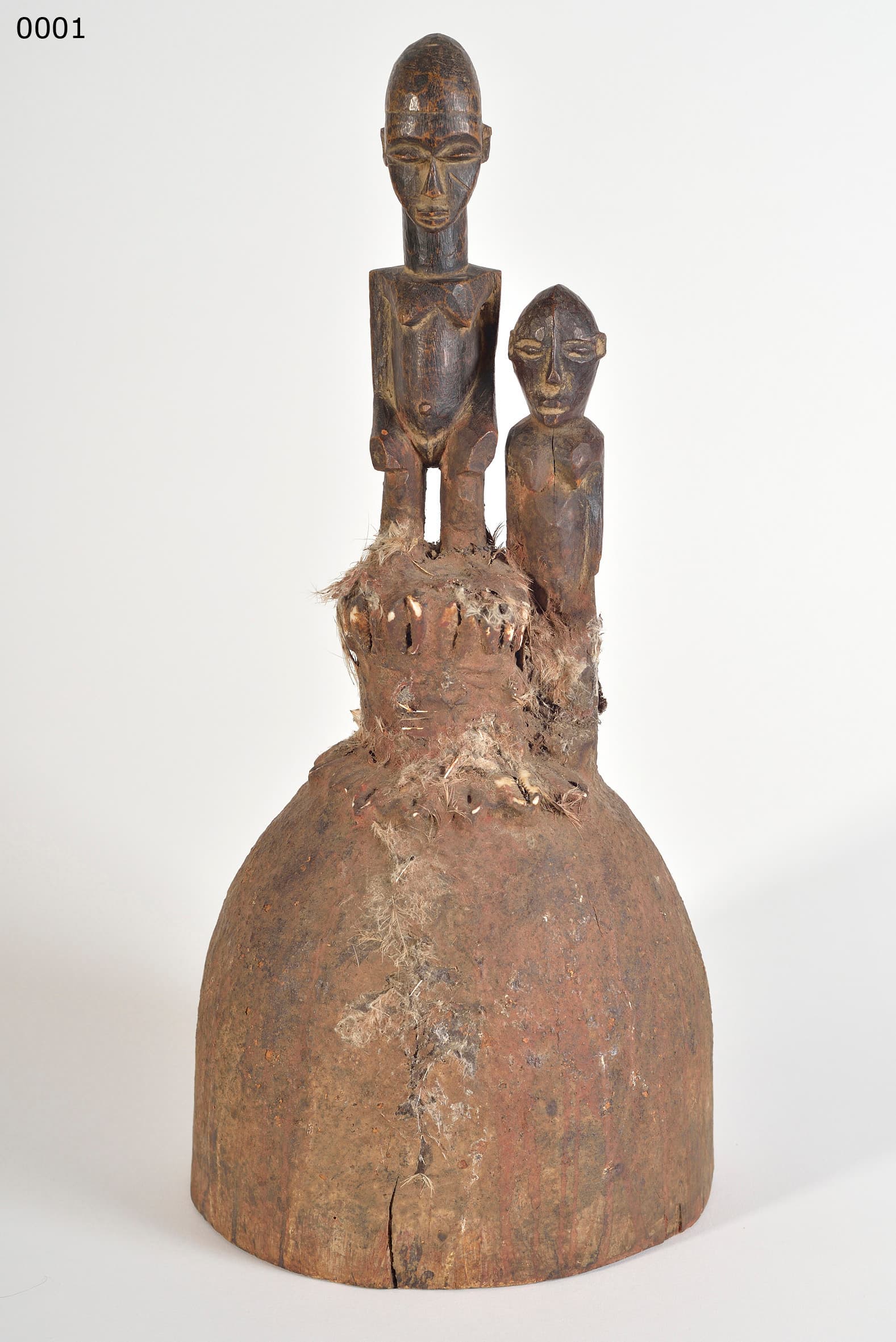
Schreinaltar mit Ehepaar BATEKE
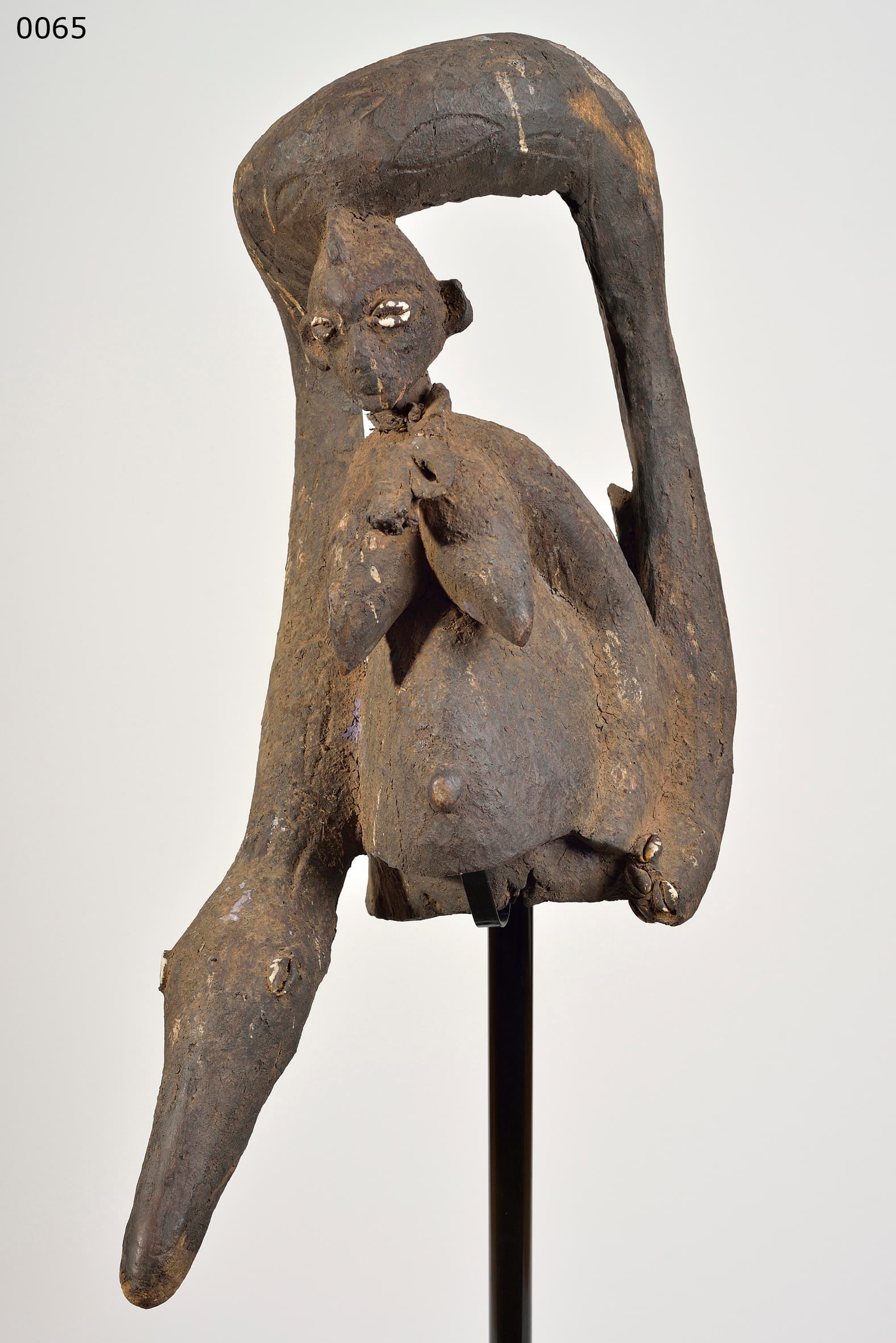
Seltene Kopfhaubenmaske
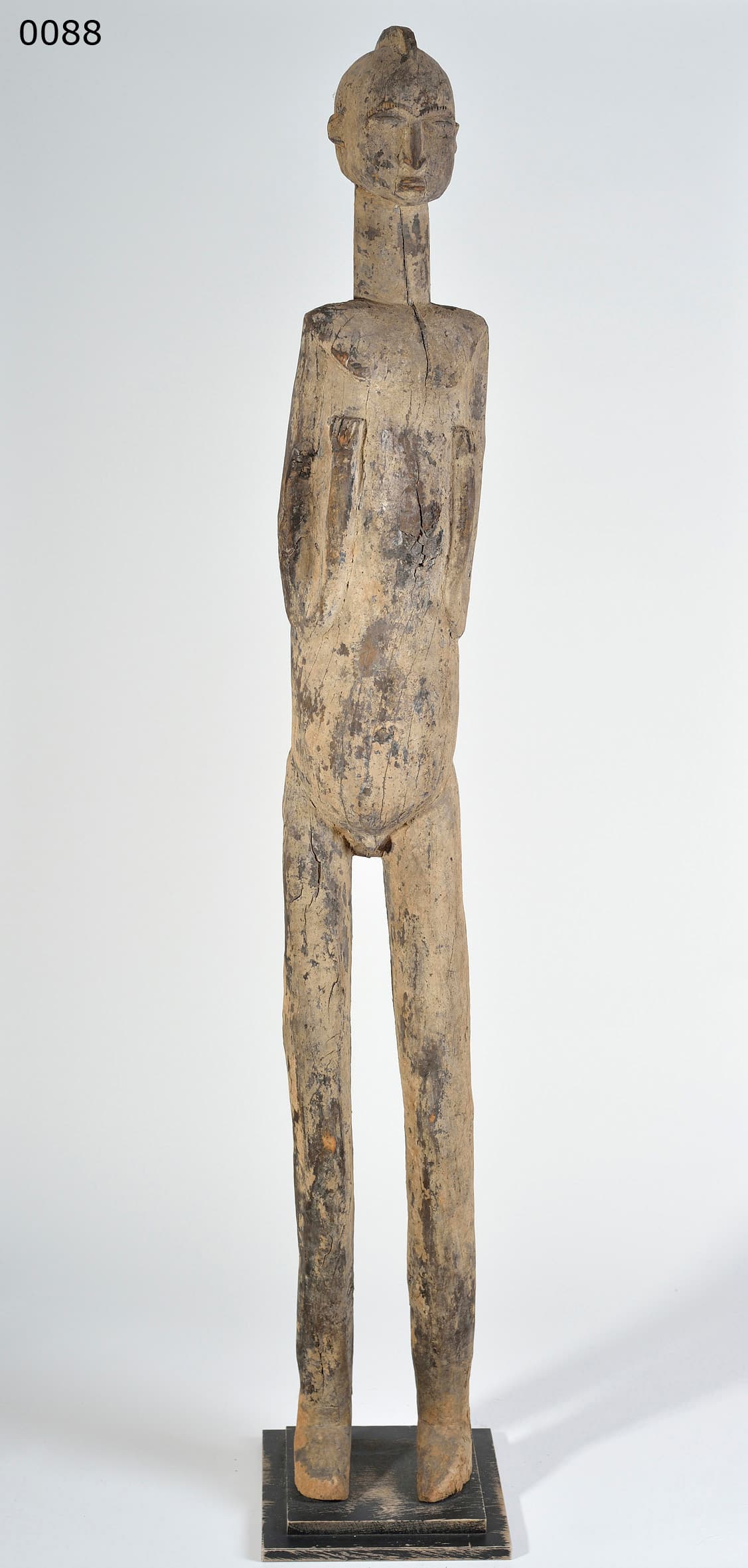
Schreinfigur, die einen BATEBA-Geist darstellt (ungewöhnlich groß, selten)