Ein massiver hölzerner Schlitzgong (102 cm) aus dem 19. Jahrhundert von den Ibibio in Nigeria - geschnitzt aus einem einzigen Stamm, ausgehöhlt durch schmale Schlitze an der Oberseite, mit einem anthropomorphen Kopf, der in den vorstehenden Griff geschnitzt ist.
1. Der Schlitzgong-Telegraf
Dies ist ein Idiophon, regional bekannt als Ekwe oder Obodom.
- Ein-Stamm-Konstruktion: Aus einem massiven Stamm aus resonierendem Hartholz geschnitzt und durch schmale Schlitze an der Oberseite ausgehöhlt.
- Tonale Übertragung: Mit hölzernen Schlägeln angeschlagen, erzeugen die verschiedenen Wandstärken unterschiedliche Tonhöhen - sie werden als buchstäblicher Telegraf verwendet, um komplexe tonale Botschaften über weite Waldentfernungen zu übertragen.
2. Die Stimme der Ahnen
Die Trommel wurde nie als bloßes Instrument betrachtet.
- Anthropomorphe Identität: Der Bildhauer schnitzte am Ende einen menschlichen Kopf ein und verlieh dem Objekt so eine spezifische spirituelle Persönlichkeit.
- Totengebrüll: Wenn sie gespielt wurde, hörte die Gemeinschaft nicht den Musiker, sondern die Stimme der Ahnen, die durch das Dorf dröhnte.
3. Durchsetzung des Geheimbundes
Mit 102 cm gehörte diese Trommel zu den höchsten Rängen der Geheimgesellschaften.
- Ekpo / Ekpe (Leopard): Sie diente dazu, die Mitglieder zu dringenden Versammlungen zu rufen und die Ankunft von maskierten Geistern anzukündigen.
- Klanglicher Hüter des Gesetzes: Historisch gesehen signalisierte sie auch Hinrichtungen von Verbrechern - eine akustische Waffe, die die Autorität der Gesellschaft in den Wald projizierte.
Zusammenfassung
Diese Ibibio-Schlitztrommel aus dem 19. Jahrhundert ist eine massive akustische Waffe. Durch die Kombination von Hohlholzresonanz mit einem anthropomorphen Kopf diente sie als furchterregende, unausweichliche Stimme der Geheimgesellschaften im nigerianischen Wald.
KI-unterstützt erstellt aus Sammlungsgutachten, Objektfotografie und eigener Recherche, redaktionell geprüft. Fehler sind möglich — Hinweise darauf sind uns willkommen. Zum Verfahren →

Seltener Schreinaltar mit magischen Gegenständen
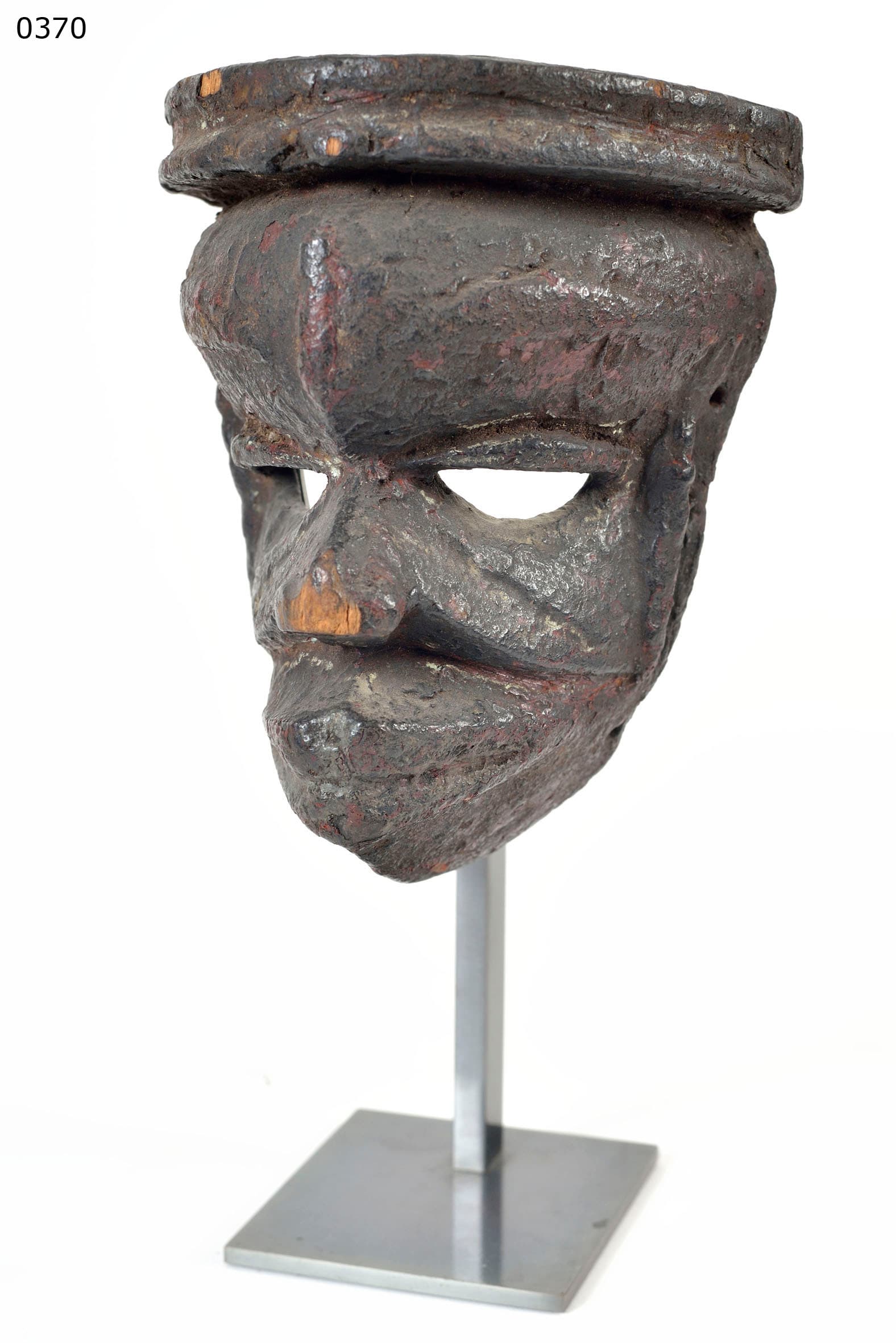
Maske auf Metra-Sockel
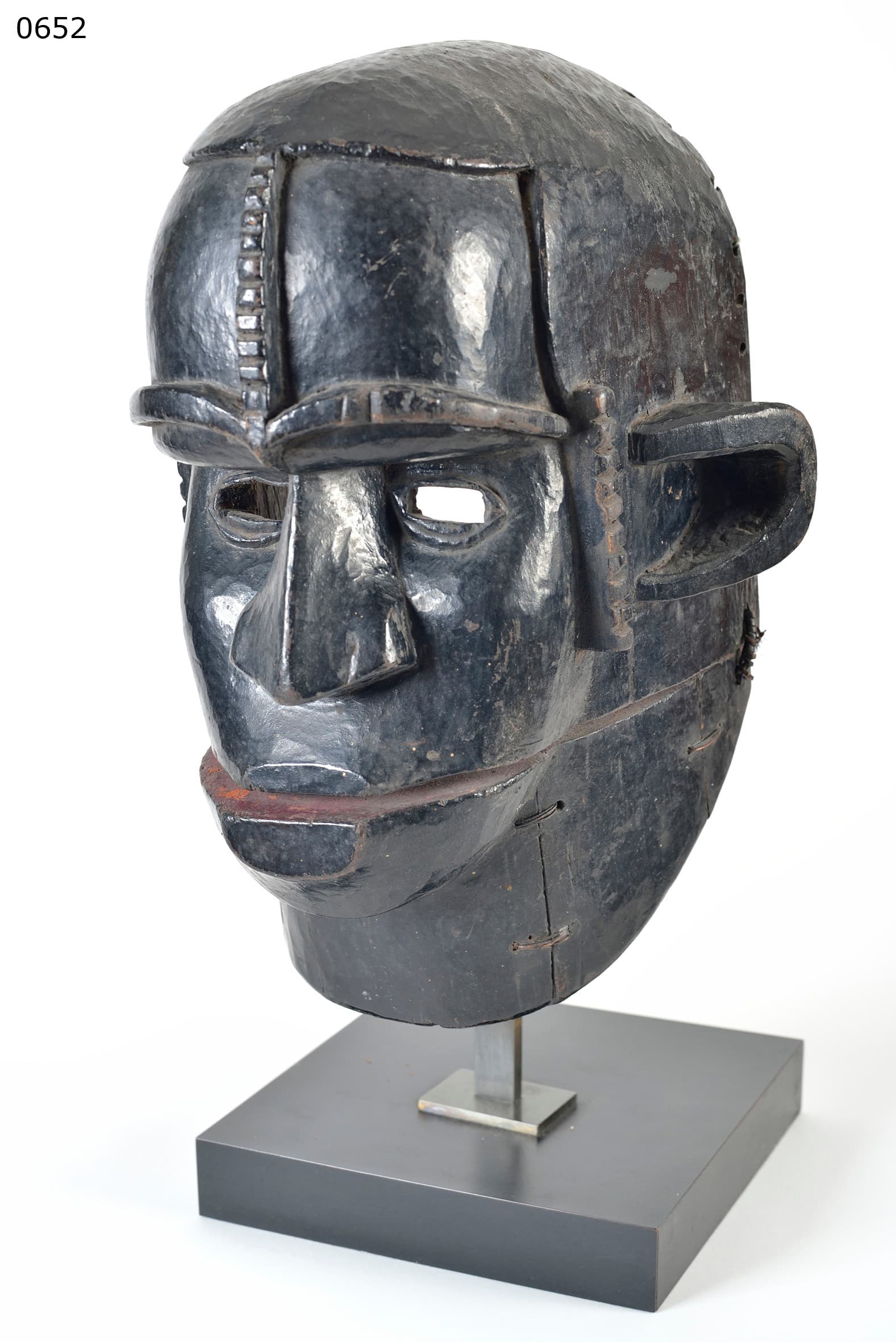
Klatschen Gesichtsmaske