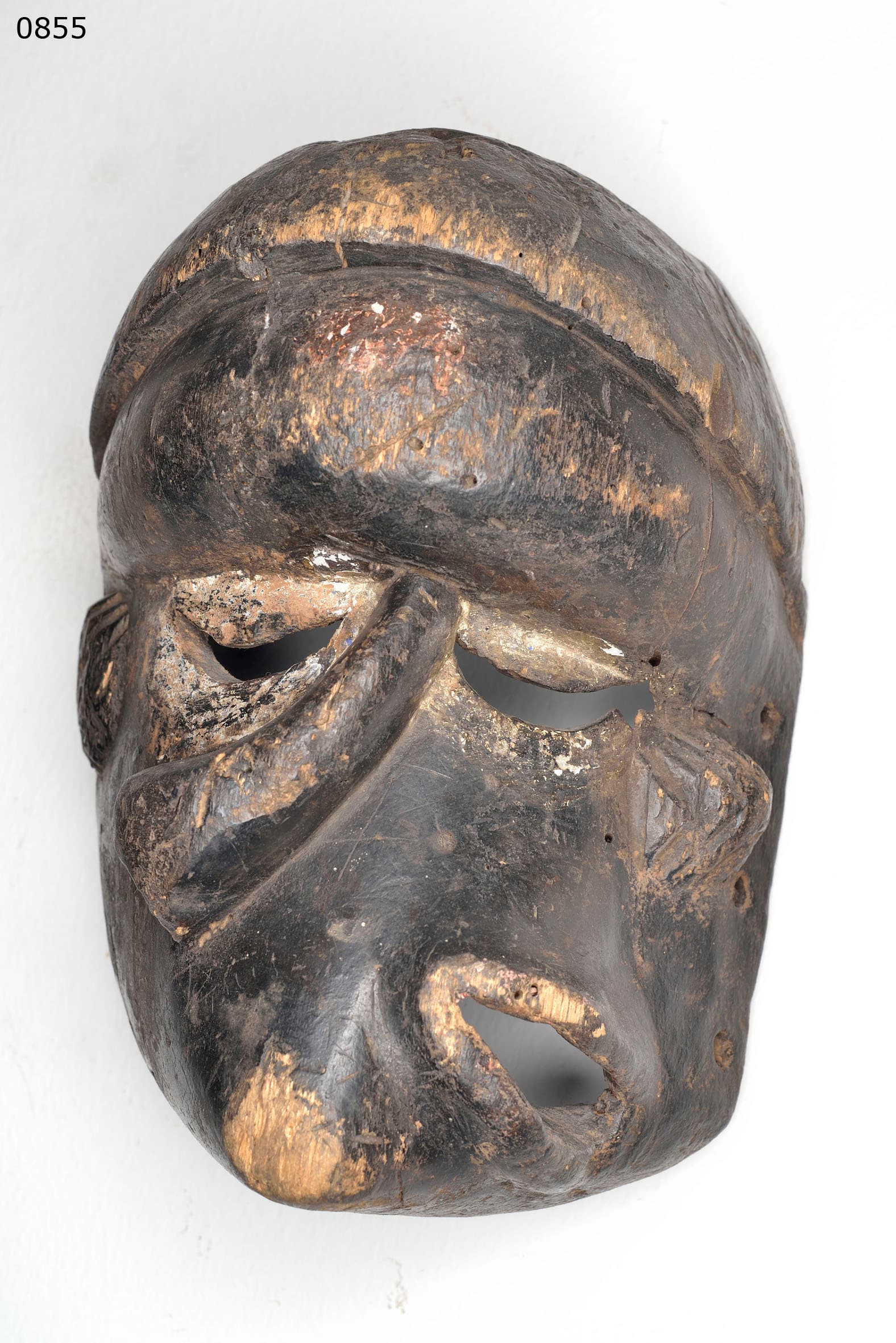
Eine kleine, ausdrucksstarke Ibibio idiok-Maske (wohl 1. Hälfte 20. Jh., 17 cm) aus Nigeria - ein stark verzerrtes, asymmetrisches Gesicht mit geschwollenem, verdrehtem Kiefer, abgeflachter Nase und tief eingesunkenen Augenhöhlen. Das schwere, dichte Holz ist vollständig von einer dicken, geschwärzten, stark oxidierten, krustigen Opferpatina überzogen.
1. Die Idiok Ekpo-Ästhetik der Krankheit
Die Maskentradition der Ibibio lässt sich in zwei Kategorien unterteilen: die schönen, heiteren mfon-Masken (die gute Vorfahren repräsentieren) und die schrecklichen, entstellten idiok-Masken.
- Absichtliche Asymmetrie: Die Schnitzer verletzen absichtlich die Symmetrie, um die Verheerungen von Krankheiten darzustellen - insbesondere Lepra, Kiefer oder gangosa (knochenzerstörende Syphilis).
- Viszerale Warnung: Der verdrehte Mund und die eingefallene Nase sind ausdrucksstark ausgeführt, um körperliches Leiden und Bösartigkeit zu evozieren - sie dienen als viszerale visuelle Warnung an die Gemeinschaft.
2. Soziale Kontrolle und die wandernden Toten
Die Ekpo-Gesellschaft benutzte diese idiok-Masken, um die umherwandernden ruhelosen Seelen von Menschen darzustellen, die gewaltsam gestorben sind, schwere Sünden begangen haben oder denen eine angemessene Bestattung verweigert wurde.
- Gefährlicher Tänzer: Mit aggressiven, unberechenbaren Bewegungen getanzt, galt der Träger dieser Maske als äußerst gefährlich.
- Tabus durch Schrecken durchsetzen: Sie überwachten das Dorf, setzten gesellschaftliche Gesetze durch Schrecken durch und erinnerten die Lebenden an die schrecklichen Folgen von Tabubrüchen - man glaubte, dass die Maske selbst die flüchtige Energie dieser bösartigen Geister enthielt.
3. Dicke schwarze Patinierung und Heiligtumspflege
Die Oberfläche dieser 17 cm langen Maske weist eine ausgeprägte Struktur auf.
- Teerähnliche Kruste: Nicht bemalt, sondern stark verkrustet mit einer dicken teerähnlichen Patina – ein Erscheinungsbild, das auf wiederholte Opfergaben (wie geronnenes Blut, Palmöl, Ruß) zurückgeführt werden kann, die auf die Maske gegossen und eingerieben wurden, um den Geist zu nähren und zu besänftigen.
- Rauchiger Waldschrein: Starke Oxidation und eine dicke blasige Kruste legen nahe, dass diese Maske, wenn sie nicht getanzt wurde, in den dunklen, rauchigen Nischen der Waldschreine der Ekpo-Gesellschaft aufbewahrt wurde.
Zusammenfassung
Diese Maske ist ein eindringliches Porträt von Krankheit und spiritueller Unbeständigkeit – ein charakteristisches Beispiel der Ibibio idiok-Tradition. Ihre ausgeprägte, geschwärzte Opferkruste verweist auf ihre rituelle Nutzung im Kontext der Ibibio-Gemeinschaft.
KI-unterstützt erstellt aus Sammlungsgutachten, Objektfotografie und eigener Recherche, redaktionell geprüft. Fehler sind möglich — Hinweise darauf sind uns willkommen. Zum Verfahren →

Seltener Schreinaltar mit magischen Gegenständen
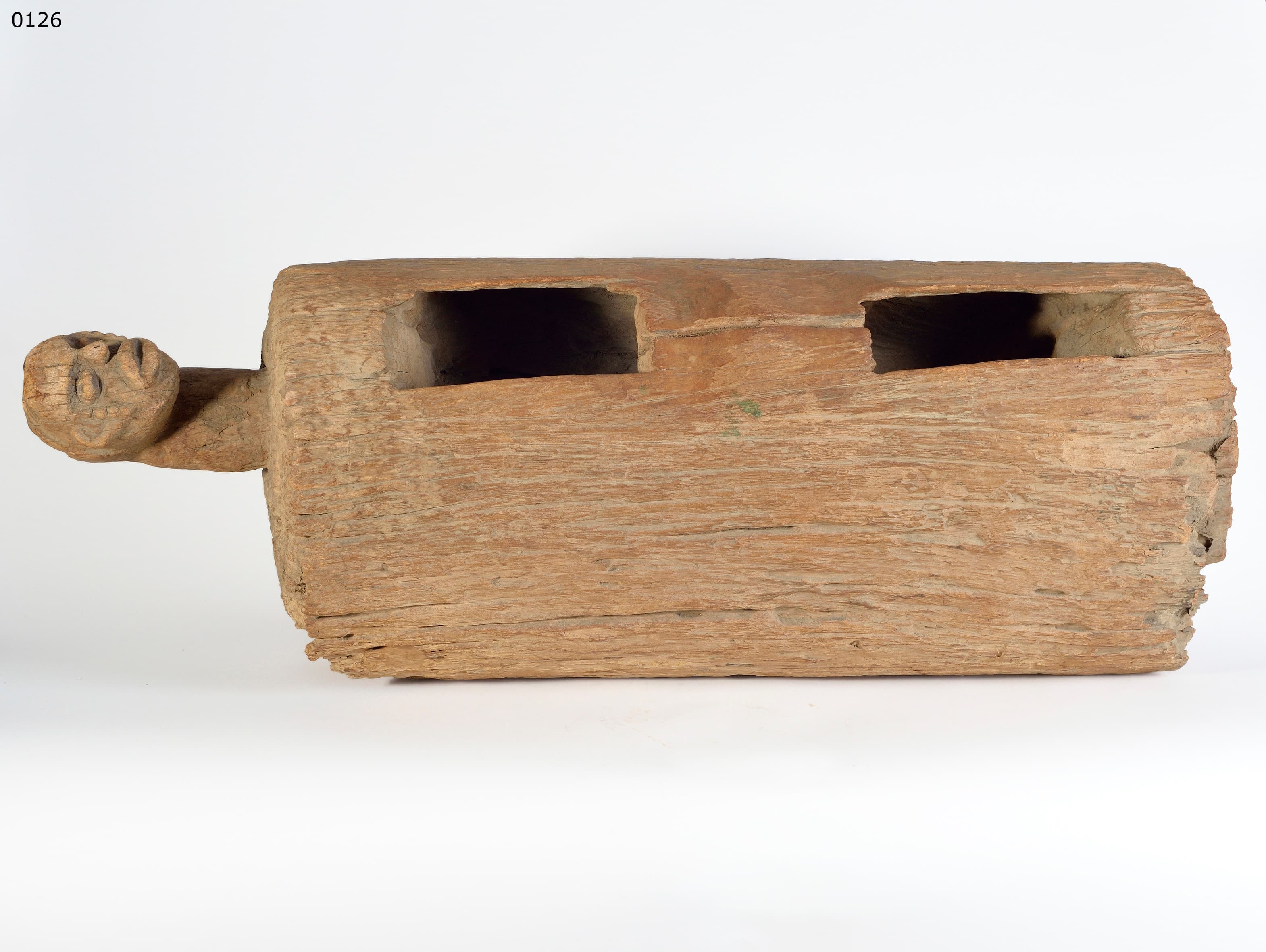
Ritualtrommel
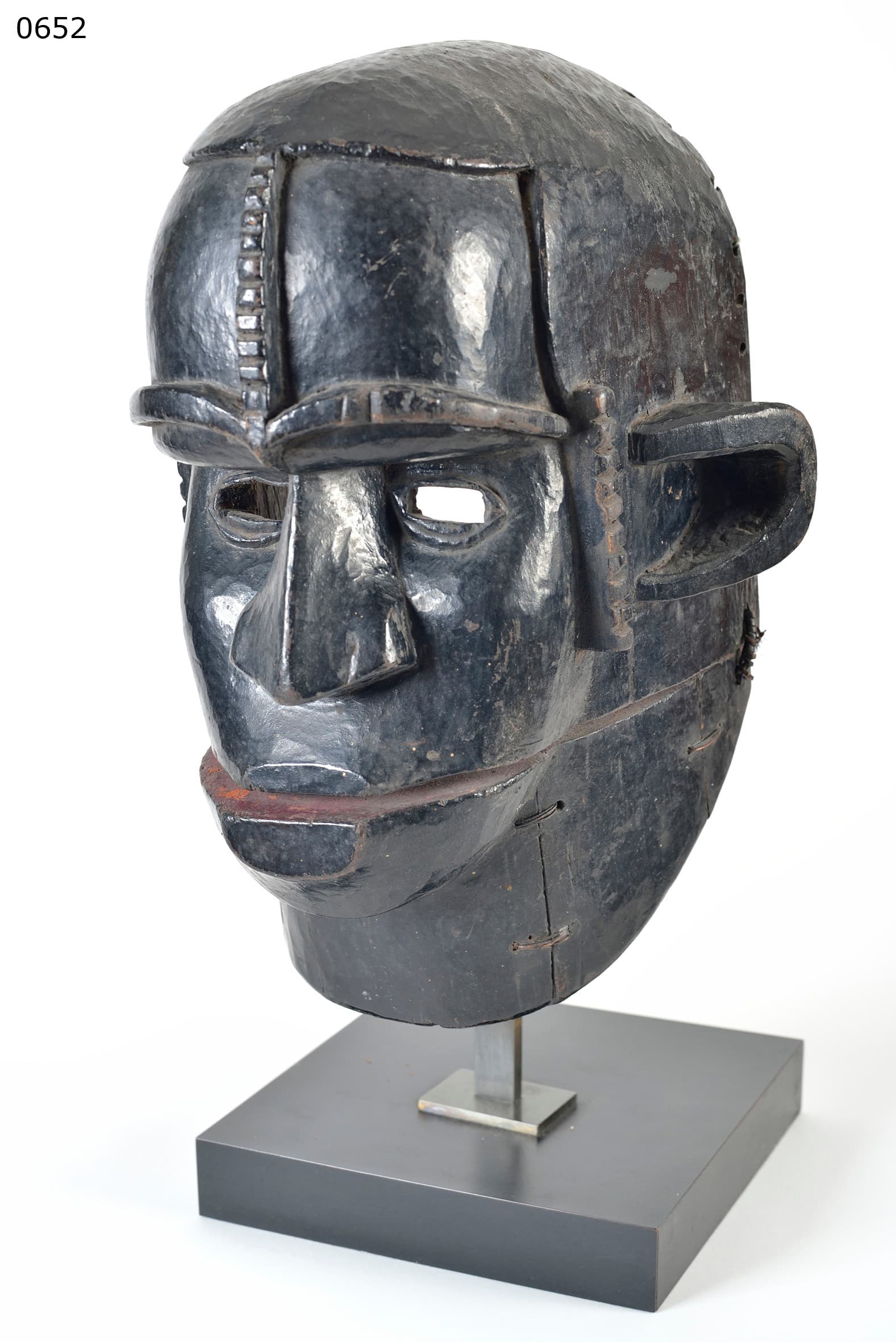
Klatschen Gesichtsmaske