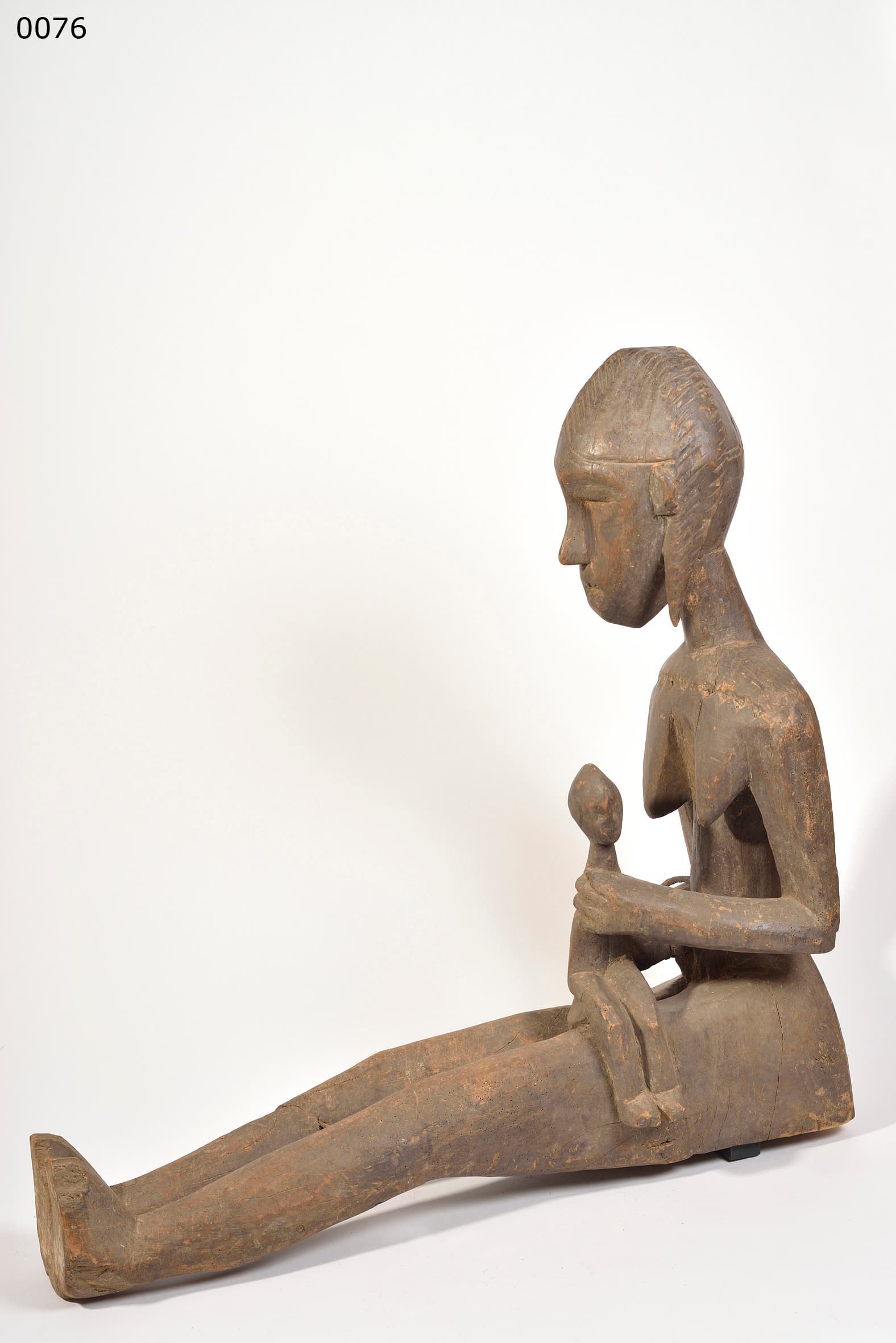
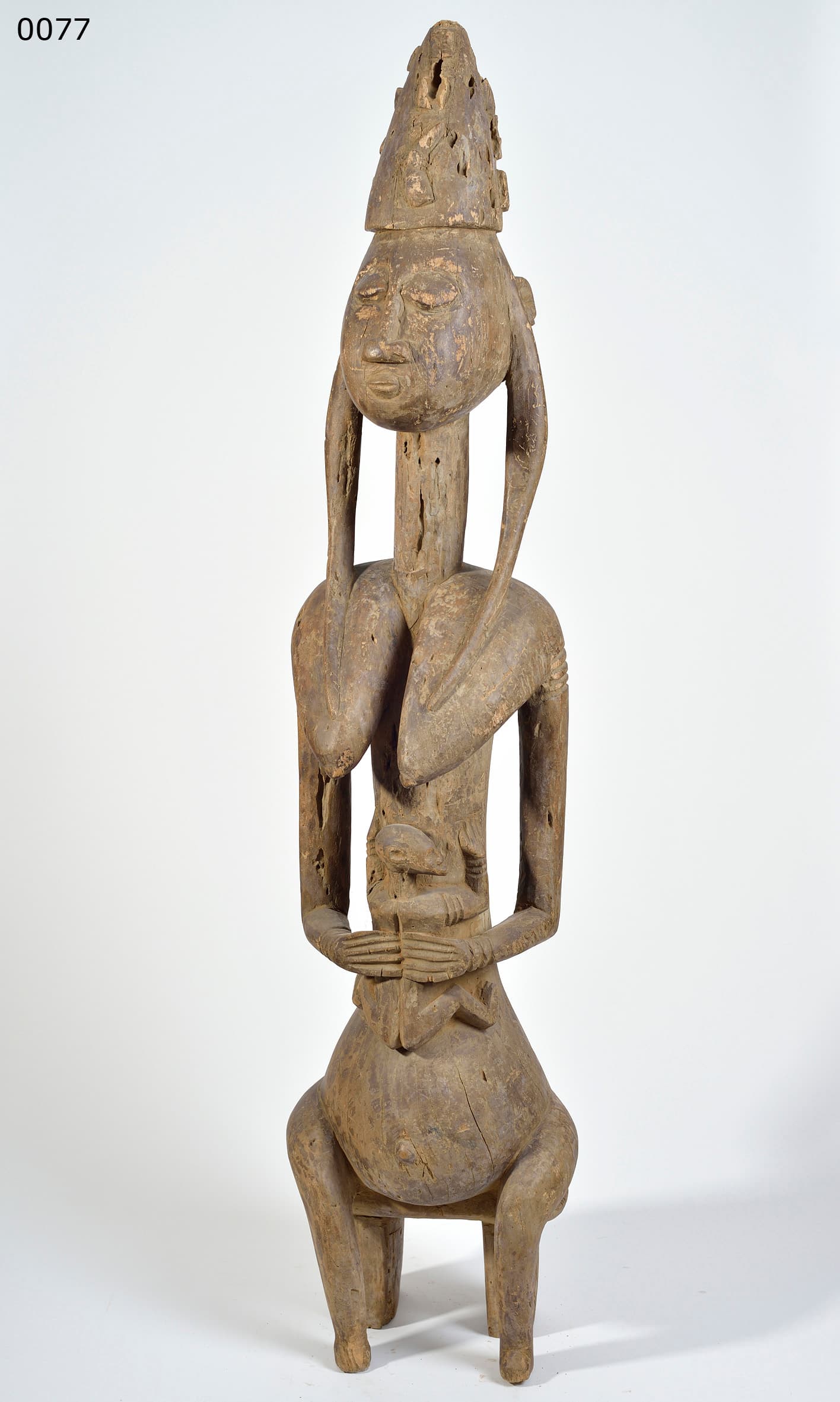
Eine majestätische, sitzende hölzerne Mutterschaftsfigur (19.–20. Jh., 79 cm) von den Bamana aus Mali - mit ausgeprägtem Scheitel, seitlich herabfallenden Locken, großen konischen Brüsten und einem stilisierten Säugling auf dem Schoß. Das Holz zeigt eine tiefgreifende, natürliche Verwitterung mit massiven vertikalen Schwundrissen, die auf ein hohes Alter hindeuten.
1. Der Gwandusu-Archetyp
Gwandusu-Figuren (auch Guandusu) repräsentieren bei den Bamana ein konzeptionelles Ideal außergewöhnlicher Mutterschaft und Fruchtbarkeit.
- Majestätisches Wappen und Locken: Diese Attribute signalisieren immense körperliche und geistige Stärke. Ein kleines Detail wie die um den Hals getragene Kauri-Schnecke verweist zusätzlich auf den rituellen Wert und den Status der dargestellten Entität.
- Kein Mensch, ein Archetyp: Die Figur stellt eine Frau dar, die erfolgreich viele Kinder zur Welt gebracht hat und daher über ein bedeutendes Nyama verfügt - die Skulptur stellt eher die mütterliche Ausdauer selbst als eine bestimmte Mutter dar.
2. Jo- und Guan-Gesellschaften
Solche Mutterschaftsfiguren sind integraler Bestandteil der Guan-Gesellschaft, einer angesehenen Vereinigung, die sich auf Fruchtbarkeit, Landwirtschaft und das Wohl der Gemeinschaft konzentriert.
- Jährliche öffentliche Zurschaustellung: Während der Guan-Zeremonien werden die Figuren herausgeholt, um Opfer und Gebete von Frauen entgegenzunehmen, die eine Empfängnis oder eine sichere Geburt wünschen.
- Kind als Kontinuität: Der Säugling auf dem Schoß ist eine symbolische Manifestation der Bamana-Linie - ein Sinnbild dafür, dass der Segen der Ahnen über Generationen hinweg fließt.
3. Verwitterung und rituelle Salbung
Die stark erodierte Oberfläche zeugt von einem beträchtlichen Alter und ritueller Nutzung.
- Öle und Sheabutter: Reste einer dunkleren, krustigen Substanz in den tieferen Rissen deuten auf wiederholtes Salben mit Sheabutter und Palmöl während der Rituale der Guan-Gesellschaft hin, eine Praxis, deren Spuren im Laufe der Zeit fast vollständig abgetragen wurden.
- Natürliche Erosion statt künstlicher Patina: Im Gegensatz zu künstlich aufgebauten Oberflächen jüngerer Marktstücke (wie sie etwa bei modernen Boli-Kopien von Sarah Brett-Smith kritisiert wurden), sprechen die massive Austrocknung und Substanzverluste an den Extremitäten für eine aktive zeremonielle Verwendung, die bis in das 19. Jahrhundert zurückreichen kann.
Zusammenfassung
Diese Bamana-Gwandusu-Figur ist eine monumentale Hommage an idealisierte Mutterschaft und spirituelle Stärke. Ihre klassischen Proportionen, gepaart mit den massiven Alterungsspuren einer über Generationen bewahrten Skulptur, unterstreichen ihre Bedeutung innerhalb der malischen Kunsttradition.
KI-unterstützt erstellt aus Sammlungsgutachten, Objektfotografie und eigener Recherche, redaktionell geprüft. Fehler sind möglich — Hinweise darauf sind uns willkommen. Zum Verfahren →