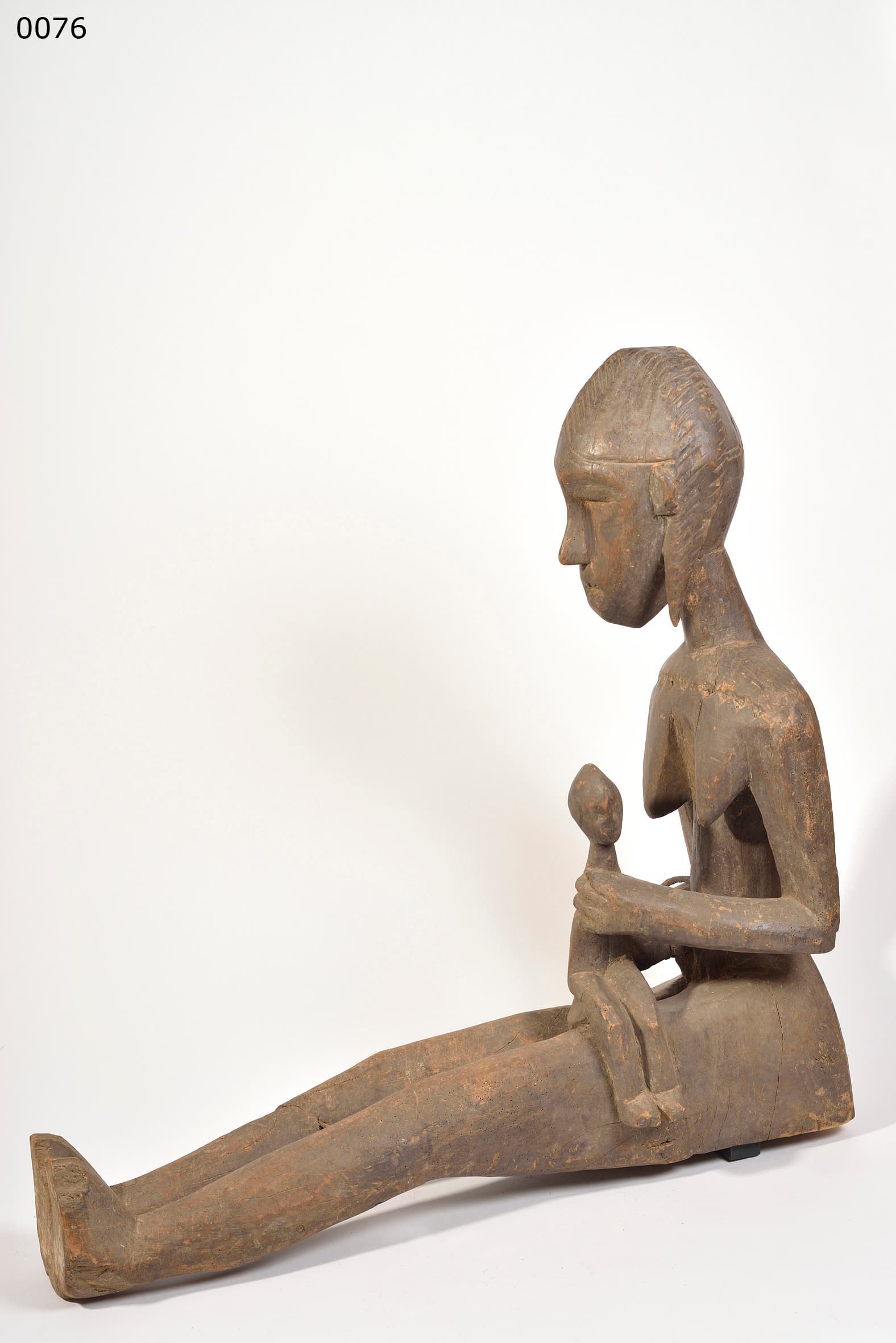
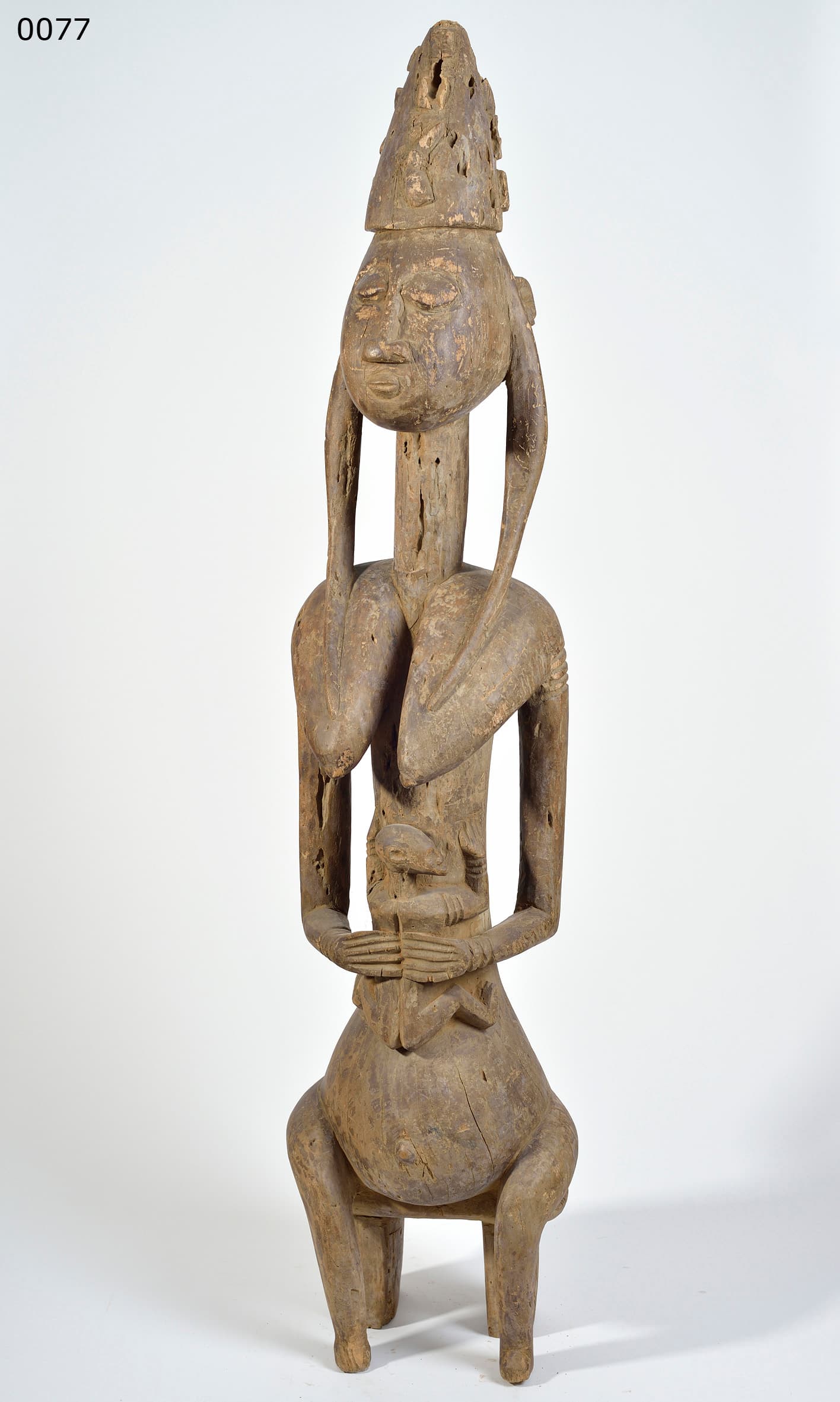
Eine sitzende weibliche Holzfigur (1. Hälfte 20. Jh., 62 cm) aus den Bamana von Mali - anmutig auf einem kleinen Hocker sitzend, mit einer großen, aufwendig gemusterten Kammfrisur, hervorstehenden Brüsten, blockhaft stilisierten Händen und dunkler, stark bearbeiteter Patina, die die eingeritzten geometrischen Skarifikationen betont.
1. Autorität in sitzender Haltung
Im Gegensatz zu den stehenden Jonyeleni-Figuren zeugen die sitzenden Bamana-Frauen von hohem Status, Reife und gefestigter Weisheit.
- Erhöht durch den Hocker: Der Hocker erhebt sie physisch und symbolisch über die Erde und verleiht ihr eine aristokratische Stellung.
- Zeichen der Initiation: Die aufwendige Frisur und die Körperskarifikationen bestätigen sie als zivilisiertes, voll initiiertes Mitglied der Gesellschaft, das seine sozialen und familiären Pflichten erfüllt hat.
2. Kultische Heiligtumsverehrung
Sitzende Frauenfiguren dieses Kalibers lebten in festen Dorfschreinen und wurden nicht von Eingeweihten getragen.
- Auffanggefäß für Geister: Die Figur beherbergt die Geister der Vorfahren oder Gottheiten, die mit der Fruchtbarkeit verbunden sind, und empfängt in regelmäßigen Abständen Opfergaben.
- Von den Ältesten konsultiert: Die Dorfältesten suchten den Rat der Figur, um den landwirtschaftlichen und reproduktiven Erfolg der Gemeinschaft sicherzustellen.
3. Aufwändige Handhabung und Opferpatina
Die Oberfläche offenbart eine doppelte Geschichte.
- Glänzend erhabene Oberflächen: Die Brüste und Knie zeigen eine polierte Oberfläche, die von wiederholter taktiler Verehrung herrührt.
- Materie-gefüllte Vertiefungen: Dunklere Rückstände füllen die eingeritzten Skarifikationen von flüssigen Opfergaben - eine mehrschichtige Patina aus dem frühen 20.
Zusammenfassung
Diese Bamana-Ahnenfigur, die durch ihre sitzende Haltung und die raffinierten Skarifikationen eine große Würde ausstrahlt, stellt den Höhepunkt der mütterlichen Autorität dar. Ihre reichhaltige, geschichtete Patina bestätigt eine lange Geschichte authentischer Schreinverehrung.
KI-unterstützt erstellt aus Sammlungsgutachten, Objektfotografie und eigener Recherche, redaktionell geprüft. Fehler sind möglich — Hinweise darauf sind uns willkommen. Zum Verfahren →