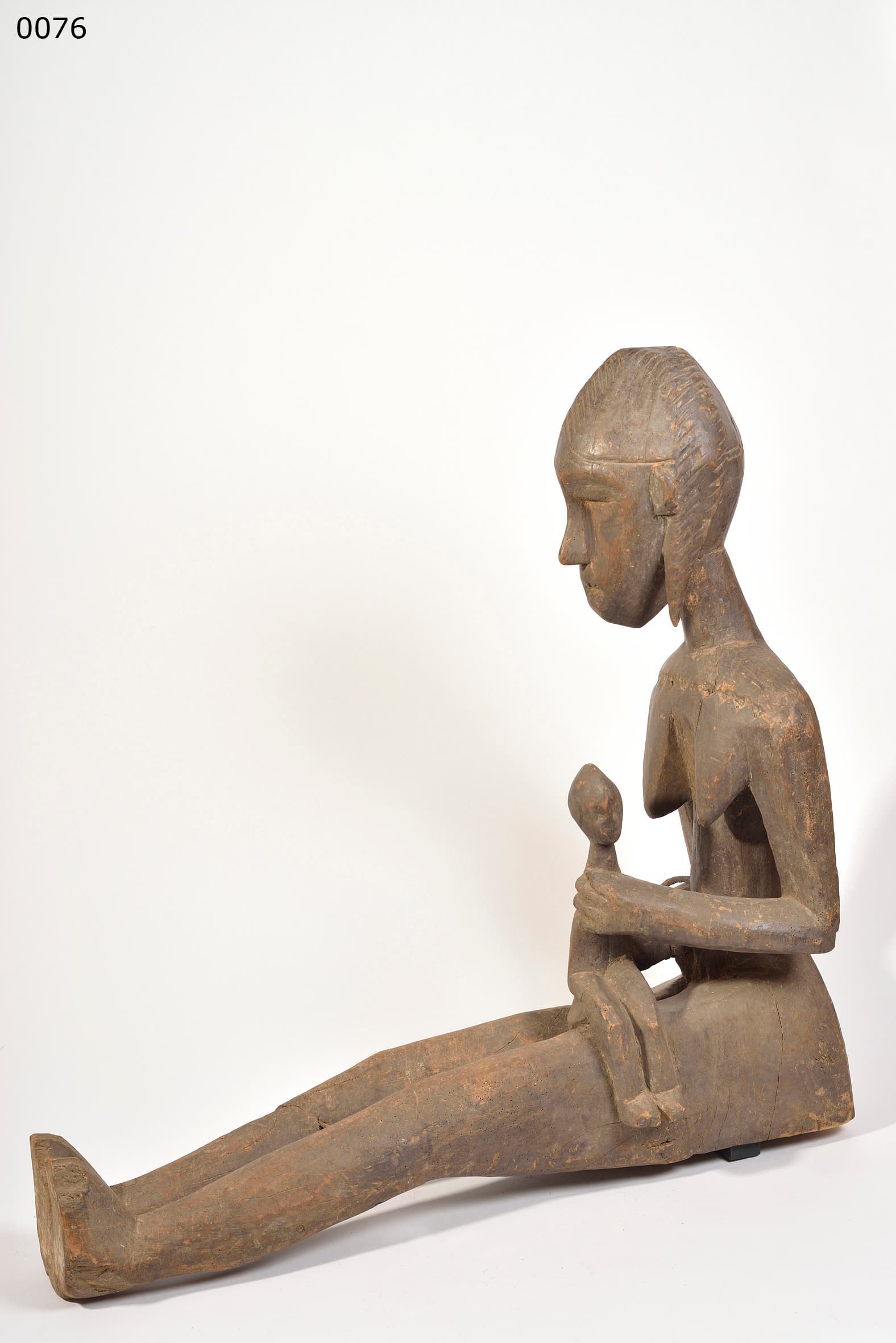
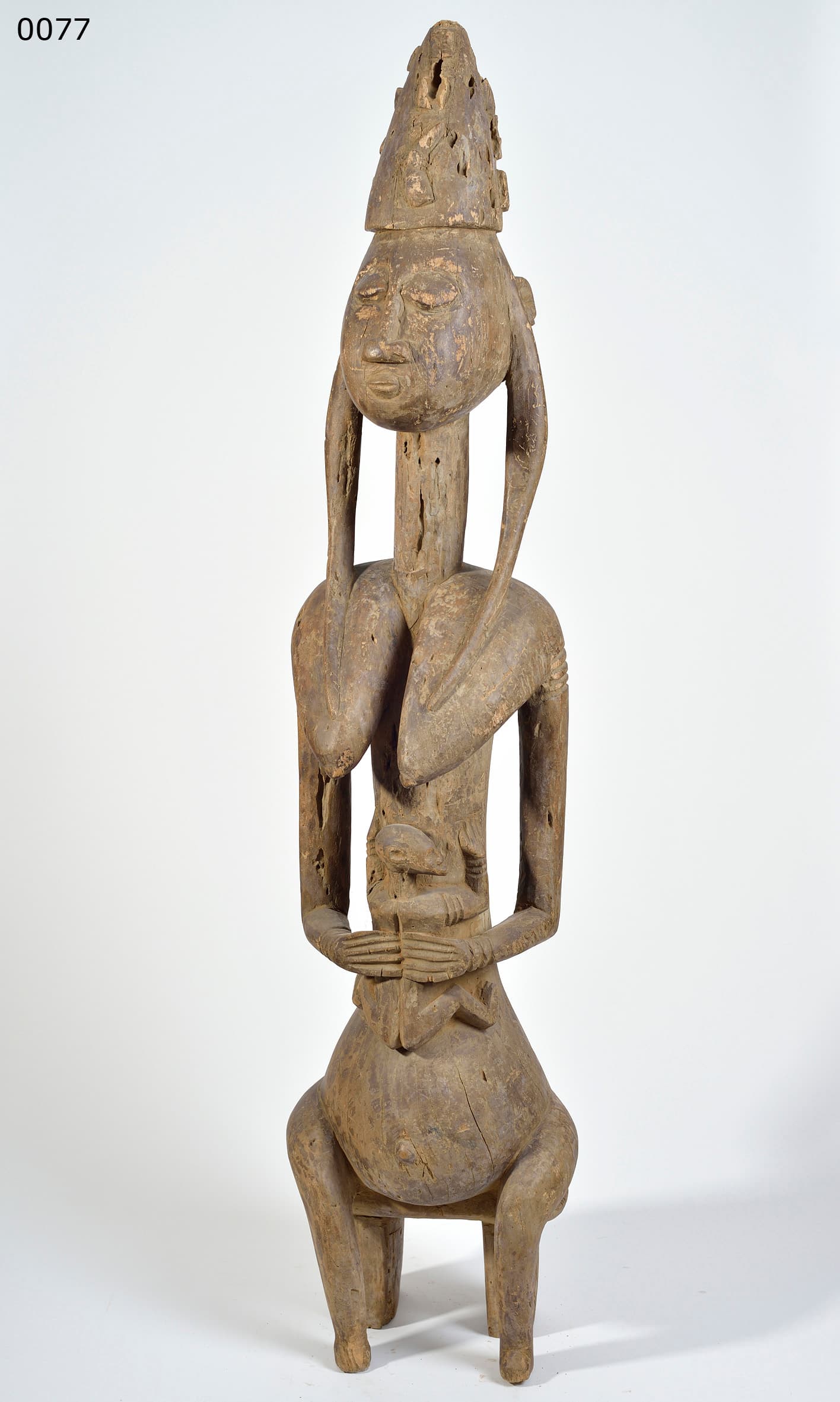
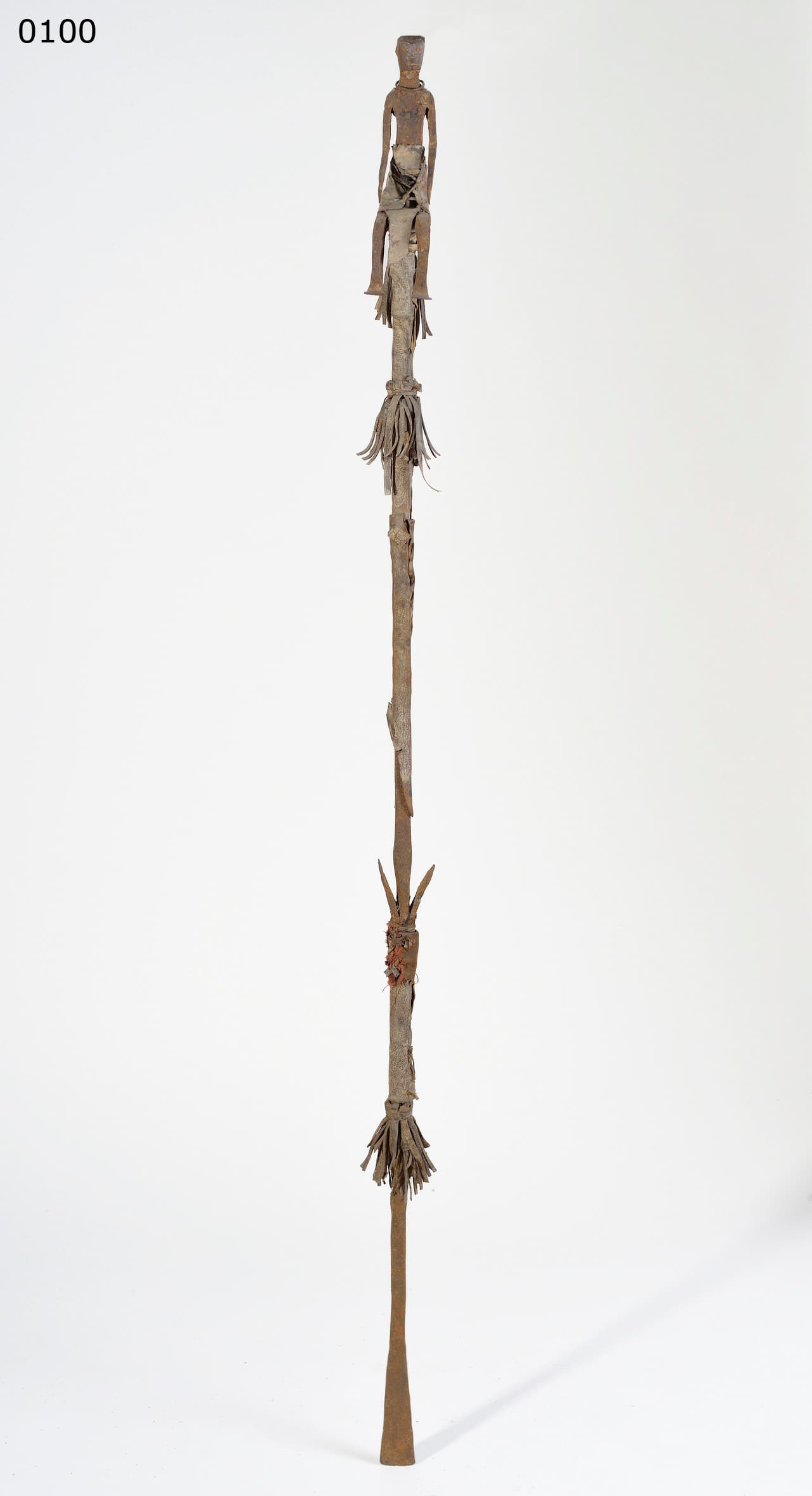
Ein hoch aufragendes Paar vertikaler Antilopenkämme (Mitte 20. Jh., 84 cm und 56 cm) von den Bamana in Mali - schwungvolle, tief eingeschnittene Hörner, durchbrochene geometrische Mähnen, das Weibchen trägt ein kleines Kalb auf dem Rücken, mit trockenen, matten Oberflächen und Gebrauchsspuren an den Basen, wo sie an den Schädelkappen aus Korbwaren befestigt sind.
1. Vertikale Abstraktion im Segou-Stil
Diese Kämme verkörpern den klassischen vertikalen Stil der Segou-Region.
- Antilope als Architektur: Der Schnitzer abstrahiert die Pferdeantilope zu einem hochfliegenden, eleganten Zusammenspiel von positivem und negativem Raum.
- Codierte Symbole: Die durchbrochene Zick-Zack-Mähne steht für den Lauf der Sonne, die aufragenden Hörner symbolisieren das Wachstum der Hirse. Die extreme Vertikalität zeigt die Meisterschaft des Schnitzers in Bezug auf strukturelle Spannung und delikates Gleichgewicht.
2. Landwirtschaftliche Riten der Ciwara-Gesellschaft
Die Ciwara (oder Tyi Wara) ist eine landwirtschaftliche Männergesellschaft, die dem mythischen Wesen, halb Mensch, halb Tier, gewidmet ist, das den Bamana die Landwirtschaft brachte.
- Männlich-weibliche Vereinigung: Die Wappen werden bei Pflanz- und Erntefesten ausschließlich in geschlechtsspezifischen Paaren getanzt und zelebrieren die kosmologische Vermählung von Sonne (männlich) und Erde (weiblich), die für erfolgreiche Ernten erforderlich ist.
- Kalb als Kontinuität: Das kleine Kalb auf dem Rücken der Frau verstärkt das Thema der Fruchtbarkeit und der Generationskontinuität des landwirtschaftlichen Zyklus selbst.
3. Tanzkleidung und matte Oxidation
Im Gegensatz zu stark verkrusteten Schreinobjekten sind Ciwara-Kämme aktive Performance-Stücke.
- Trockene matte Oberfläche: Die überwiegend trocken oxidierte Oberfläche spiegelt das Alter in der Mitte des Jahrhunderts wider, ohne die rituelle Kruste statischer Altarobjekte.
- Lokalisierte Abnutzung an der Basis: Die primäre Abnutzung konzentriert sich auf die Basis, wo die Wappen wiederholt an die von den Tänzern getragenen gewebten Mützen gebunden und von diesen entfernt wurden - eine spezifische Abnutzungssignatur, die den tatsächlichen landwirtschaftlichen Zeremonialgebrauch authentisch macht.
Zusammenfassung
Dieses hoch aufragende Paar Bamana-Ciwara-Wappen ist das Symbol malischer Kunstfertigkeit und verkörpert perfekt die landwirtschaftliche Mythologie und geometrische Brillanz der Region. Ihre authentische Tanzkleidung und ihre anmutigen Proportionen im Segou-Stil machen sie zu prächtigen Ergänzungen für jede ernsthafte Sammlung.
KI-unterstützt erstellt aus Sammlungsgutachten, Objektfotografie und eigener Recherche, redaktionell geprüft. Fehler sind möglich — Hinweise darauf sind uns willkommen. Zum Verfahren →