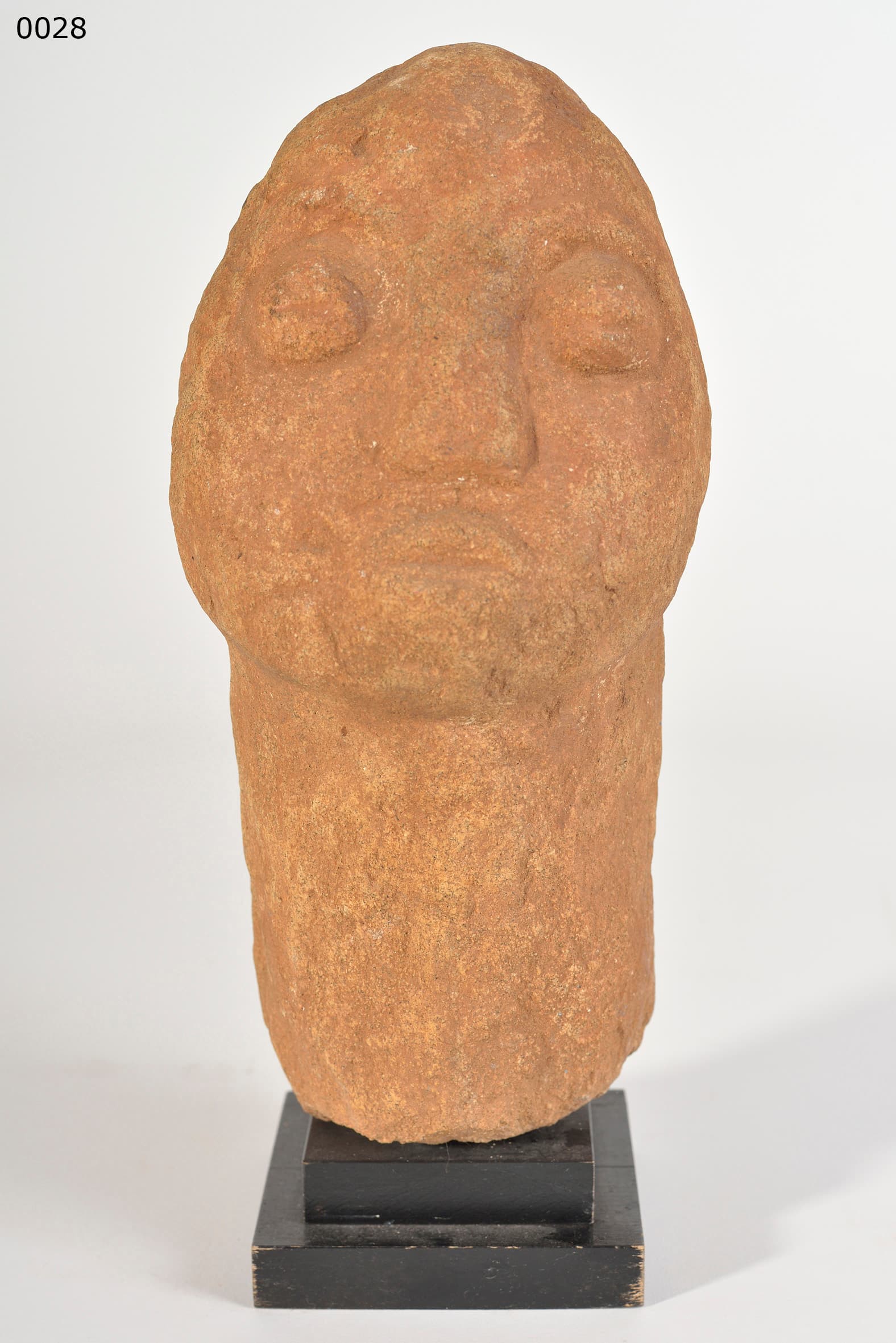
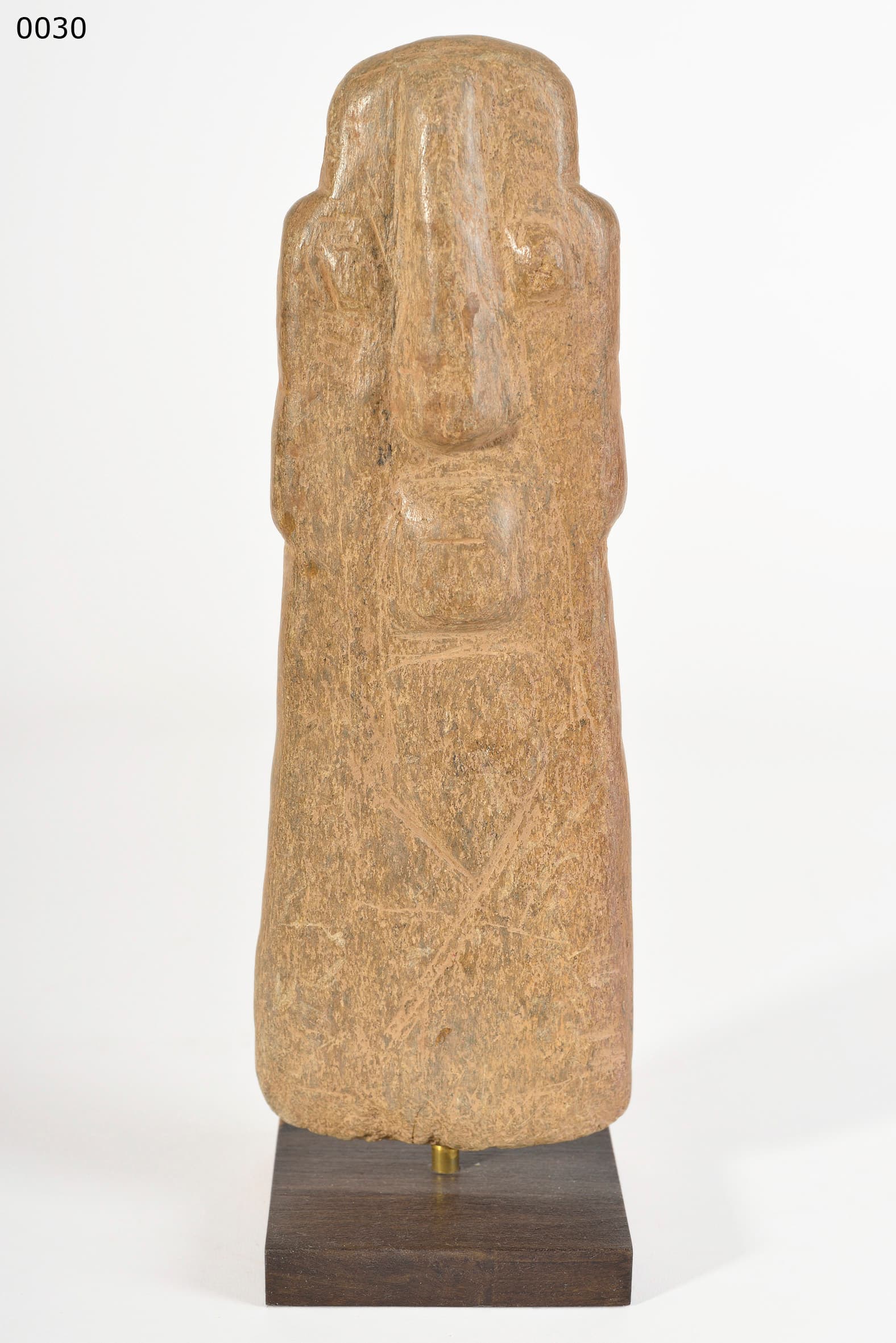
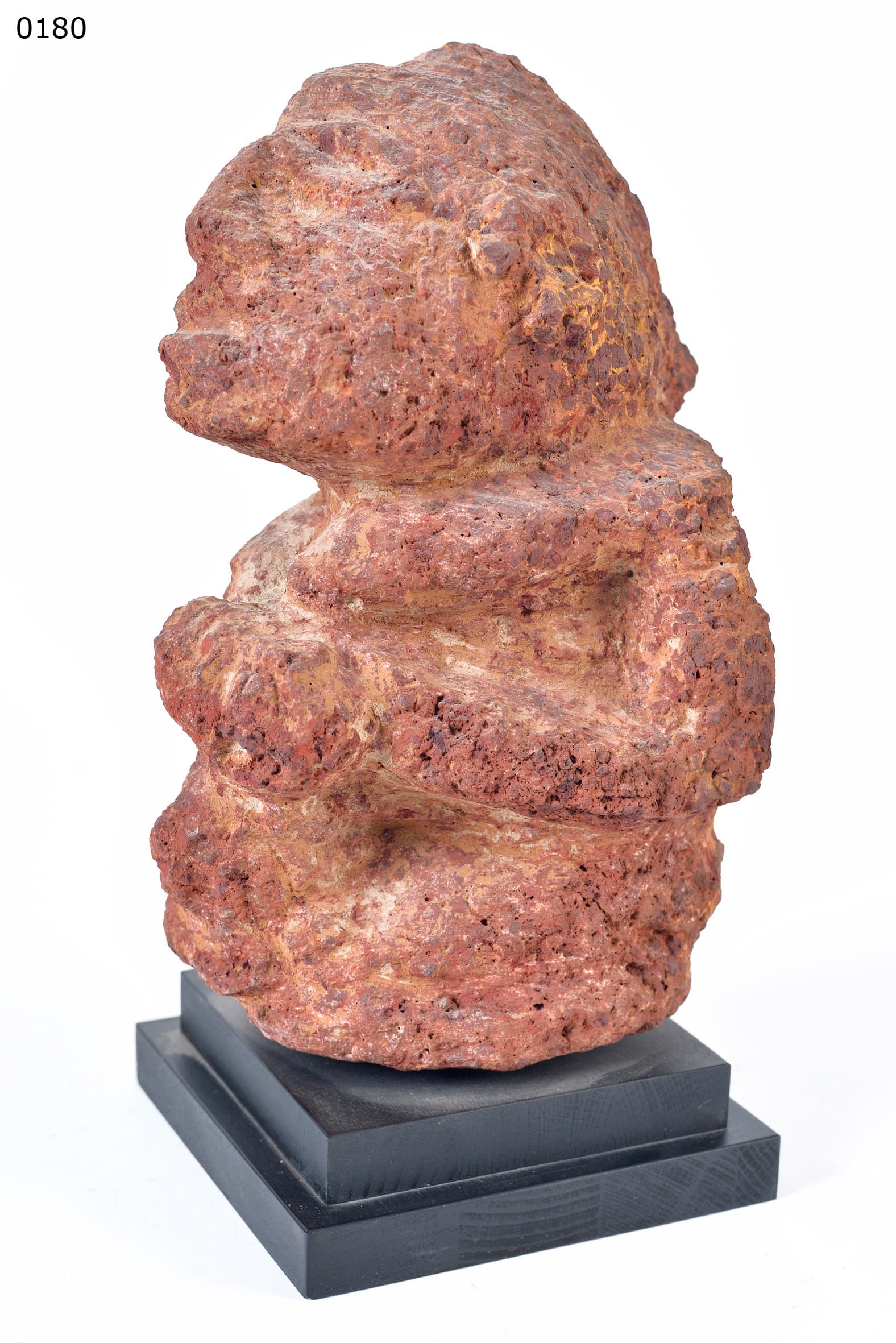
Eine gewölbte, kugelförmige Laterit-/Sandsteinfigur (12.-16. Jh., 21 cm) aus Kurumba in Burkina Faso - schwache, stark erodierte geometrische Ritzungen mit vertikalen Streifen, der Stein ist stark zerklüftet, kraterartig und geologisch verwittert.
1. Antike lithische Traditionen in Burkina Faso
Die Kurumba, wie auch andere alte voltaische Kulturen, pflegten eine spezialisierte Tradition der Steinmetzkunst für Bestattungszwecke.
- Destillierte Ahnenpräsenz: Die gewölbte Elementarform steht für ein konzentriertes Konzept der Fruchtbarkeit und dauerhaften Präsenz der Ahnen.
- Vorläuferformen: Die schwachen Rillen und kreisförmigen Vertiefungen sind archaische Vorläufer der aufwändigeren Skarifikationen, die später in der Holzskulptur zu sehen sind - volumetrische Masse über Oberflächendetails.
2. Die Verankerung der Ahnen
Direkt auf oder in den Gräbern platziert, erfüllten diese schweren Steinmarkierungen eine wichtige spirituelle Funktion.
- Fixierung der Seele: Der Stein verankerte die Seele des Verstorbenen an einem bestimmten Ort, wo sie verehrt werden konnte.
- Ewig statt vergänglich: Im Gegensatz zu Holz, das von Termiten befallen wird, garantierte der Stein die dauerhafte Integration des Ahnen in die spirituelle Landschaft der Gemeinschaft.
3. Geologische Taphonomie und Altertum
Die Degradation der Oberfläche ist ein nicht falsifizierbarer Beleg für ein extremes Alter.
- Aufgelöste weichere Minerale: Jahrhunderte von abrasivem Wind, Monsunregen und chemischer Verwitterung haben die weicheren Bestandteile ausgelaugt.
- Gekratzte Eisenstruktur: Die verbliebene, stark zerklüftete Textur spricht direkt für die authentische archäologische Geschichte als freiliegender Grabstein in der Sahelzone im 12. bis 16.
Zusammenfassung
Diese Grabfigur aus Kurumba-Stein ist ein Monument antiker Beständigkeit und bietet einen seltenen Einblick in die frühen lithischen Traditionen Westafrikas. Ihre tiefgreifende geologische Verwitterung und elementare Geometrie machen sie zu einem faszinierenden archäologischen Schatz.
KI-unterstützt erstellt aus Sammlungsgutachten, Objektfotografie und eigener Recherche, redaktionell geprüft. Fehler sind möglich — Hinweise darauf sind uns willkommen. Zum Verfahren →