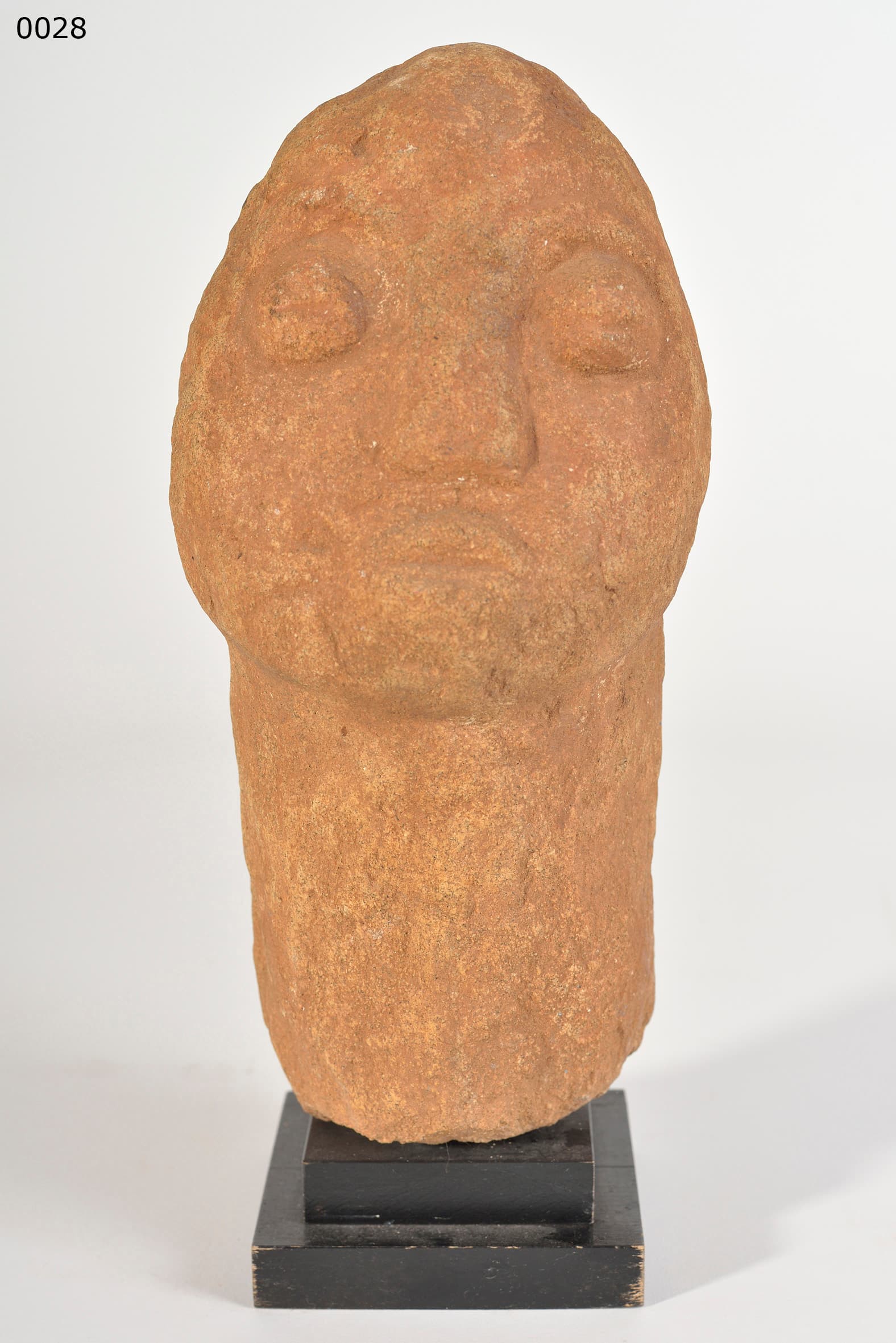
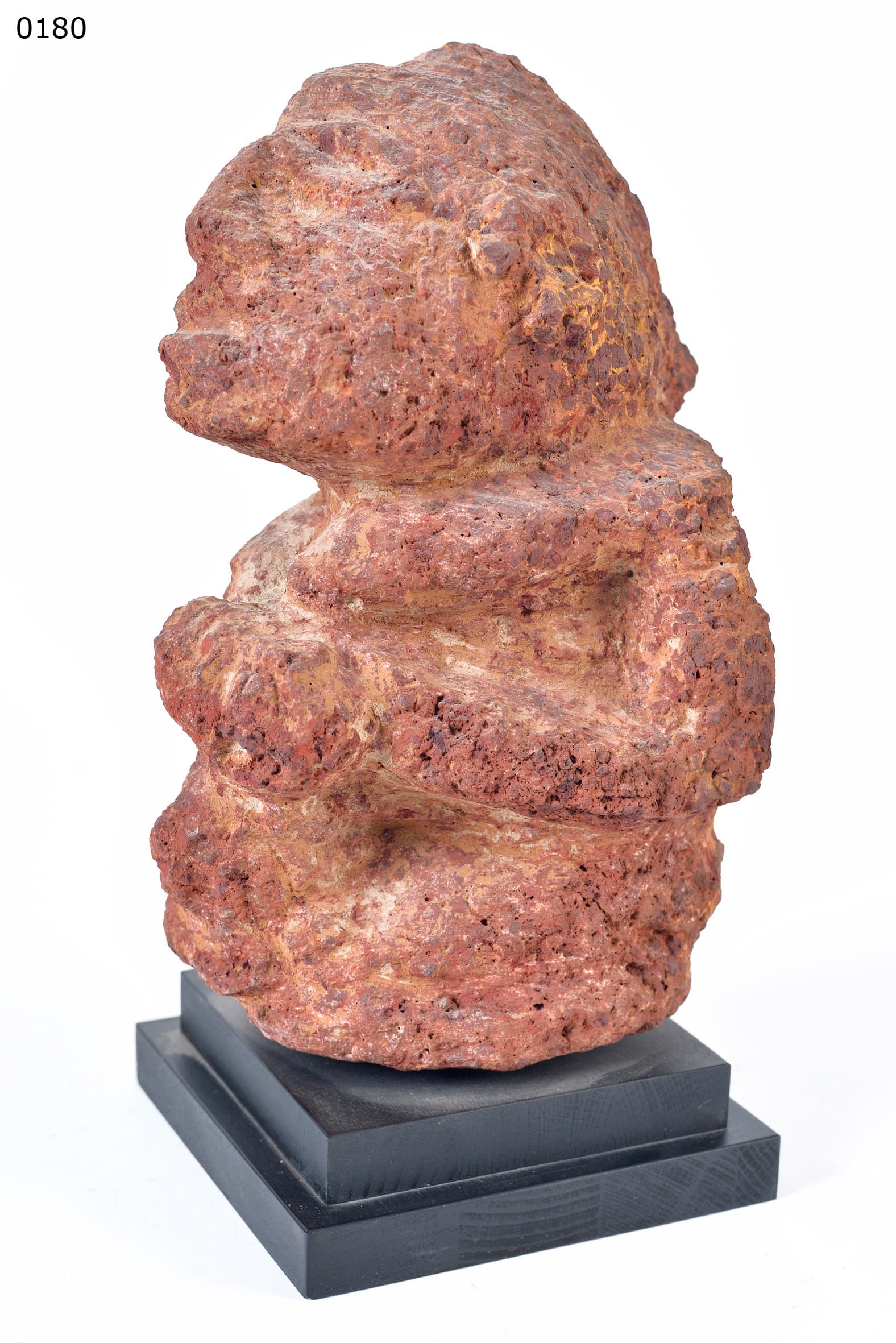
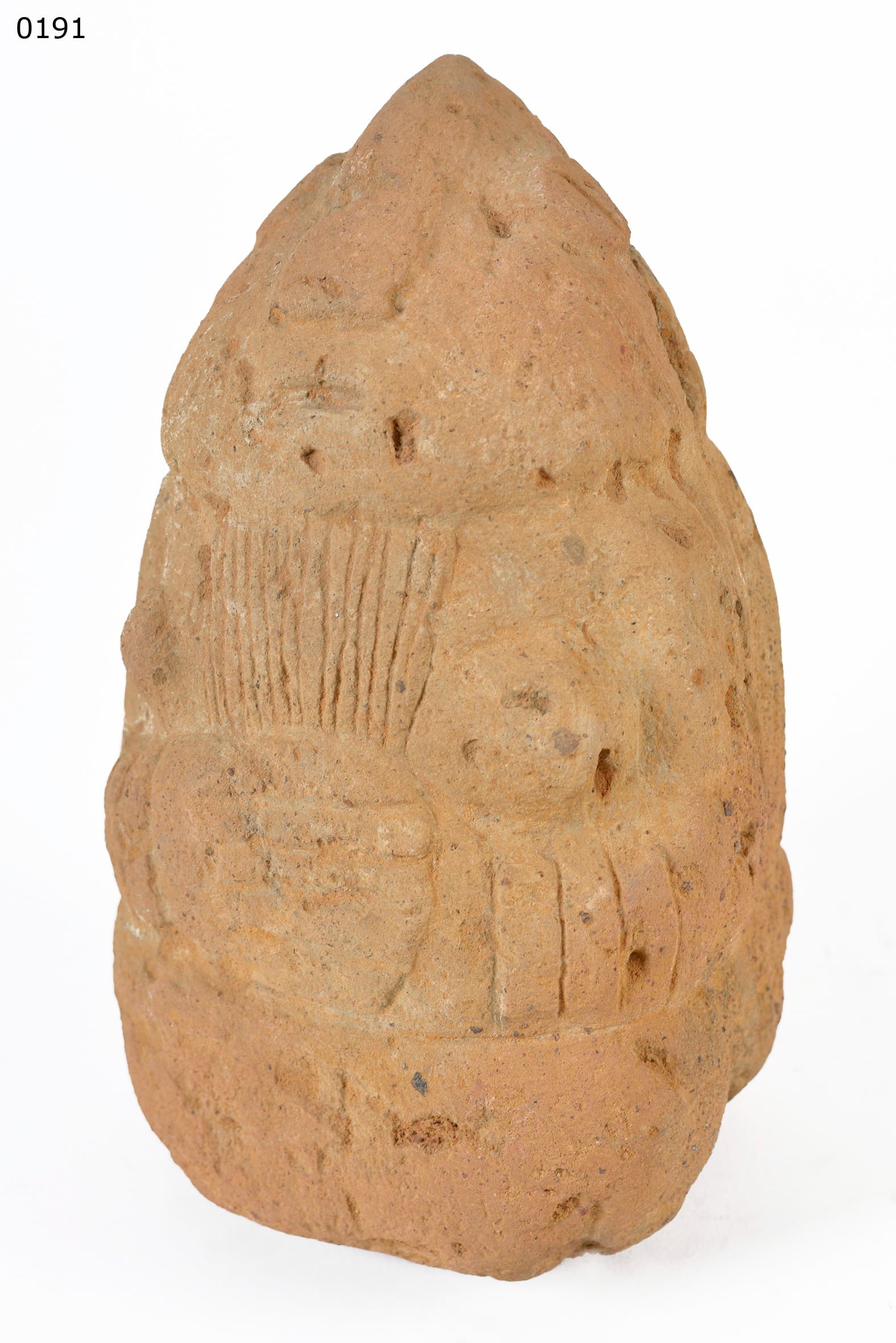
Eine antike steinerne Grabfigur (12.-16. Jh., 31 cm) aus Kurumba in Burkina Faso - ein abgeflachtes, stark geometrisches, "kubistisches" Gesicht mit einem scharfen, vertikalen Nasengrat, kreisförmigen Augenvertiefungen und schwachen, eingeschnittenen Körpermarkierungen. Begleitstück zur Sammlung Nrs. 13, 28.
1. Geometrische Reduktion
Im Gegensatz zur phallisch-säulenartigen Abstraktion anderer Kurumba-Stücke der Sammlung komprimiert dieser Stein die menschliche Form zu einem flachen rechteckigen Monolithen.
- Proto-Kubismus: Die Nase ist ein scharfer vertikaler Grat, die Augen sind lediglich kreisförmige Einbuchtungen. Dieser Ansatz entfernt die individuelle sterbliche Identität, um das ewige, universelle Konzept des "Ahnen" darzustellen
2. Eingeschnittene Clan-Merkmale
- Textil in Stein: Auf dem Unterkörper sind schwache geometrische Ritzlinien (Chevrons und Zickzacks) zu sehen. Diese entsprechen wahrscheinlich alten Clan-Skarifikationen oder spezifischen Textilmustern.
- Binden der Linie: Indem der Künstler diese Linien in Stein meißelte, band er den ewigen Geist des Steins an eine bestimmte lebende Familienlinie und stellte so sicher, dass der Segen des Vorfahren an die richtigen Nachkommen weitergeleitet wurde.
3. Der Trotz der Zeit
- Ein Akt der Hingabe: Das Schnitzen eines scharfen, ausgeprägten Nasenrückens und komplexer geometrischer Linien in harten Granit/Laterit mit frühen Eisen- oder Steinwerkzeugen erforderte immense körperliche Anstrengung und Hingabe.
- Ein überlebender Rekord: Dass diese geometrischen Linien 500+ Jahre der Erosion überstanden haben, zeugt von der Hingabe des Handwerkers und der heiligen Bedeutung des Monuments.
Zusammenfassung
Diese Figur ist ein Beispiel für das Genie der Kurumba im Bereich des Minimalismus. Sie destilliert die menschliche Präsenz in einen reinen architektonischen Block aus beständigem Stein, der als unnachgiebiger Wächter für die Ewigkeit stehen soll.
KI-unterstützt erstellt aus Sammlungsgutachten, Objektfotografie und eigener Recherche, redaktionell geprüft. Fehler sind möglich — Hinweise darauf sind uns willkommen. Zum Verfahren →