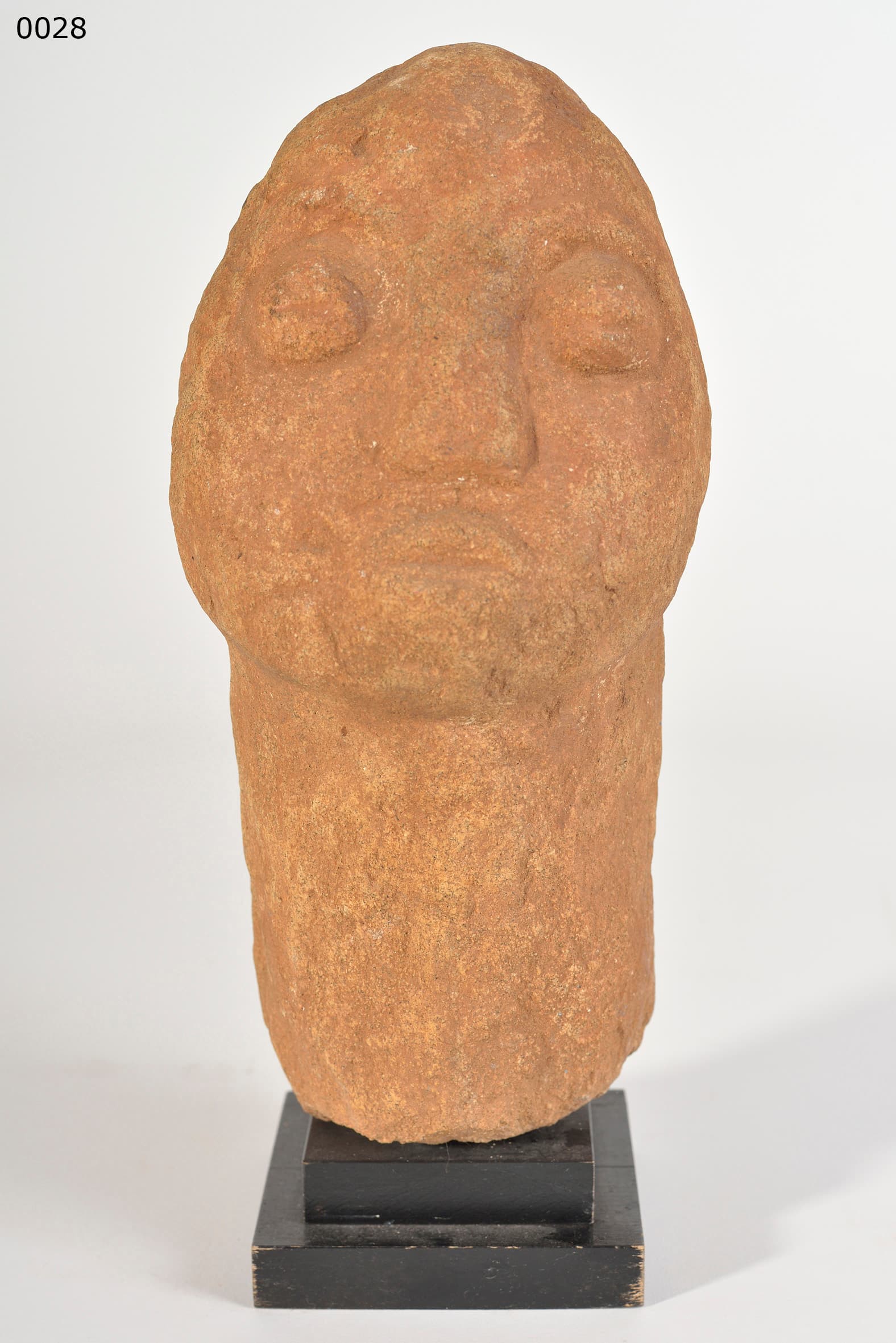
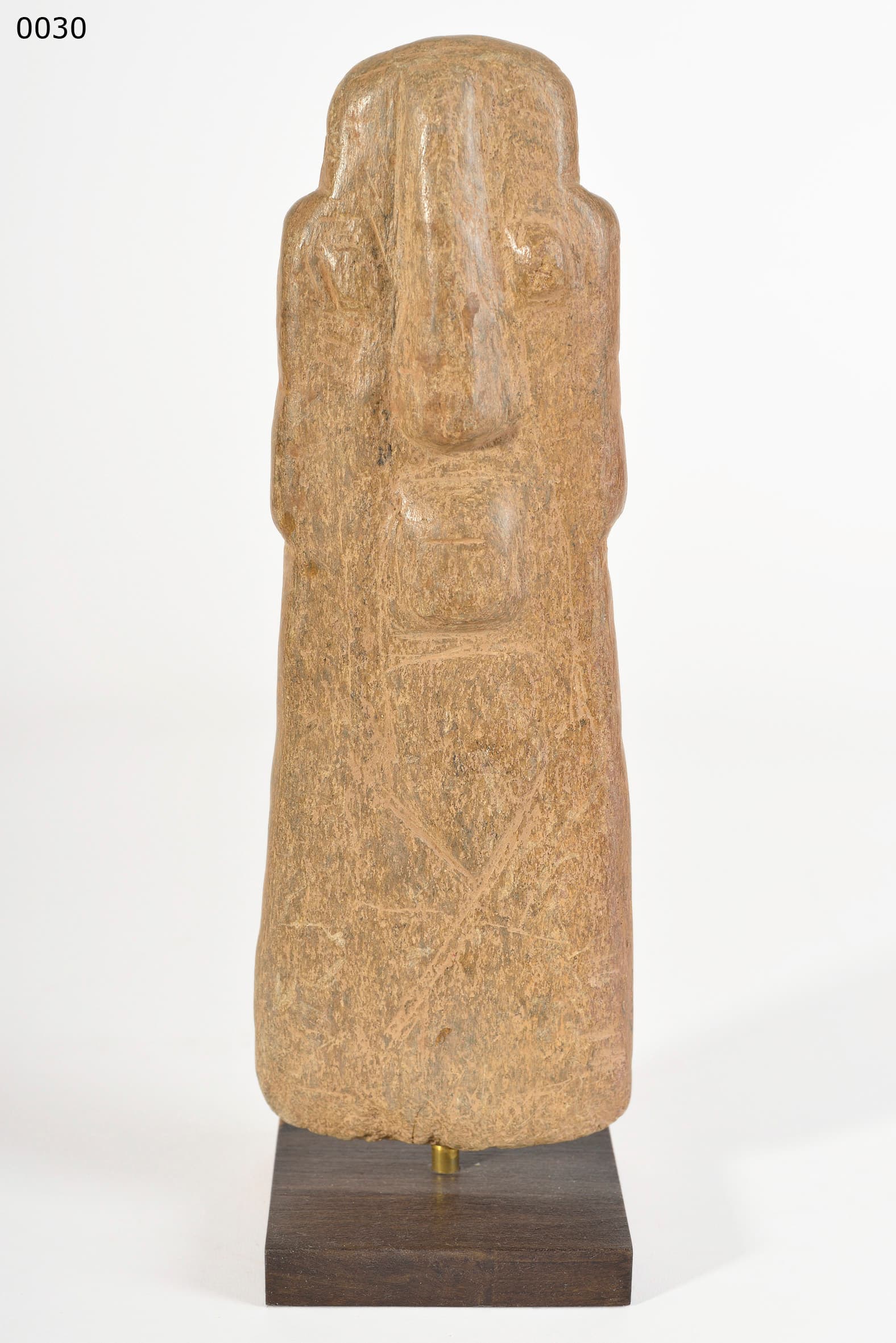
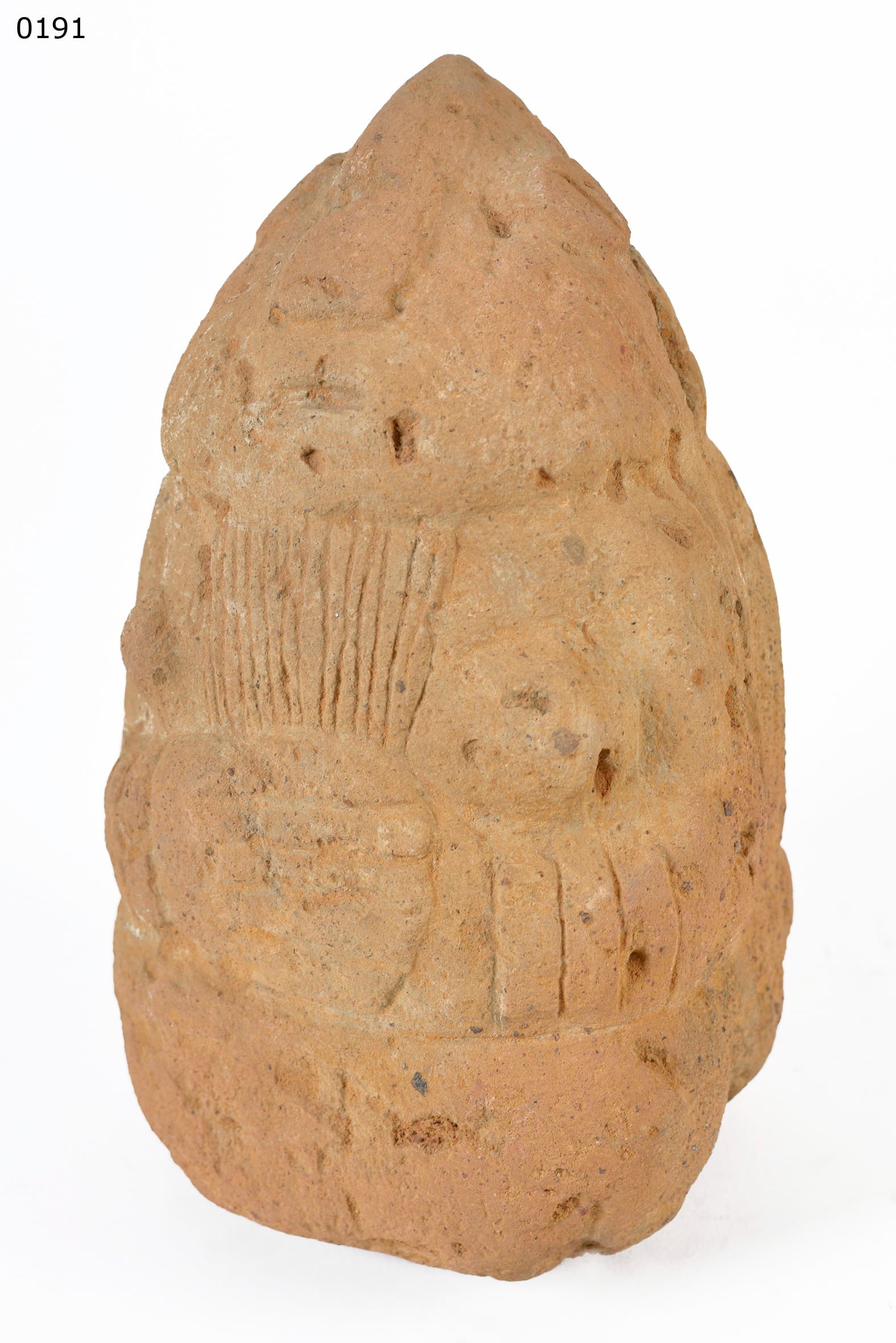
Eine antike Stenskulptur aus Laterit (12.-16. Jh., 25 cm) aus Kurumba in Burkina Faso - reduziert auf eine stark abstrahierte, blockhafte, anthropomorphe Form in hockender Haltung. Das eisenhaltige, rötliche Gestein ist stark zerklüftet und erodiert, wobei nur die schwersten geometrischen Formen des Kopfes und der gefalteten Gliedmaßen lesbar bleiben.
1. Antike lithische Abstraktion aus der Sahelzone
Neben der bekannteren Tradition der Holzschnitzerei gibt es in der Voltaregion eine bedeutende antike Kultur der Lithoskulptur.
- Unversöhnliches Medium: Der dichte Laterit erfordert eine reine volumetrische Geometrie - der Schnitzer könnte keinen zarten Naturalismus erzeugen, selbst wenn er wollte.
- Dauerhaftigkeit durch Design: Die schweren Blockmassen strahlen eine Aura der Dauerhaftigkeit aus, die bewusst mit der Vergänglichkeit des menschlichen Lebens kontrastiert und das Ewige gegenüber dem Besonderen betont.
2. Die Verankerung der Seele der Vorfahren
Steinfiguren dieser Art dienten als ewige Grabmale oder Altaraufsätze für hochrangige Persönlichkeiten.
- Seelenanker: Man glaubte, dass der schwere Stein die umherwandernde Seele des Verstorbenen physisch in der Erde verankerte und sie so für die Lebenden zugänglich hielt.
- Unsterbliche Leitung: Lange nachdem der physische Körper verschwunden war, empfing der Stein weiterhin Trankopfer und Gebete für Regen und landwirtschaftliche Fruchtbarkeit im Namen des Vorfahren.
3. Lateritentaphonomie und extremes Altertum
Der physische Zustand liefert geologische Hinweise, die für eine Datierung in das 12. bis 16. Jahrhundert sprechen.
- Aufgelöste Silikate: Jahrhunderte von Monsunregen und sahelischen Winden haben die weicheren Mineralien aus dem Laterit ausgelaugt.
- Eisenskelett: Übrig geblieben ist ein stark zerkratztes poröses Eisengerüst - ein Verwitterungsmuster, das schwer künstlich nachzubilden ist und diese geologische Zuschreibung stützt.
Zusammenfassung
Als seltenes Zeugnis früherer Epochen ist diese Kurumba-Steinfigur ein ausdrucksstarkes Beispiel der voltaischen Ahnenverehrung. Ihre extreme Lateritverwitterung und ihr tiefes geometrisches Gewicht machen sie zu einem bedeutenden archäologischen Objekt.
KI-unterstützt erstellt aus Sammlungsgutachten, Objektfotografie und eigener Recherche, redaktionell geprüft. Fehler sind möglich — Hinweise darauf sind uns willkommen. Zum Verfahren →