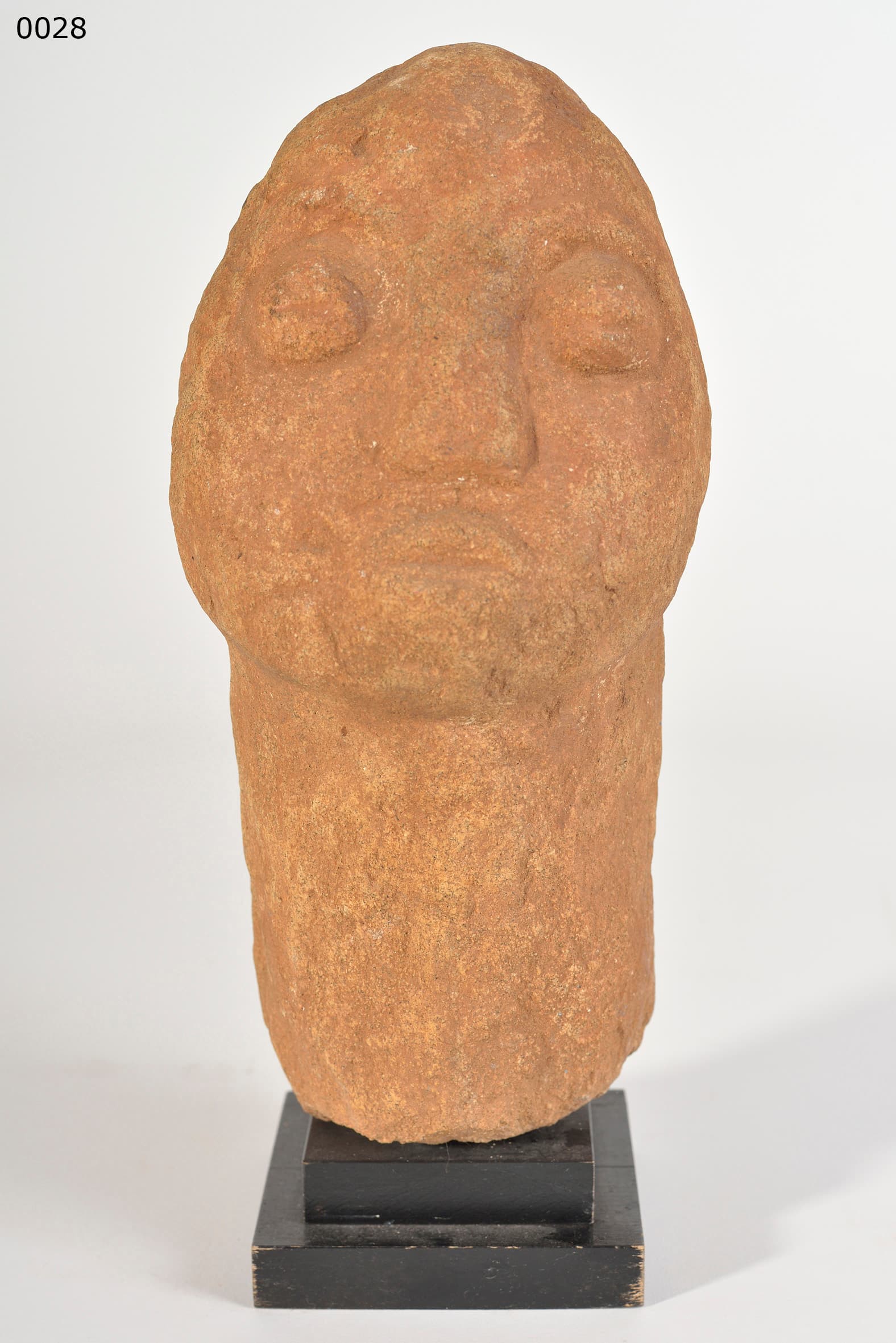
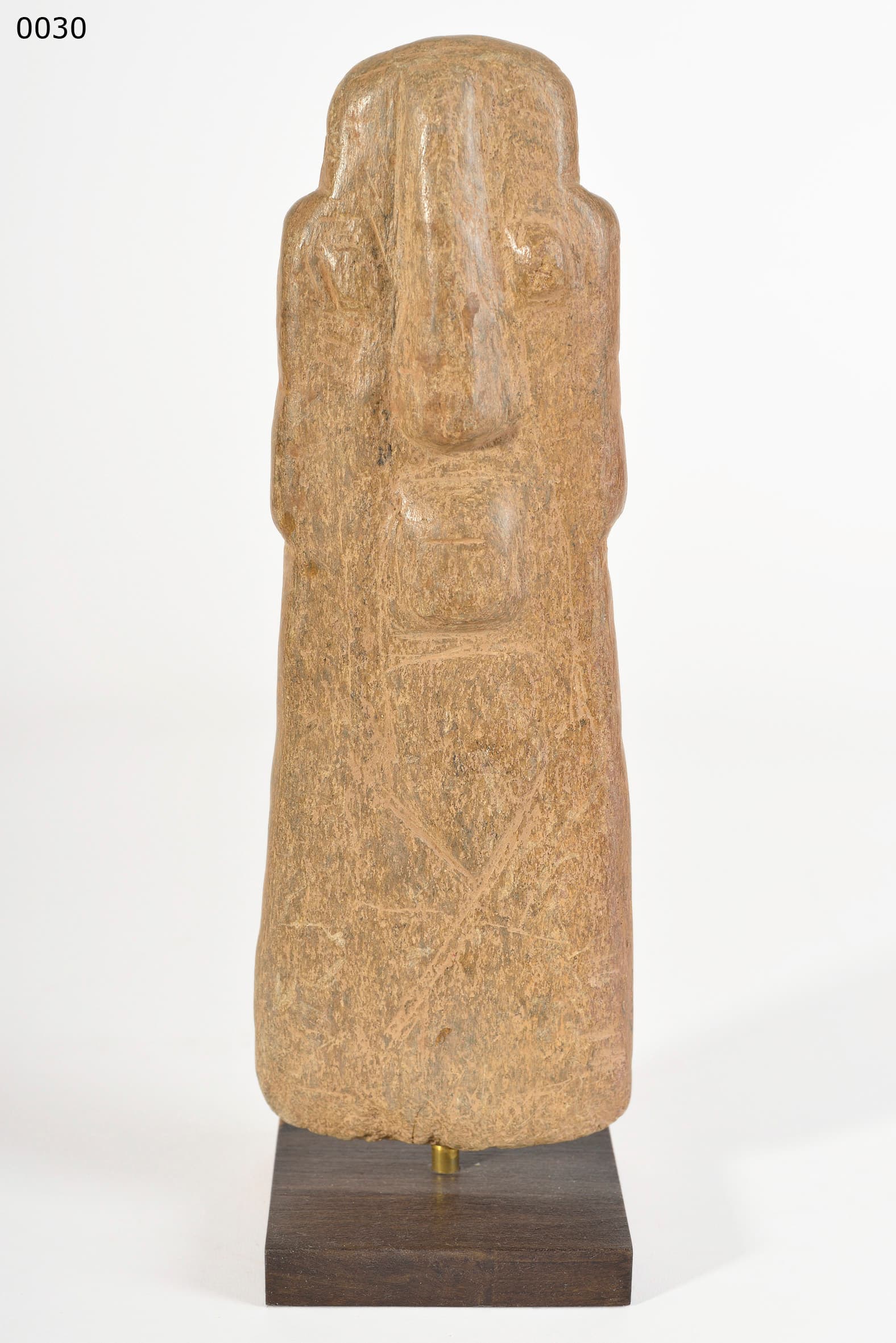
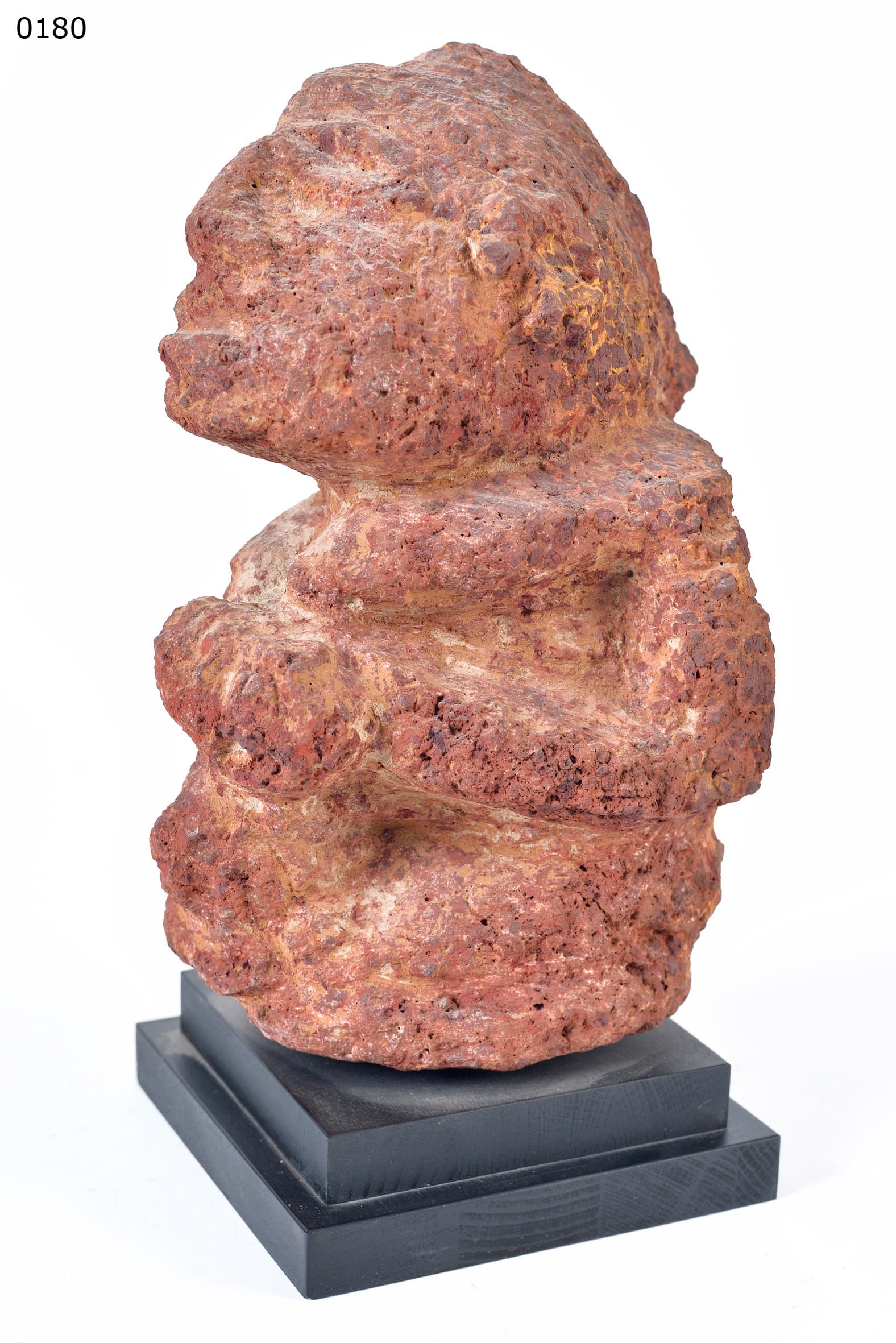
Eine schwere, eisenhaltige Lateritstein-Skulptur (12.-16. Jh., 34 cm) aus Kurumba in Burkina Faso - geschnitzt als Schildkröte mit abgerundetem Panzer, vorstehendem Kopf und vier blockigen Beinen. Der Stein ist durch extreme geologische Erosion und tiefe Oxidation stark entsteint.
1. Zoomorphe Steinverehrung
Während die meisten voltaischen Steinfiguren abstrakt menschlich sind, ist dieses Kurumba-Grabmal eindeutig zoomorph.
- Schildkröten-Symbolik: Die Schildkröte ist ein nahezu universelles Symbol für Langlebigkeit, Ausdauer und eine tiefe Verbindung zu Erde und Wasser.
- Dauerhaftigkeit in Dauerhaftigkeit: Indem der Bildhauer dieses Tier in dichten, unbeweglichen Stein meißelte, schuf er ein beständiges Symbol der Kontinuität für den Verstorbenen - das langsamste Tier im dauerhaftesten Medium.
2. Wächter des Grabes
Diese schweren Steinschildkröten wurden an Grabstätten aufgestellt und fungierten als ewige Wächter.
- Metapher des harten Panzers: Der natürliche Panzer der Schildkröte ist eine offensichtliche Schutzmetapher, die den Geist des Ahnen vor bösartigen Kräften bewahrt.
- Regenmacher: In den trockenen Gebieten der Sahelzone ist die Schildkröte aufgrund ihrer Assoziation mit Schlamm und Wasser ein mächtiges Vehikel für Regenmachergebete und Trankopfer, die direkt auf den Panzer gegossen werden, um das Überleben der Landwirtschaft zu sichern.
3. Tausendjährige Taphonomie
Der physische Zustand der Skulptur ist beeindruckend.
- Aufgelöste Details: Jahrhunderte der Exposition haben alle scharfen ursprünglichen Schnitzspuren ausgelaugt und eine poröse, kraterartige, eisenhaltige Haut hinterlassen.
- Geologische Taphonomie: Die extreme Taphonomie spricht für eine Herkunft aus dem 12. bis 16. Jahrhundert - dies legt ein hohes Alter nahe.
Zusammenfassung
Diese Schildkröte aus Kurumba-Stein, Symbol für Beständigkeit und schützendes Gewicht, ist ein bedeutendes Zeugnis westafrikanischer Steinkunst. Ihre tiefgreifende geologische Erosion und ihre seltene zoomorphe Form machen sie zu einem bemerkenswerten archäologischen Objekt.
KI-unterstützt erstellt aus Sammlungsgutachten, Objektfotografie und eigener Recherche, redaktionell geprüft. Fehler sind möglich — Hinweise darauf sind uns willkommen. Zum Verfahren →