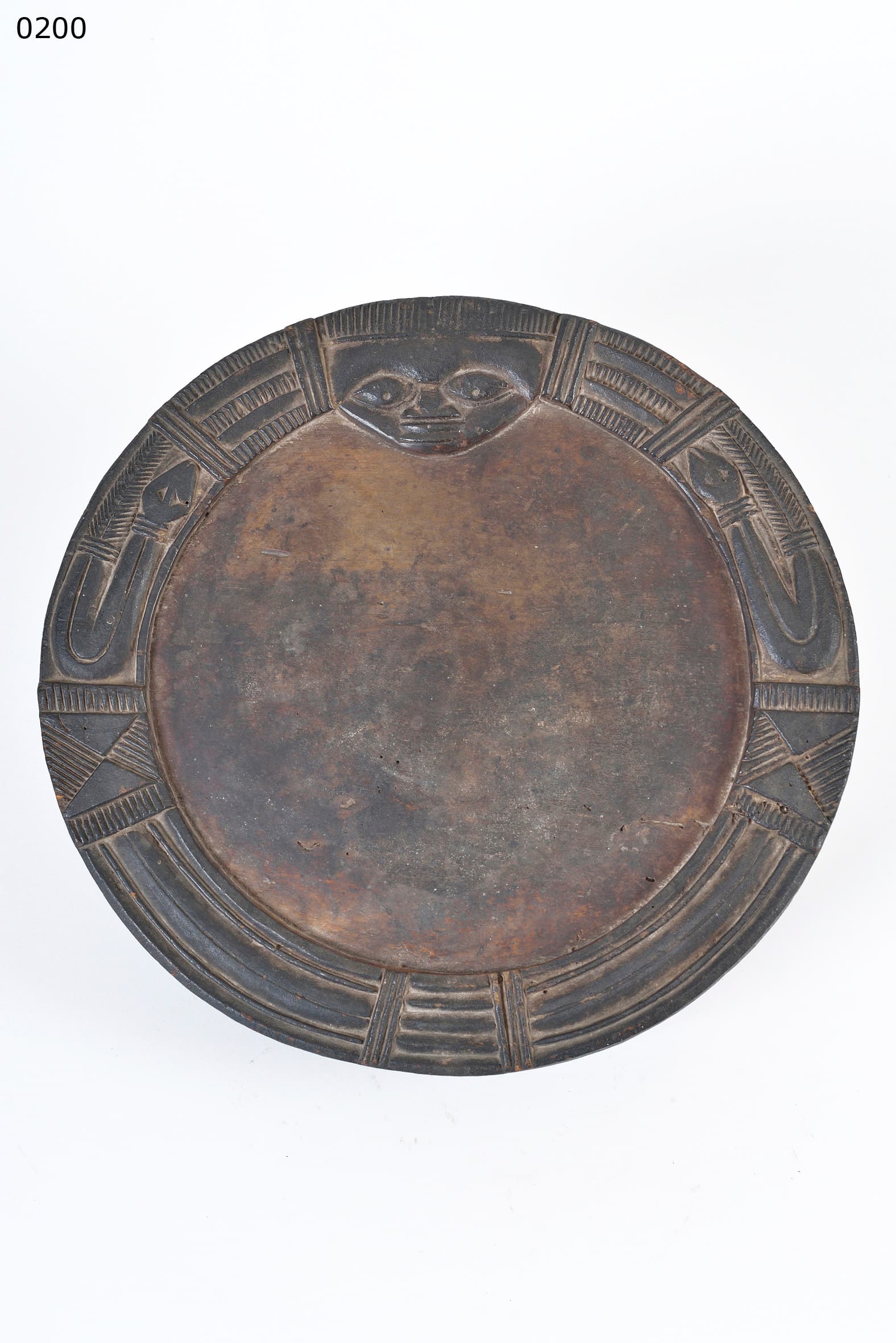
Eine große runde hölzerne Opon Ifa (19.–20. Jh., 30 cm) von den Yoruba in Nigeria - flache zentrale Vertiefung, umgeben von einem erhöhten, kunstvoll geschnitzten Rand mit geometrischem Geflecht, ein markantes starrendes Gesicht von Eshu am oberen Rand, das Holz trägt eine trockene, pulverige Patina mit Resten von weißem Wahrsagerstaub in der Maserung.
1. Das Universum des Opon Ifa
Der Opon Ifa gilt als ein zentrales Element der religiösen Praxis der Yoruba - ein physischer Mikrokosmos des Universums.
- Erde und Himmel in einem Objekt: Das flache Zentrum repräsentiert den irdischen Bereich, in dem sich die menschlichen Schicksale abzeichnen; der geschnitzte Rand repräsentiert den spirituellen Bereich.
- Eshu an der Schwelle: Das Gesicht an der Spitze stellt traditionell Eshu (oder Elegba) dar, den göttlichen Betrüger und Boten, der zuerst angerufen wird, damit die Gebete des Wahrsagers (Babalawo) die höchsten Gottheiten erreichen.
2. Die Mechanik der Weissagung
Während einer Ifa-Konsultation führt der Babalawo eine genaue rituelle Abfolge durch.
- Iyerosun-Staub: Der Wahrsager streut iyerosun (heiligen Holzstaub) auf die flache Mitte des Tabletts.
- Palmnüsse und Muster: Dann wirft er heilige Palmnüsse und zeichnet Muster in den Staub, je nachdem, wie die Nüsse fallen. Diese binären Muster entsprechen Versen aus dem umfangreichen mündlichen Ifa-Literaturkorpus - sie offenbaren das Schicksal, schreiben Opfer vor und stellen das Gleichgewicht wieder her.
3. Iyerosun-Patina und authentische Verwendung
Die ausgeprägte Patinierung und Materialermüdung sprechen für eine divinatorische Verwendung und eine lange Objektbiografie.
- Verkrustete Ränder: Die Vertiefungen des Schnitzwerks am Rand weisen eine dicke, verkrustete Patina auf, die durch wiederholte Libationen, Palmöl und die ständige Berührung durch die Finger des Babalawo während der Beratung entstanden ist.
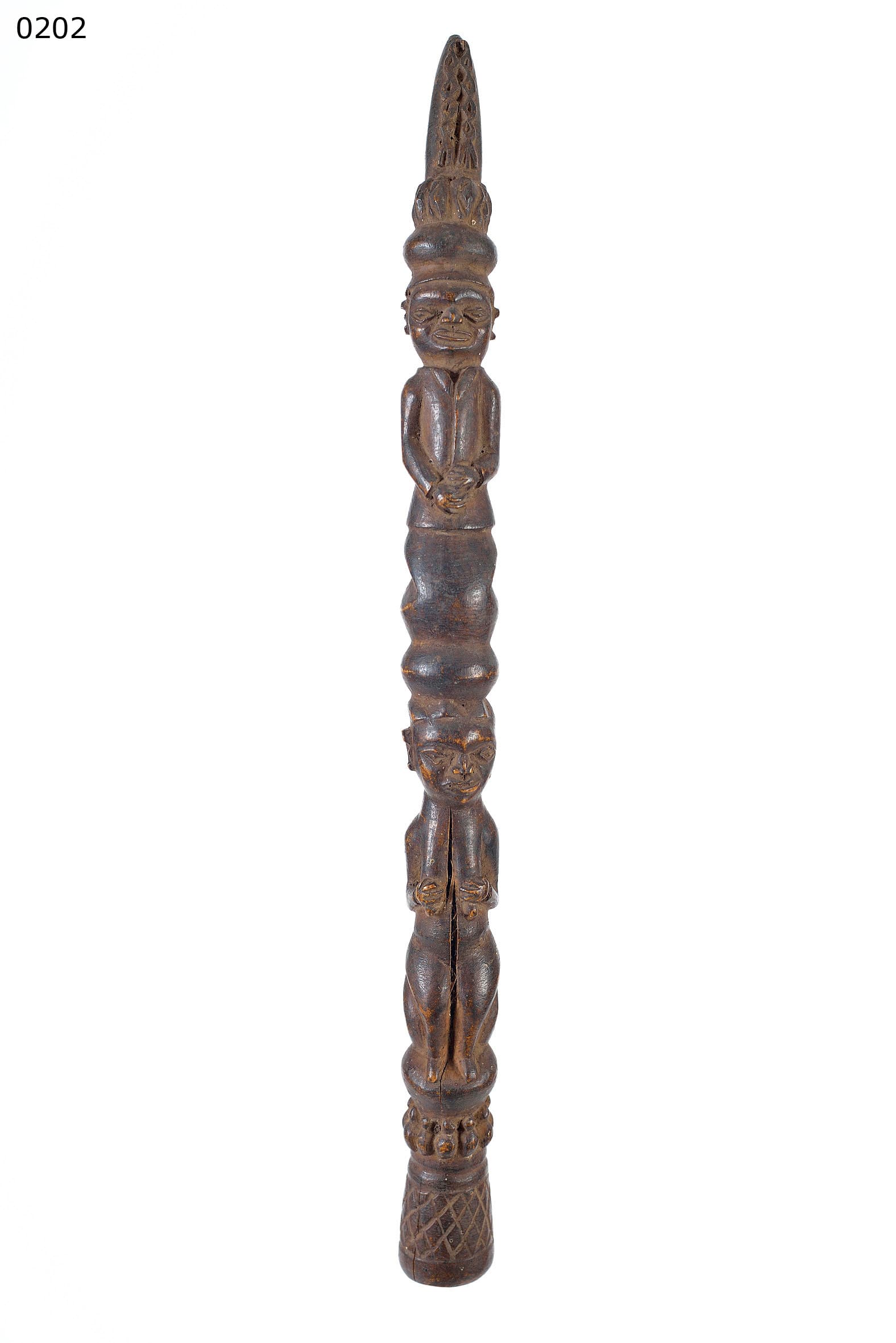
- Tief abgenutzte Mitte: Die flache zentrale Vertiefung zeigt extreme physische Abrasion durch das ständige Klopfen des Wahrsageklopfers (Iroke Ifa) und das Nachzeichnen von Mustern. Die ursprüngliche Patina ist hier völlig abgerieben und offenbart stark oxidiertes, rissiges Holz. Blasser iyerosun-Staub, der tief in die Maserung eingebettet ist, zeugt von der aktiven Nutzung bis in die erste Hälfte des 20. Jahrhunderts, und die Tiefe der rituellen Abnutzung legt nahe, dass das Brett bereits im späten 19. Jahrhundert geschnitzt und geweiht worden sein könnte.
Zusammenfassung
Dieses Ifa-Orakeltablett zeigt eine komplexe religiöse Ikonographie sowie geometrische Schnitzereien und stellt eine tiefgründige Karte des Yoruba-Kosmos dar. Seine ausgeprägte, tiefe Abnutzung, die mit einer Entstehung im späten 19. Jahrhundert vereinbar ist, und der eingebettete Staub machen es zu einem bemerkenswerten Zeugnis der westafrikanischen Wahrsagerei.
KI-unterstützt erstellt aus Sammlungsgutachten, Objektfotografie und eigener Recherche, redaktionell geprüft. Fehler sind möglich — Hinweise darauf sind uns willkommen. Zum Verfahren →