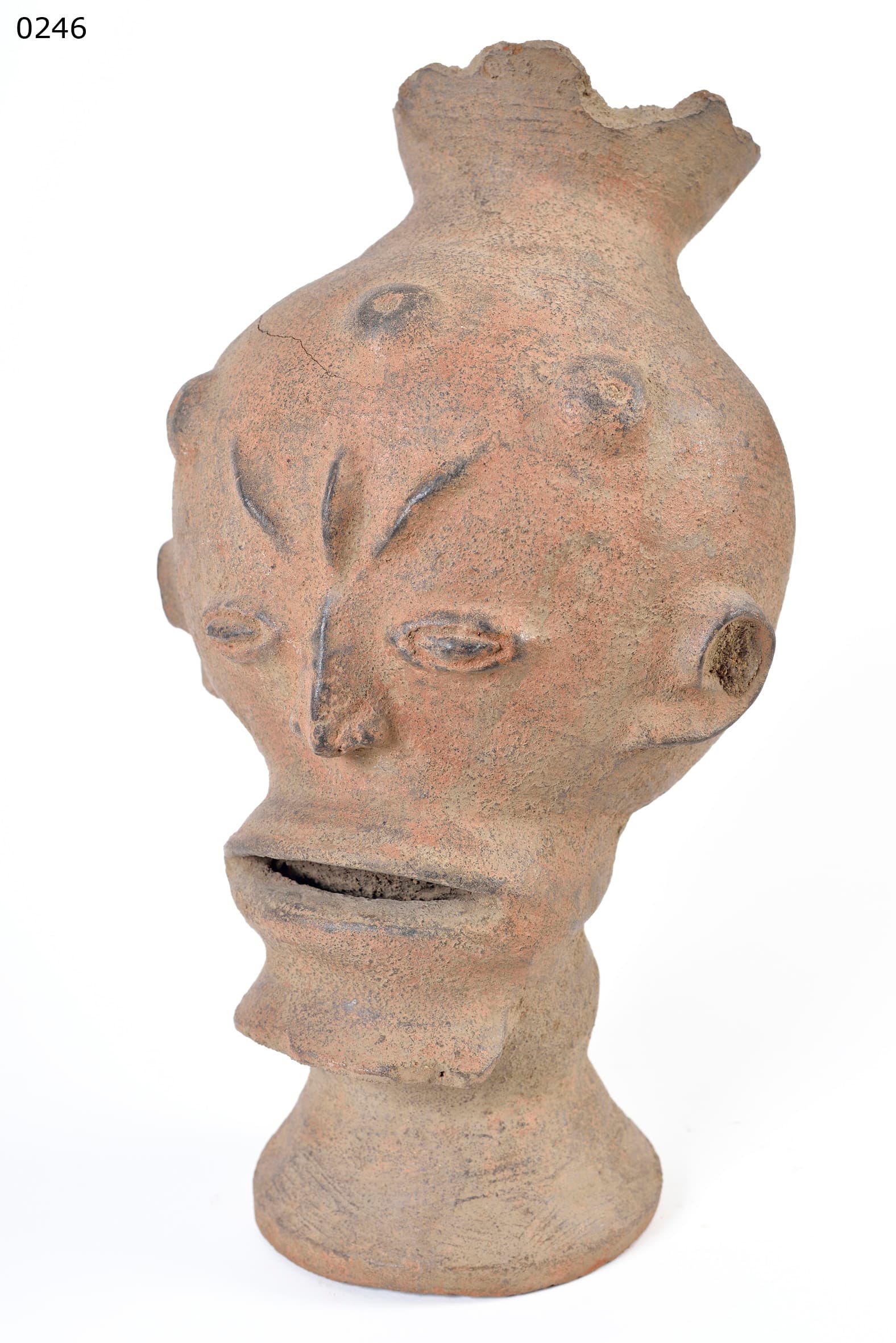
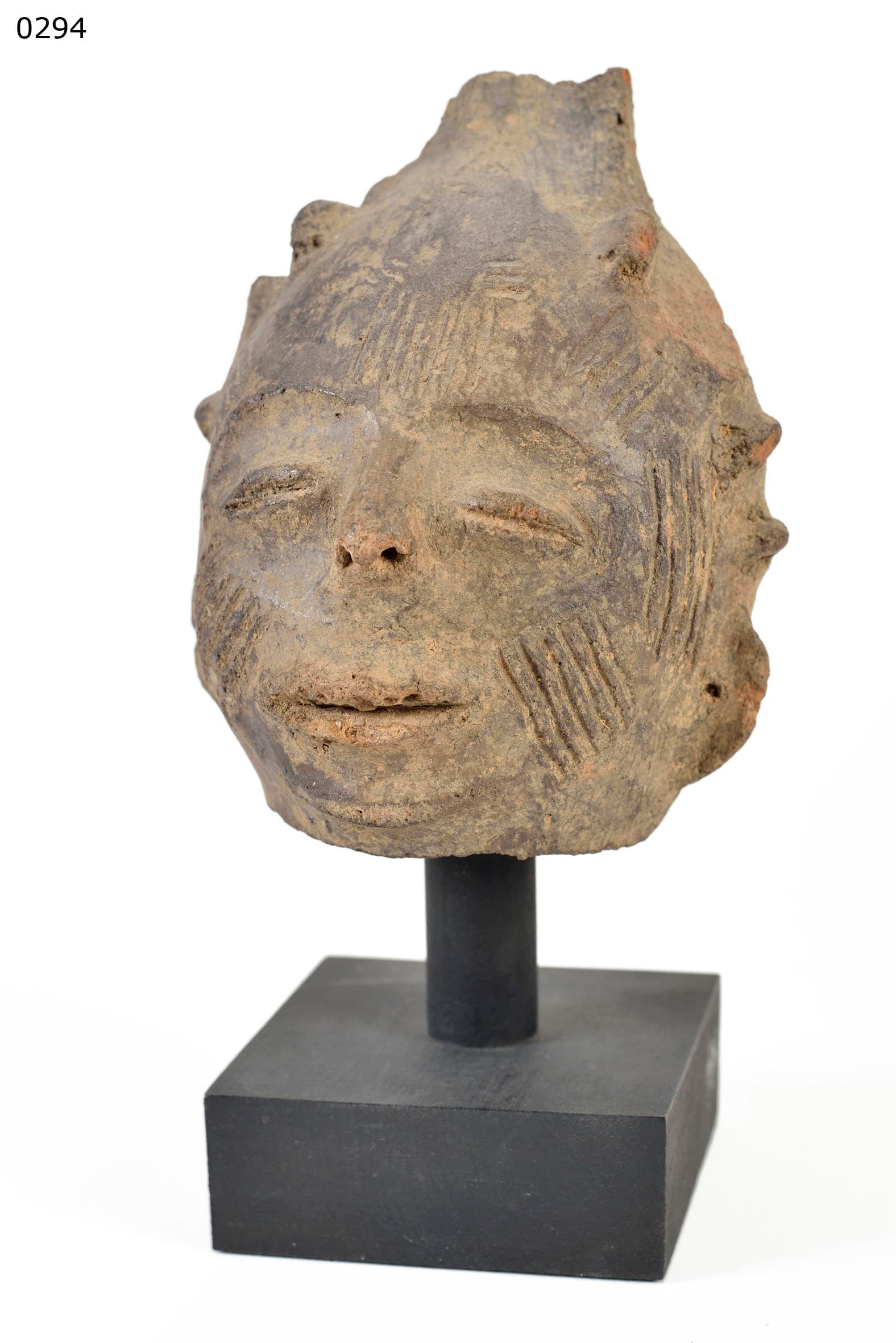
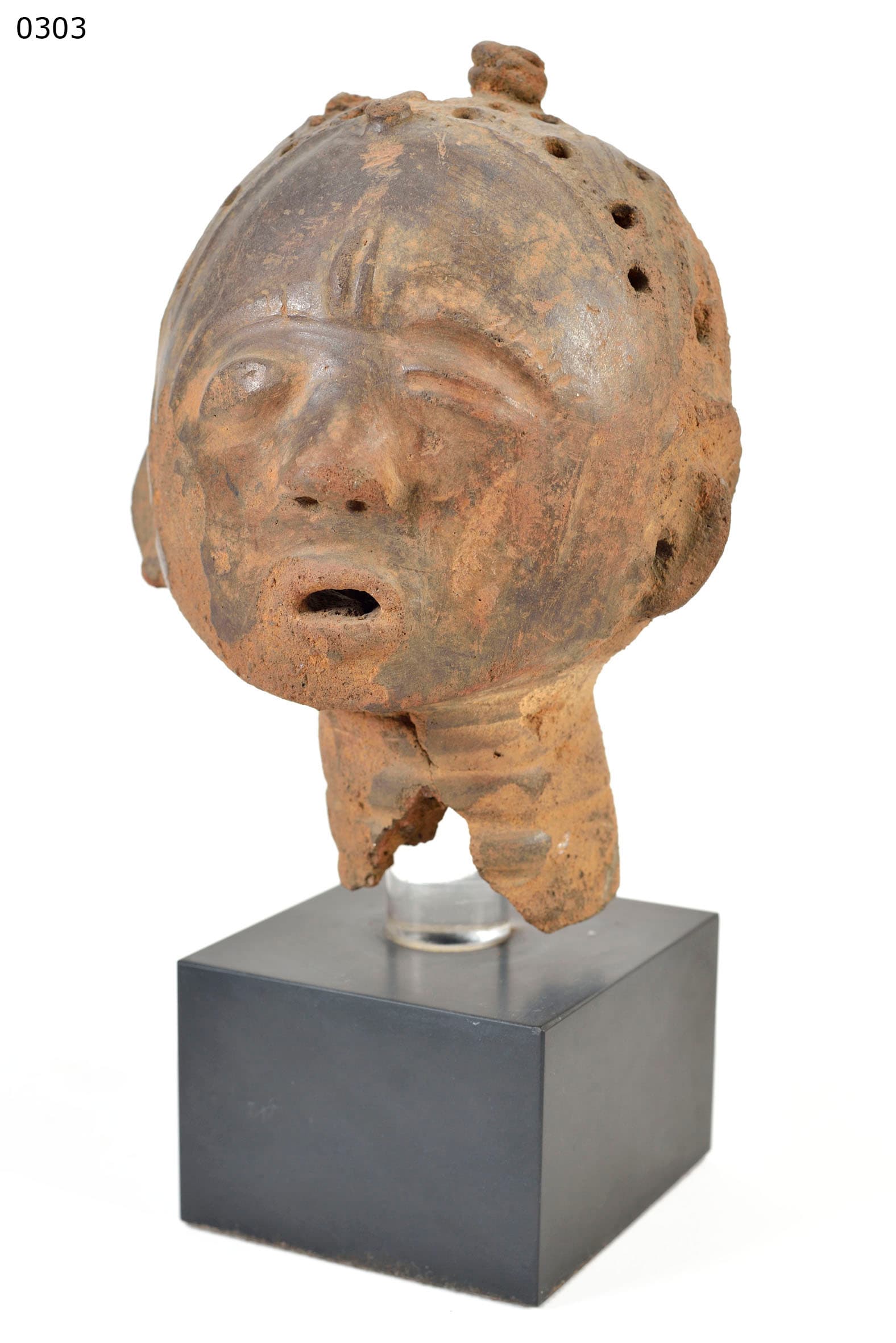
Eine langgestreckte weibliche Akan-Terrakotta-Figur (12.-18. Jh., 43 cm) aus Ghana - röhrenförmiger weiblicher Körper mit abgeflachtem, stilisiertem Gesicht. Der dunkelrotbraune Ton weist erhebliche strukturelle Risse, Lochfraß und blasse Erdverkrustungen auf.
1. Ganzkörper-Mma-Tradition
Diese röhrenförmige weibliche Figur repräsentiert die Ganzkörper-Variante der Akan mma-Tradition - ein Pendant zum körperlosen Kopf in der Sammlung.
- Idealisierte Matriarchin: Stellt eher die ideale Haltung und den Status einer verstorbenen Adeligen dar als ein spezifisches Abbild.
- Ringierter Hals und Frisur: Das abgeflachte Gesicht, die stilisierte Frisur und der typische ringförmige Hals weisen sie als elitär und voll in das höfische Leben integriert aus.
2. Die Asensie und das königliche weibliche Ehrenmal
Wie der Kopf lebte auch die Figur oberirdisch im Gedenkhain.
- Verehrung der Königinmutter: Die Akan-Gesellschaft räumte den königlichen Frauen ein bedeutendes zeremonielles Gewicht ein - Königinmütter und ältere Matriarchen hatten oft eigene Figuren im Asensie.
- Bekleidung und Ansprache: Die Figur wurde während der Bestattungszyklen bekleidet und so angesprochen, als wäre die Verstorbene noch anwesend, wodurch die Stimme der königlichen Frau im Gedächtnis der Gemeinschaft erhalten blieb.
3. Verwitterung unter dem Vordach
Die Taphonomie spiegelt den gruppierten Gedenkkopf wider.
- Tropischer Regen und Feuchtigkeit: Jahrhunderte des äquatorialen Wetters haben die Oberfläche aufgeweicht und den ursprünglichen Schlicker abgetragen.
- Eingebettete Erde und organische Substanzen: Blasse, wurzelgebundene Erde ist in den porösen Ton eingedrungen, was sowohl die Datierung in das Mittelalter bis in die frühe Neuzeit als auch den authentischen Aufenthalt des Stücks in der Asensie bestätigt.
Zusammenfassung
Diese langgestreckte, röhrenförmige Figur ist das weibliche Ganzkörper-Gegenstück des Akan-Grabpaares und erweitert die idealisierte königliche Memorialisierung der mma-Tradition zu einer vollständigen anatomischen Form. Ihre verwitterte Oberfläche und ihr verschlüsselter matriarchalischer Status machen sie zu einem wichtigen historischen Dokument des ghanaischen Hoflebens.
KI-unterstützt erstellt aus Sammlungsgutachten, Objektfotografie und eigener Recherche, redaktionell geprüft. Fehler sind möglich — Hinweise darauf sind uns willkommen. Zum Verfahren →