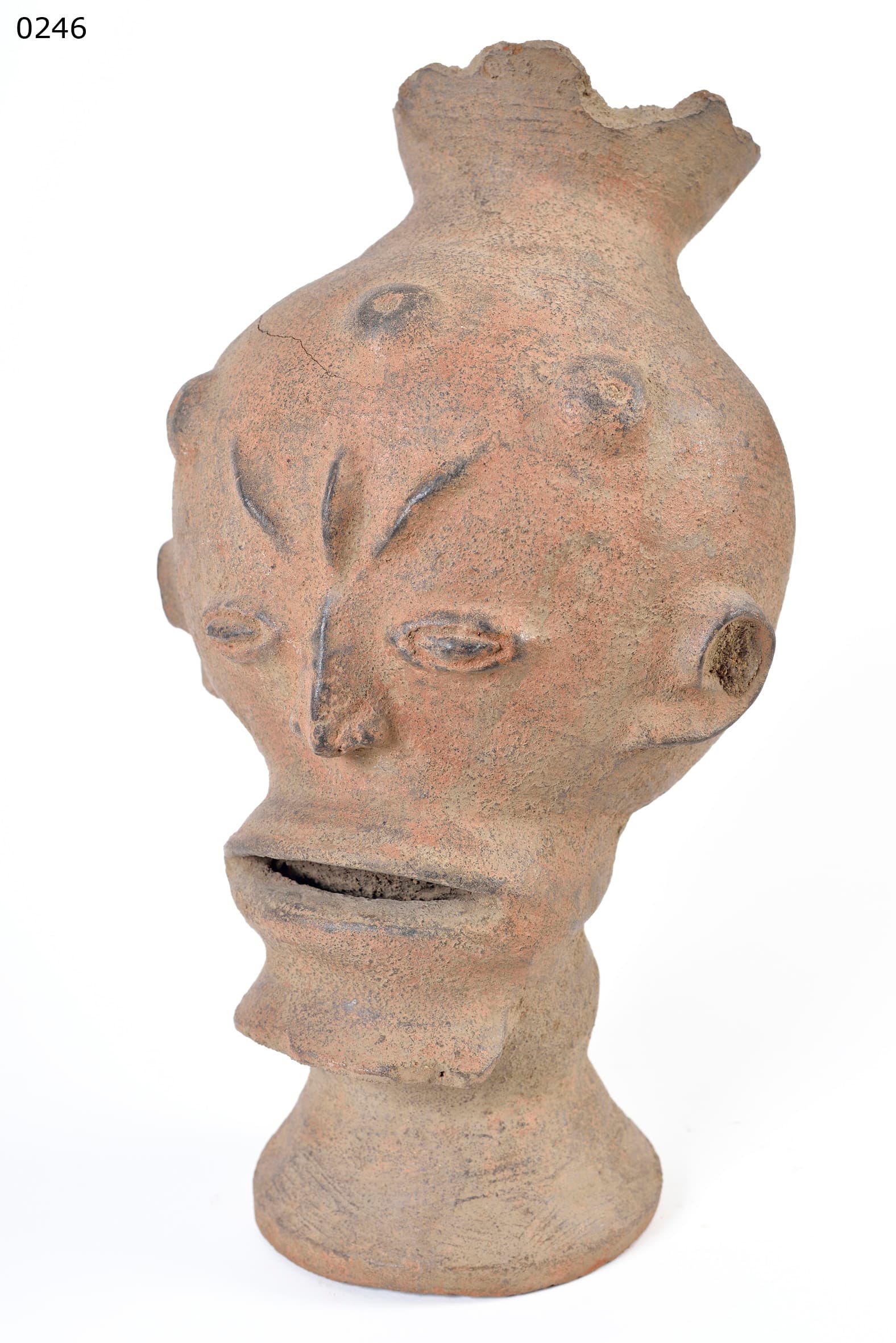
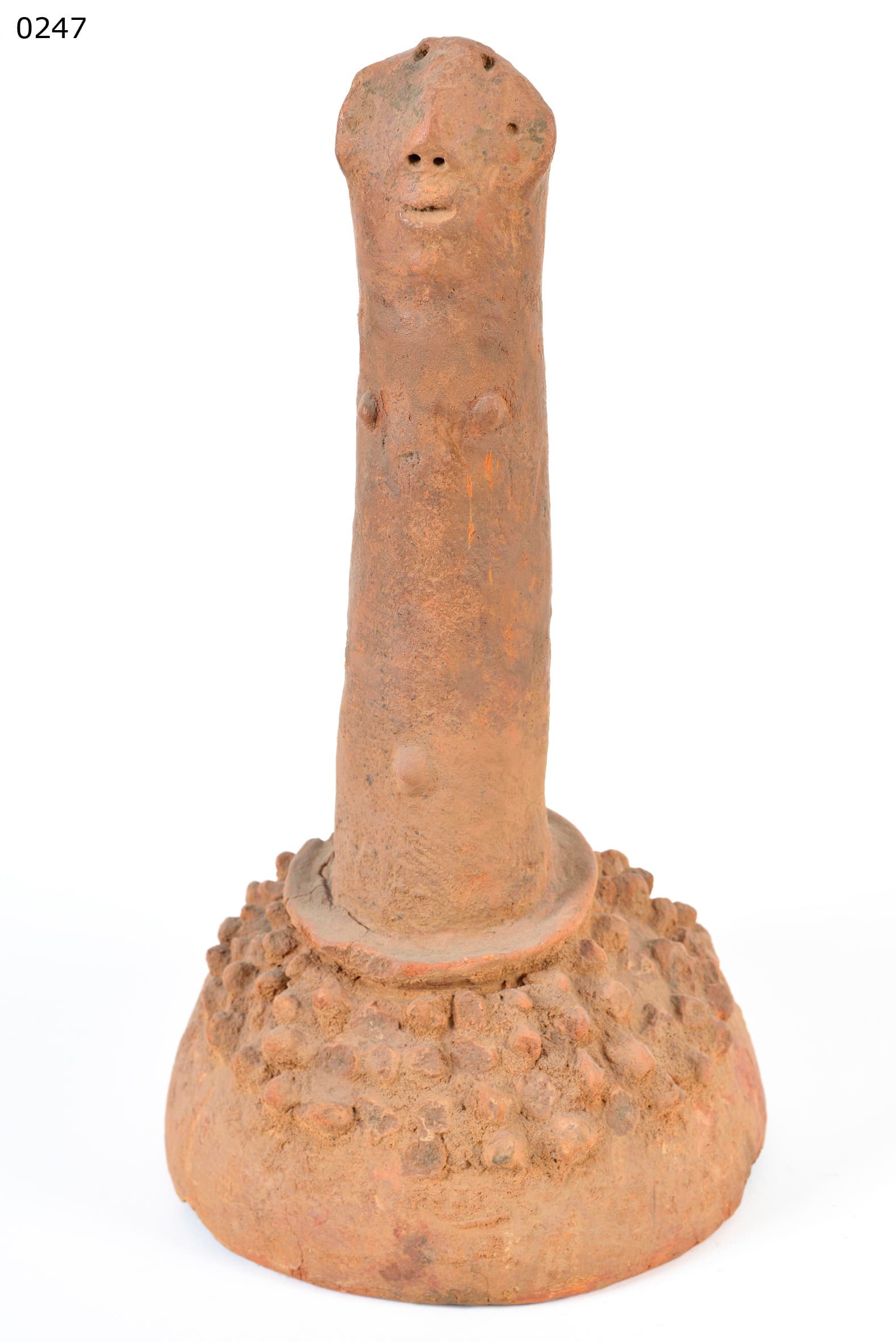
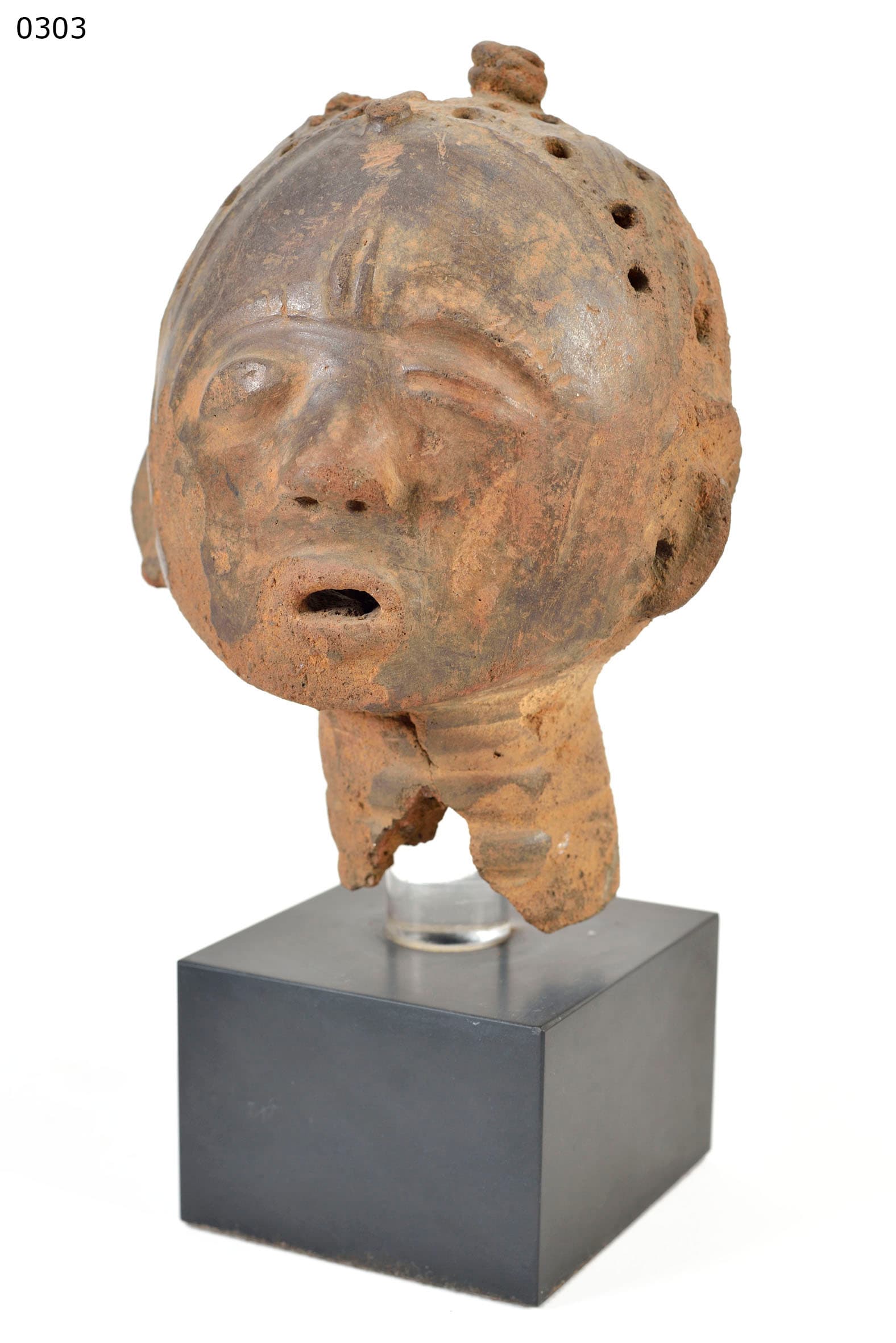
Eine auffällige Akan-Terrakotta (12.-18. Jh., 13 cm) aus Ghana - ein abgeflachter, ovaler Kopf mit schweren, kaffeebohnenförmigen Augen, einem markanten, beringten Hals und kleinen Stachelknoten, die den Haaransatz zieren. Der dunkle Ton ist stark verwittert mit einer tief porösen, erdigen Oberfläche und erheblichem Abrieb.
1. Die Mma-Gedächtnistradition
Dieses Artefakt gehört zur mma (oder nsodie) Tradition des Akan-Volkes in Ghana - eine der kontinuierlichsten und am besten dokumentierten Terrakotta-Traditionen in Westafrika.
- Idealisiert, nicht wörtlich: Der Kopf ist kein wörtliches naturalistisches Porträt, sondern eine stark idealisierte Darstellung eines verstorbenen Königs.
- Status durch Form: Das abgeflachte Profil, die ruhigen Augen und der beringte Hals (ein Symbol für Gesundheit und Schönheit) vermitteln den sozialen Status, die Weisheit und die absolute geistige Gelassenheit des elitären Vorfahren.
2. Der Asensie Memorial Grove
Im Gegensatz zu vielen afrikanischen Terrakotten, die direkt mit den Toten begraben wurden, wurden die Grabfiguren der Akan oberirdisch in einem Asensie (Ort der Töpfe) aufgestellt - einem heiligen Gedenkhain, der sich streng außerhalb der Dorfgrenzen befindet.
- Gekleidet und gefüttert: Während komplexer mehrtägiger Bestattungsriten wurden diese Figuren gekleidet, gefüttert und als physische Stellvertreter der königlichen Toten behandelt.
- Königliche Frisur Stacheln: Die auffälligen Stachelknoten entlang des Haaransatzes weisen wahrscheinlich auf eine hochkomplexe Elitefrisur oder eine königliche Krone hin - und markieren die Figur als Brennpunkt der gemeinschaftlichen Trauer.
3. Verwitterung unter freiem Himmel
Da diese Objekte nicht in unterirdischen Gräbern, sondern in bewaldeten Hainen unter freiem Himmel beigesetzt wurden, ist ihre Taphonomie außergewöhnlich ausgeprägt.
- Tropische Abwaschung: Jahrhunderte intensiver tropischer Regenfälle und die Feuchtigkeit des Dschungels haben den Kopf stark verwittert und eine tief entsteinte, aufgeweichte Oberfläche hinterlassen, bei der der ursprüngliche Brennschlamm vollständig weggewaschen wurde.
- Wurzelgebundene Erde: Der dunkle, poröse Ton ist von heller, wurzelgebundener Erde durchdrungen - ein Merkmal, das eine Datierung auf das 12. bis 18. Jahrhundert sowie eine Platzierung in einer Asensie nahelegt.
Zusammenfassung
Dieser Akan-Terrakottakopf ist ein profundes historisches Dokument der königlichen Memorialisierung in Ghana und verkörpert idealisierte aristokratische Gelassenheit. Seine charakteristische, vom Wald verwitterte Oberfläche macht ihn zu einem bemerkenswerten Zeugnis westafrikanischer Gedenkkunst.
KI-unterstützt erstellt aus Sammlungsgutachten, Objektfotografie und eigener Recherche, redaktionell geprüft. Fehler sind möglich — Hinweise darauf sind uns willkommen. Zum Verfahren →