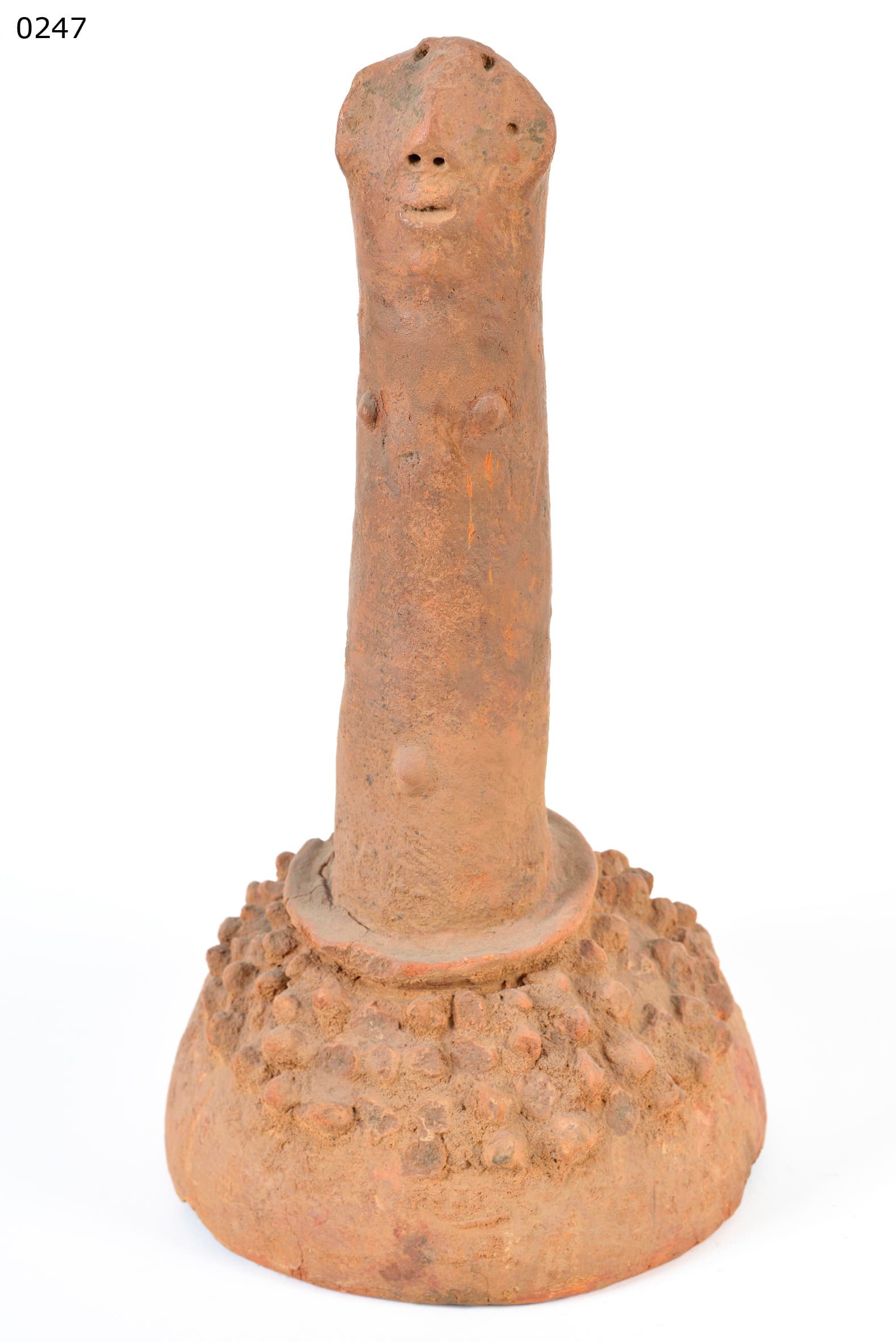
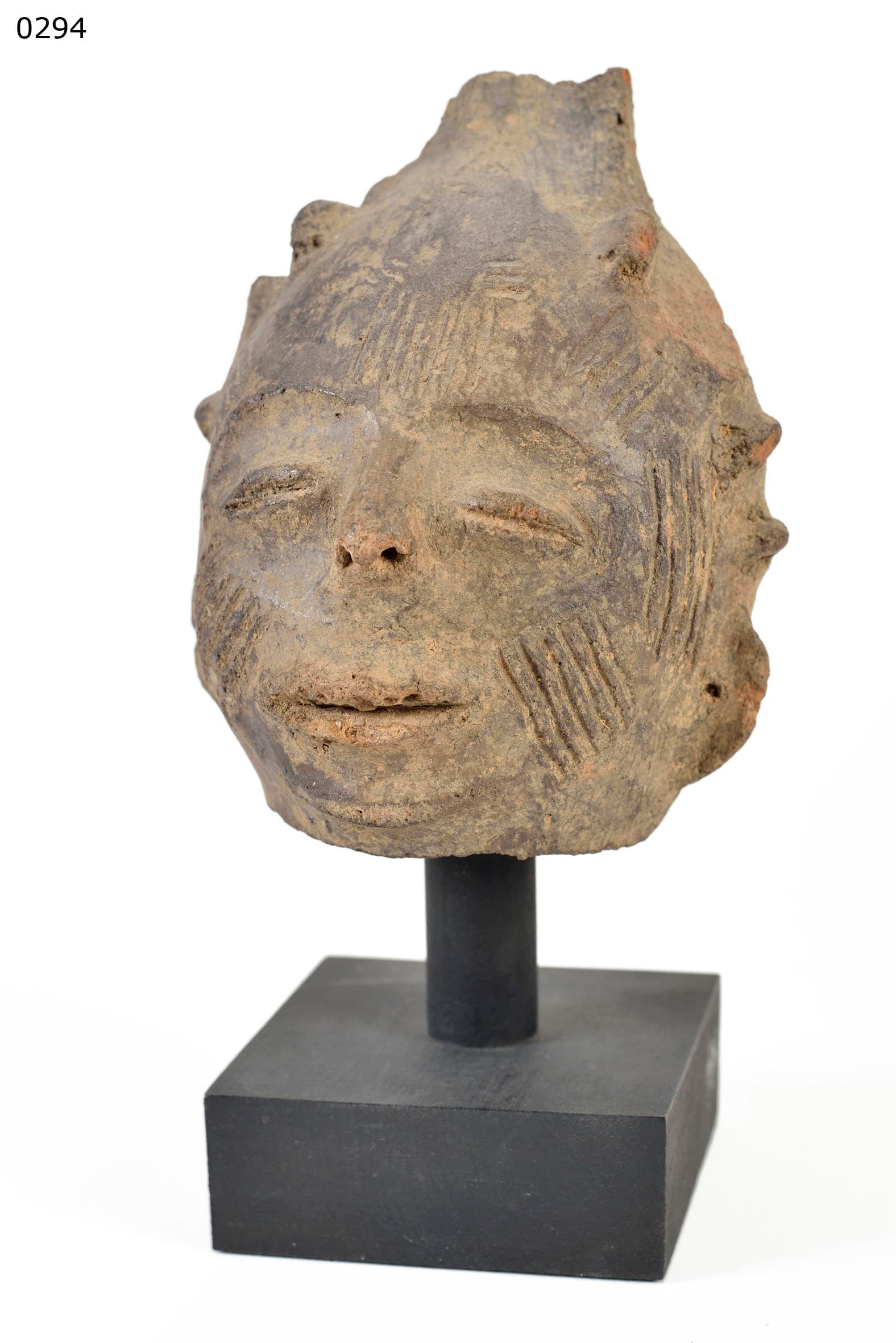
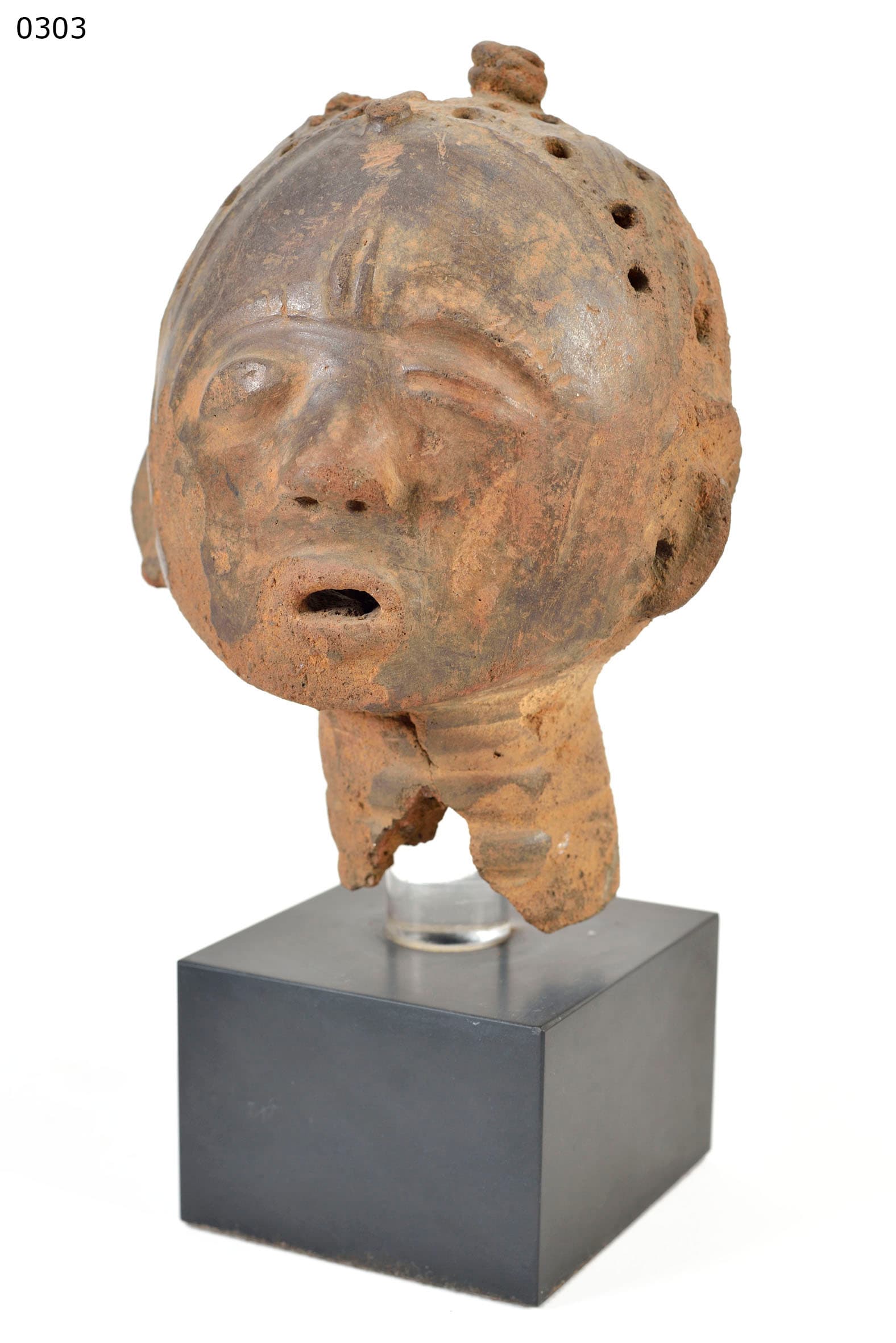
Ein großer Akan-Terrakotta-Gedenkkopf (12.-18. Jh., 39 cm) aus Ghana - ein körperloser Kopf, der mit auffälligen stacheligen Knötchen verziert ist. Der dunkelrotbraune Ton weist erhebliche strukturelle Risse, Lochfraß und blasse Erdverkrustungen auf.
1. Die Mma-Tradition der Akan
Dieses Stück gehört zur mma (oder nsodie) Tradition - eine der wenigen kontinuierlichen, gut dokumentierten Terrakotta-Traditionen in Westafrika.
- Idealisiert, nicht wörtlich: Diese Köpfe sind keine naturalistischen Porträts, sondern stark idealisierte Darstellungen von verstorbenen Königen und Adligen.
- Status verschlüsselt: Abgeflachte Profile, beringte Hälse und spezifische Skarifikationen oder Haarknoten vermitteln sozialen Rang, Weisheit und die heitere geistige Gelassenheit des elitären Vorfahren.
2. Die Asensie (Ort der Töpfe)
Anders als viele afrikanische Terrakotten, die mit den Toten begraben wurden, lebten die Grabfiguren der Akan oberirdisch.
- Gedächtnishain: Offen ausgestellt im Asensie - einem heiligen Gedächtnishain außerhalb des Dorfes.
- Bekleidet und gefüttert: Während der komplexen Begräbnisriten wurden diese Figuren bekleidet, gefüttert und als physische Stellvertreter der königlichen Toten behandelt. Die stacheligen Kopfknötchen stellen wahrscheinlich eine elitäre Frisur oder eine Krone der Autorität dar - der Mittelpunkt der gemeinschaftlichen Trauerarbeit.
3. Verwitterung im Wald
Da die Asensie-Figuren in offenen bewaldeten Hainen und nicht in unterirdischen Gräbern beigesetzt wurden, ist ihre Taphonomie sehr unterschiedlich.
- Tropische Exposition: Jahrhunderte intensiver tropischer Regenfälle und Dschungelfeuchtigkeit haben die Oberfläche tief entkernt und den ursprünglichen Schlicker weggewaschen.
- Wurzelgebundener Boden: Der dunkle poröse Ton ist von heller Erde und organischen Stoffen durchdrungen, was eine Datierung auf das 12. bis 18. Jahrhundert stützt und für ein Verbleiben des Stücks in einem traditionellen Akan-Gedenkhain spricht.
Zusammenfassung
Dieser Gedenkkopf aus Terrakotta der Akan ist ein wichtiges historisches Dokument der königlichen Gedenkkultur in Ghana. Seine ruhige, idealisierte Abstraktion und seine charakteristische, waldverwitterte Oberfläche machen ihn zu einem bedeutenden Zeugnis der westafrikanischen Gedenkkunst.
KI-unterstützt erstellt aus Sammlungsgutachten, Objektfotografie und eigener Recherche, redaktionell geprüft. Fehler sind möglich — Hinweise darauf sind uns willkommen. Zum Verfahren →