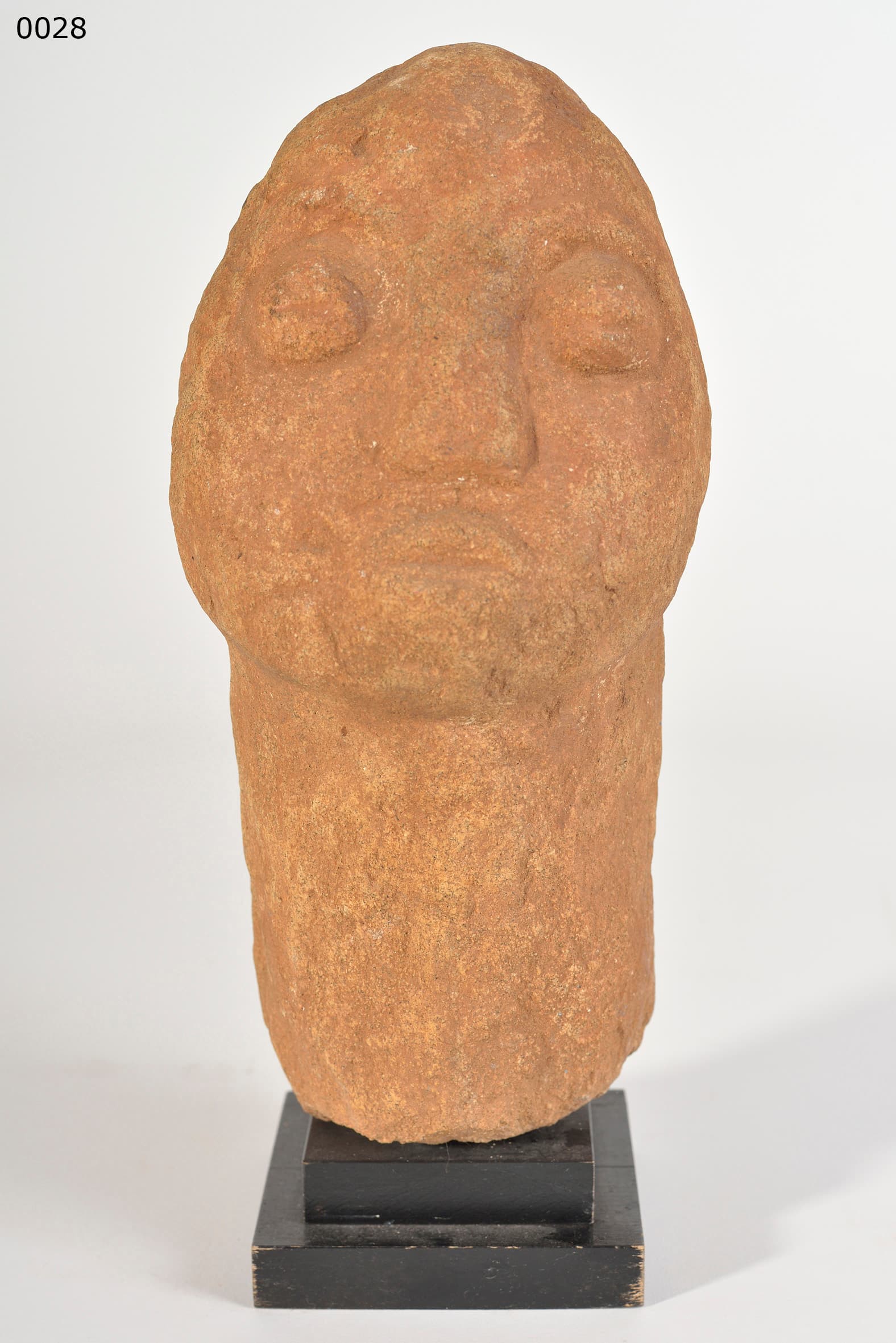
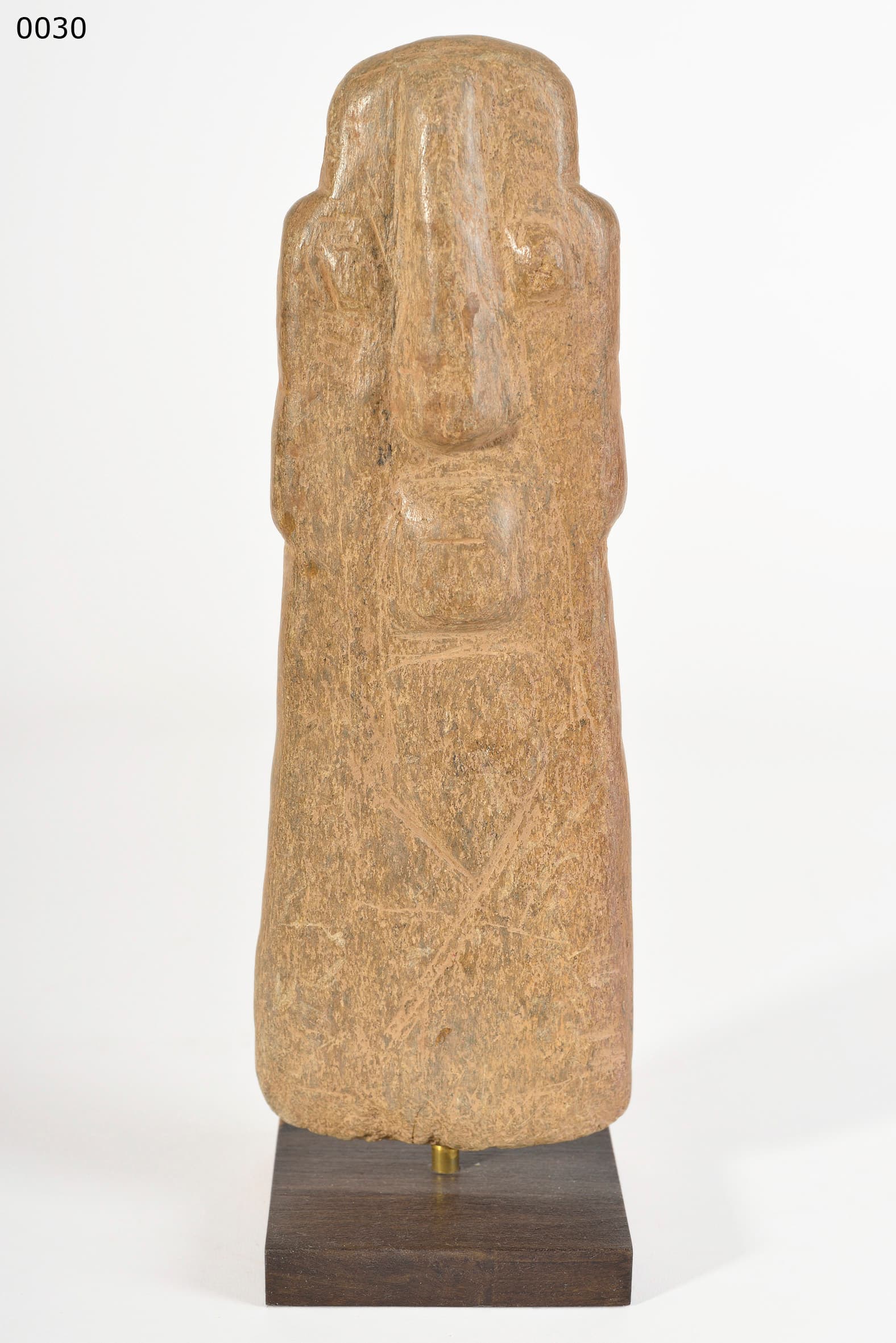
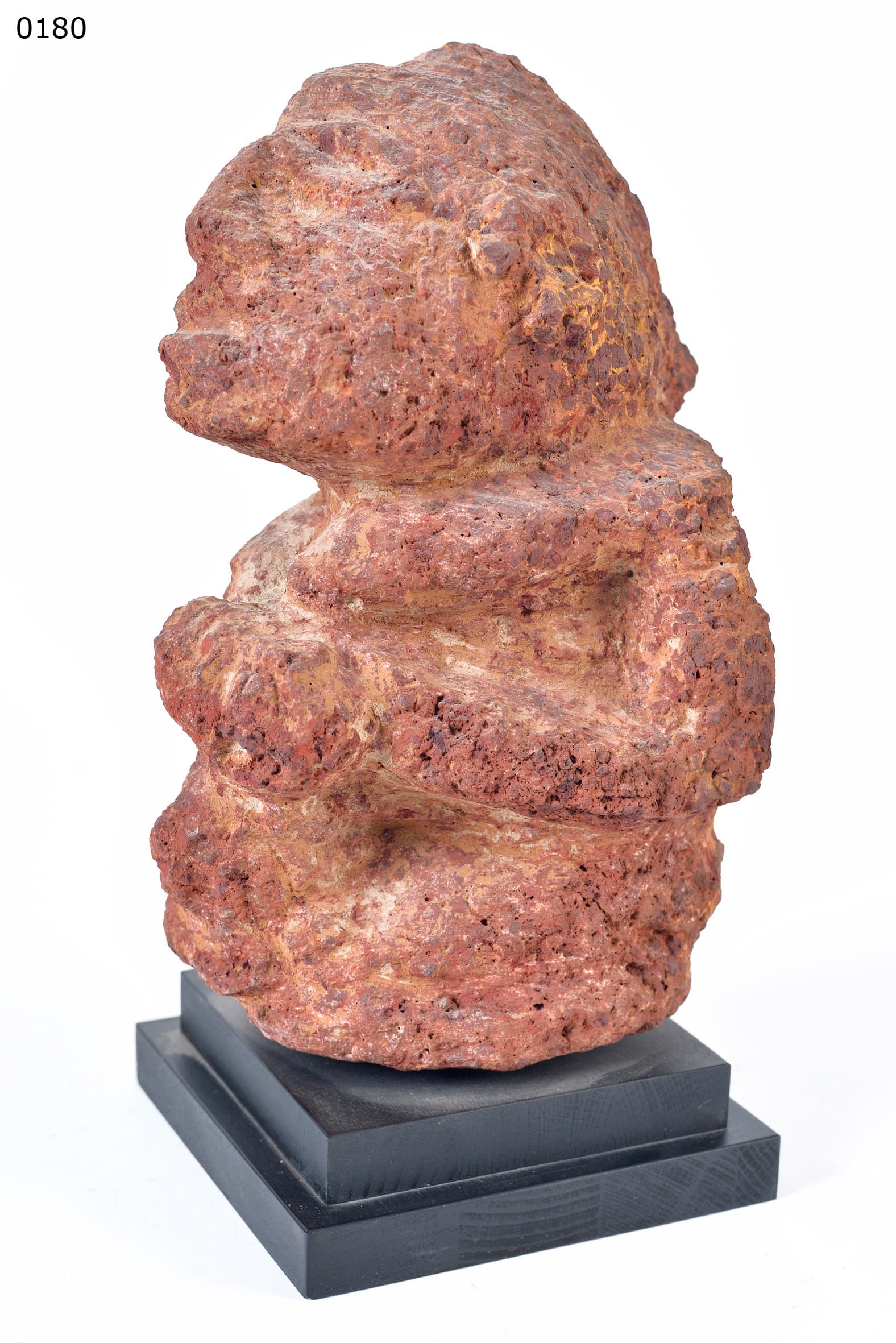
Ein hoch aufragender, schlanker Kurumba-Steinmonolith (12.-16. Jh., 75 cm) aus Burkina Faso - ein stark abgeflachtes, schildförmiges Gesicht mit minimalen geometrischen Merkmalen, das sich zu einer spitzen Basis verjüngt, der dichte, hellgraue Stein ist stark verwittert und stark entsteint, gesichert mit modernen Metallbefestigungsbändern.
1. Voltaische Lithische Abstraktion
Diese massive Kurumba-Steinfigur ist ein Beispiel für die absolute minimalistische Reduktion des alten Burkina Faso.
- Gesicht als Schild: Das Gesicht ist auf zwei Dimensionen abgeflacht, die Gesichtszüge sind auf einfache geometrische Erhebungen reduziert.
- Die brutalistische Geometrie hebt die Individualität der Sterblichen auf und projiziert eher die unzerstörbare Essenz des Ahnen als ein flüchtiges persönliches Abbild.
2. Die Verankerung der toten Elite
Der spitz zulaufende Sockel deutet darauf hin, dass der Monolith am Kopfende eines Grabes tief in die Erde getrieben wurde.
- Unbewegliche Stele: Da sie als Stele für hochrangige Älteste oder Erdpriester diente, konnte sie nicht bewegt oder gestohlen werden.
- Ewige Leitung: Größe und Gewicht verankerten den Geist der Ahnen dauerhaft im geografischen Zentrum der Gemeinschaft und dienten als Leitung für Gebete, Trankopfer und landwirtschaftliche Opfer.
3. Strenge Umwelt-Taphonomie
Über einen Zeitraum von etwa 500-800 Jahren hat der Stein das gesamte Klima der Sahelzone ausgehalten.
- Verwischte Werkzeugspuren: Abrasive Winde und saisonale Regenfälle haben die ursprünglichen Schnitzspuren vollständig ausgelöscht.
- Kraterförmige Erweichung: Eine tief entsteinte, kraterförmige, organisch erweichte Oberfläche - geologische Taphonomie, die für ein hohes Alter spricht.
Zusammenfassung
Dieser hoch aufragende Monolith aus Kurumba-Stein, der eine schweigende Autorität ausstrahlt, ist ein bedeutendes Beispiel der antiken voltaischen Abstraktion. Seine monumentalen Ausmaße und die tiefgreifende geologische Erosion machen ihn zu einem bemerkenswerten archäologischen Überbleibsel.
KI-unterstützt erstellt aus Sammlungsgutachten, Objektfotografie und eigener Recherche, redaktionell geprüft. Fehler sind möglich — Hinweise darauf sind uns willkommen. Zum Verfahren →