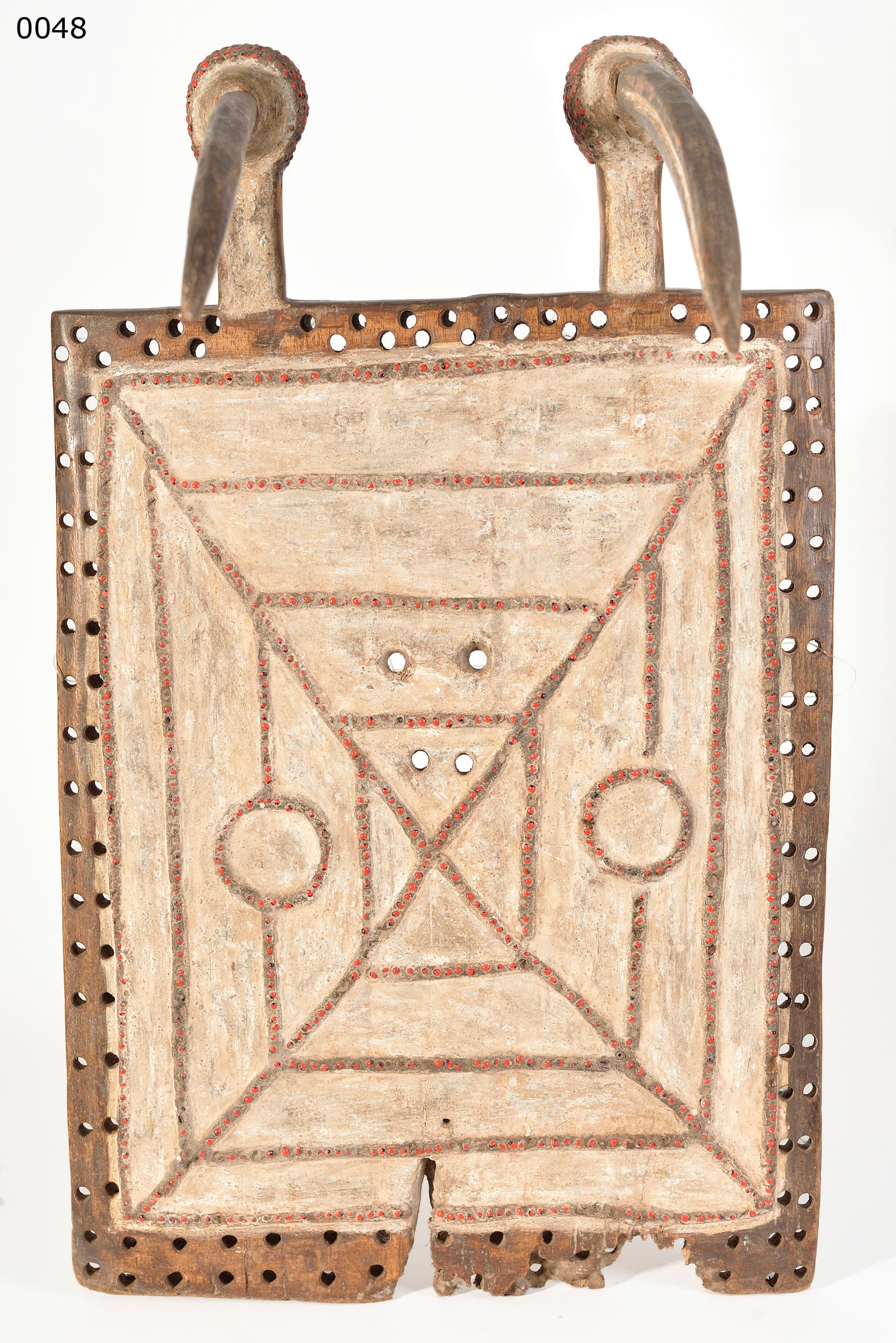
Eine massive Tusianische Loniake Brettermaske (wohl frühes 20. Jh., 95 cm) aus Burkina Faso - ein flaches, rechteckiges Holzbrett mit der hochreliefierten Schnitzerei eines Tieres (wahrscheinlich eines Nashornvogels), das sich über die gesamte Länge erstreckt und aufwändig mit aufgetragenen Kreisen aus roten Samen verziert ist. Der Hintergrund ist mit verblasstem weißem Kaolin-Ton überzogen, an den unbemalten Rändern zeigt sich dunkel oxidiertes Holz.
1. Monumentale Plankengeometrie
Das Volk der Tusianer (oder Toussianer) in Burkina Faso ist für seine massiven Loniake-Masken bekannt.
- Starke Zweidimensionalität: Die Ästhetik beruht auf einem unglaublich strengen, flachen geometrischen Profil - einem massiven rechteckigen Brett, das diagonal auf dem Kopf getragen wird.
- Ausstrahlende Autorität: Das zentrale Tier im Hochrelief ist der einzige volumetrische Bruch. Der brutalistische, zweidimensionale Maßstab ist für eine hohe Sichtbarkeit aus der Ferne konzipiert und projiziert eine imposante, übernatürliche Autorität über den Dorfplatz.
2. Die Do-Gesellschaft und magische Abrus-Samen
Loniake-Masken sind die heiligsten Gegenstände der Do-Gesellschaft - einer Initiationsgemeinschaft, die die mächtigen Geister des ungezähmten Busches beherrscht.
- Giftige Jequirity-Samen: Das wichtigste Merkmal ist die Verwendung von Abrus precatorius (Jequirity) Samen - leuchtend rot-schwarze Samen, die hochgiftig sind und mit gefährlicher flüchtiger Magie in Verbindung gebracht werden.
- Tödlich geladen: Indem der Schnitzer sie in die Maske einbettet, stattet er das Objekt mit tödlicher spiritueller Energie aus, die Hexerei abwehrt und von uneingeweihten Zuschauern absoluten Gehorsam verlangt.
3. Echtes Kaolin und Abrasion
Die Patinierung dieser Maske, die dem frühen 20. Jahrhundert zugeschrieben wird, ist sehr ausgeprägt.
- Verblasstes Ahnenweiß: Die weiße Pemba (Kaolin-Ton), die die Maske mit dem Reich der Ahnen verbindet, ist durch Staub und Handhabung verblasst, abgeblättert und befleckt.
- Handle-Worn Edges: Die Kanten der massiven Planke, an denen die Hände des Tänzers gegriffen haben könnten, sind glatt gerieben; dies legt das dunkle, tief oxidierte Hartholz unter dem Pigment frei und spricht für eine Verwendung bei Zeremonien der Do-Gesellschaft.
Zusammenfassung
Als imposantes Zeugnis ritueller Geometrie ist diese tusianische Loniake Plankenmaske ein repräsentatives Beispiel voltaischer Kunst. Ihre Giftsamen-Applikationen und die abgenutzte Kaolin-Patina machen sie zu einem bedeutenden ethnografischen Objekt.
KI-unterstützt erstellt aus Sammlungsgutachten, Objektfotografie und eigener Recherche, redaktionell geprüft. Fehler sind möglich — Hinweise darauf sind uns willkommen. Zum Verfahren →