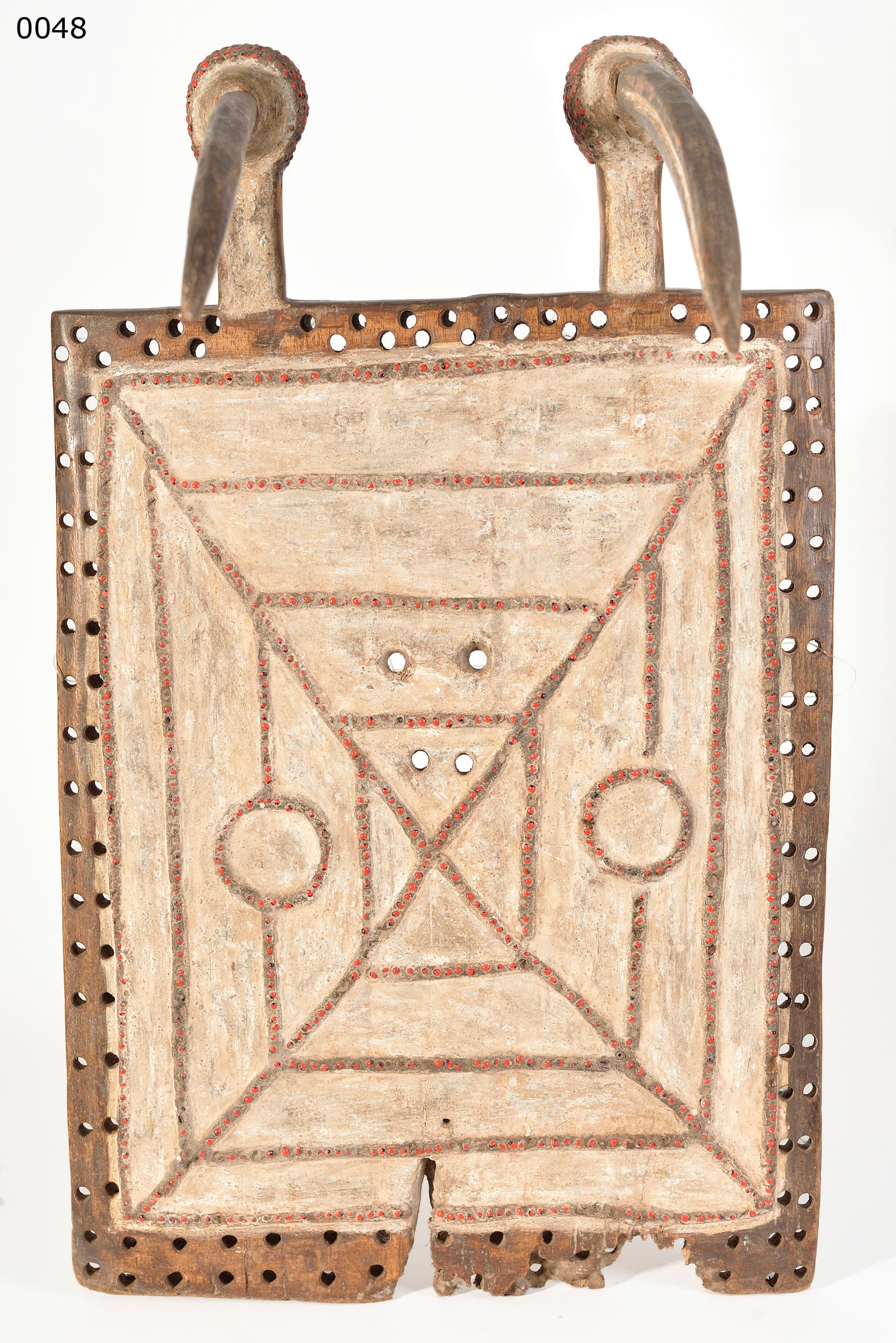
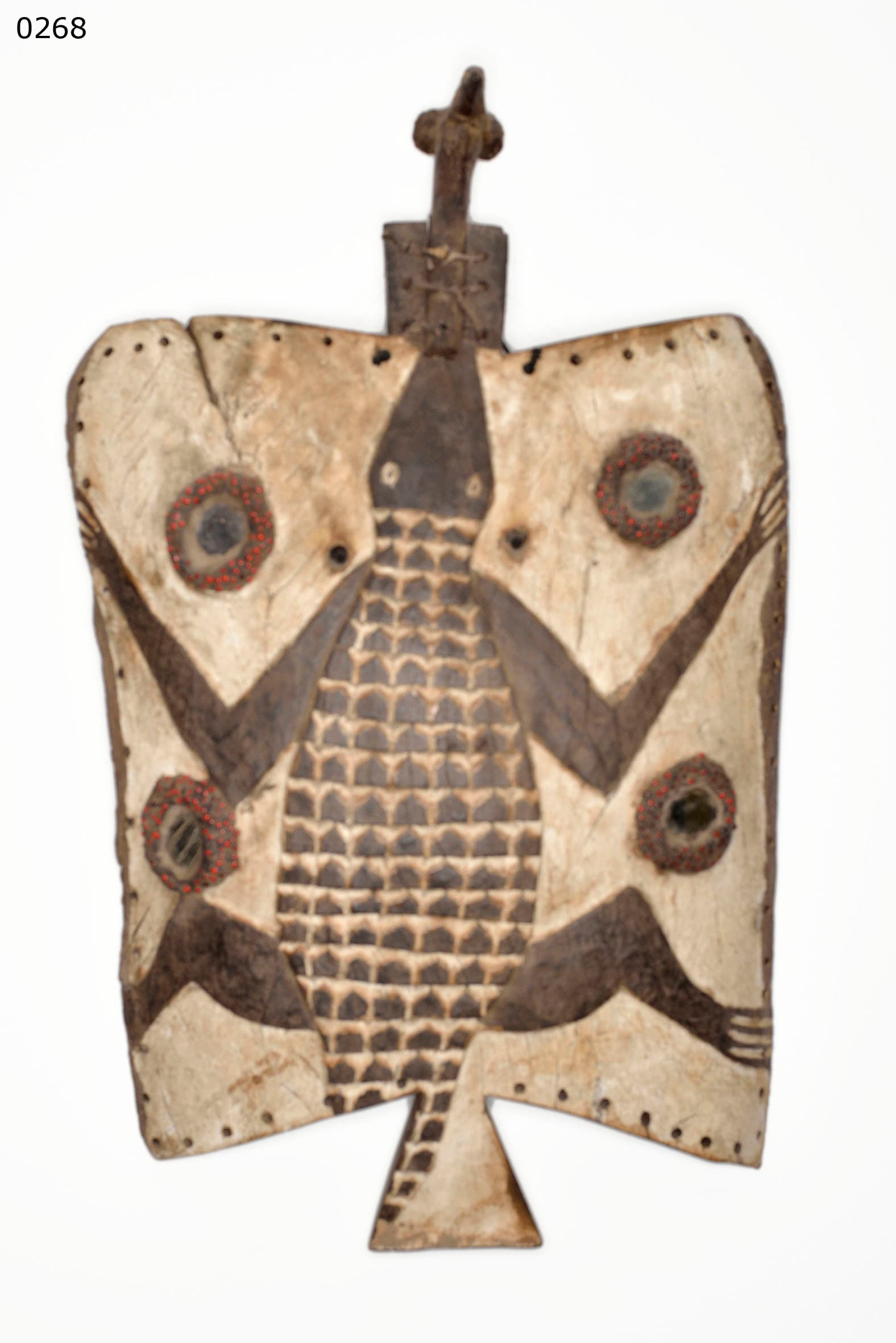
Diese auffällige hölzerne Kopfbedeckung besteht aus einer zentralen gewölbten Kappe, die von einem breiten, flachen Halbmond und zwei großen, nach unten und außen geschwungenen Hörnern gekrönt wird. Die stark verwitterte Oberfläche weist eine dicke, verkrustete, ockerfarbene Patina auf, die von tiefen Austrocknungsrissen durchzogen ist.
1. Ästhetischer Stil und regionale Merkmale
Das Volk der Tusian, das mit den Senufo in Burkina Faso und der Elfenbeinküste verwandt ist, ist für seine stark abstrahierten, minimalistischen Formen bekannt. Diese Wappenmaske, die oft mit dem Loniaken-Stil in Verbindung gebracht wird, destilliert die physischen Attribute mächtiger Totemtiere - wie der Buschkuh oder des Hornvogels - in reine geometrische Kraft. Die strenge Geometrie der geschwungenen Sichel, die auf der Helmbasis sitzt, ignoriert naturalistische Proportionen zugunsten einer symbolischen, architektonischen Dynamik.
2. Rituelle Funktion und Geheimbundkontext
Diese Art von Kopfbedeckung ist von zentraler Bedeutung für die Initiationsriten der männlichen Geheimgesellschaften, vor allem der Do-Gesellschaft. Die auf dem Kopf getragene Maske, die oft von einem massiven, einhüllenden Kostüm aus Bast und Blättern begleitet wird, dient dazu, die Identität des Trägers zu verbergen und die Buschgeister zu kanalisieren. Die Tänzerin tritt bei landwirtschaftlichen Festen und Initiationslagern auf, um das Dorf zu reinigen, die Fruchtbarkeit der Ernten zu gewährleisten und die neu initiierten Männer vor bösartiger Zauberei zu schützen.
3. Physische Patina und Altersnachweis
Die Oberfläche dieses Stücks spricht für eine umfangreiche rituelle Verwendung und ein hohes Alter. Die dicke, krustige Patina ist eine Anhäufung von aufgetragenen irdenen Pigmenten, Ocker und organischen Trankopfern. Darüber hinaus legen die tiefen Austrocknungsrisse (Risse), die sich durch das dichte Holz ziehen, nahe, dass es über einen langen Zeitraum den extremen trockenen Bedingungen der Sahelzone ausgesetzt war, gefolgt von Zeiten der Lagerung in den trockenen, raucherfüllten Dachböden der Dörfer.
Zusammenfassung
Diese Tusian-Kopfplatte ist aufgrund ihrer klaren geometrischen Abstraktion und der deutlichen physischen Spuren ihres zeremoniellen Gebrauchs ein bemerkenswertes Zeugnis dieser Kunsttradition. Sie veranschaulicht die Schnittmenge aus minimalistischer skulpturaler Formgebung und ritueller Ausdruckskraft.
KI-unterstützt erstellt aus Sammlungsgutachten, Objektfotografie und eigener Recherche, redaktionell geprüft. Fehler sind möglich — Hinweise darauf sind uns willkommen. Zum Verfahren →