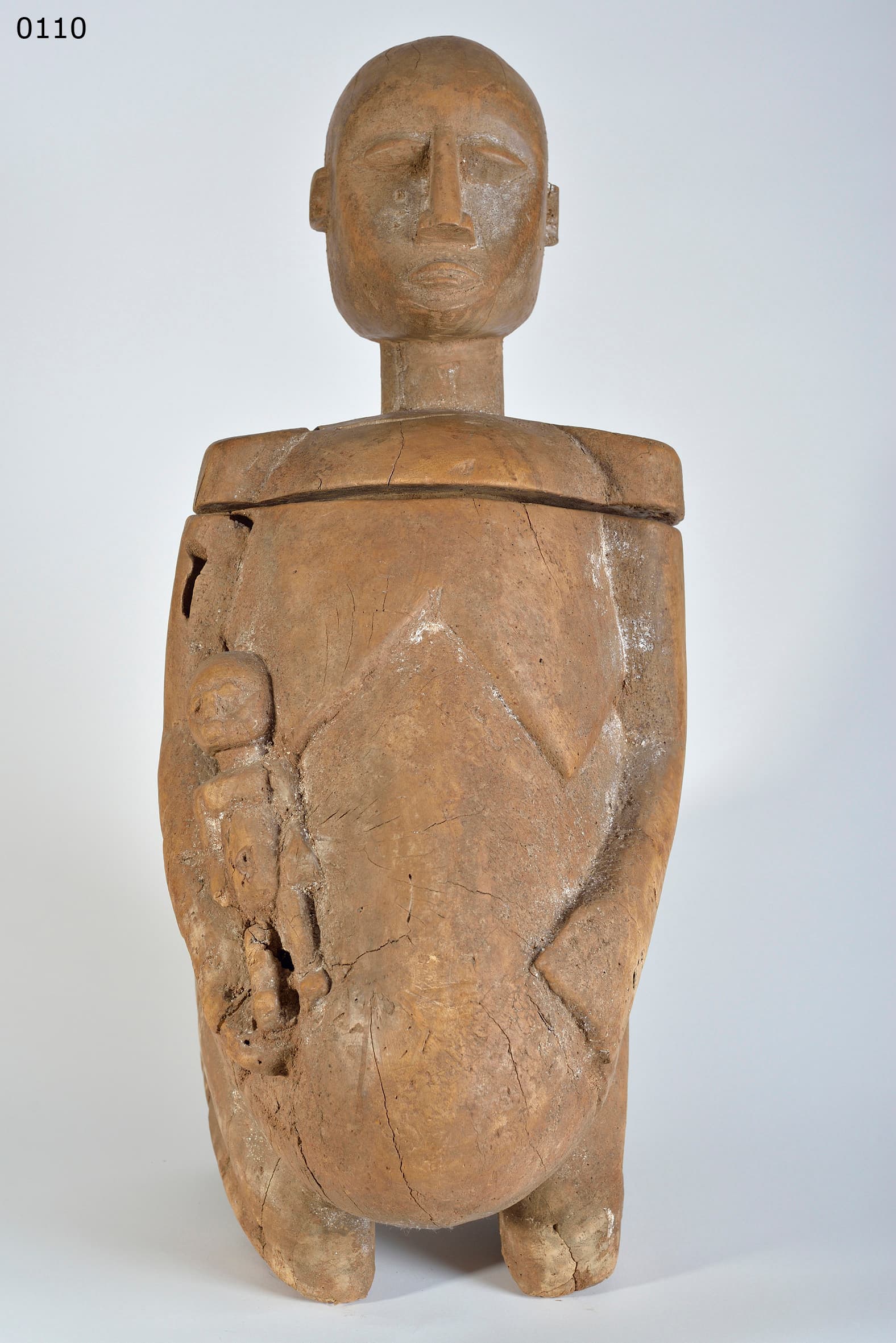
Eine breite, etwas abgeflachte Lobi-Terrakotta (17.-19. Jh., 33 cm) aus Burkina Faso - ein breiter Mund, horizontal geschlitzte Augen und eine markante kreisförmige hohle Öffnung im Scheitelbereich des Kopfes. Der stark strukturierte Ton ist vollständig mit einer dicken, trockenen, blassen Erdkruste überzogen.
1. Seltene Terrakotta-Abstraktion in der Region Voltaic
Die Lobi sind allgemein für ihre hölzernen Bateba-Figuren bekannt - ihre Ritualobjekte aus Terrakotta sind äußerst selten.
- Holz-zu-Ton-Übersetzung: Dieser Kopf überträgt die düstere, schwere und sehr zurückgezogene Ästhetik der Lobi-Holzschnitzerei auf gebrannten Ton.
- Slit-Eyed Vigilance: Die breite, abgeflachte Gesichtsebene und die horizontalen, schlitzartigen Augen projizieren dieselbe Aura angespannter, hyperwacher Wachsamkeit, wie man sie bei den hölzernen Lobi-Schreinen findet - wobei die starre spirituelle Geometrie dem Naturalismus vorgezogen wird.
2. Begräbnisgefäße und Opfergaben
Das auffälligste Merkmal ist die große, absichtlich in den Scheitel geschnitzte hohle Öffnung.
- Aktives Gefäß, keine Statue: Dieses architektonische Detail zeigt die Funktion des Kopfes als aktives rituelles Gefäß und nicht als solide Gedenkstatue.
- Fütterung des Ahnen: Auf einem Ahnengrab oder einem dithil (Familienschrein) aufgestellt, ermöglichte die offene Oberseite den Nachkommen, flüssige Trankopfer (Hirsebier oder Wasser) direkt "in" den Kopf des Ahnen zu gießen und so den ständigen Schutz des Geistes über den Haushalt sicherzustellen.
3. Unterirdische Verkalkung
Der physische Zustand deutet auf eine längere Bestattung oder die Integration in einen irdenen Schrein hin.
- Verdeckte ursprüngliche Oberfläche: Die ursprüngliche Keramikoberfläche ist durch eine dicke, blasse, stark verkalkte Kruste völlig verdeckt.
- Mineralische Bindung: Diese Schicht entstand durch die chemische Bindung des mineralhaltigen Bodens von Burkina Faso mit der porösen Terrakotta über mehrere Jahrhunderte hinweg - eine tiefgreifende, irreversible geologische Verkrustung, die die Herkunft aus dem 17. bis 19.
Zusammenfassung
Dieser Grabkopf, der die angespannte, wachsame Kraft des Lobi-Animismus in ein seltenes keramisches Medium übersetzt, ist ein wichtiges Stück voltaischer Kunst. Seine einzigartige Trankopfermulde und die dicke antike Verkalkung machen ihn zu einem außergewöhnlichen ethnografischen Altertum.
KI-unterstützt erstellt aus Sammlungsgutachten, Objektfotografie und eigener Recherche, redaktionell geprüft. Fehler sind möglich — Hinweise darauf sind uns willkommen. Zum Verfahren →
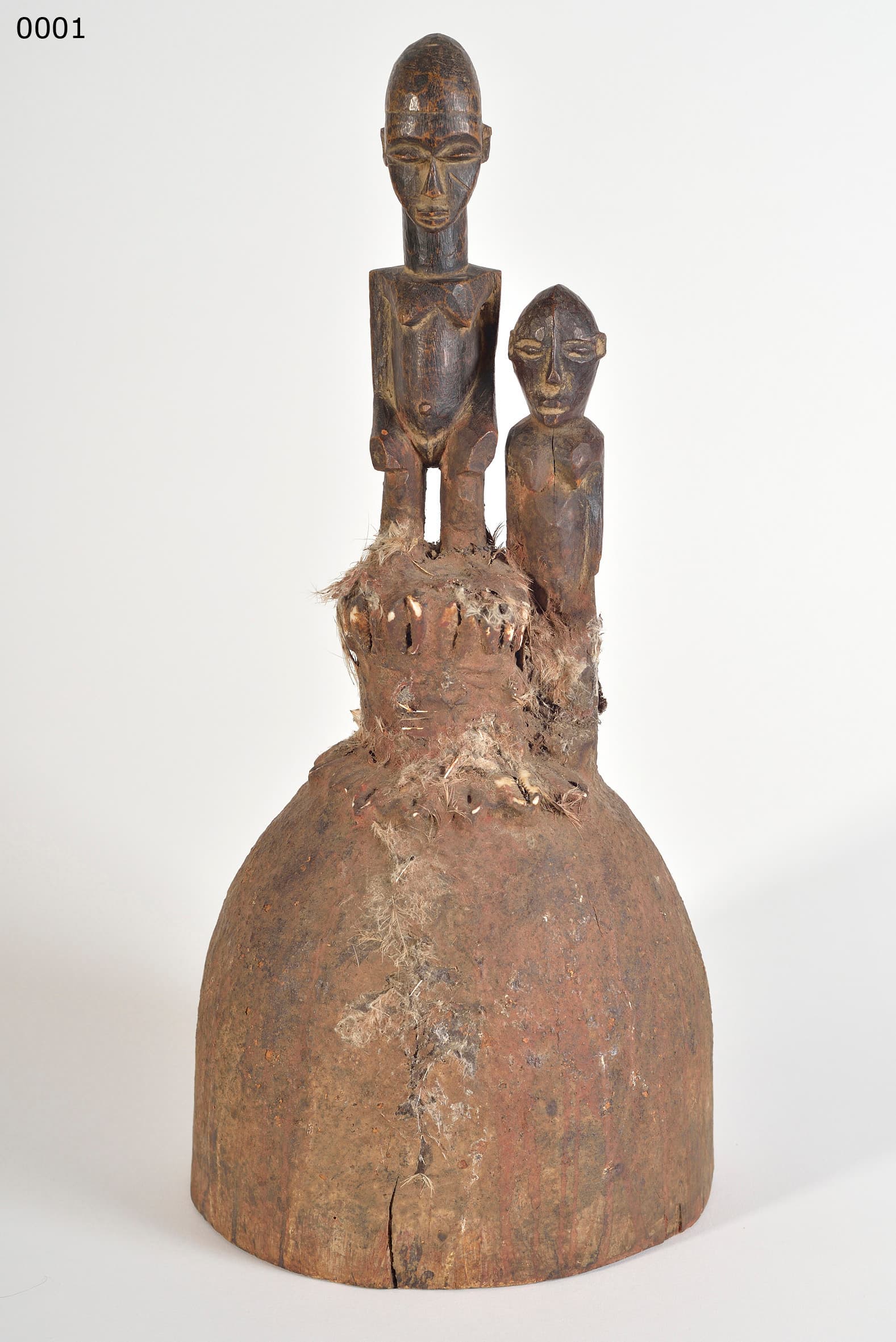
Schreinaltar mit Ehepaar BATEKE
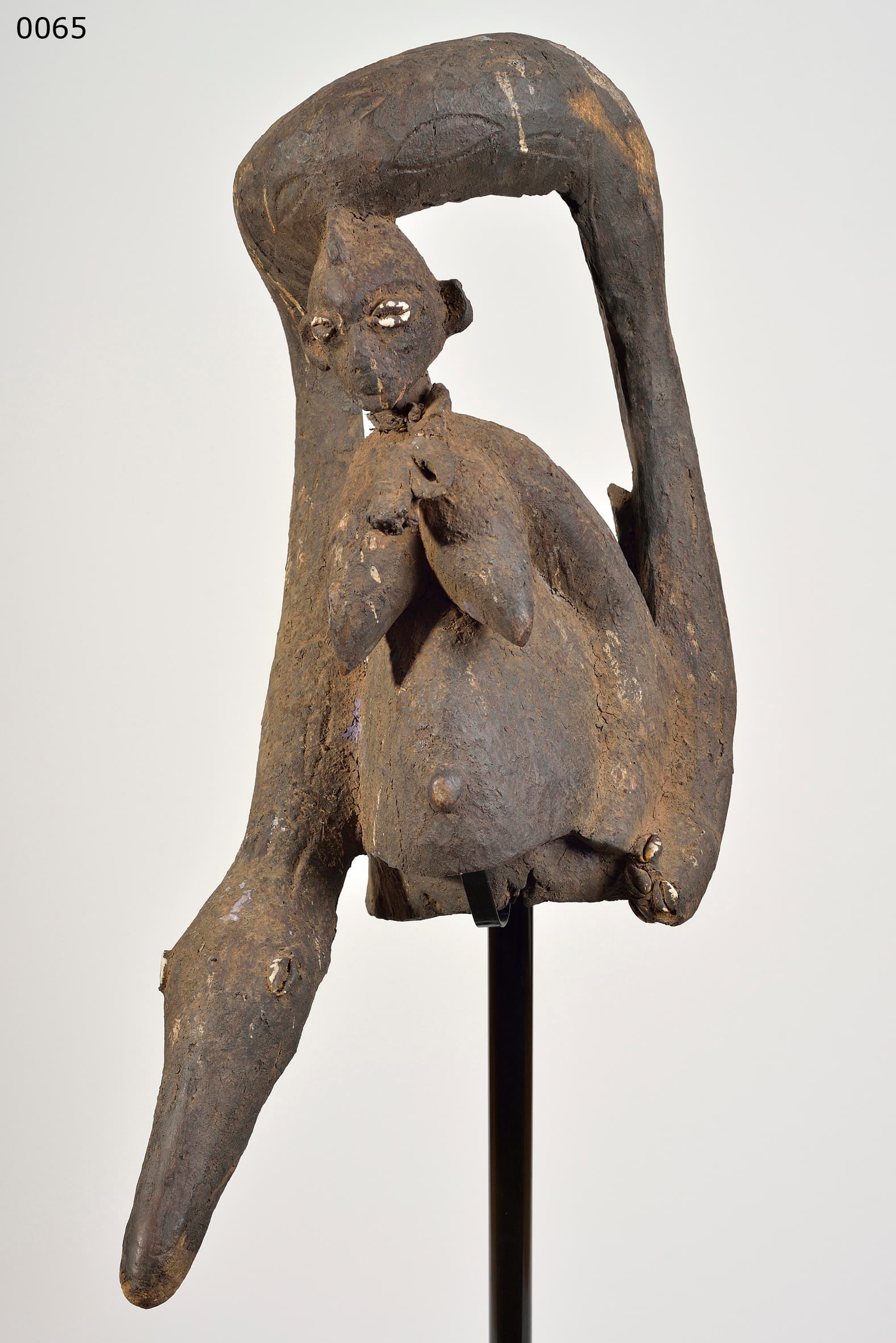
Seltene Kopfhaubenmaske
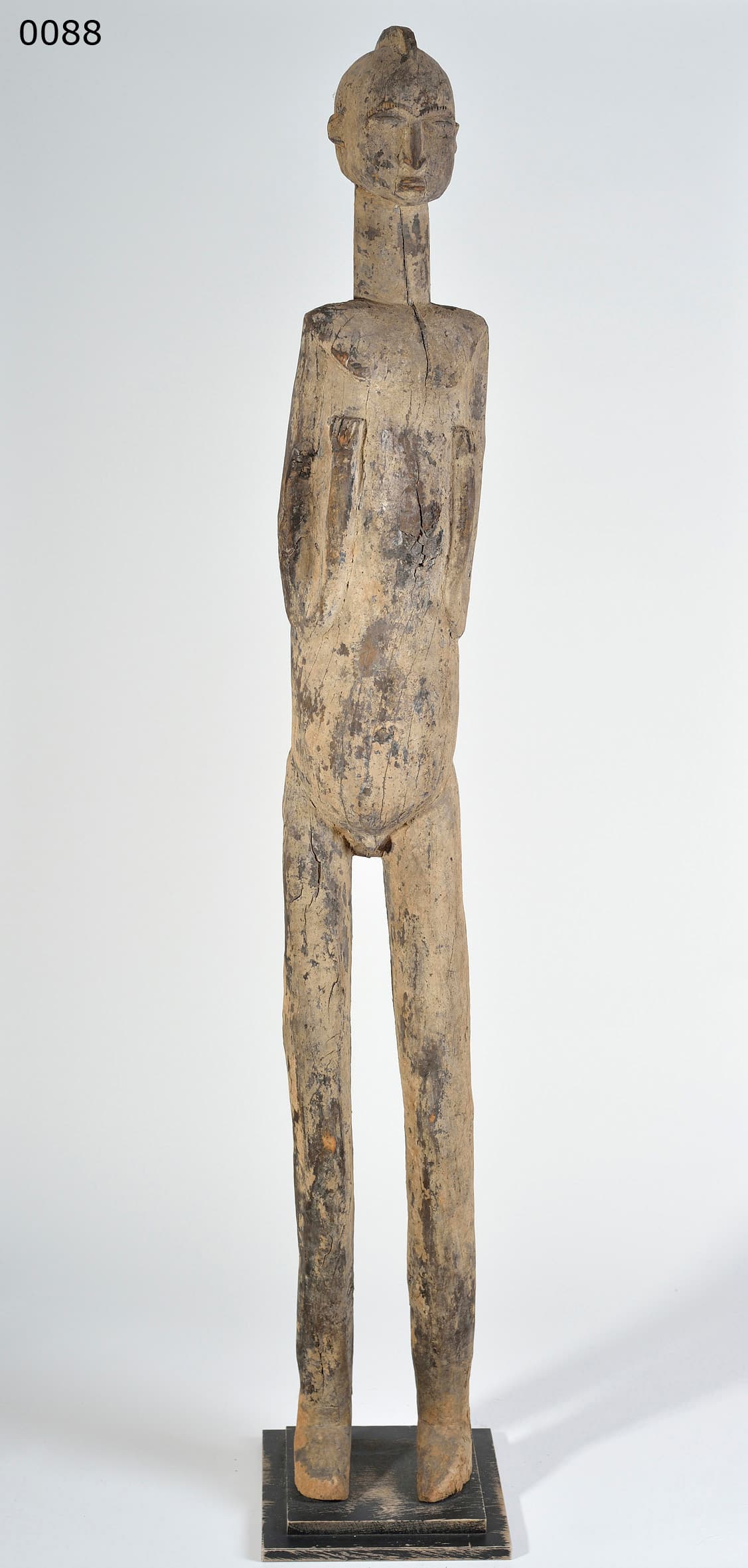
Schreinfigur, die einen BATEBA-Geist darstellt (ungewöhnlich groß, selten)