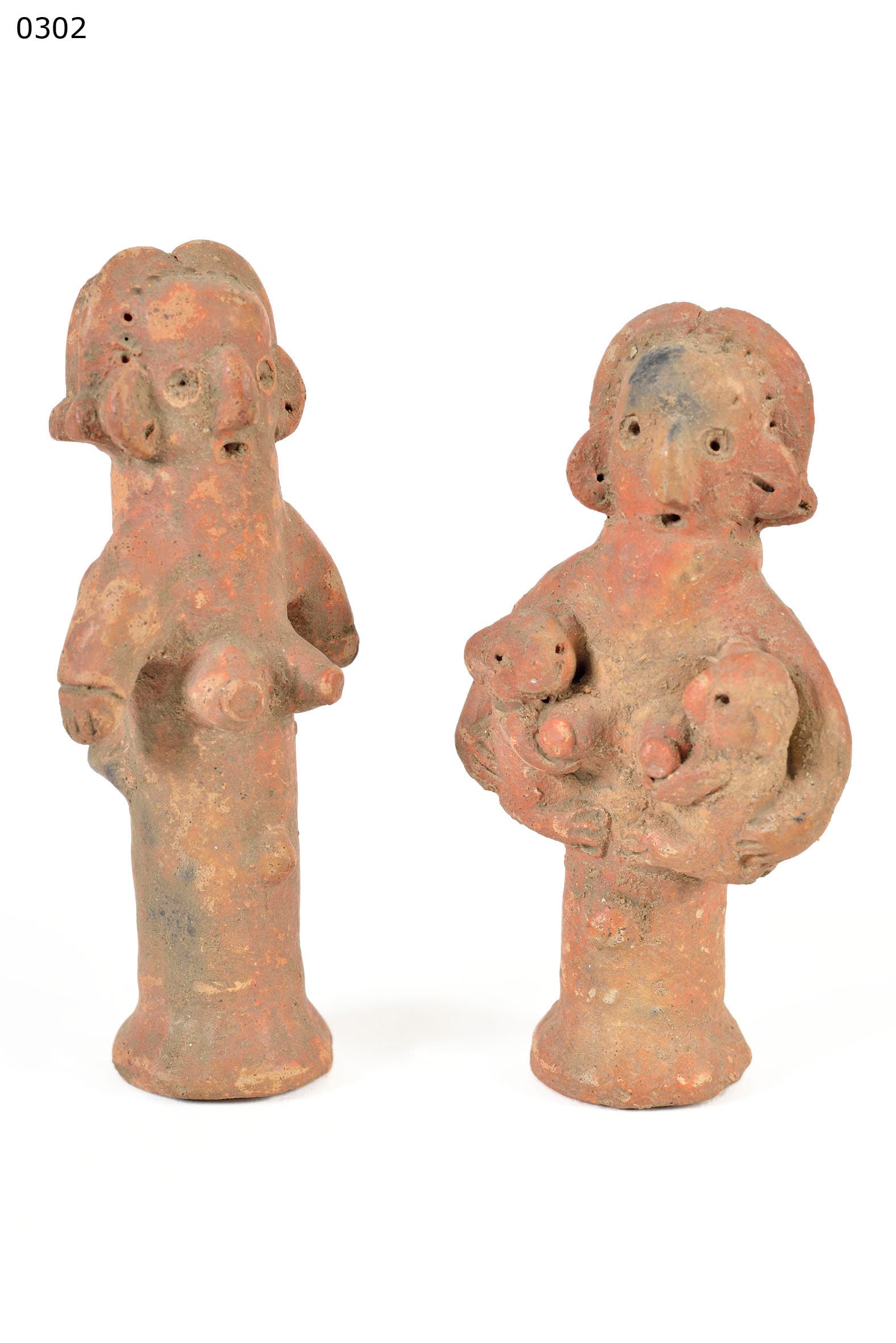
Eine Miniatur-Terrakotta aus dem Inland des Nigerdeltas (12.-16. Jh., 13 cm) aus Mali - ein stilisierter weiblicher Torso mit gepunkteten Skarifikationen, konstruiert mit einem aufgeweiteten oder konischen Sockel, der grobe rötliche Ton weist blasse verkalkte Bodenverkrustungen und deutliche dunkle Brennspuren auf.
1. Die Ikonographie der mütterlichen Abstammung
Diese Miniatur verkörpert die reichen lokalen spirituellen Traditionen des alten Nigerdeltas.
- Häusliche Verehrung: Während sie den geografischen Bereich mit den massiven Djenne-Figuren teilen, stellen kleinere, gröbere Stücke wie dieses eher eine zutiefst intime häusliche Verehrung als elitäre Grabbeigaben dar.
- Getupfte Haut: Die getupften Skarifikationen bedecken den Torso - eine visuelle Signatur der Elite-Identität und sozialen Zugehörigkeit in der alten Sahelzone.
2. Grabhügelablagerung und ewige Wächter
Die Architektur der Figur verrät ihre spezifische rituelle Funktion.
- Aufgeweitete Basis für die Bepflanzung: Das Fehlen von skulptierten Beinen zugunsten einer aufgeweiteten trompetenförmigen oder konischen Basis ermöglichte es, die Miniatur aufrecht in Sand oder Schlamm zu pflanzen.
- Schrein- und Grabhügelverstecke: Sie wurden in großen Mengen in Tumuli (Grabhügeln) deponiert oder in die Wände und Böden von Hausheiligtümern eingelassen und dienten als ewige stationäre Wächter, die über die Verstorbenen wachten oder den lebenden Haushalt vor Unfruchtbarkeit und bösartiger Magie schützten.
3. Feuerwolken und unterirdische Verkalkung
Die Taphonomie legt einen antiken Ursprung nahe.
- Brennwolken im Tagebau: Dunkle, unregelmäßige Flecken auf dem rötlichen Ton sind Brennwolken - Kohlenstoffflecken, die von der unvorhersehbaren Natur der antiken Niedertemperaturbrände im Tagebau herrühren.
- Zementartige Kruste: Ein langes Verbleiben in den saisonal überfluteten Böden von Mali hat eine tiefe Verkalkung verursacht - eine blasse, zementartige Kruste aus Erdmineralien, die dauerhaft in den mikroskopisch kleinen Poren sitzt, die getüpfelten Ritzungen ausfüllt und auf eine archäologische Einbettung hindeutet.
Zusammenfassung
Diese weibliche Miniatur-Grabfigur ist ein bemerkenswertes archäologisches Zeugnis, das die intime häusliche Verehrung des alten Nigerdeltas im Landesinneren veranschaulicht. Die gesprenkelten Skarifikationen und die tiefe unterirdische Verkalkung unterstreichen ihren historischen Charakter.
KI-unterstützt erstellt aus Sammlungsgutachten, Objektfotografie und eigener Recherche, redaktionell geprüft. Fehler sind möglich — Hinweise darauf sind uns willkommen. Zum Verfahren →