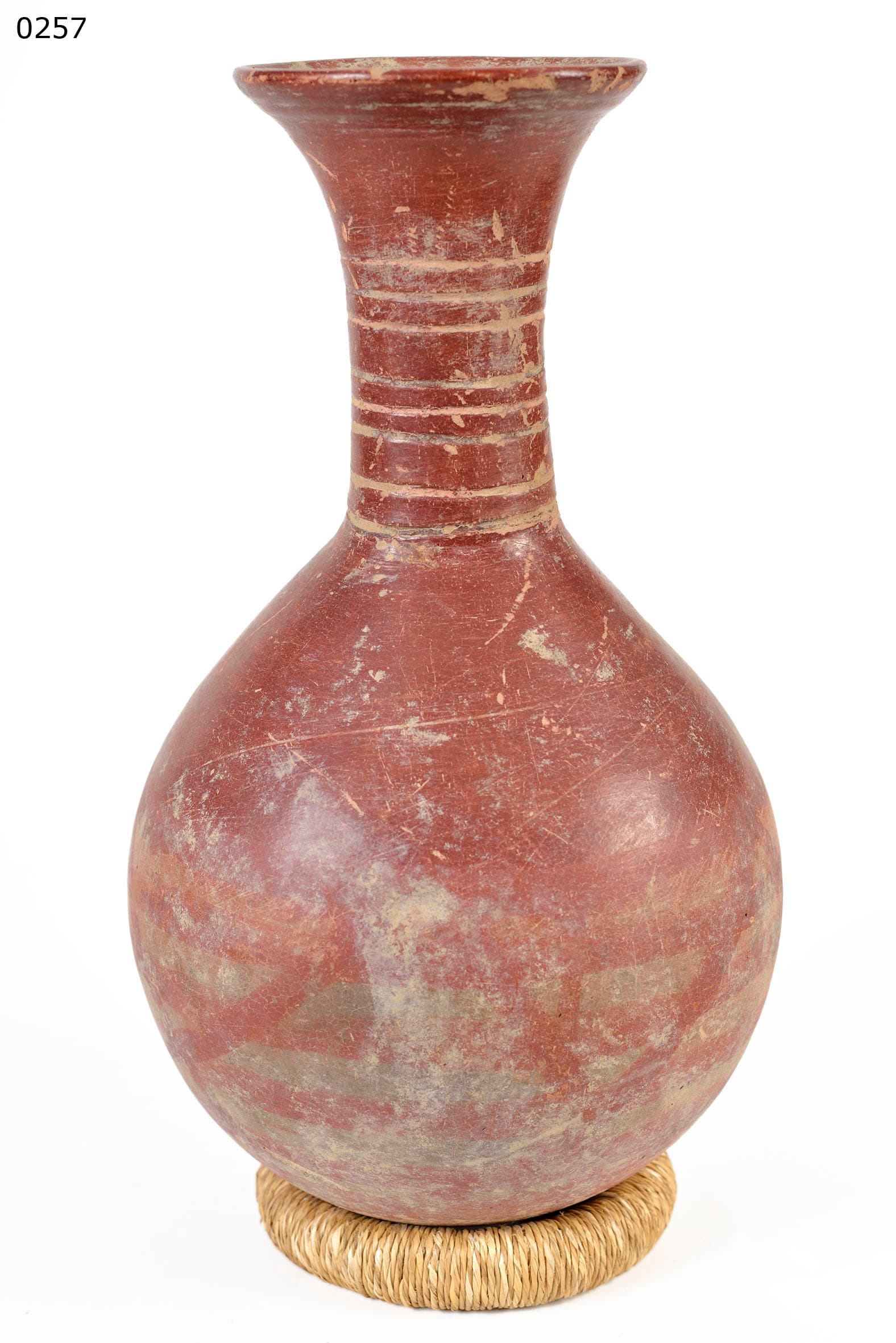
Ein exquisites, kugelförmiges Terrakotta-Gefäß (12.-16. Jh., 39 cm) aus dem Inland des Nigerdeltas in Mali. Es ist vollständig mit geometrischen Bändern und Dreiecken bedeckt, die Oberfläche ist stark verkalkt und hat eine erdige Kruste.
1. Der Höhepunkt der malischen Keramikkunst
Dieses Gefäß repräsentiert die hochentwickelten Keramiktraditionen des alten Inland-Niger-Deltas, das zeitgleich mit dem Reich von Djenne entstand.
- Rhythmischer Einschnitt: Der präzise rhythmische Einschnitt von Dreiecken und Bändern zeugt von einer Beherrschung der dekorativen Geometrie, die sich mit den berühmten figurativen Skulpturen der Region messen kann.
- Künstlerischer Höhepunkt: Das Stück ist das Produkt einer Kultur, die sich auf dem absoluten Höhepunkt ihrer künstlerischen Kraft befand - allein das ornamentale Programm erforderte spezielles Können und stundenlange disziplinierte Arbeit.
2. Rituelle Opfergaben und Grabbeigaben
Fein verzierte Gefäße dieses Kalibers wurden nur selten für den Hausgebrauch hergestellt.
- Eliteinhalt: Wahrscheinlich wurden sie zur Aufbewahrung heiliger Medizin, zeremonieller Trankopfer oder wertvoller Handelsgüter verwendet.
- Bestattungscaches: Wenn solche Gefäße in archäologischen Kontexten gefunden werden, stammen sie in der Regel aus Grabhügeln oder Gründungscaches, die als Opfergaben zur Versorgung der Ahnen im Jenseits oder zur Einweihung neuer Häuser und Schreine angelegt wurden.
3. Unterirdische Verkalkung
Ein halbes Jahrtausend der Bestattung hat den gebrannten Ton chemisch verändert.
- Mineralische Bindungen: Dort, wo sich Bodenmineralien dauerhaft mit der porösen Keramik verbunden haben, hat sich eine blasse Kalkkruste gebildet.
- Aufgeweichte Einschnitte: Die extreme Aufweichung der ursprünglich scharfen Ritzlinien bestätigt die Datierung auf das 12. bis 16. Jahrhundert - Jahrhunderte der Kompression und Chemie haben jede Kante abgerundet.
Zusammenfassung
Dieses Gefäß aus dem Nigerdelta ist ein hervorragendes Beispiel malischer Keramikkunst, das eine elegante Kugelform mit komplizierten geometrischen Verzierungen verbindet. Seine tiefe unterirdische Verkalkung macht es zu einer wertvollen archäologischen Antiquität.
KI-unterstützt erstellt aus Sammlungsgutachten, Objektfotografie und eigener Recherche, redaktionell geprüft. Fehler sind möglich — Hinweise darauf sind uns willkommen. Zum Verfahren →