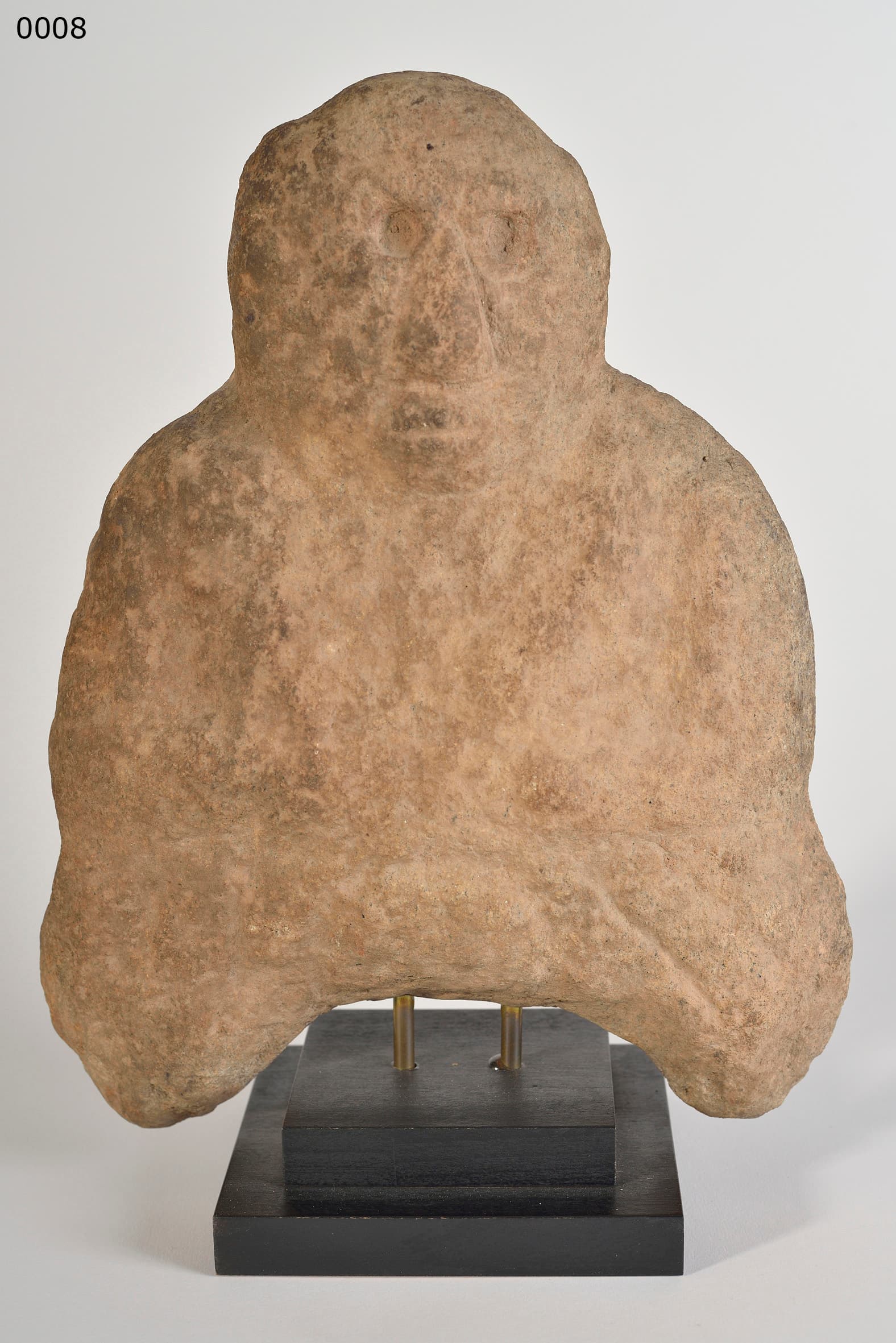
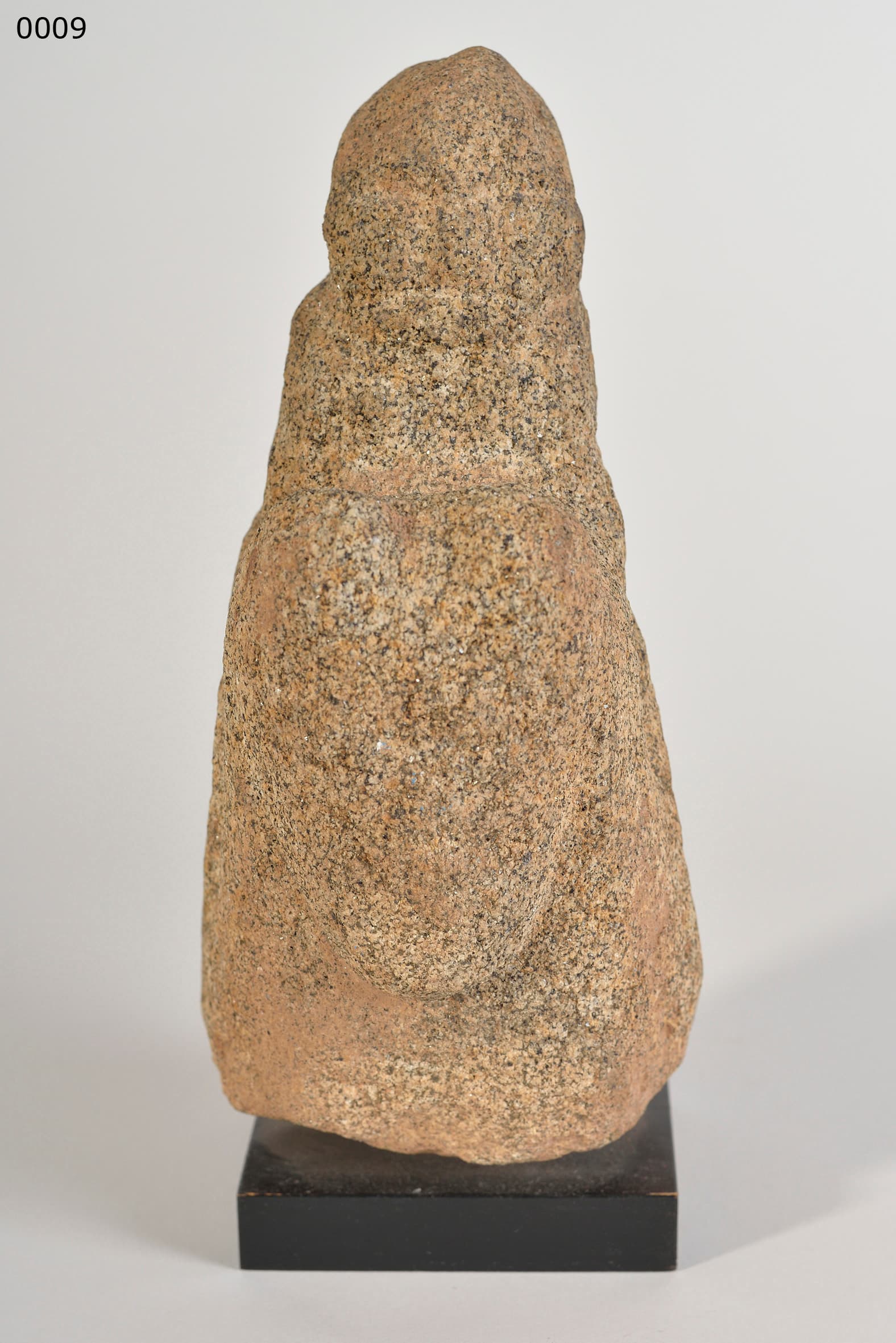
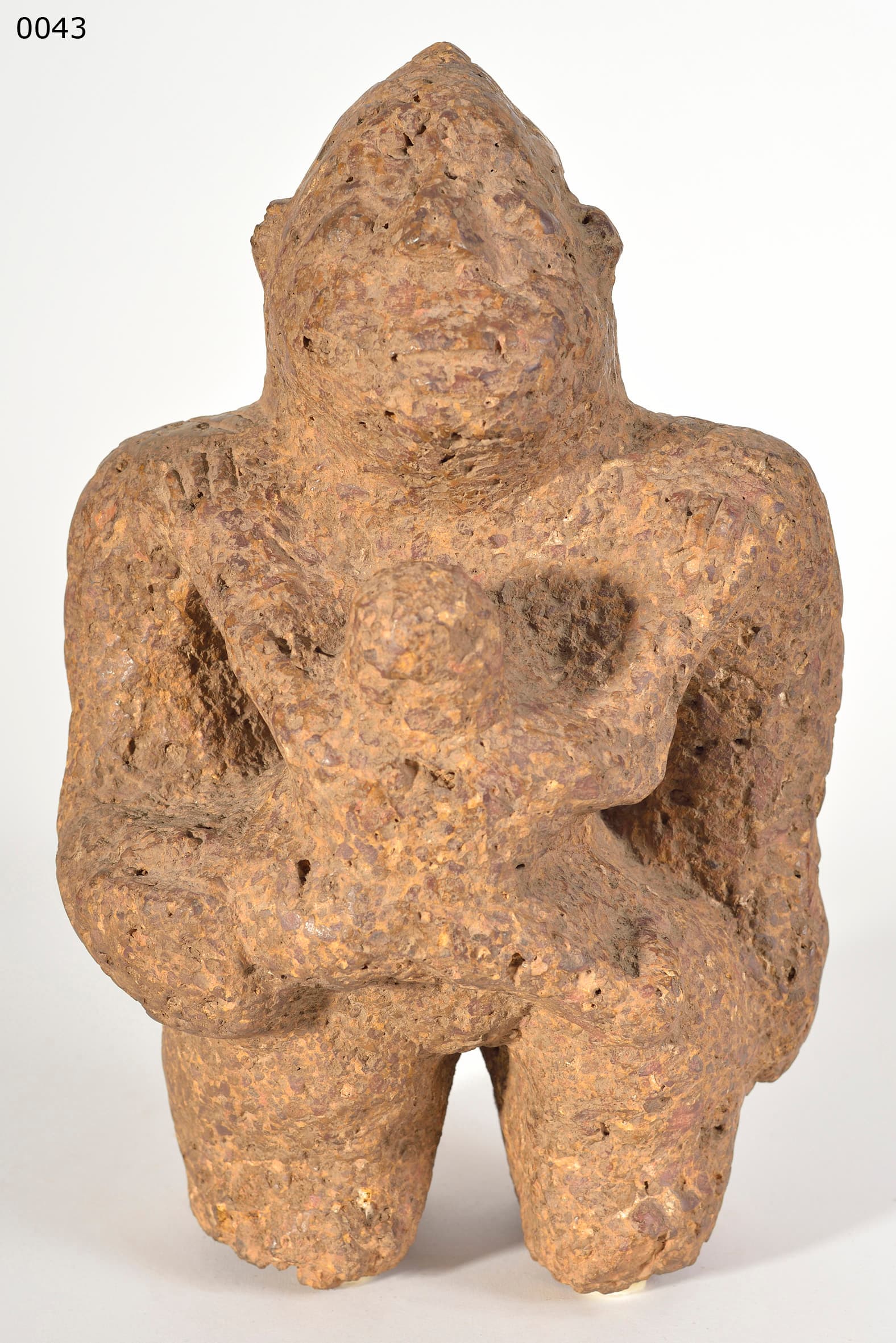
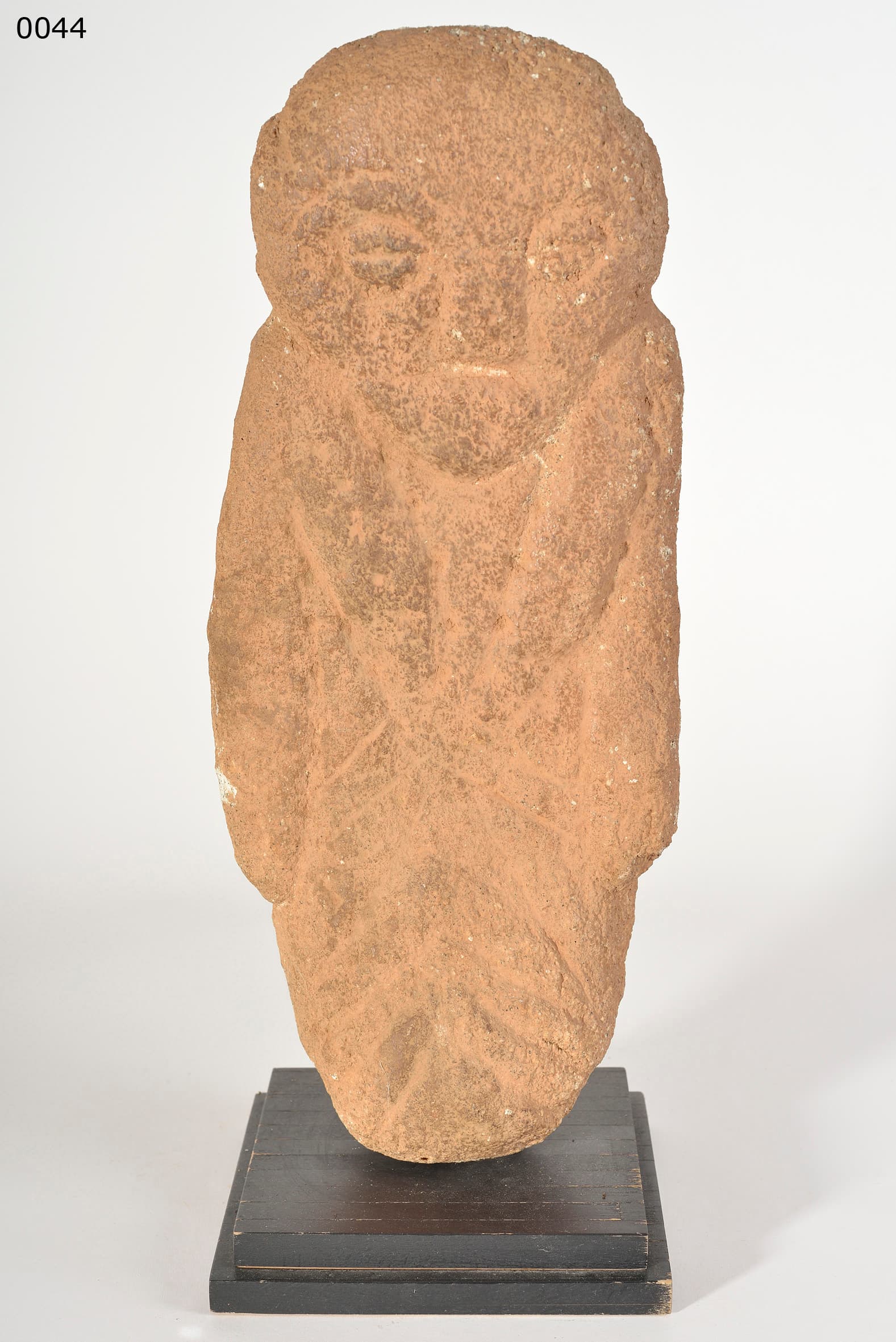
Eine lithische Nyonyosi-Grabfigur (12.-16. Jh., 20 cm) aus Burkina Faso - gemeißelt aus dichtem, grobkörnigem Granit oder Sandstein, mit einem kräftigen, stark abstrahierten Körper, einem übergroßen, abgerundeten Kopf, ausgeprägten Stirnkämmen und vereinfachten Gliedmaßen. Die lithische Oberfläche zeigt eine deutliche Glättung, Erosion und eine gesprenkelte, grau-braune Verwitterung, die auf ein hohes Alter und eine direkte Einwirkung der Elemente hinweist. Gepaart mit 0305.
1. Monumentaler Minimalismus in der lithischen Schnitzerei
Die Steinmetztradition der Nyonyosi - der alten Ureinwohner des burkinischen Plateaus, die später von den Kurumba assimiliert wurden - ist durch eine strenge monolithische Abstraktion gekennzeichnet.
- Masse vor Detail: Im Gegensatz zu den hochdetaillierten Holzschnitzereien späterer westafrikanischer Epochen stehen bei den Steinfiguren der Nyonyosi die rohe Masse und die geometrische Reduktion im Vordergrund.
- Kopf als Sitz der Seele: Die übertriebenen Proportionen des Kopfes im Verhältnis zum Körper betonen das Schädelgewölbe als Sitz der Seele und des Intellekts der Vorfahren - ein wiederkehrendes Motiv in den frühesten Schichten der sahelischen Kunst.
2. Wächter der Nekropole
Diese schweren, imposanten lithischen Figuren dienten traditionell als Grabzeichen oder Grabwächter.
- Verankerung der Seele: Sie wurden auf Grabhügeln oder an den Eingängen von unterirdischen Familiengruften errichtet, um die Seele des Verstorbenen an ihrer letzten Ruhestätte zu verankern.
- Besänftigung der Toten: Indem sie die Schwelle zwischen dem Reich der Lebenden und der Nekropole markierten, besänftigten diese Figuren die Toten und hinderten ruhelose Geister daran, ins Dorf zurückzukehren und Krankheiten oder Unglück zu verursachen.
3. Elementare Verwitterung und Altertum
Der Erhaltungszustand spricht für ein hohes Alter.
- Weiche Gesichtserosion: Die Aufweichung der Gesichtszüge sowie tief eingebettete Erd- und Flechtenablagerungen legen nahe, dass der Stein über mehrere Jahrhunderte hinweg dem rauen, trockenen Klima Burkina Fasos ausgesetzt war.
- Replizierbare Mikrolöcher: Die spezifische Art von Mikrolöchern auf der Oberfläche des Steins gilt als schwer künstlich reproduzierbar – ein geologischer Indikator, der eine Altersschätzung aus dem 12. bis 16. Jahrhundert stützt.
Zusammenfassung
Diese Steinskulptur bietet einen seltenen Einblick in die alten vorislamischen Bestattungspraktiken des Sahel-Plateaus. Ihre strenge Abstraktion und die tiefe geologische Verwitterung unterstreichen ihre Bedeutung als seltenes archäologisches Zeugnis.
KI-unterstützt erstellt aus Sammlungsgutachten, Objektfotografie und eigener Recherche, redaktionell geprüft. Fehler sind möglich — Hinweise darauf sind uns willkommen. Zum Verfahren →