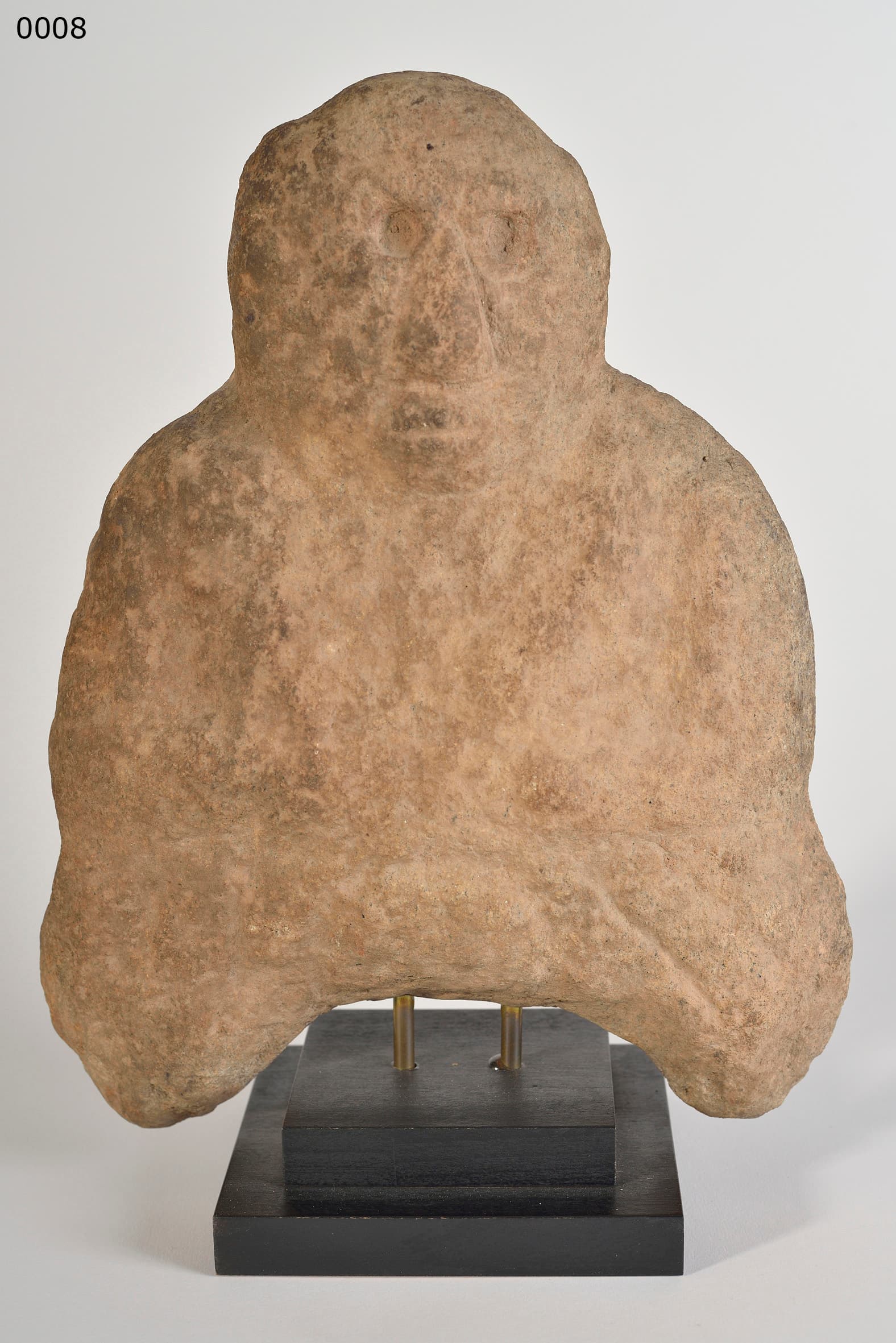
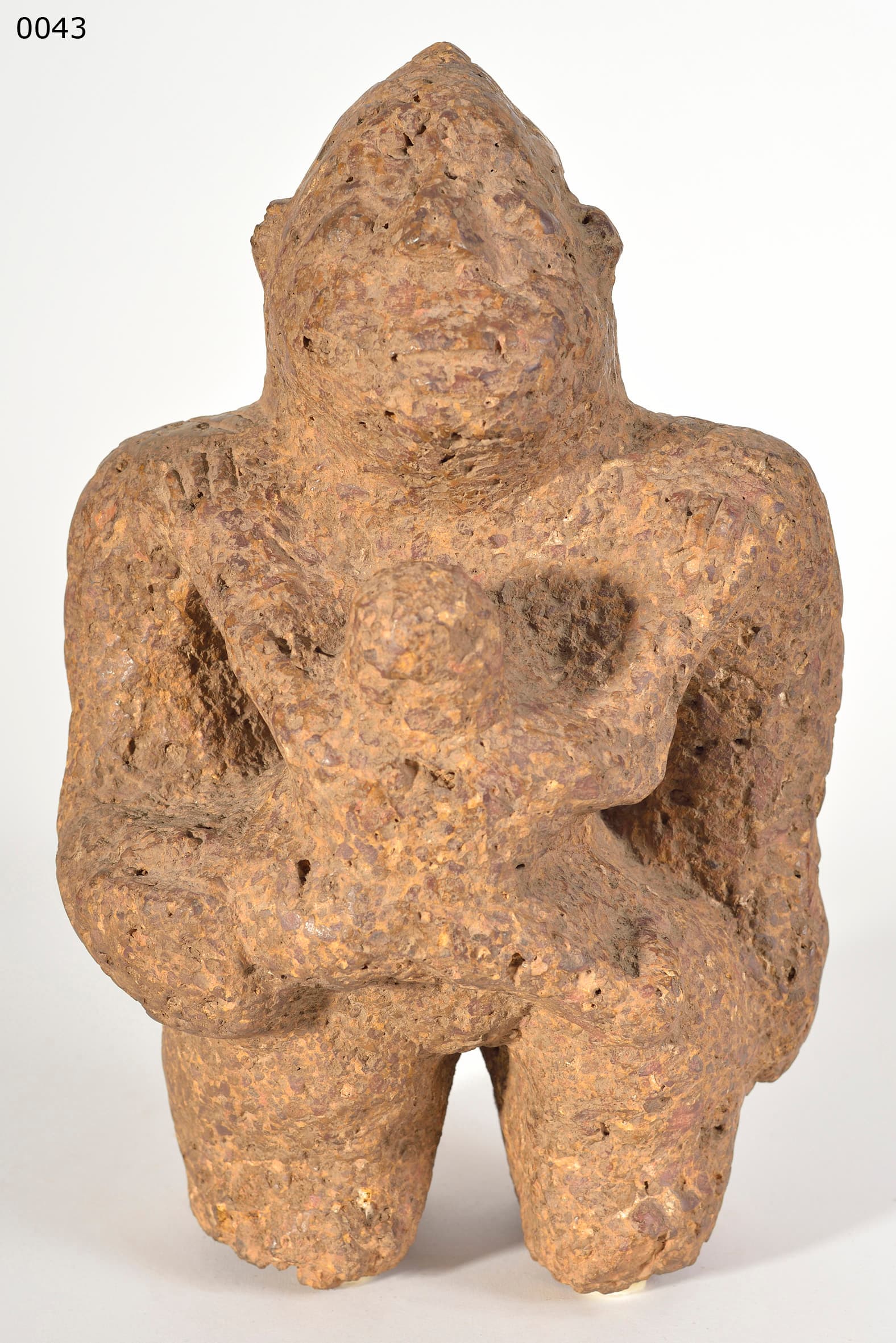
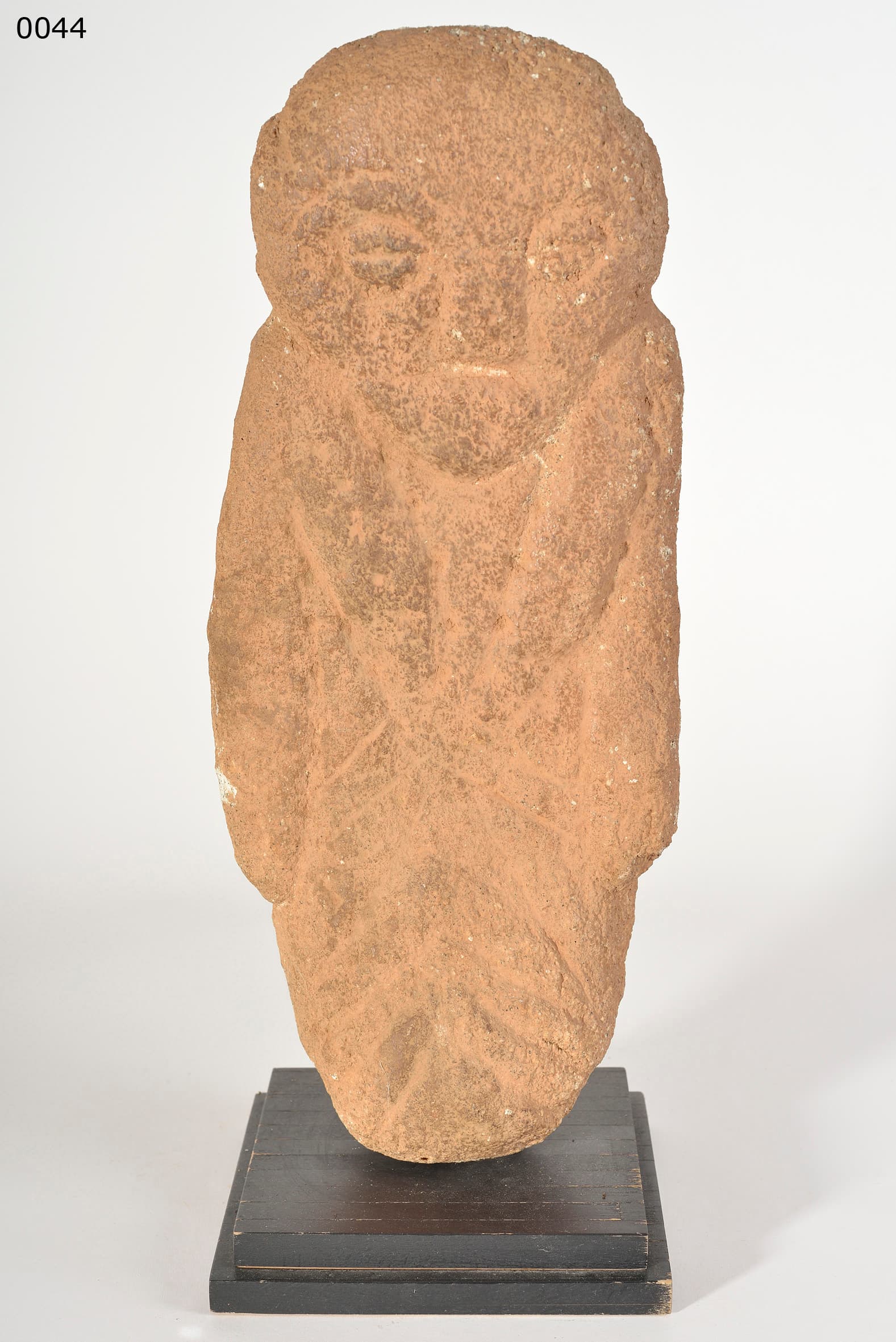
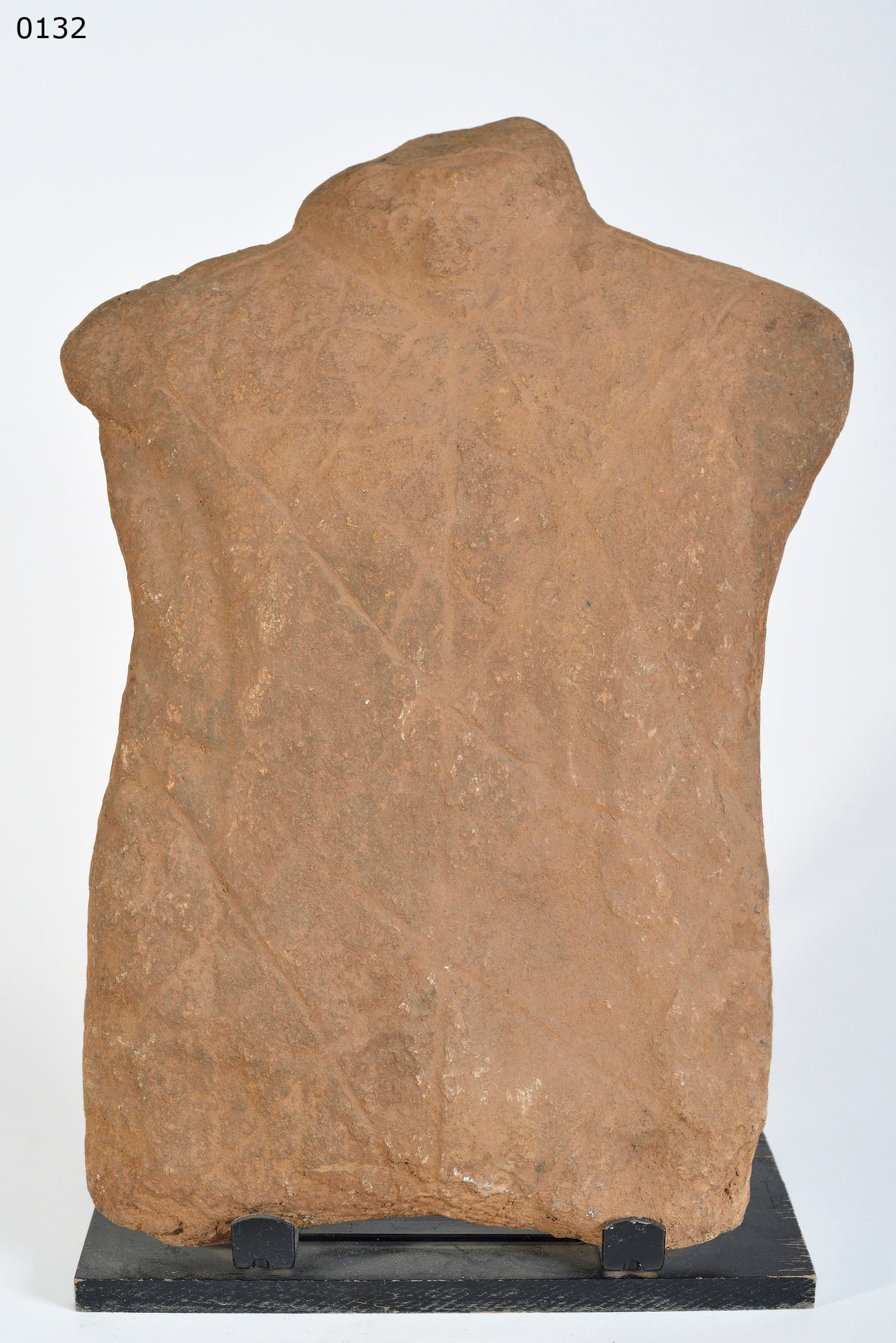
Dies ist ein weiteres faszinierendes Beispiel einer Nyonyosi (oder Nyonyose)-Grabfigur aus Burkina Faso, die der gleichen alten Tradition angehört wie das vorherige Stück (Bild 0008).
Während die vorherige Figur mehr erkennbare Gesichtszüge hatte, steht diese für die extreme Abstraktion, die man bei diesen mittelalterlichen westafrikanischen Steinmonumenten häufig findet.
1. Vergleichende Analyse: Abstraktion vs. Repräsentation
In der Kunst der Nyonyosi gibt es ein breites Spektrum an Darstellungen. Einige Figuren haben ein recht "menschliches" Aussehen, während andere - wie diese - auf eine symbolische Säule reduziert sind.
- Die totemistische Form: Die Figur ist als einfache, sich verjüngende Säule dargestellt. Der "Kopf" wird durch die abgerundete Spitze angedeutet, und die "Schultern" oder "Arme" werden durch eine subtile Verbreiterung des zentralen Blocks angedeutet.
- Geist vs. Körper: Diese Abstraktionsebene deutet darauf hin, dass der Schnitzer weniger an der Darstellung eines physischen menschlichen Körpers als vielmehr an der Schaffung eines "Kraftobjekts" oder eines dauerhaften Gefäßes für die Seele interessiert war. Es stellt den Verstorbenen in seiner neuen, nicht-menschlichen Form als einen mächtigen Vorfahren dar.
2. Material und Verwitterung
Das Material scheint ein sehr grober, könniger Stein zu sein - wahrscheinlich ein verwitterter Granit oder ein stark kristallisierter Laterit.
- Oberflächentextur: Die "zerklüftete" und erodierte Oberfläche erzählt die Geschichte einer jahrhundertelangen Exposition gegenüber dem rauen Klima der Sahelzone. Jedes Sandkorn und jeder Regentropfen im Laufe von Jahrhunderten hat die ursprünglichen Meißelspuren geglättet und zu dieser weichen, organischen Silhouette beigetragen.
- Dauerhaftigkeit: Wie bei der vorherigen Steinfigur war die Wahl des Materials ein bewusster ritueller Akt. In einer Region, in der die meiste Kunst aus Holz gefertigt wurde (das verrottet), war Stein das Medium der Ewigkeit.
3. Spiritueller Kontext: Der "Herr der Erde"
Wie bereits erwähnt, waren die Nyonyosi die ursprünglichen Bewohner dieses Landes, bevor die Mossi kamen.
- Nandare: In einigen lokalen Traditionen werden diese Steinmonumente nandare genannt. Sie waren nicht nur "Grabsteine", sondern aktive "Strahler" spiritueller Energie.
- Territoriale Markierungen: Da die Nyonyosi die "Meister der Erde" waren, dienten diese Figuren auch dazu, den spirituellen Besitz des Clans am Land zu markieren. Indem man ein solch schweres, dauerhaftes Objekt in den Boden steckte, verankerte" man die Familie buchstäblich mit dem Boden.
4. historische Bedeutung
Zwei dieser Objekte zusammen (in einer Sammlung oder einem Katalog) zu finden, ist bedeutsam. Sie zeigen die stilistische Bandbreite einer Kultur, die dem Zeitraum zwischen dem 12. und 16. Jahrhundert zugeordnet wird. Insbesondere dieses Stück zeigt eine "proto-minimalistische" Ästhetik, die der europäischen Moderne um Jahrhunderte vorauszugehen scheint und ein vergleichbares Gefühl von tiefer, ruhiger Kraft vermittelt.
Zusammenfassung
Diese Nyonyosi-Figur gilt als ein eindrucksvolles Beispiel reduktiver Bildhauerei. Sie entfernt die individuelle Persönlichkeit des Verstorbenen, um ein zeitloses, universelles Bild eines Ahnen zu präsentieren. Sie ist ein stummer Zeuge der alten Geschichte des Hochplateaus von Burkina Faso und repräsentiert eine Periode hoher künstlerischer Leistungen lange vor der Kolonialzeit.
KI-unterstützt erstellt aus Sammlungsgutachten, Objektfotografie und eigener Recherche, redaktionell geprüft. Fehler sind möglich — Hinweise darauf sind uns willkommen. Zum Verfahren →