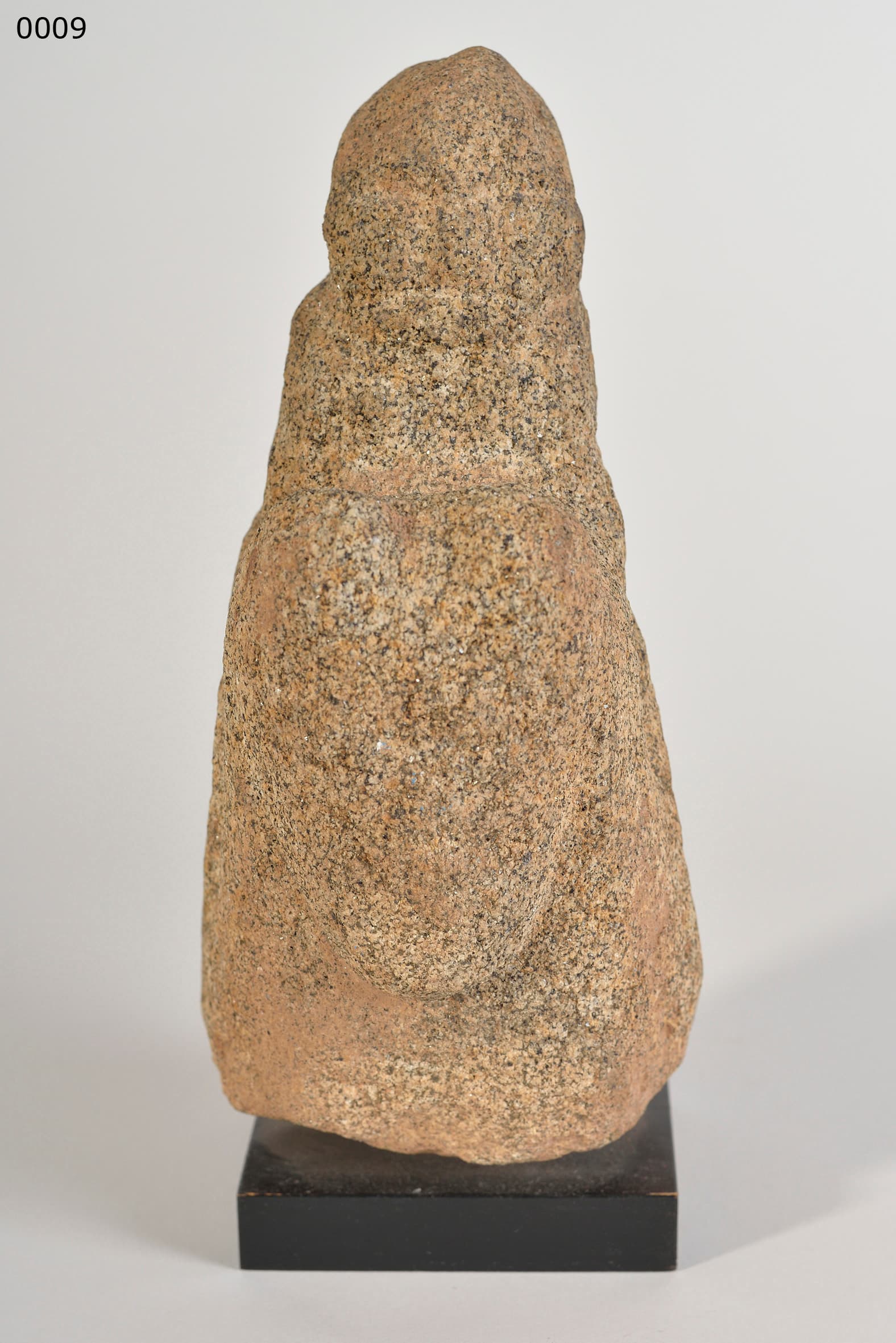
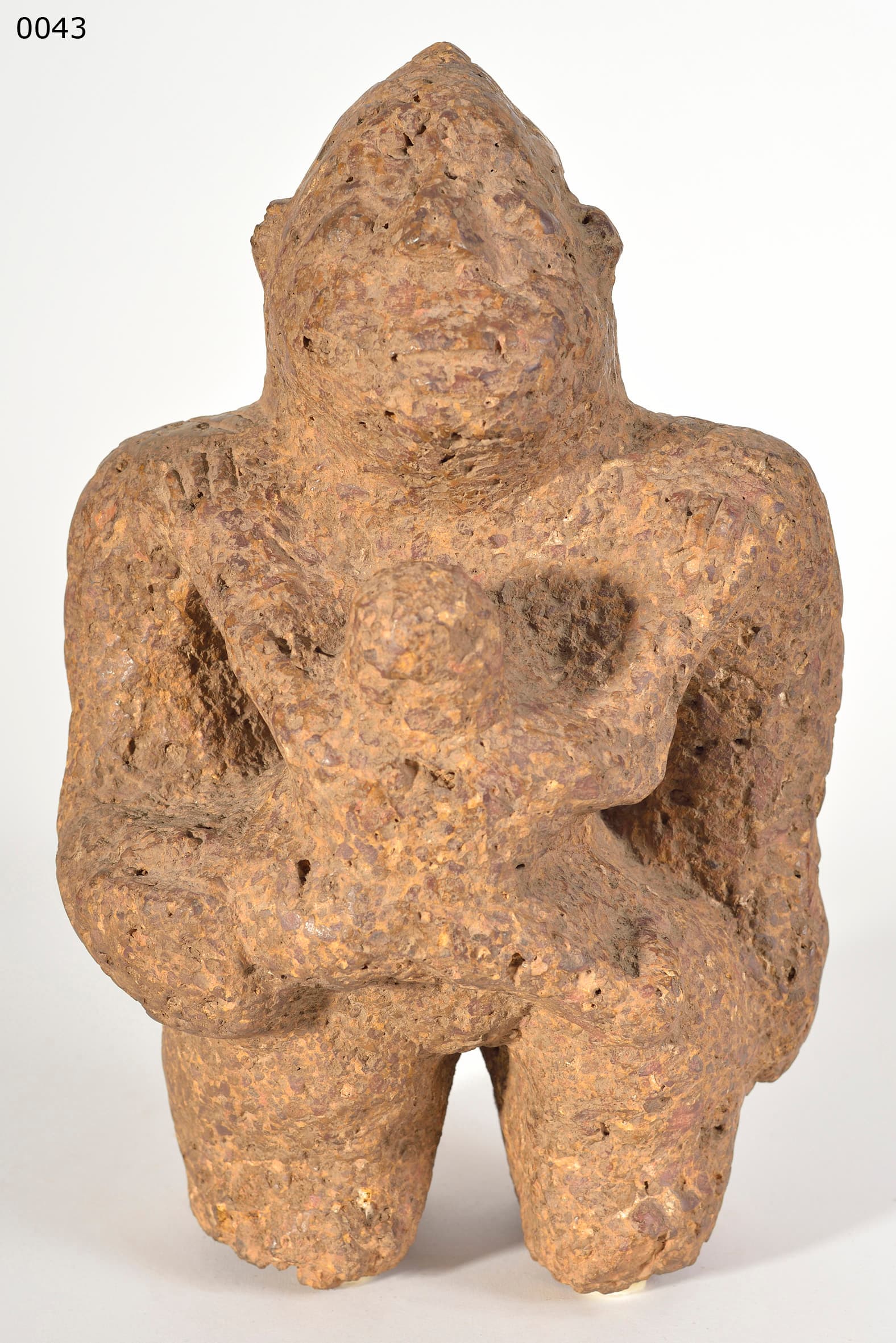
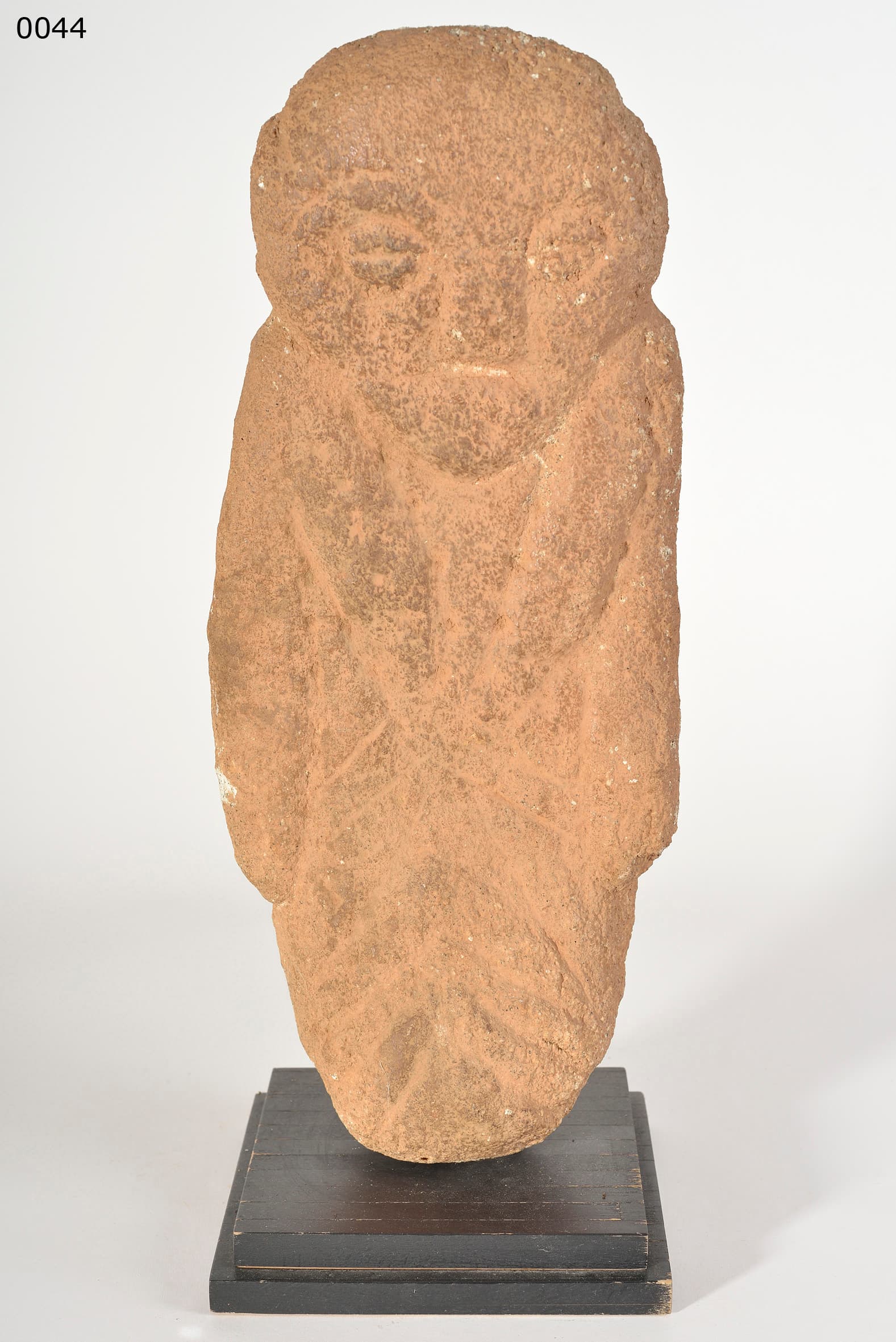
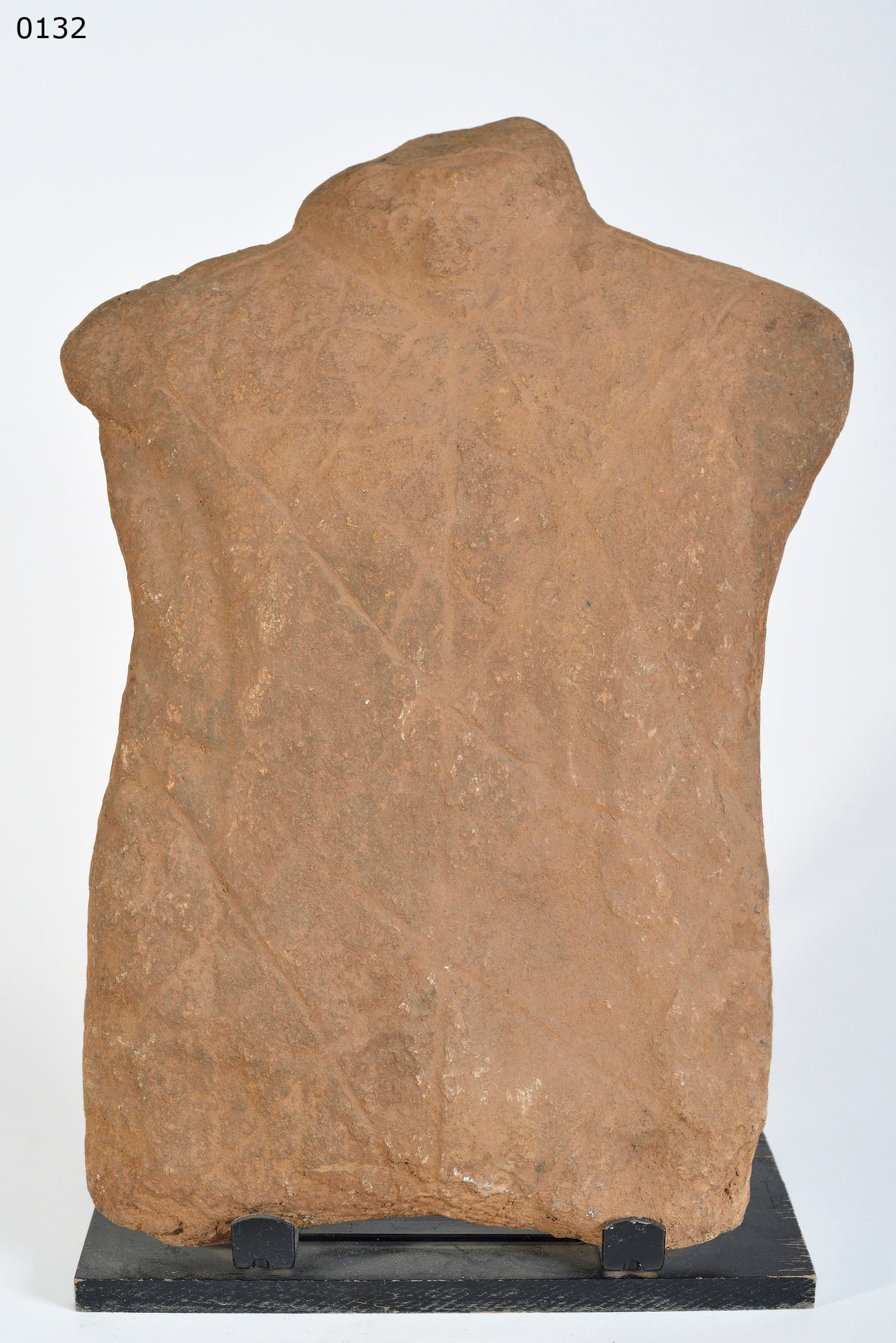
Dies ist eine bedeutende und seltene Nyonyosi (oder Nyonyose) Grabfigur aus Burkina Faso, die etwa aus dem 12. bis 16. Jahrhundert.
Dieses Objekt repräsentiert eine der ältesten und am wenigsten verstandenen Bildhauertraditionen in Westafrika.
1. Die Nyonyosi: "Die Uralten"
Die Nyonyosi sind die ursprünglichen, vormossischen Bewohner des nördlichen und zentralen Plateaus von Burkina Faso. Als die Mossi in die Region einwanderten und ihre Reiche gründeten (etwa im 15. Jahrhundert), wurden die Nyonyosi assimiliert, behielten aber ihre Rolle als "Herren der Erde" Auch heute noch sind in der Mossi-Gesellschaft die Priester der Erde oft von den Nyonyosi abstammend.
2. Bestattungsfunktion und Ritual
- Ahnenmarkierungen: Diese Steinskulpturen wurden traditionell als Grabmarkierungen oder Gedenkstätten verwendet. Sie wurden auf den Grabhügeln hochrangiger Personen errichtet oder in heiligen Hainen aufgestellt, die den Ahnen gewidmet waren.
- Die Macht des Steins: Im Gegensatz zu den in späteren Epochen üblichen Holzschnitzereien (wie den Objekten der Lobi oder Igbo, die Sie mit uns geteilt haben), war die Verwendung von Stein den dauerhaftesten und mächtigsten spirituellen Verbindungen vorbehalten. Diese Figuren sollten jahrhundertelang den Elementen trotzen und als dauerhafter Anker für den Geist des Verstorbenen dienen.
- Laterit-Stein: Die meisten dieser Figuren sind aus Laterit gemeißelt, einem rötlichen, eisenhaltigen Erdgestein, das beim ersten Abbau relativ weich ist, sich aber deutlich verhärtet, wenn es der Luft ausgesetzt wird.
3. Visuelle Analyse
- Radikaler Reduktivismus: Der Stil ist extrem minimalistisch und "reduktivistisch" Der Körper ist in der Regel ein einfacher, säulen- oder glockenförmiger Block, wobei der Schwerpunkt ganz auf dem Kopf liegt.
- Das Gesicht: Das Gesicht wird oft als flaches oder leicht konkaves Dreieck oder Oval dargestellt. Die Gesichtszüge - die runden Augen, die gerade Nase und der kleine Mund - sind sehr sparsam geschnitzt. Diese "geisterhafte" Abstraktion soll einen Geist darstellen, der über die physische Welt hinaus in das Reich der Ahnen übergegangen ist.
- Patina des Alters: Die verwitterte, entsteinte Oberfläche ist das Ergebnis von Hunderten von Jahren, in denen sie den Winden und Regenfällen der Sahelzone ausgesetzt war. Diese "natürliche Patina" ist ein Markenzeichen authentischer alter Steinskulpturen aus dieser Region.
4. historischer Kontext
Im 16. Jahrhundert wurde die Herstellung dieser großen Steinmonolithen weitgehend eingestellt, da sich die soziale Struktur der Mossi durchsetzte und sich die künstlerischen Traditionen auf Holz und Metall verlagerten. Heute werden diese Figuren gelegentlich auf Feldern oder in alten Grabstätten wiederentdeckt, wo sie von der lokalen Bevölkerung manchmal noch als mächtige "Erdgeister" verehrt werden
Zusammenfassung
Dieses Stück ist ein seltenes Überbleibsel einer vorkolonialen afrikanischen Zivilisation. Es ist ein Zeugnis der alten Ahnenkulte auf dem Hochplateau von Burkina Faso, das die Kluft zwischen der archäologischen Vergangenheit und den lebendigen spirituellen Traditionen der Region überbrückt.
KI-unterstützt erstellt aus Sammlungsgutachten, Objektfotografie und eigener Recherche, redaktionell geprüft. Fehler sind möglich — Hinweise darauf sind uns willkommen. Zum Verfahren →