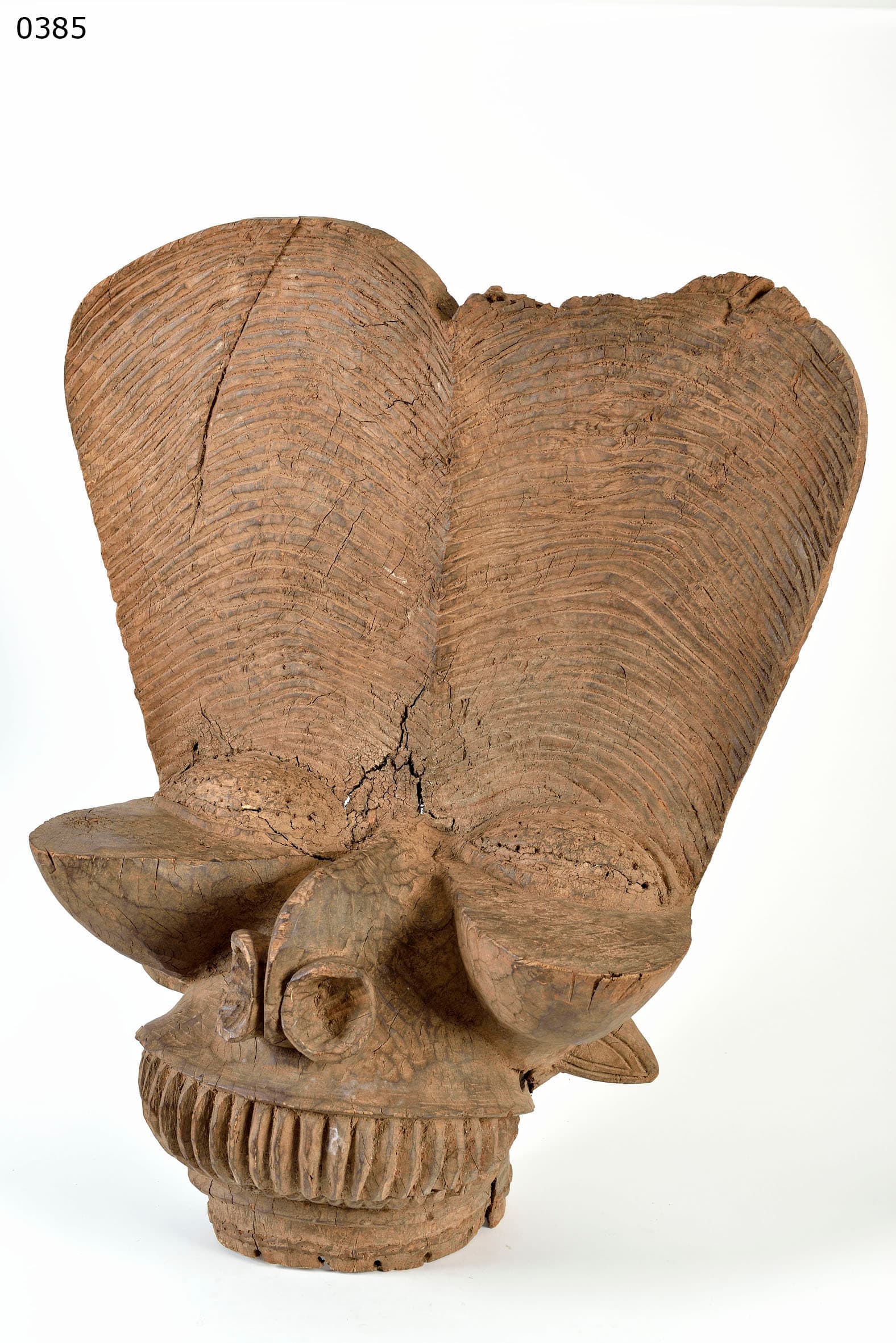
Ein bemerkenswertes Bamileke-Musikinstrument (1. Hälfte 20. Jh., 41 cm) aus Kamerun - ein großer, rechteckiger hölzerner Resonanzkasten, anthropomorphisiert mit einem ausdrucksstarken, geschnitzten Kopf an der Oberseite und kräftigen Füßen an der Unterseite, auf der Vorderseite befindet sich ein Steg mit verrosteten Eisen- und Bambustasten, das gesamte Objekt ist mit einer dunklen Patina überzogen.
1. Die Synthese von Skulptur und Klang
In den Grasfeldern Kameruns integrierten die Bamileke hochrangige Bildhauerkunst in alltägliche und zeremonielle Gebrauchsgegenstände.
- Musikalische Skulptur: Dieses Lamellophon (Daumenklavier) geht über seine Funktion als Musikinstrument hinaus, indem es eine buchstäbliche Skulptur darstellt.
- Stimme des Ahnen: Das ausdrucksstarke Gesicht - mandelförmige Augen, geblähte Nasenlöcher, breiter Mund - ist klassischer Bamileke-Hofstil. Indem er das Instrument in eine menschliche Form schnitzt, deutet der Kunsthandwerker an, dass die Musik, die erzeugt wird, buchstäblich die Stimme des Ahnen oder des Geistes ist, der im Holz wohnt.
2. Hofmusik und Ahnenbeschwörung
Die Musik an den Königshöfen der Bamileke war eng mit Prestige, mündlicher Überlieferung und spiritueller Beschwörung verbunden.
- Königliches Griot-Instrument: Lamellophone dieser Größe und mit kunstvollen Schnitzereien wurden wahrscheinlich von bestimmten königlichen Musikern oder Griots auf dem Gelände des Fon (Königs) gespielt.
- Trance-induzierendes Zupfen: Das resonante rhythmische Zupfen begleitete Loblieder, erzählte königliche Genealogien und induzierte Trancezustände während Zeremonien, bei denen die Geister der Vorfahren um Führung oder Segen angerufen wurden.
3. Akustische Abnutzung und taktile Patinierung
Die Patina dokumentiert das Doppelleben des Objekts als Skulptur und Instrument.
- Griffig geglättete Seiten: Der hölzerne Resonanzkasten weist eine tief glänzende dunkelbraune Oxidation auf, die speziell an den Seiten geglättet und poliert wurde, wo die Hände des Musikers ihn über Jahrzehnte hinweg fest umklammert haben.
- Schwerwiegende Alterung der Tasten: Die Tasten weisen ein starkes Alter auf - die Eisenelemente sind stark verrostet, der Steg ist durch die ständige taktile Reibung abgenutzt. Die tiefe Klangfarbe steht im Einklang mit Objekten aus dem frühen 20. Jahrhundert, die in rauchgefüllten, aktiven königlichen Haushalten aufbewahrt wurden.
Zusammenfassung
Als brillante Synthese aus musikalischem Nutzen und Grassfields Porträt ist dieses anthropomorphe Lamellophon ein seltenes kulturelles Artefakt. Sein ausdrucksstarkes Gesicht und die tiefe, von der Musik abgenutzte Patina machen es zu einem meisterhaften Relikt der königlichen Hoftraditionen der Bamileke.
KI-unterstützt erstellt aus Sammlungsgutachten, Objektfotografie und eigener Recherche, redaktionell geprüft. Fehler sind möglich — Hinweise darauf sind uns willkommen. Zum Verfahren →