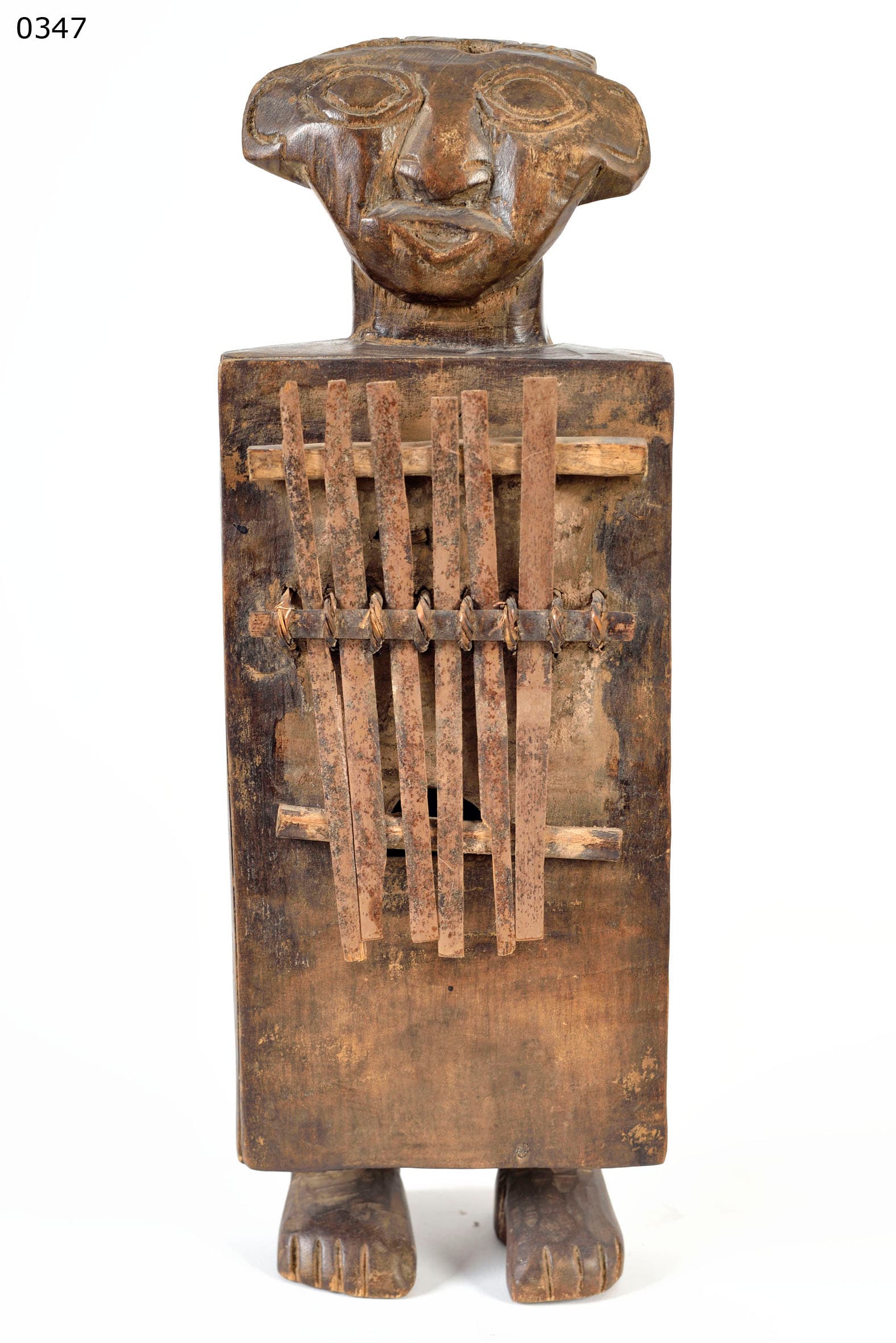
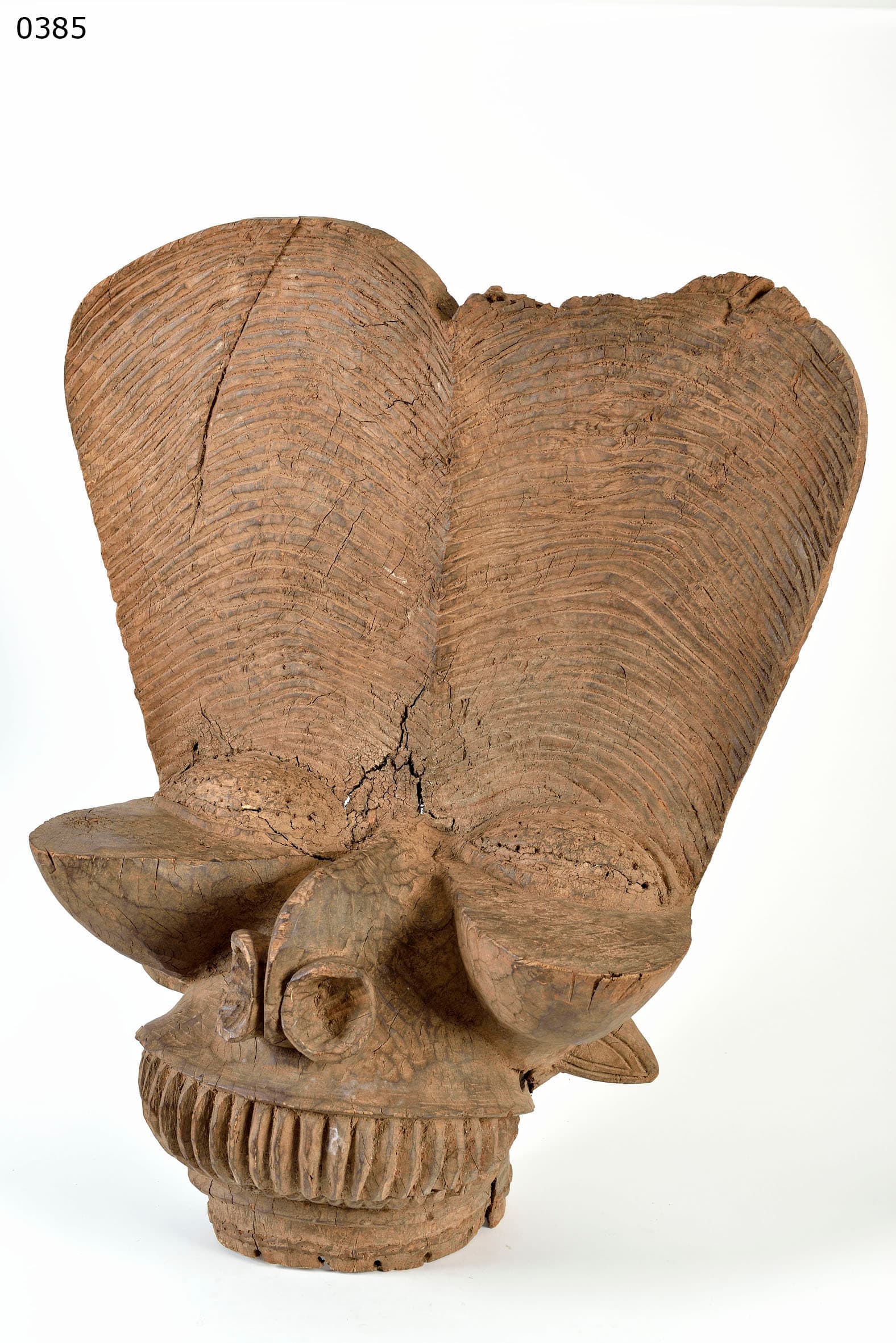
Dieses geschnitzte akustische Holzinstrument hat ein sichelförmiges Mundstück, das sich zu einer abgeflachten Basis hin verjüngt. Der zentrale Schaft ist fest in eine Hülle aus gealtertem, getrocknetem Leder eingebunden. Das freiliegende Holz ist dunkel und durch die Reibung von Hand stark poliert.
1. Ästhetischer Stil und regionale Eigenheiten
In den kamerunischen Grasländern werden selbst sehr nützliche Gegenstände durch sorgfältige Handwerkskunst und die Verwendung von Prestigematerialien aufgewertet. Diese Bamileke-Pfeife verzichtet auf komplexe figürliche Schnitzereien und setzt stattdessen auf schlichte, aerodynamische Linien. Die elegante, sichelförmige Form des Mundstücks passt sich perfekt an die Lippen an, während die zusätzliche, fest vernähte Lederumwicklung nicht nur das Holz vor Rissen schützt, sondern dem Instrument auch ein taktiles, prestigeträchtiges Element verleiht.
2. Rituelle Funktion und Geheimbund-Kontext
Pfeifen dienten in den Grassfields sowohl weltlichen als auch sakralen Zwecken. Praktisch wurden sie von Jagdgesellschaften oder Kriegern benutzt, um über große Entfernungen hinweg Signale zu geben, ohne die menschliche Stimme zu benutzen. Rituell wurden sie während der energiegeladenen, polyrhythmischen Tänze männlicher Geheimgesellschaften (wie der Kuosi- oder Elefantengesellschaft) geblasen. Man glaubte, dass der durchdringende Klang die weltliche Welt durchschneidet, die Geister der Vorfahren anruft, damit sie der Maskerade beiwohnen, und bösartige Kräfte vertreibt.
3. Physische Patina und Altersnachweis
Die Wechselwirkung zwischen Holz und Leder spricht für ein hohes Alter des Objekts. Der Ledereinband ist durch Austrocknung geschrumpft, verhärtet und nachgedunkelt und umschließt den Holzschaft mit einer Festigkeit, die auf eine lange natürliche Alterung hindeutet. Das freiliegende Holz am Mundstück und am Boden weist eine dunkle, ölige Patina auf, die von den Ölen der Hände und Lippen des Musikers herrührt.
Zusammenfassung
Diese Bamileke-Pfeife ist ein wunderschönes Beispiel für funktionale Grassfields-Kunst und setzt auf eine schlanke Geometrie und Materialkontraste für ihre visuelle Kraft. Die tiefe Patina und der alte, geschrumpfte Ledereinband zeugen von ihrer umfangreichen Verwendung bei traditionellen Signalen und zeremoniellen Tänzen.
KI-unterstützt erstellt aus Sammlungsgutachten, Objektfotografie und eigener Recherche, redaktionell geprüft. Fehler sind möglich — Hinweise darauf sind uns willkommen. Zum Verfahren →