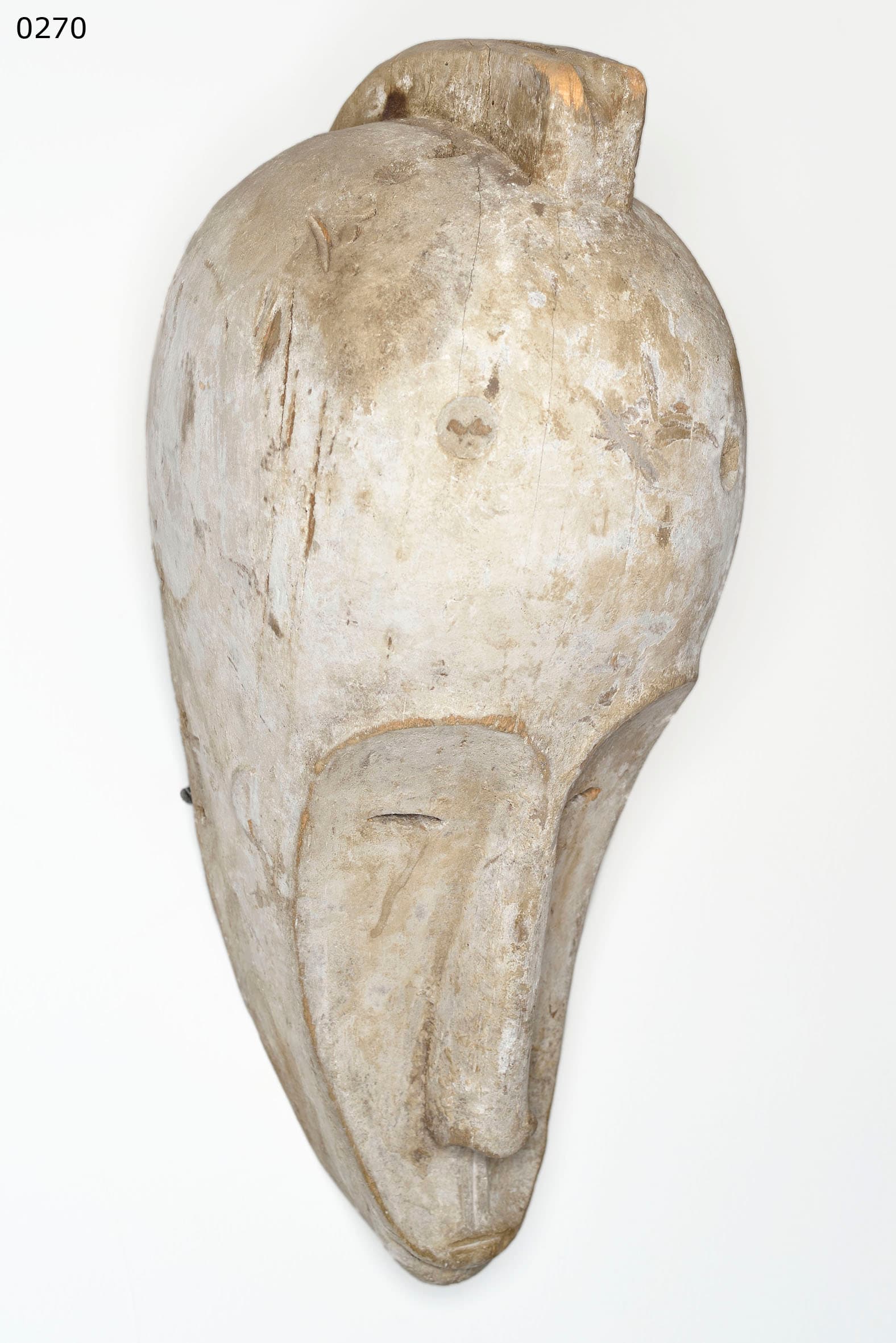
Eine massive, langgestreckte Fang Ngil-Maske (dem 19. Jh. zugeschrieben, 72 cm) aus Gabun - ein markantes, herzförmiges, konkaves Gesicht, das mit weißem Kaolin überzogen ist, geteilt durch eine außergewöhnlich lange, schmale Nase, die zu einem kleinen, vorspringenden Mund führt. Das Holz ist stark gealtert, mit lokalen Austrocknungserscheinungen, strukturellen Rissen und Resten von organischer Bindung im Scheitelbereich.
1. Die Spitze des Fang-Kubismus
Die Ngil-Masken der Fang gehören zu den bekannten und geschätzten Formen in der afrikanischen Kunstgeschichte und haben europäische Modernisten wie Modigliani und Picasso zu Beginn des 20. Jahrhunderts beeinflusst.
- Volumetrische Spannung: Die durchgängig gewölbte Augenbrauenlinie geht nahtlos in den scharfen vertikalen Nasenrücken über und erzeugt eine ausgeprägte volumetrische Spannung.
- Architektonischer Kontrast: Die stark weiß kaolingestrichene Gesichtsebene im Kontrast zu den abgedunkelten, vertieften Kanten verstärkt die visuelle Wirkung und verleiht dem Gesicht einen architektonischen Charakter.
2. Der Geheimbund der Ngil und der Justizterror
Die Ngil waren ein einflussreicher Geheimbund, der für die Aufrechterhaltung der sozialen Ordnung, das Aufspüren von Zauberern und die Vollstreckung der Gerechtigkeit in den Fang-Gemeinschaften zuständig war.
- Nächtliche Fackelzeremonien: Sie wurden bei nächtlichen Fackelzeremonien getragen, wobei die extreme Streckung und der strenge, teilnahmslose Gesichtsausdruck dazu beitragen sollten, eine einschüchternde Wirkung zu erzielen.
- Repräsentant der richterlichen Autorität: Der Träger trat als ein anonymer, hoch aufragender Repräsentant der richterlichen Autorität auf, was zur Wahrung der gesellschaftlichen Disziplin beitragen sollte.
3. Einordnung in das 19. Jahrhundert und Kaolinverwitterung
Überlebende Ngil-Masken, die dem 19. Jahrhundert zugeschrieben werden, sind selten, da die französische Kolonialverwaltung die Gesellschaft in den 1920er Jahren verbot, was zur Zerstörung der meisten Utensilien führte.
- Tief oxidiertes Kaolin: Das weiße Kaolinpigment ist über Jahrzehnte hinweg oxidiert und abgeblättert und mit der darunter liegenden Holzmaserung verschmolzen.
- Hinweise auf frühen Gebrauch: Starke stabilisierte Austrocknungsrisse, die durch die Stirn und das Kinn verlaufen, in Kombination mit der verdunkelten, bearbeiteten Patina auf dem inneren Rand, sprechen für einen frühen zeremoniellen Gebrauch.
Zusammenfassung
Als ein seltenes Zeugnis der historischen Ngil-Gesellschaft, das stilistisch in das 19. Jahrhundert eingeordnet werden kann, gilt dieser Maskentypus als ein bedeutendes Werk der gabunischen Kunst. Seine schwungvolle, monumentale Geometrie und die gealterte Kaolinoberfläche unterstreichen seine künstlerische Qualität.
KI-unterstützt erstellt aus Sammlungsgutachten, Objektfotografie und eigener Recherche, redaktionell geprüft. Fehler sind möglich — Hinweise darauf sind uns willkommen. Zum Verfahren →