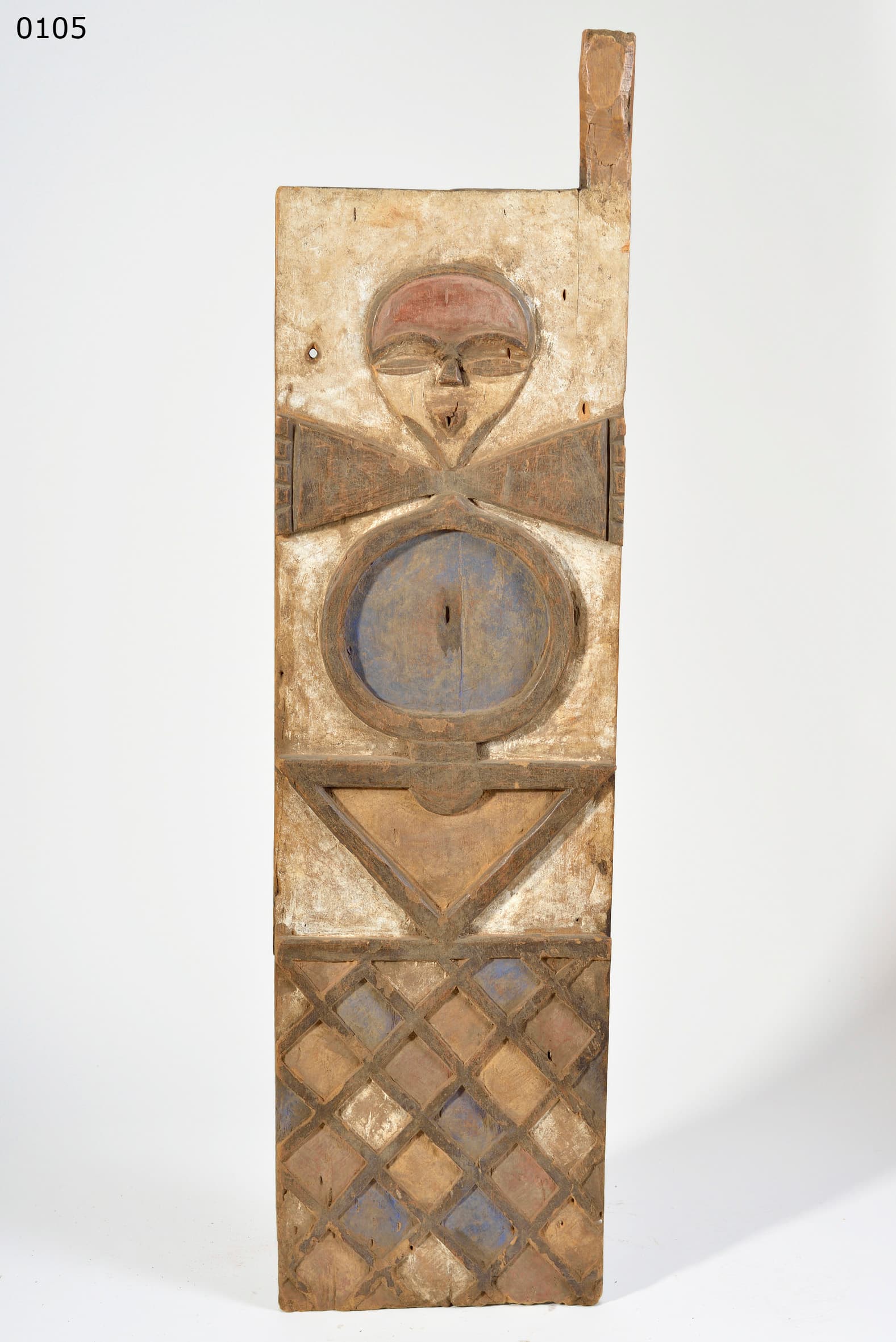
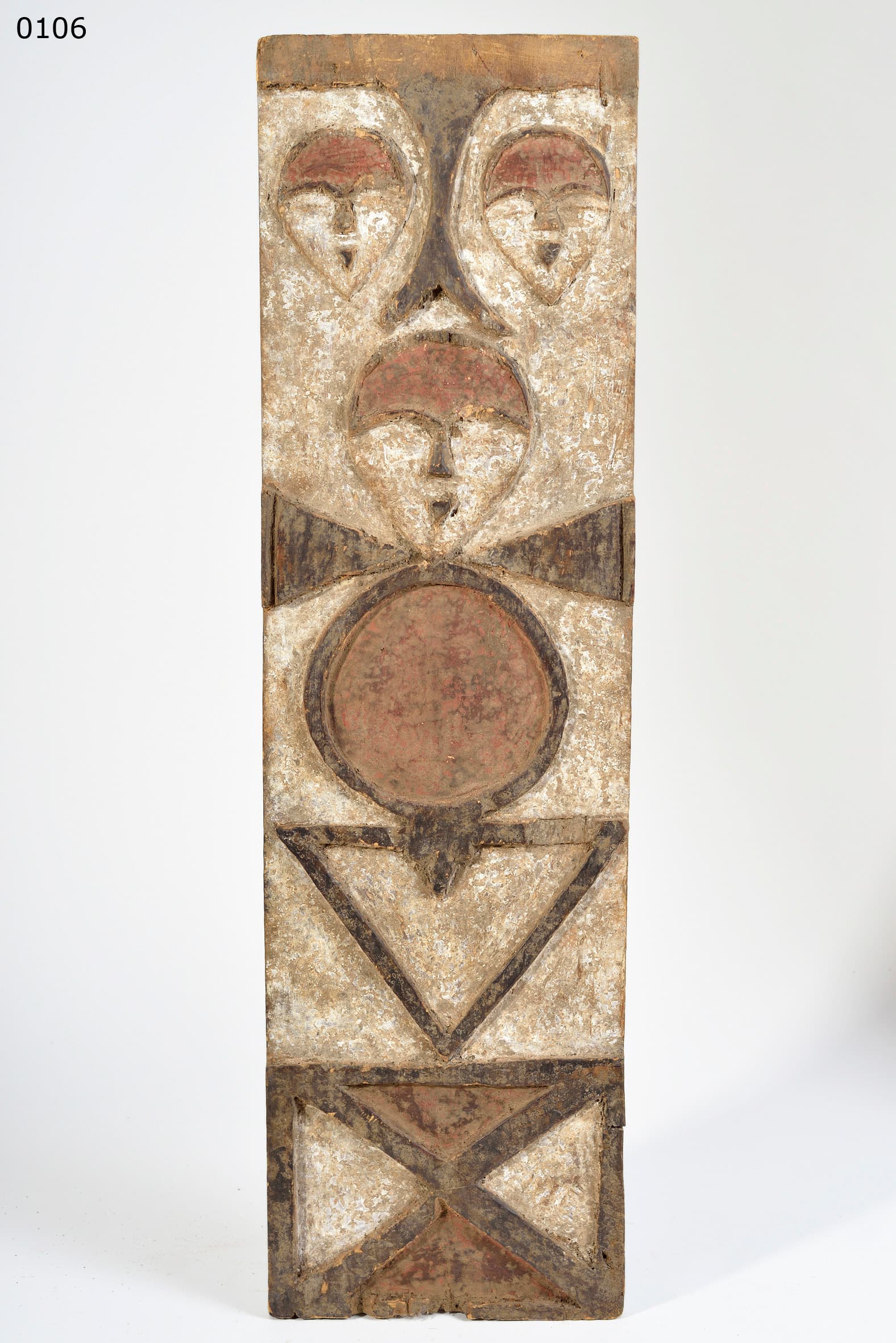
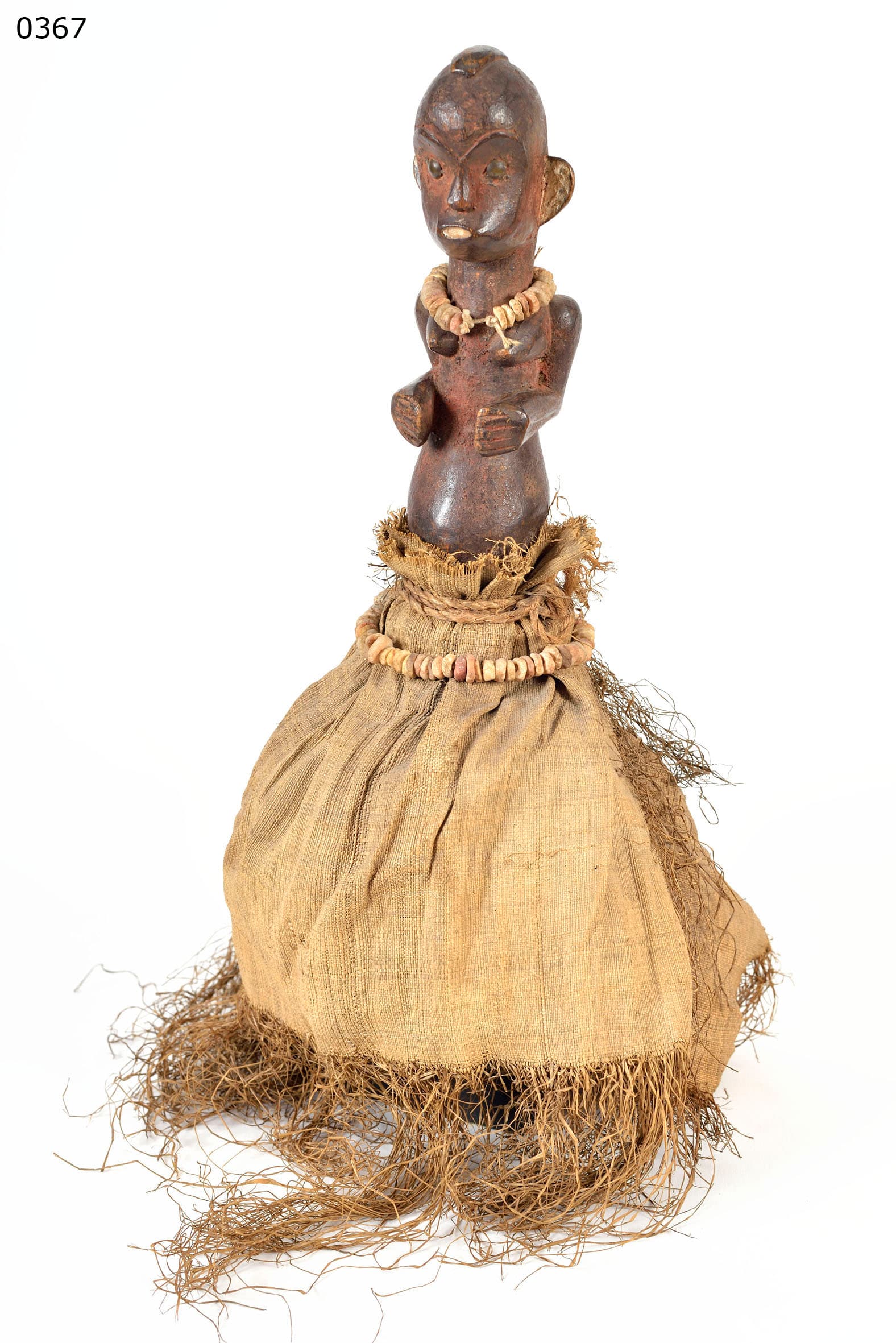
Ein rituelles Tsogho-Instrument (wohl 1. Hälfte 20. Jh., 50 cm) aus Gabun - eine schwere, ausgestellte, geschmiedete Eisenglocke, die nahtlos an einem fein geschnitzten Holzgriff befestigt ist, der in einem klassischen anthropomorphen Tsogho-Kopf mit abgerundeter Frisur, herzförmiger Stirn und heiterem Gesichtsausdruck endet. Das Holz weist eine tiefe, ölige Patina auf, während die Eisenglocke stark strukturiert ist und eine dunkle, stabile Oxidation aufweist.
1. Die Synthese von Klang und Skulptur
Die Tsogho (oder Mitsogo) aus Zentral-Gabun sind für ihre hochentwickelten, spirituell aufgeladenen Holzschnitzereien bekannt - und dieser Gong verbindet ausdrucksstarke Porträtkunst mit akustischer Kraft.
- Miniatur-Tsogho-Gesicht: Der Griff zeigt ein fein ausgeführtes Miniatur-Tsogho-Gesicht - hohe gerundete Stirn, herzförmige Stirn, Kaffeebohnen-Augen und geschürzte Lippen, die architektonische Schnitzereien und Reliquienfiguren der Tsogho widerspiegeln.
- Ästhetischer Kontrast: Der Kontrast zwischen der schweren oxidierten Masse der Eisenglocke und der zarten dunkel polierten Eleganz des hölzernen Ahnenkopfes ist ein charakteristisches Beispiel gabunischen Designs.
2. Die Bwiti-Gesellschaft und die Iboga-Trance
Dieser Gong gilt als ein bedeutendes spirituelles Werkzeug der Bwiti - einer tiefgründigen esoterischen religiösen Bewegung in Gabun, die sich um den Konsum der psychoaktiven Wurzel Iboga dreht.
- Nima's Rhythmic Invocation: Während der nächtlichen Initiationszeremonien im ebanza (Männertempel) wurde die schwere Eisenglocke traditionell vom Nima (Hohepriester) rhythmisch angeschlagen.
- Trance-Reise zu den Toten: Die durchdringende metallische, sich wiederholende akustische Resonanz - in Verbindung mit der psychedelischen Wirkung von iboga - sollte die Eingeweihten in einen tiefen Trancezustand versetzen, der es ihnen ermöglichen sollte, in das Reich der Toten zu reisen und die Ahnen direkt zu befragen.
3. Akustische Reibung und zusammengesetzte Patinierung
Das Objekt weist eine ausgeprägte, zweiteilige Patina auf, die eine intensive zeremonielle Nutzung nahelegt.
- Stabiler Eisenglockenrost: Die Eisenglocke weist einen dunklen, stabilen, leicht entsteinten Rost auf, der von einer längeren Einwirkung der feuchten Dschungelluft und wiederholten physischen Schlägen herrühren dürfte.
- Schweißpolierter Ahne: Der hölzerne Ahnengriff besitzt eine tief glänzende, geschwärzte Patina - ein Erscheinungsbild, das mit der taktilen Reibung der Hände des Priesters und dem Palmöl vereinbar ist, mit dem die Form des Ahnen während der Bwiti-Zeremonien gepflegt wurde.
Zusammenfassung
Als symbolischer und akustischer Schlüssel zur gabunischen Geisterwelt ist dieser rituelle Tsogho-Gong ein faszinierendes zusammengesetztes Artefakt. Sein fein geschnitzter Griff und seine ausgeprägten Gebrauchsspuren machen ihn zu einem bemerkenswerten Stück Bwiti esoterischer Geschichte.
KI-unterstützt erstellt aus Sammlungsgutachten, Objektfotografie und eigener Recherche, redaktionell geprüft. Fehler sind möglich — Hinweise darauf sind uns willkommen. Zum Verfahren →