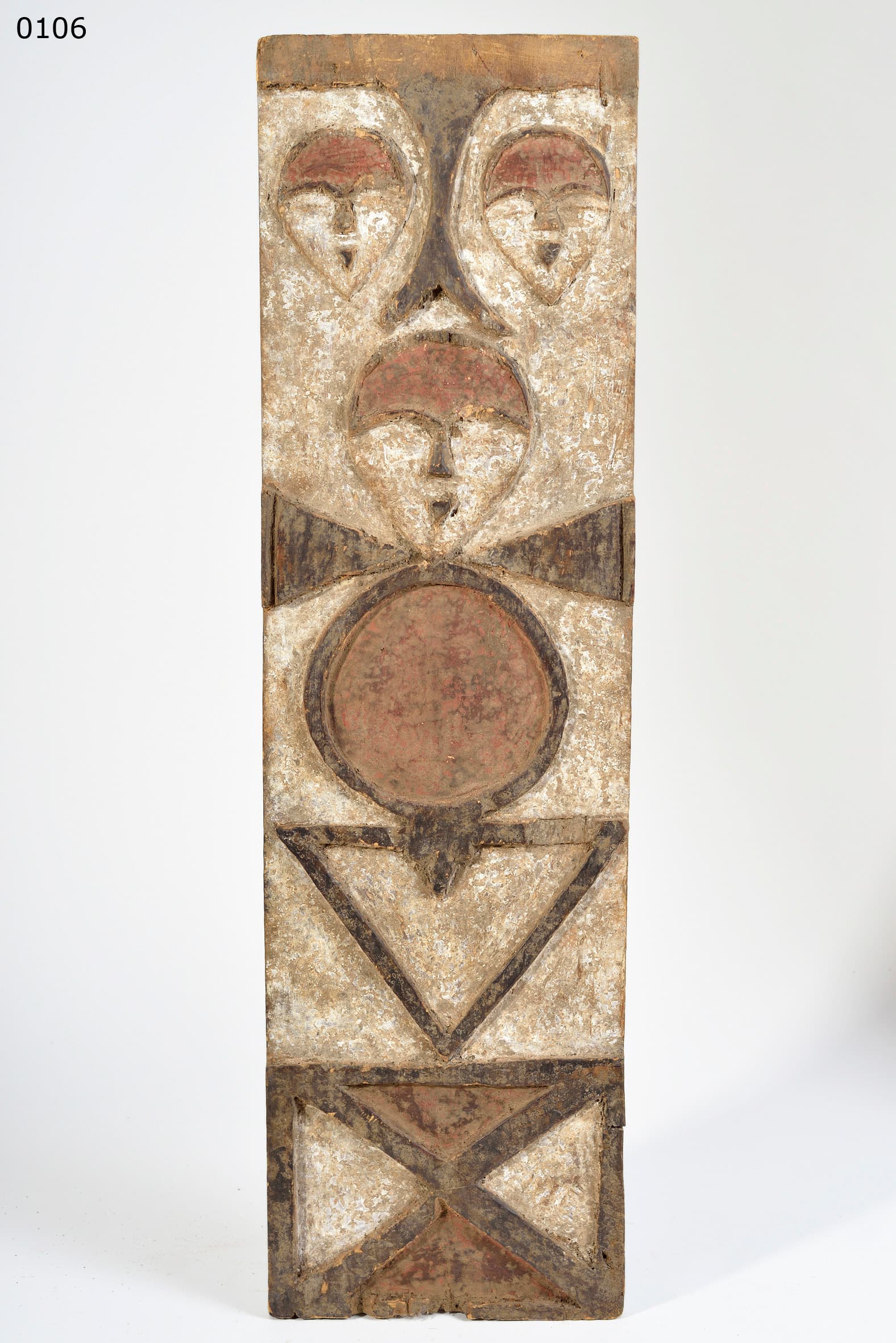
Eine flache, rechteckige Holztafel (1. Hälfte 20. Jh., 112 cm) von den Tsogho aus Gabun - tief im Flachrelief geschnitzt mit einem herzförmigen Gesicht, kosmischen geometrischen Motiven und kräftigen polychromen Pigmenten.
1. Die Architektur der Bwiti
Die Tsogho (Mitsogho) verwenden diese Platten als Strukturelemente ihrer Bwiti-Tempel (ebanza).
- Keine Tür: Die Tafel ist eher eine innere Schreinplatte oder eine zentrale Säule als ein Eingang.
- Heilige Schwelle: Sie trennt visuell und spirituell das innere Heiligtum von der nicht eingeweihten Welt draußen.
2. Das Gesicht der Ahnen
Das herzförmige Gesicht mit den gewölbten Augenbrauen ist ein typisches Merkmal der Gabunesen, das sie mit den Fang und den Punu teilen.
- Der Iboga-Kontext: Die Bwiti-Religion beinhaltet die Einnahme der psychoaktiven iboga-Pflanze.
- Geistführer: Die geschnitzten Gesichter stellen allwissende Ahnen dar, die über die Eingeweihten wachen und sie auf ihren halluzinogenen, todesnahen spirituellen Reisen begleiten.
3. Heilige Geometrie und Polychromie
Die lebhaften Muster sind eine kosmische Sprache.
- Sonne, Mond und Zyklus: Große Kreise verschlüsseln die Sonne, den Mond und die zyklische Natur von Leben und Tod.
- Farbe als Kraft: Kaolinweiß steht für die Geisterwelt und Hellsichtigkeit; lebhaftes Rot und Schwarz energetisieren das Brett zu einem hypnotisierenden, leuchtenden Brennpunkt bei nächtlichen Ritualen im Feuerschein.
Zusammenfassung
Diese Tsogho-Schreintafel ist ein eindrucksvolles Beispiel gabunischer Baukunst. Sie kombiniert heitere Ahnenporträts mit kühner, psychoaktiver Geometrie und dient als lebendiges hölzernes Tor zu den tiefgründigen Visionen der Bwiti-Gesellschaft.
KI-unterstützt erstellt aus Sammlungsgutachten, Objektfotografie und eigener Recherche, redaktionell geprüft. Fehler sind möglich — Hinweise darauf sind uns willkommen. Zum Verfahren →