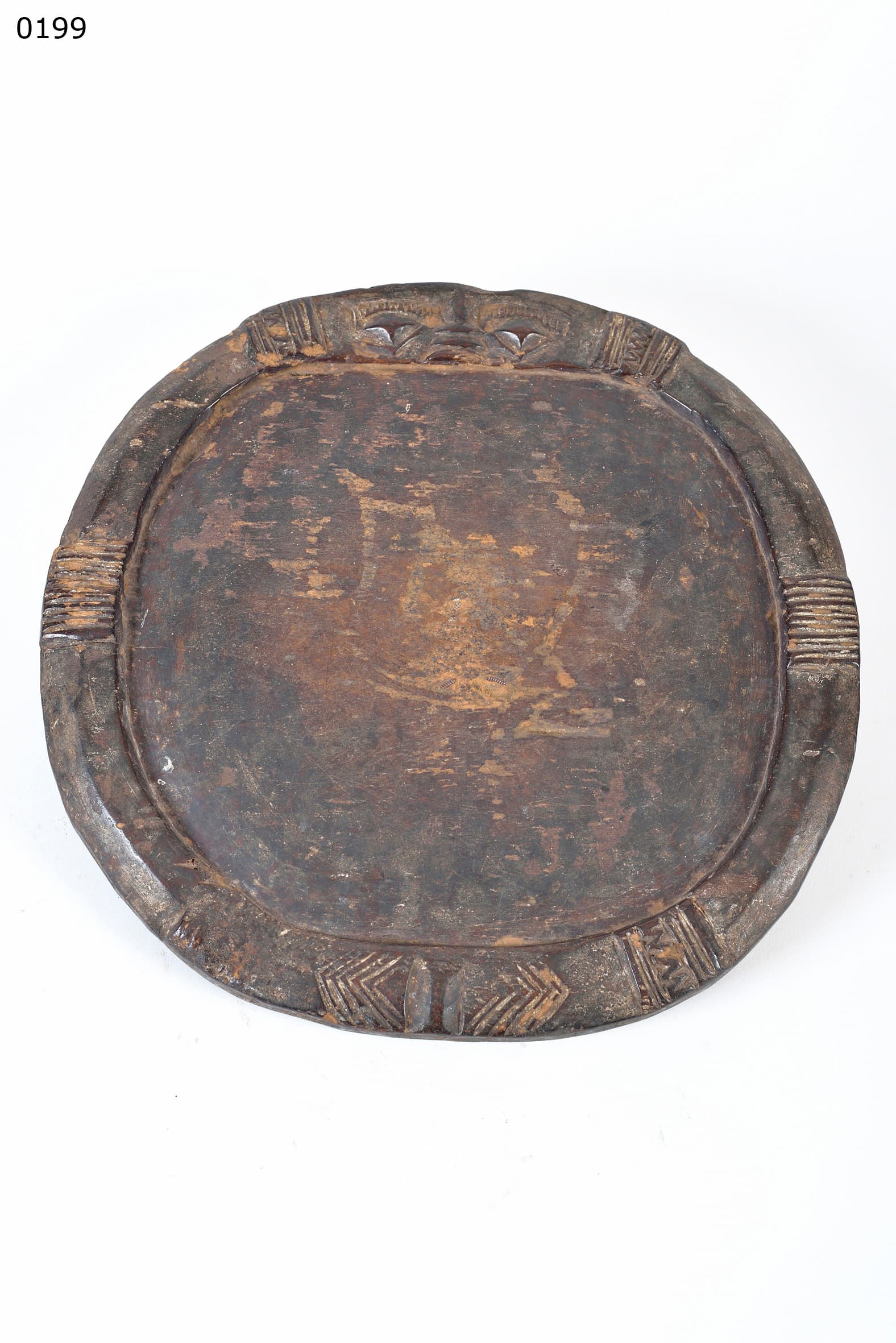
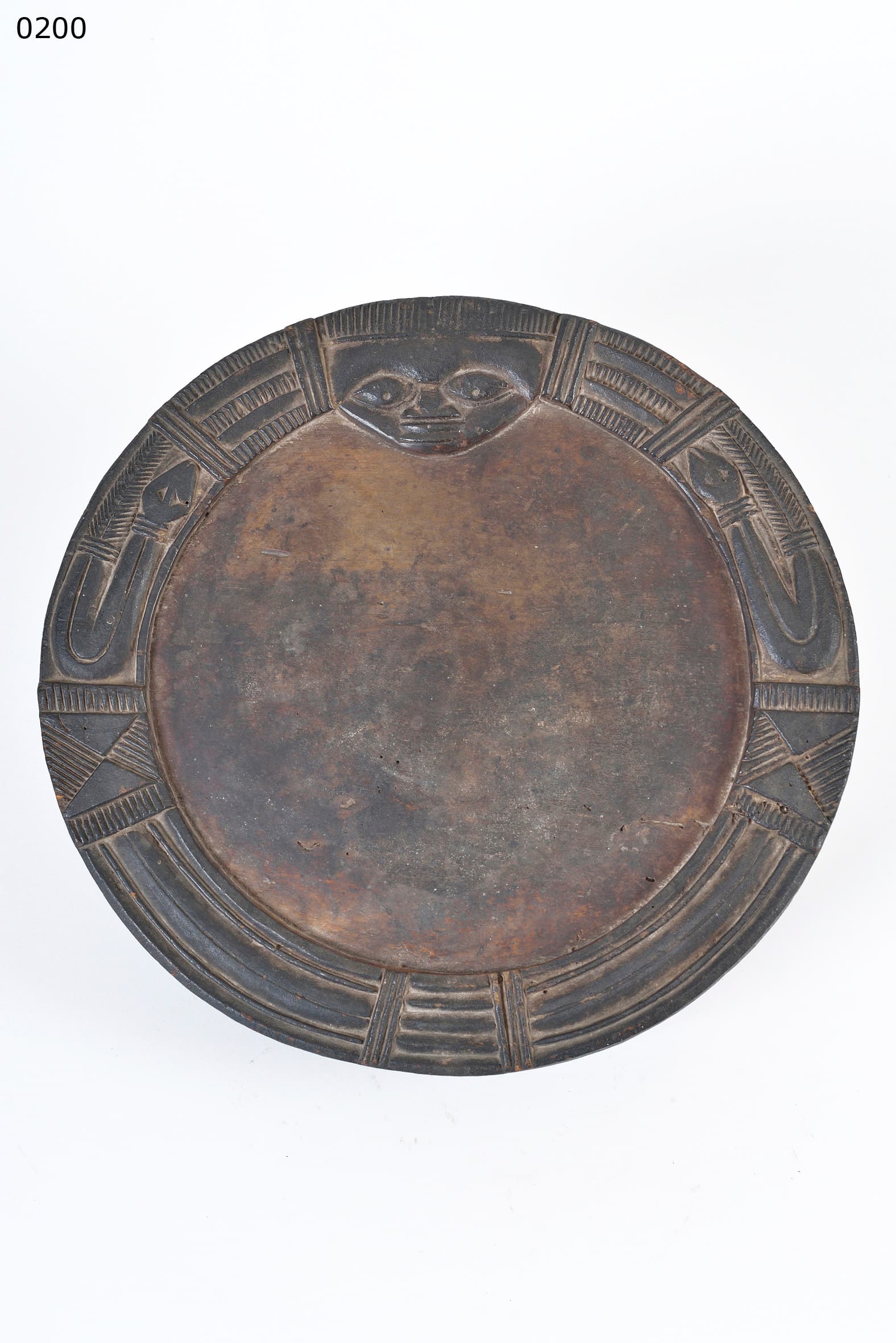
Eine große Yoruba Gelede Maske (1. Hälfte 20. Jh., 37 cm) aus Nigeria - geschnitzt aus dichtem, dunklem Holz mit einem robusten, abgerundeten Gesicht, wulstigen Augen, einem breiten Mund mit einzeln geschnitzten Zähnen und einer massiven, nach hinten geschwungenen Frisur, die mit tief eingeschnittenen, parallelen Linien strukturiert ist. Das Holz weist eine reichhaltige, tief oxidierte, dunkelbraune Patina auf, mit deutlichen Altersabnutzungen an den höchsten Graten.
1. Volumetrische Schnitzerei und das Gelede-Ideal
Diese Maske ist ein hervorragendes Beispiel für die Gelede-Ästhetik, bei der Volumen, Symmetrie und die Darstellung einer ruhigen, idealisierten menschlichen (oft weiblichen) Schönheit im Vordergrund stehen.
- Projizierende Masse: Die tief geschnitzten, wulstigen Augen und der weit geöffnete Mund ragen stark aus der Gesichtsebene heraus - sie sollen dramatische Schatten werfen, wenn sie in der Nachmittagssonne getanzt werden.
- Ausgleichende Frisur: Die massive, sorgfältig gestreifte und nach hinten geschwungene Frisur gleicht die schweren Gesichtszüge aus - ein Hinweis auf den hohen sozialen Status, den Wohlstand und die aufwendige Pflege der dargestellten Frau.
2. Die Plazierung der "Mütter"
Die Gelede-Maskerade ist eine spektakuläre öffentliche Aufführung, die Awon Iya Wa ("Unsere Mütter") gewidmet ist - zu Ehren der starken spirituellen und lebensspendenden Kraft der Frauen, der weiblichen Ahnen und der Gottheiten.
- Kopftanz: Die Maske wird flach auf dem Kopf getragen und nimmt an einem energiegeladenen, hoch choreografierten Tanz teil.
- Schmeichelei als Strategie: Durch die Darstellung von Frauen mit großer Würde, aufwändiger Körperpflege und ruhiger Gelassenheit schmeichelt die Gemeinschaft diesen mächtigen weiblichen Kräften und beschwichtigt sie, damit sie Fruchtbarkeit und Frieden schenken und nicht die zerstörerische Kraft der Hexerei entfesseln.
3. Aktive Leistungspatina
Der physische Zustand bestätigt eine intensive aktive Nutzung in der ersten Hälfte des 20.
- Palmöl-Oxidation: Die tiefdunkle Patina ist das Ergebnis der kontinuierlichen zeremoniellen Anwendungen von Palmöl und der Exposition gegenüber den Elementen.
- Performance Wear: Scharfe Kanten der Frisur Streifen sind aufgeweicht, hohe Punkte der Nase und Lippen auf Hochglanz poliert - und der innere Rand zeigt die dunkle schweißfleckige Oxidation von einer hölzernen Maske erwartet wiederholt von Tänzern in der nigerianischen Hitze getragen.
Zusammenfassung
Diese Gelede-Maske ist ein monumentaler volumetrischer Triumph der Yoruba-Holzschnitzerei, der die gesellschaftlichen Ideale von weiblicher Anmut und Gelassenheit perfekt widerspiegelt. Ihre tiefe, mit Schweiß polierte Patina und die komplizierte Frisur festigen ihren Status als erstklassiges ethnografisches Artefakt.
KI-unterstützt erstellt aus Sammlungsgutachten, Objektfotografie und eigener Recherche, redaktionell geprüft. Fehler sind möglich — Hinweise darauf sind uns willkommen. Zum Verfahren →