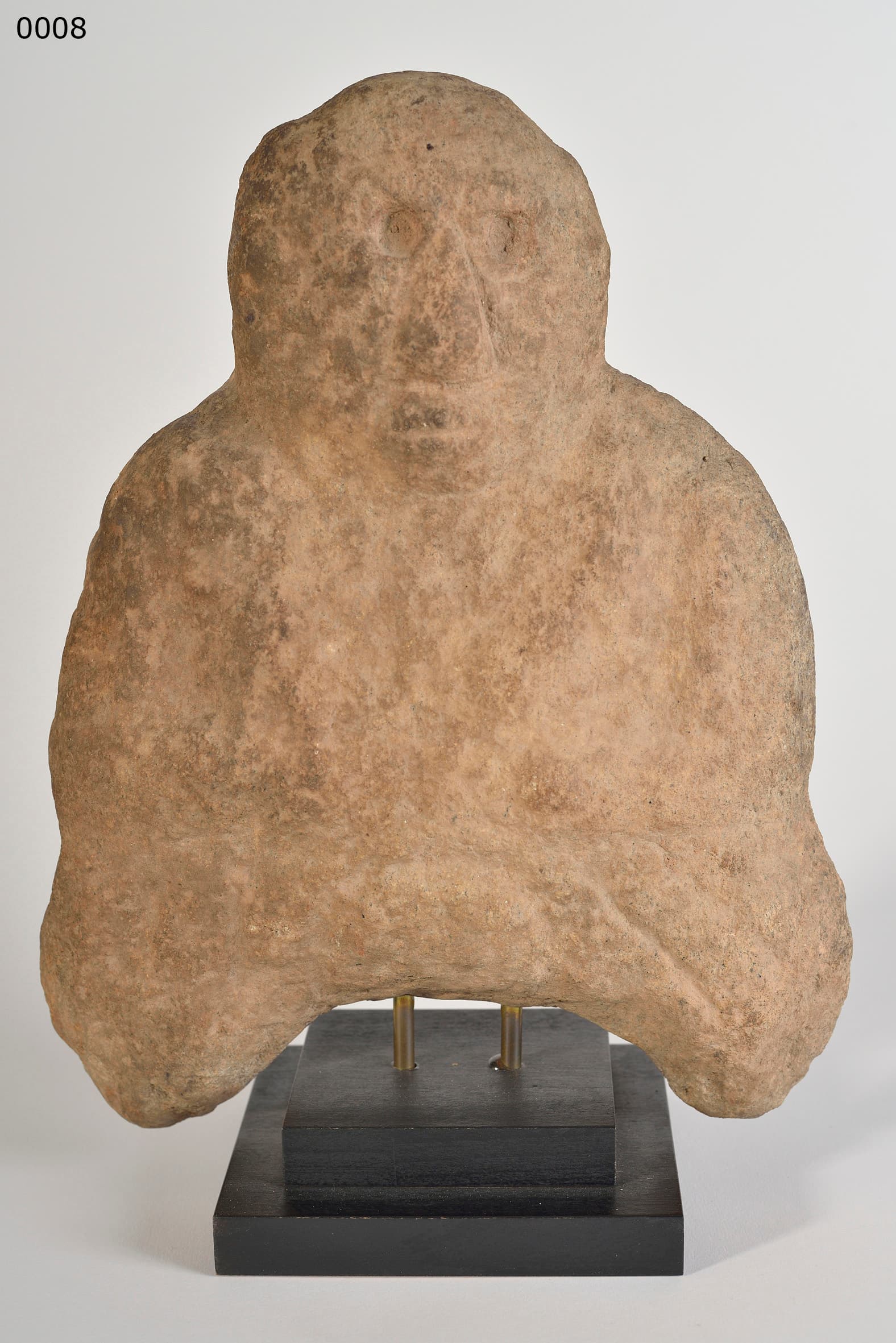
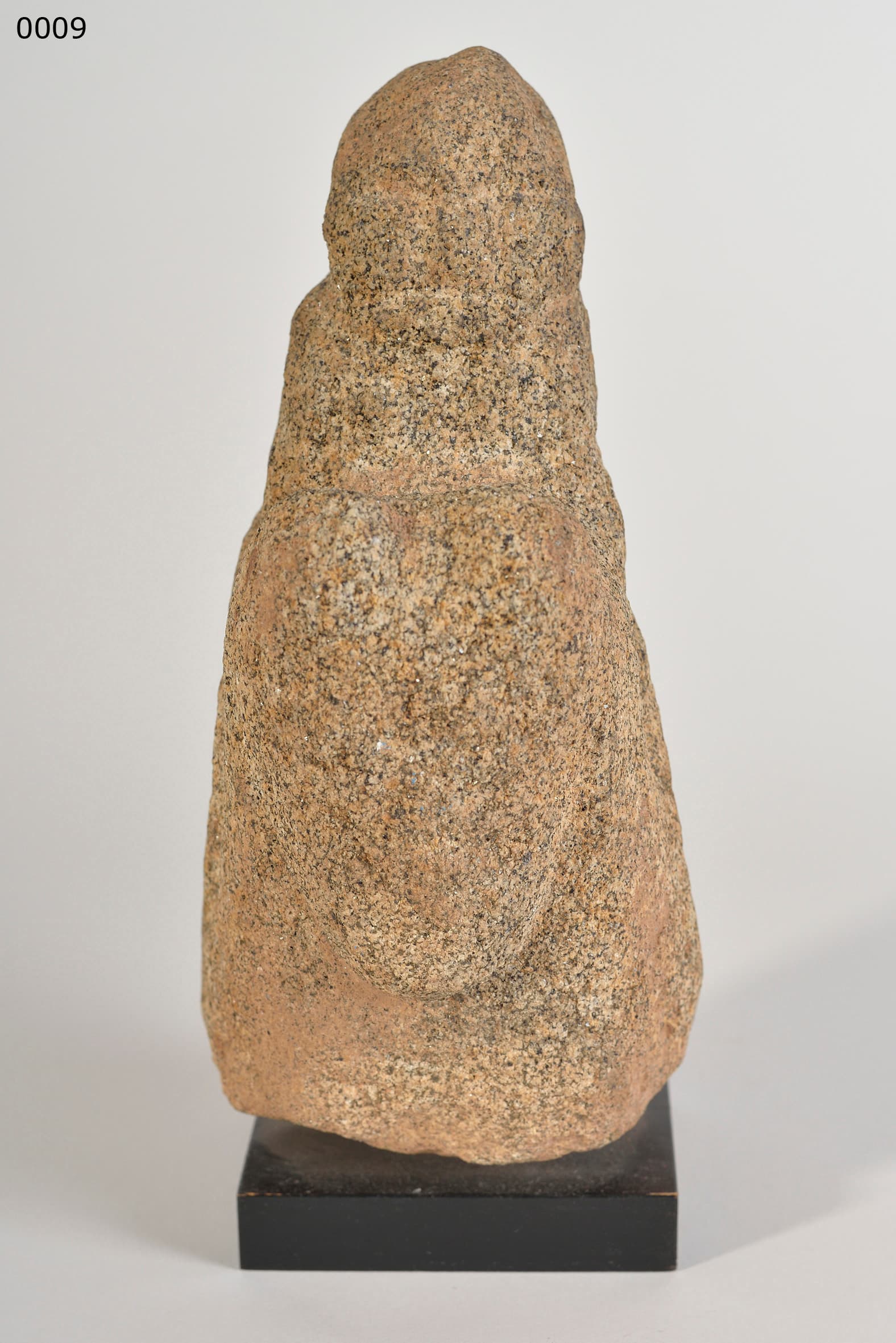
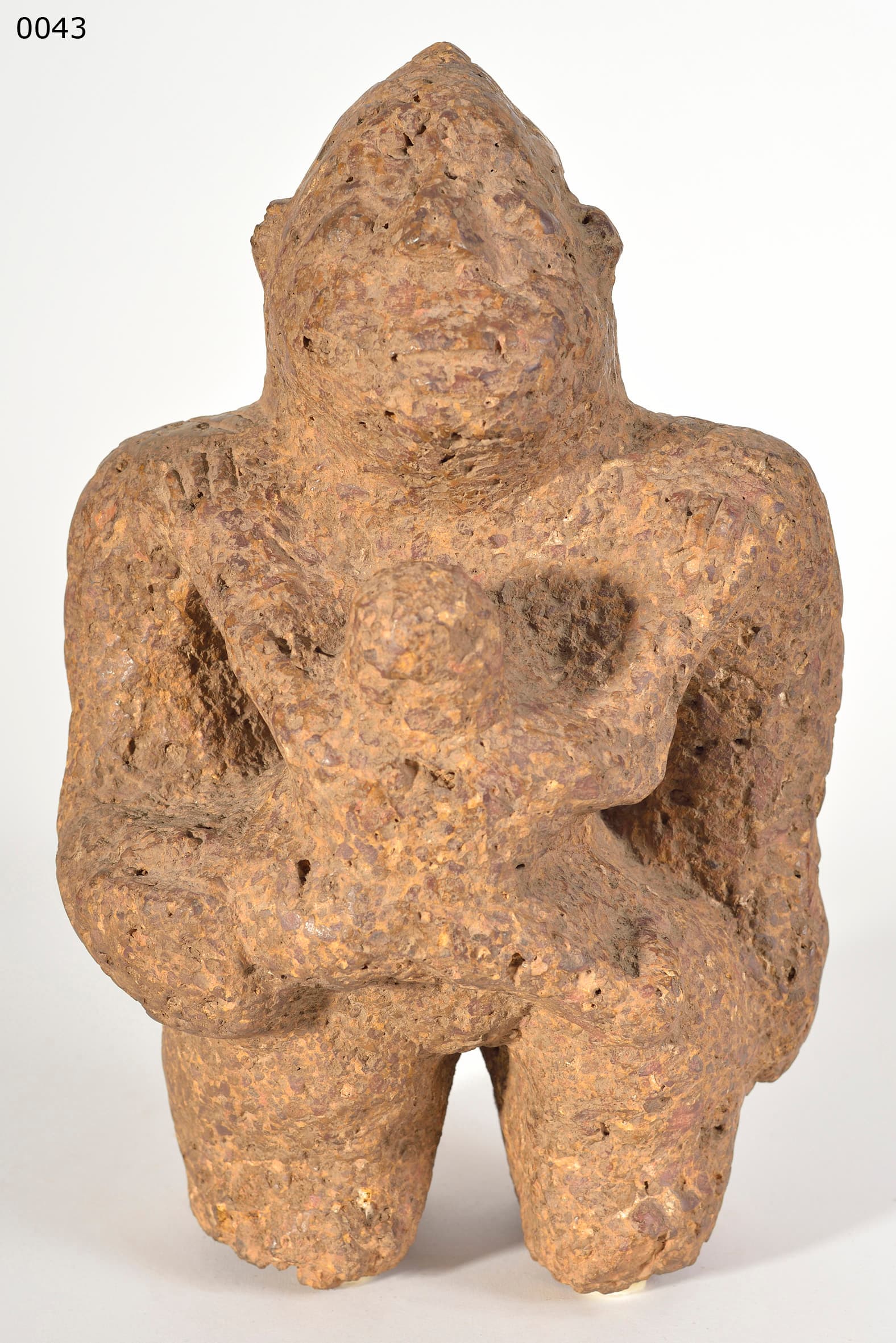
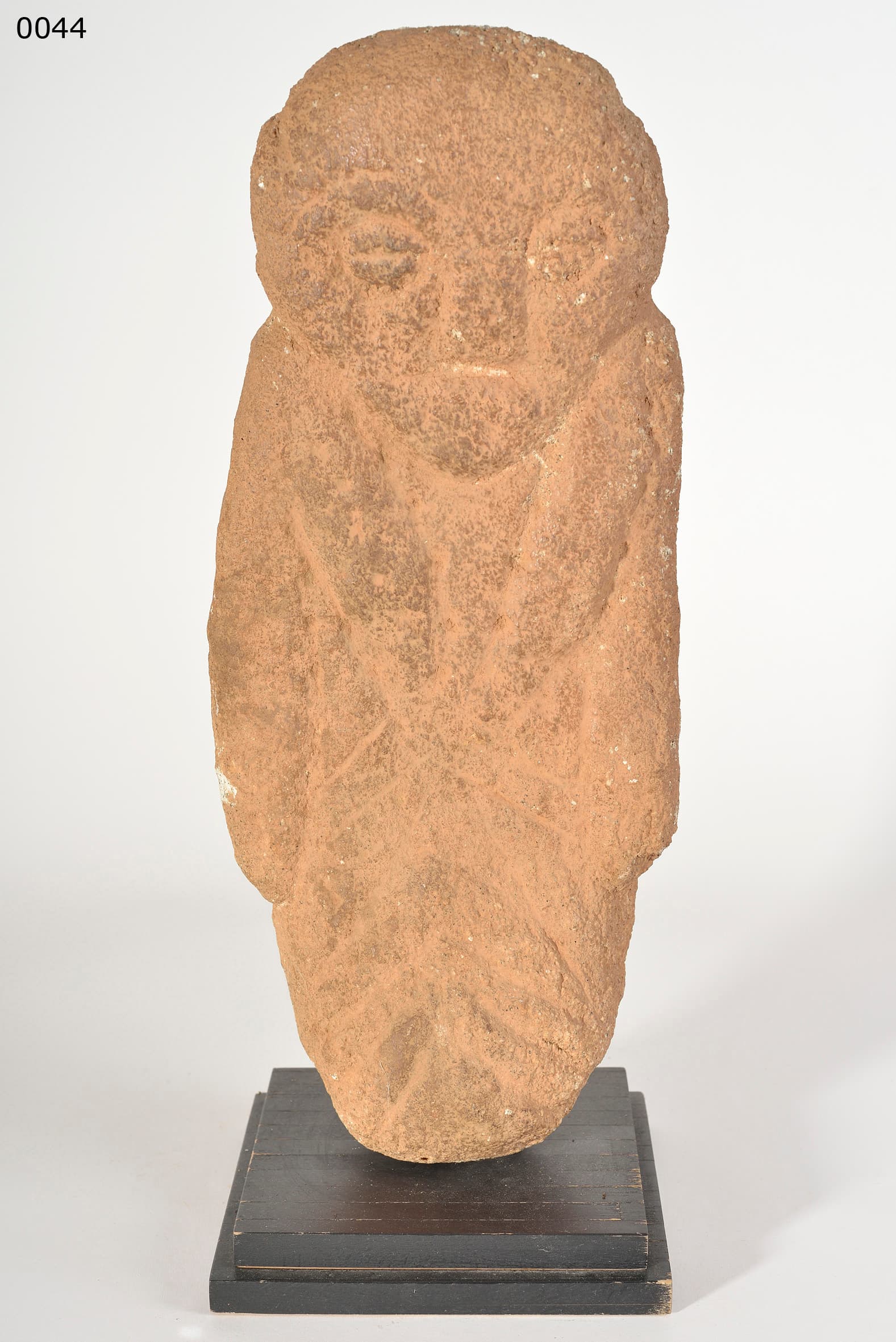
Eine lithische Nyonyosi-Grabfigur (12.-16. Jh., 17 cm) aus Burkina Faso - gemeißelt aus dichtem, gesprenkeltem Granit, ein stark abstrahierter Kopf mit abgeflachtem, schildförmigem Gesichtsfeld und minimalen, sanft erodierten geometrischen Graten, die Nase und Stirn andeuten. Die Oberfläche ist stark verwittert und zeigt jahrhundertelange Austrocknung und kristalline Exposition.
1. Lithischer Minimalismus in der Sahelzone
Die Steinmetztradition der Nyonyosi - der alten Ureinwohner des burkinischen Plateaus, die später von den Kurumba assimiliert wurden - ist durch eine strenge monolithische Abstraktion gekennzeichnet.
- Masse vor Detail: Im Gegensatz zu späteren Holzschnitztraditionen stehen bei den Steinfiguren der Nyonyosi die rohe Masse und die geometrische Reduktion im Vordergrund.
- T-förmiges Gesicht: Der durchgehende T-förmige Grat definiert die gesamte Gesichtsstruktur und betont den Schädel als Sitz der Seele und des Intellekts der Vorfahren - ein wiederkehrendes Motiv in den frühesten Schichten der sahelischen Kunst.
2. Wächter der Nekropole
Diese schweren, imposanten Steinfiguren dienten direkt als Grabmarkierungen oder Grabwächter.
- Verankerung der Seele: Sie wurden auf Grabhügeln oder an den Eingängen von unterirdischen Familiengruften errichtet, um die Seele des Verstorbenen an ihrer letzten Ruhestätte zu verankern.
- Befriedung der Toten: Markierung der Schwelle zwischen dem Reich der Lebenden und der Nekropole - Befriedung der Toten und Verhinderung der Rückkehr ruheloser Geister, die Krankheiten, Missernten oder Unglück verursachen.
3. Geologische Erosion und Altertum
Der physische Zustand spricht für ein hohes Alter.
- Geschwächte Gesichtserosion: Die sanfte Erosion der Gesichtszüge und die tief eingebettete Oxidation der Mineralien legen nahe, dass der Stein über mehrere Jahrhunderte hinweg dem rauen, trockenen Klima von Burkina Faso ausgesetzt war.
- Replizierbares Micro-Pitting: Die spezifische Art von Micro-Pitting auf der Granitoberfläche - wo weichere Mineralien schneller erodiert sind als der harte Quarz - gilt als schwer künstlich zu replizieren und stützt eine Altersschätzung aus dem 12. bis 16. Jahrhundert.
Zusammenfassung
Dieser Steinkopf aus Nyonyosi verkörpert die frühen Ursprünge der westafrikanischen Steinbildhauerkunst und gilt als bedeutendes archäologisches Denkmal. Seine starke geologische Verwitterung spricht für eine jahrhundertelange Geschichte im Buschland der Sahelzone.
KI-unterstützt erstellt aus Sammlungsgutachten, Objektfotografie und eigener Recherche, redaktionell geprüft. Fehler sind möglich — Hinweise darauf sind uns willkommen. Zum Verfahren →