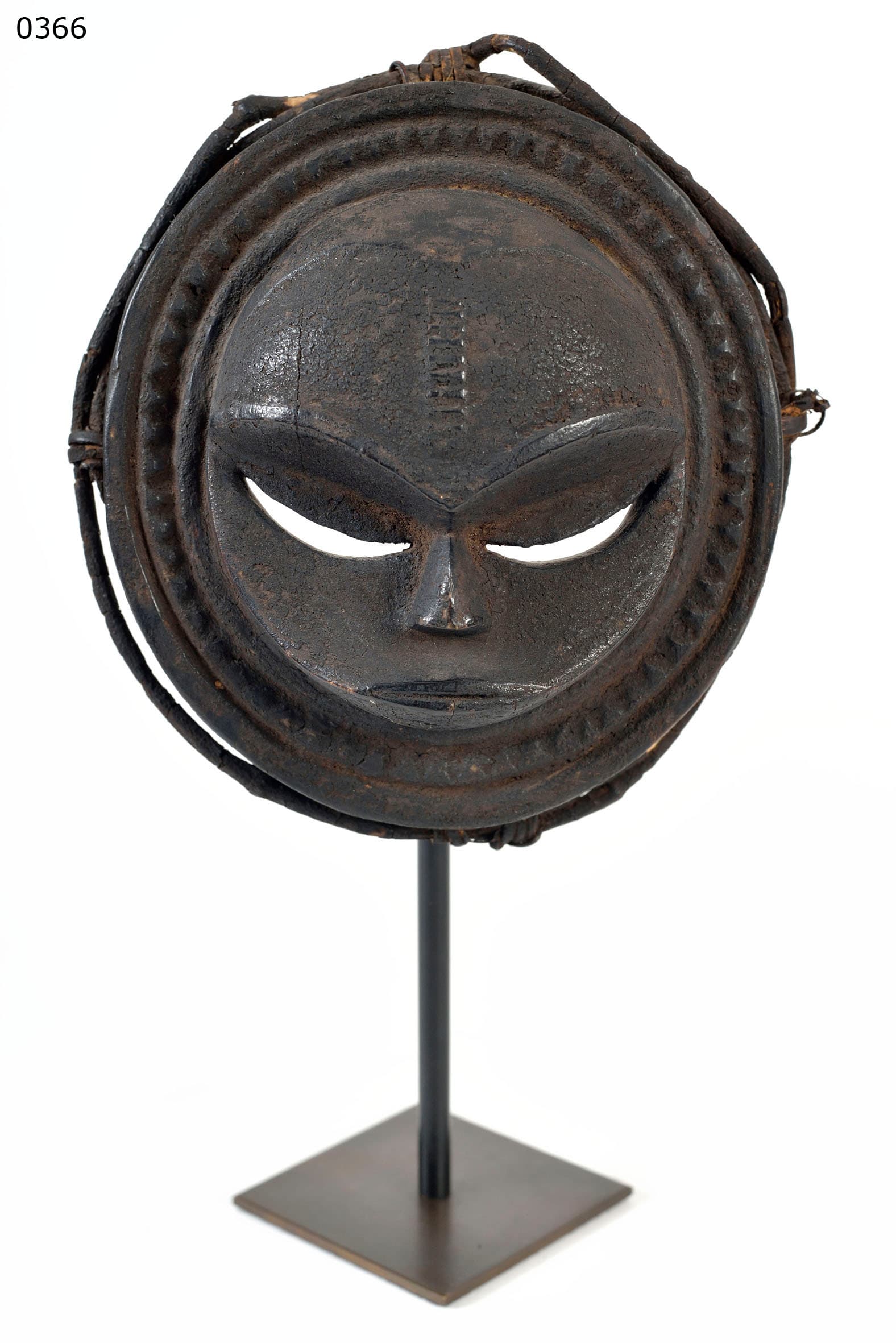
Jahrhundert (23 cm) von der Elfenbeinküste - schmale horizontale Schlitzaugen, die von einem ausgeprägten Band aus weißem Kaolinpigment durchzogen sind, eine feine Nase und volle, vorspringende Lippen. Das Holz weist eine dunkle, dichte Patina mit Gebrauchsspuren sowie zahlreiche periphere Befestigungslöcher für einen verlorenen Faserbart auf.
1. Der Deangle und die idealisierte Hellsichtigkeit
Diese Maske, die dem 19. Jahrhundert zugeschrieben wird und als charakteristisches Beispiel idealisierter westafrikanischer Ästhetik gilt, gehört zur Typologie des Deangle (oder Gle mu, "friedlicher Geist").
- Fließende Symmetrie: Die Maske zeigt eine harmonische, fließende Symmetrie mit sanft geschwungenen, volumetrischen Kurven.
- Das horizontale Band aus weißem Kaolin-Ton, das über die Augen gemalt wurde, ist ein spezifisches ikonografisches Zeichen, das in der Tradition spirituelle Hellsichtigkeit, Reinheit und die Fähigkeit der Maske symbolisiert, über die physische Welt hinaus in das Reich der Ahnen zu blicken.
2. Das Jokor-Lager und der Friedensstifter
Der Deangle ist ein wohlwollender, freudiger Geist.
- Vermittler zwischen Wald und Dorf: Während der Abgeschiedenheit der Initiationslager der Jungen (Jokor) im tiefen Wald fungierte diese Maske als wichtiger friedlicher Vermittler zwischen den Buschgeistern und dem menschlichen Dorf.
- Mütterliche Beruhigung: Die Tänzerin bewegte sich mit anmutigen, fließenden Schritten, um das Dorf zu betreten, Nahrung für die Eingeweihten zu sammeln und die Frauen zu unterhalten - der heitere Ausdruck projiziert mütterliche Wärme und Beruhigung auf die Mütter, deren Söhne in den Initiationswald überführt worden waren.
3. Die Einordnung in das 19. Jahrhundert und die glänzende Politur
Die feine Oberflächenbeschaffenheit spricht für eine Entstehung im 19. Jahrhundert.
- Glänzende, tiefschwarze Politur: Die Vorderseite weist eine ausgeprägte Patina auf – eine glänzende, tiefschwarze Oberfläche, wie sie durch wiederholtes Einreiben mit Palmöl und Blättern im rituellen Kontext entstehen kann.
- Gebrauchsspuren: Der innere Rand ist dunkel oxidiert und zeigt Spuren, die auf den wiederholten Gebrauch durch Tänzer hinweisen – deutliche Abnutzungserscheinungen um die peripheren Löcher (an denen ein Faser- oder Haarbart befestigt war) sprechen für eine traditionelle zeremonielle Nutzung.
Zusammenfassung
Diese Dan Deangle-Maske, die dem 19. Jahrhundert zugeschrieben wird, gilt als ein herausragendes Beispiel westafrikanischer idealisierter Porträtkunst – sie vermittelt Anmut und spirituelle Hellsichtigkeit. Ihre glänzende Politur und die ausgeprägte Oxidation im Inneren machen sie zu einem bedeutenden Objekt für Sammler ethnografischer Kunst.
KI-unterstützt erstellt aus Sammlungsgutachten, Objektfotografie und eigener Recherche, redaktionell geprüft. Fehler sind möglich — Hinweise darauf sind uns willkommen. Zum Verfahren →