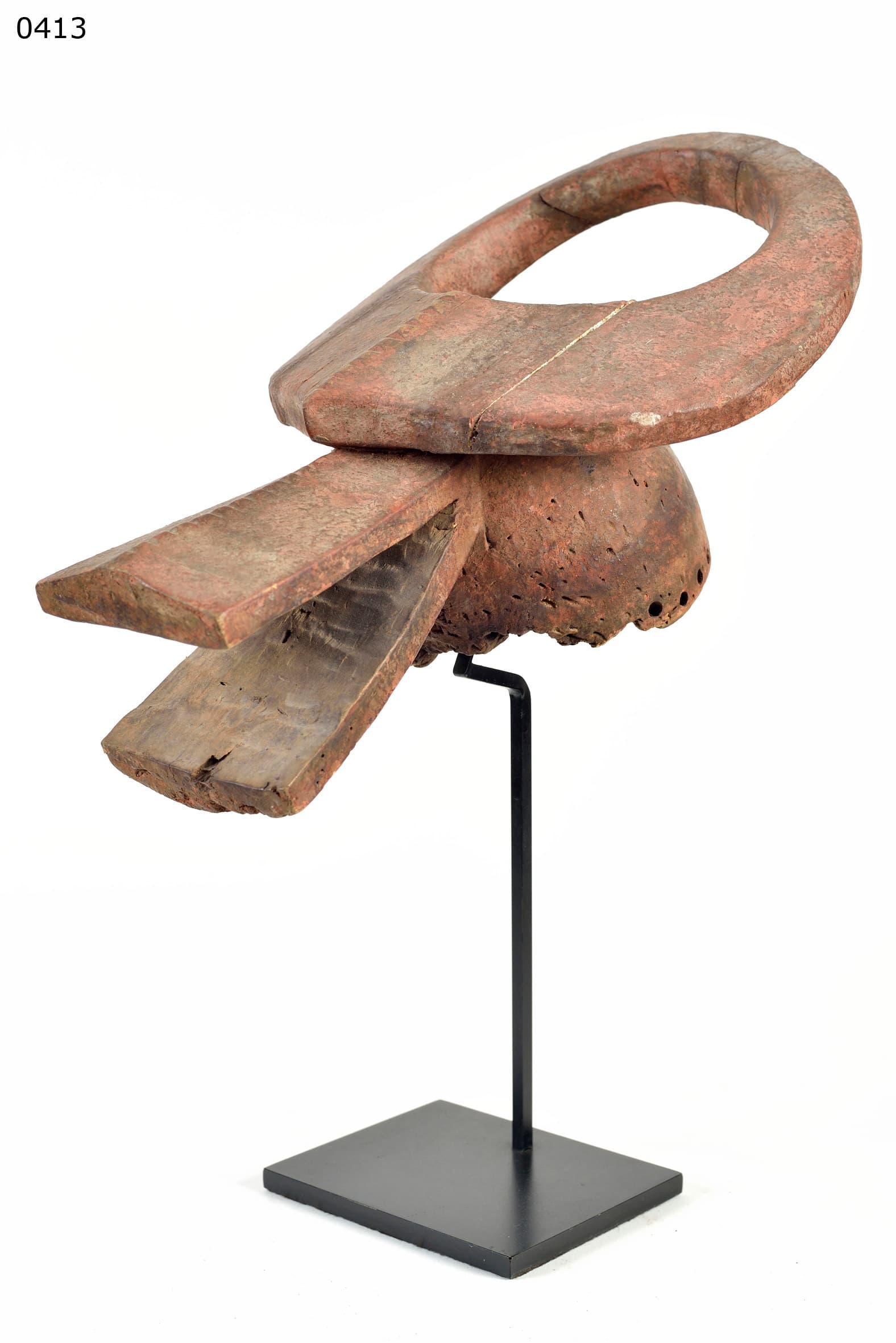
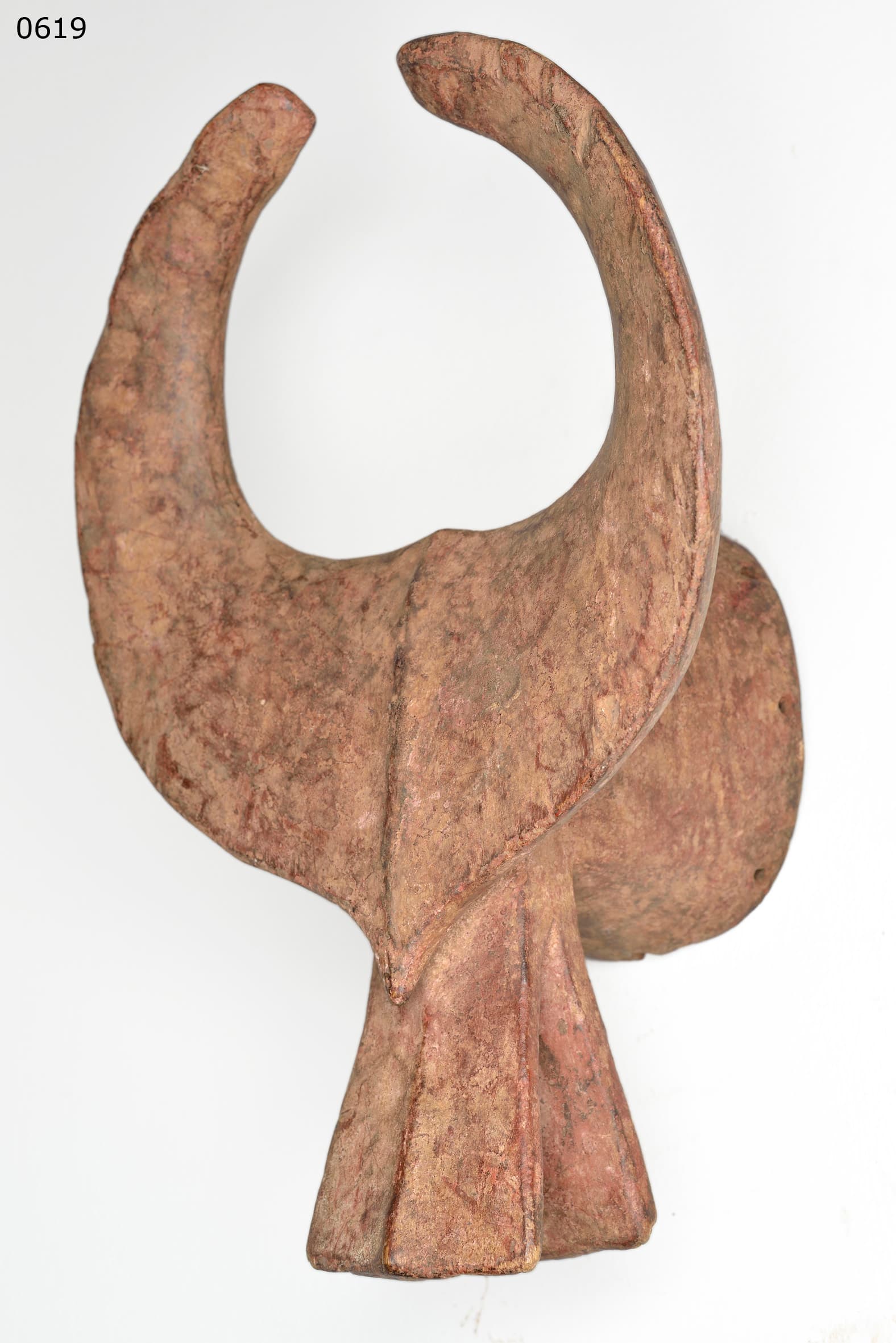
Ein Mama Mangam Buschkuhkopf (1. Hälfte 20. Jh., 38 cm) aus Nigeria - katalogisiert als Ahnenstatue, aber visuell eine klassische abstrakte Buschkuhkopfmaske, definiert durch eine stark abstrahierte geschwungene Sichelform mit langer offener Schnauze und rückwärts gebogenen Hörnern, das Holz trägt eine dicke tief oxidierte krustige dunkelbraune Patina.
1. Der abstrakte Zoomorphismus der Kantana
Das Volk der Mama (auch Kantana genannt) aus dem Benue-Tal stellt einige der am radikalsten abstrahierten Tiermasken in Afrika her.
- Ablehnung des Naturalismus: Die schwere Buschkuh (Waldbüffel) ist auf einen aerodynamischen Schwung aus reinem Negativraum und scharfen, minimalistischen Kurven reduziert.
- Schlanke, moderne Silhouette: Die lange, offene Schnauze steht in perfektem Gleichgewicht zu den nach hinten geschwungenen Hörnern - so entsteht eine schlanke, fast moderne Silhouette, die beim Tanzen wie eine fließende, rauschende Naturgewalt wirkt.
2. Die Mangam-Gesellschaft und die landwirtschaftliche Kraft
Diese Maske wurde von den Mitgliedern des Geheimbundes Mangam waagerecht auf dem Kopf getragen (wie eine Mütze).
- Beerdigungen und Ernten: Die Maske wird bei Beerdigungen wichtiger Ältester und bei kritischen landwirtschaftlichen Festen getanzt und kanalisiert die rohe, unaufhaltsame Kraft der Buschkuh.
- Aggressive Reinigung: Die Aufführung ist sehr energisch und aggressiv - sie soll bösartige Geister vertreiben und das Dorf reinigen und sicherstellen, dass die ungezähmte Kraft der Wildnis genutzt wird, um die Ernten und das Vieh der Gemeinschaft zu schützen.
3. Dickes Blut und Ölverkrustung
Der physische Zustand bietet einen unglaublichen forensischen Nachweis der esoterischen Verwendung.
- Akkumulierte Trankopferkruste: Tief verkrustete, stark strukturierte dunkelbraune Patina - das akkumulierte Ergebnis jahrzehntelanger Opfertränke (Palmöl, Hirsebier, Tierblut), die über die Holzkrone gegossen wurden, um den Mangam-Geist zu nähren.
- Gehärtete organische Bindung: Die tiefe Oxidation des Holzes und die gehärtete Natur dieser organischen Kruste zeugen von einem aktiven Schreinleben im frühen 20.
Zusammenfassung
Als brillantes Beispiel nigerianischer aerodynamischer Abstraktion destilliert diese Mama-Buschkuh-Wappenmaske die Kraft der Wildnis in einen schlanken geometrischen Bogen. Ihre dicke Opferkruste bestätigt die authentische Geschichte innerhalb der Mangam-Gesellschaft.
KI-unterstützt erstellt aus Sammlungsgutachten, Objektfotografie und eigener Recherche, redaktionell geprüft. Fehler sind möglich — Hinweise darauf sind uns willkommen. Zum Verfahren →