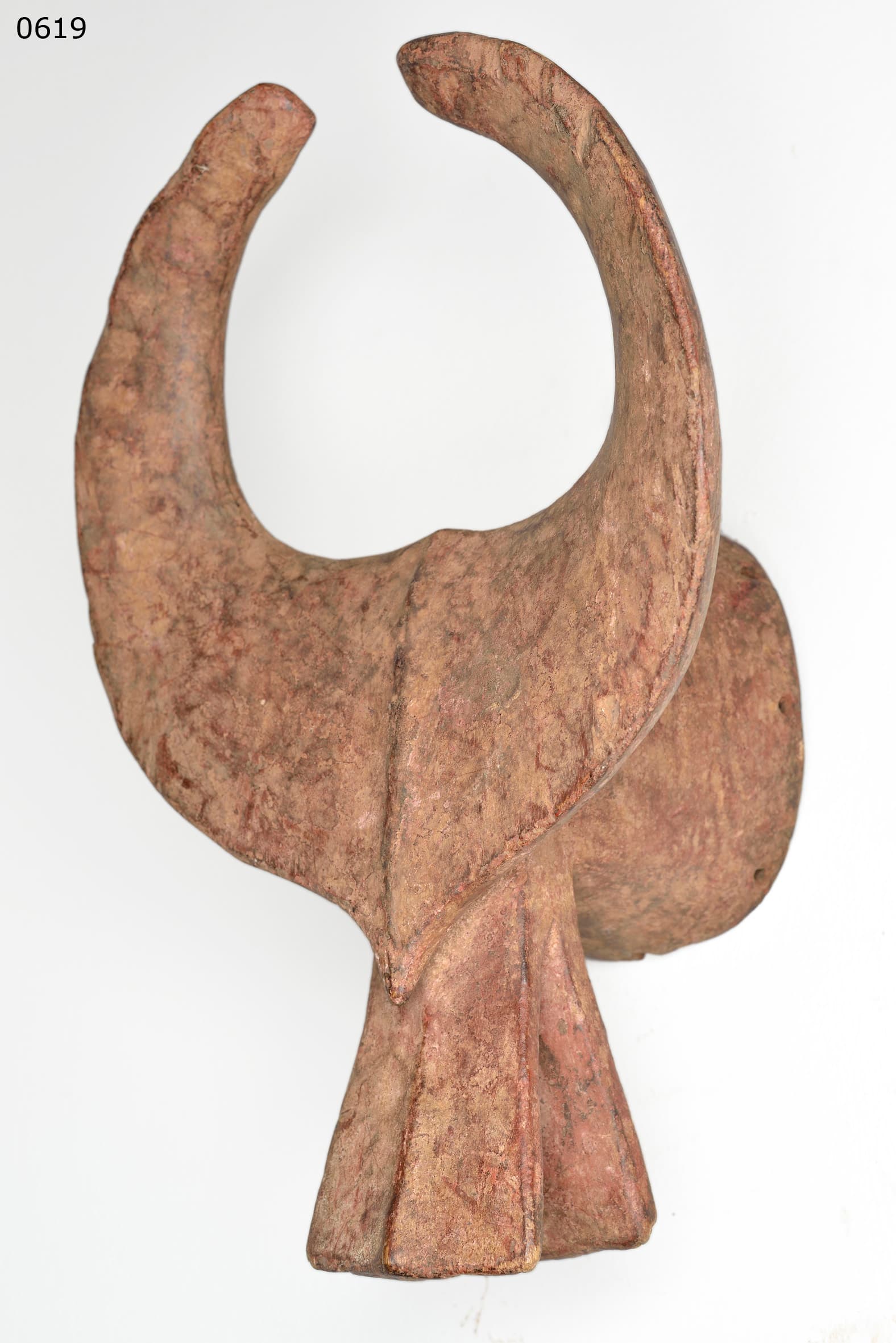
Eine stark abstrahierte hölzerne Mama-Kopfmaske (1. Hälfte 20. Jh., 41 cm) aus Nigeria - sie zeigt eine stilisierte Buschkuh (Büffel) mit einer markanten, länglichen, blockigen Schnauze, die in zwei große, sichelförmige Hörner ausläuft. Das dichte Holz ist mit einer dicken, dunkelrotbraunen Opferpatina überzogen.
1. Aerodynamischer Zoomorphismus des Kantana
Die Mama (auch Kantana genannt) aus dem Benue-Tal stellen Wappenmasken her, die den absoluten Höhepunkt der westafrikanischen aerodynamischen Abstraktion darstellen.
- Schlanke kinetische Silhouette: Der Künstler entfernt alle überflüssigen naturalistischen Details des Waldbüffels und destilliert die massive Masse des Tieres in eine schlanke, fließende Silhouette aus reiner kinetischer Energie.
- Aggressiver Negativraum: Der dramatisch geschwungene Negativraum zwischen der langgestreckten Schnauze und den nach hinten gebogenen Hörnern schafft eine skulpturale Form, die sich in einer schnellen, aggressiven Bewegung zu befinden scheint, selbst wenn sie still steht.
2. Mangam-Gesellschaft und ungezähmte Macht
Diese Wappenmaske wurde waagerecht wie eine Kappe auf dem Kopf des Tänzers getragen und war durch ein massives Kostüm aus dicken Bastfasern stark verdeckt.
- Hauptinsignien der Mangam: Die Hauptinsignien des Mangam-Geheimbundes - getanzt bei landwirtschaftlichen Festen und bei Beerdigungen prominenter Mitglieder der Gesellschaft.
- Gewaltsamer Wildniskanal: Die Darbietung ist gewalttätig und unvorhersehbar - sie demonstriert visuell die Fähigkeit der Gesellschaft, sich die gefährlichen Kräfte der Wildnis zunutze zu machen, um das Dorf von Hexerei zu reinigen und die Fruchtbarkeit der Ernte zu gewährleisten.
3. Rituelle Verkrustung und ölige Oxidation
Die Oberfläche ist stark durch das esoterische Schreinleben geprägt.
- Wachsartige dunkelbraune Kruste: Nicht für die kommerzielle Ausstellung poliert - bedeckt mit einer dicken wachsartigen dunkelbraunen Kruste, die von der kontinuierlichen rituellen Salbung in der ersten Hälfte des 20.
- Glättung der hohen Grate: Mischungen aus Palmöl, gekauter Kolanuss und Tierblut wurden wiederholt über den Kamm gegossen, um den Mangam-Geist zu erhitzen und zu nähren - die Härtung und Glättung der Kruste auf den hohen Graten durch die Handhabung spricht für eine authentische zeremonielle Verwendung.
Zusammenfassung
Als brillante Ausführung des nigerianischen zoomorphen Kubismus reduziert diese Mama-Buschkuh-Wappenmaske die Kraft der Wildnis auf einen schlanken, aggressiven Bogen. Ihre dicke, mit Blut und Öl verkrustete Patina unterstreicht ihren Status als hochaktives Objekt einer verehrten Geheimgesellschaft.
KI-unterstützt erstellt aus Sammlungsgutachten, Objektfotografie und eigener Recherche, redaktionell geprüft. Fehler sind möglich — Hinweise darauf sind uns willkommen. Zum Verfahren →