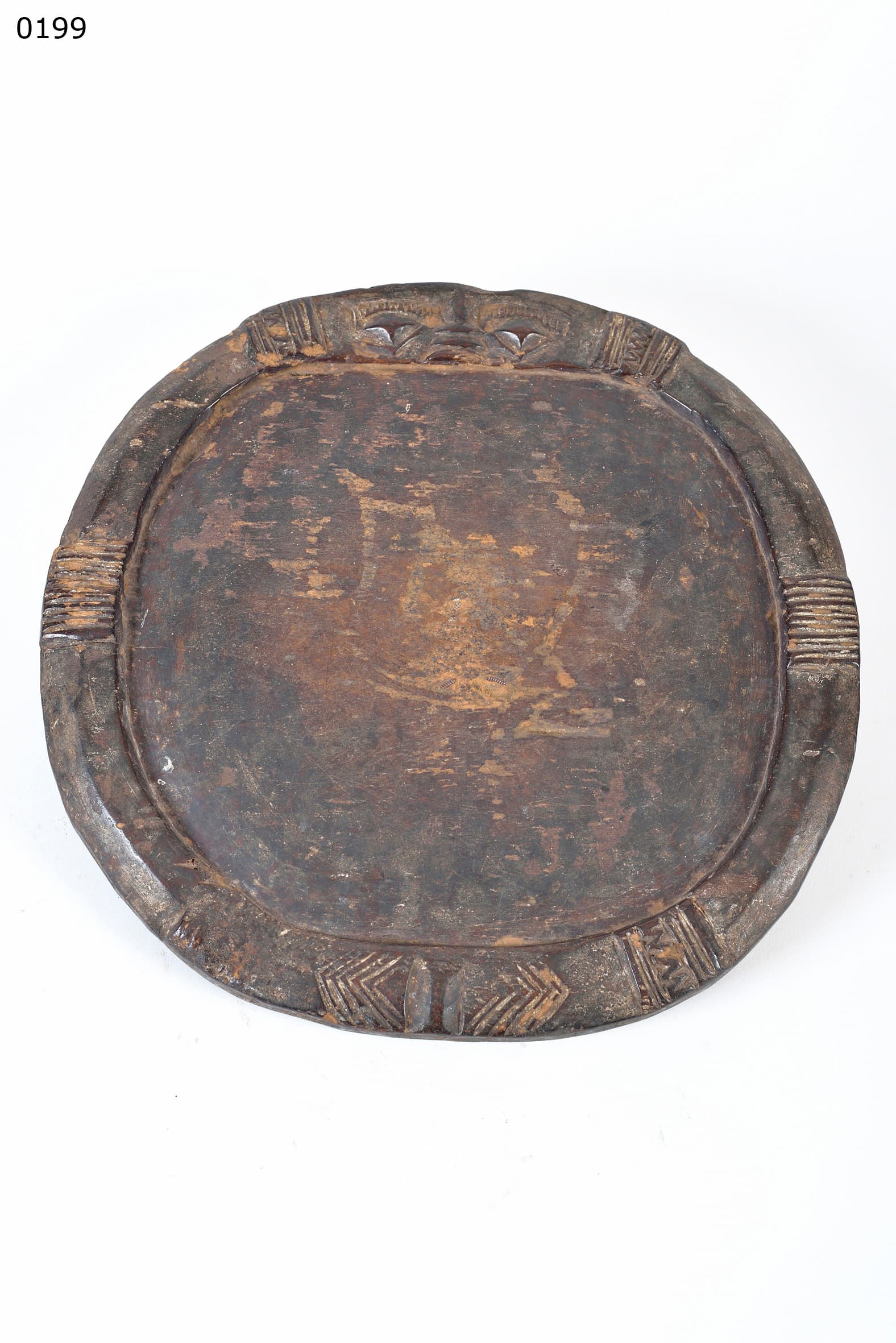
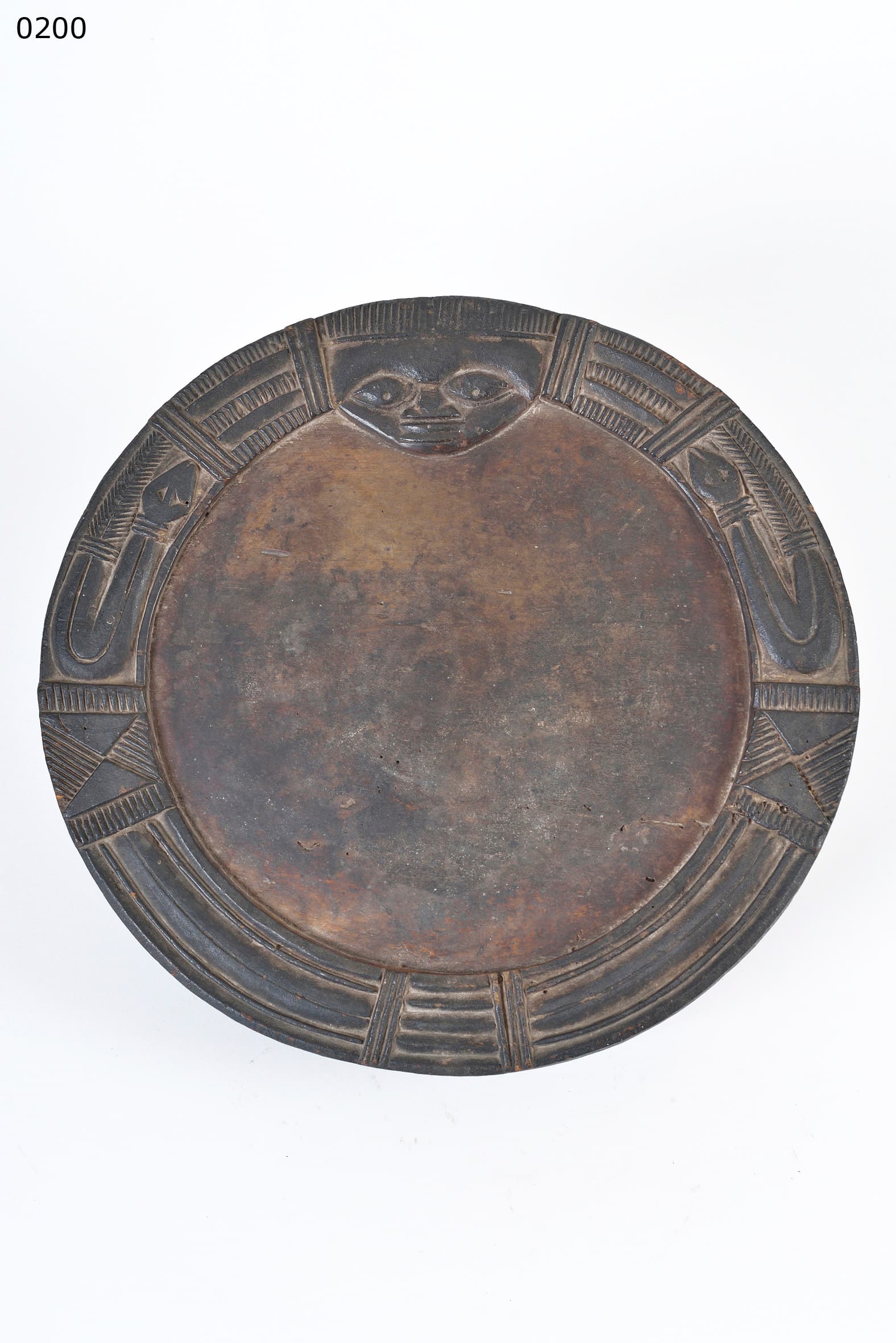
Eine massive, geschwungene, seitengeblasene Yoruba-Elfenbeintrompete (Akohen) (1. Hälfte 20. Jh., 59 cm) aus Nigeria - ein ausgehöhlter Elefantenstoßzahn mit glattem, elegant gealtertem Elfenbein und minimalistischen, geometrischen Bandschnitzereien in der Nähe der Basis, die eine tiefe, buttrige, orange-braune Patina aufweisen. Teil einer Gruppe von drei Hörnern (0437, 0438, 0439).
1. Elfenbein als prestigeträchtiges Material
In Westafrika gilt Elfenbein als ein bedeutendes materielles Symbol für königliches Vorrecht, großen Reichtum und Macht.
- Meisterhaftes Schnitzen des Stoßzahns: Das Schnitzen eines ganzen massiven Elefantenstoßzahns zu einem funktionsfähigen Instrument erfordert außerordentliches Geschick, damit das dichte Zahnbein nicht zerbricht.
- Schwungvolle natürliche Krümmung: Dieses Yoruba-Exemplar beruht auf der schwungvollen, eleganten natürlichen Krümmung des Stoßzahns, die eher mit subtilen geometrischen Bändern als mit figuralen Reliefs verziert ist.
2. Akohen und die akustische Macht des Königtums
Diese seitlich geblasenen Hörner (bei den Yoruba als akohen bekannt) waren keine Musikinstrumente zur allgemeinen Unterhaltung - sie waren die akustischen Maschinen des königlichen Hofes und des Schlachtfeldes.
- **Der ohrenbetäubend tiefe Klang der Elfenbeintrompete, die ausschließlich von hochqualifizierten königlichen Gefolgsleuten geblasen wurde, kündigte die Annäherung des Königs an, signalisierte den Angriff im Krieg oder beschwor mächtige Geister bei den jährlichen Maskenfesten.
- Unaufhaltsame Befehlsstimme: Der Klang des Elefantenstoßzahns wurde buchstäblich mit der Stimme des Königs gleichgesetzt - unaufhaltsam, uralt und absolute Unterwerfung gebietend.
3. Jahrzehntelange Patinierung mit gesättigtem Elfenbein
Das Objekt weist eine ausgeprägte, charakteristische Elfenbeinpatina auf.
- **In der ersten Hälfte des 20. Jahrhunderts nahm das poröse Elfenbein das zu seinem Schutz verwendete Palmöl, den Rauch der königlichen Schreine sowie den Schweiß und den Atem der Musiker auf und verwandelte das weiße Knochenmaterial in ein tiefes, glänzendes Orange-Braun.
- Glasglatter Ansatz: Der rechteckige, seitlich geblasene Ansatz (Mundstück) weist extreme, glasartige Reibungsverschleißerscheinungen auf - sie glätten das umgebende Elfenbein und sprechen für eine jahrzehntelange aktive zeremonielle Nutzung.
Zusammenfassung
Diese Yoruba-Elfenbeintrompete ist ein repräsentatives Beispiel westafrikanischer höfischer Kunst und akustischer Präsenz. Sie steht im Kontext vergleichbarer Stücke (wie den Gurunsi- und größeren Yoruba-Hörnern 0438, 0439) aus diesem Kulturkreis. Die tief gesättigte orangefarbene Patina und das glatte Mundstück weisen auf eine langjährige zeremonielle Verwendung hin.
KI-unterstützt erstellt aus Sammlungsgutachten, Objektfotografie und eigener Recherche, redaktionell geprüft. Fehler sind möglich — Hinweise darauf sind uns willkommen. Zum Verfahren →