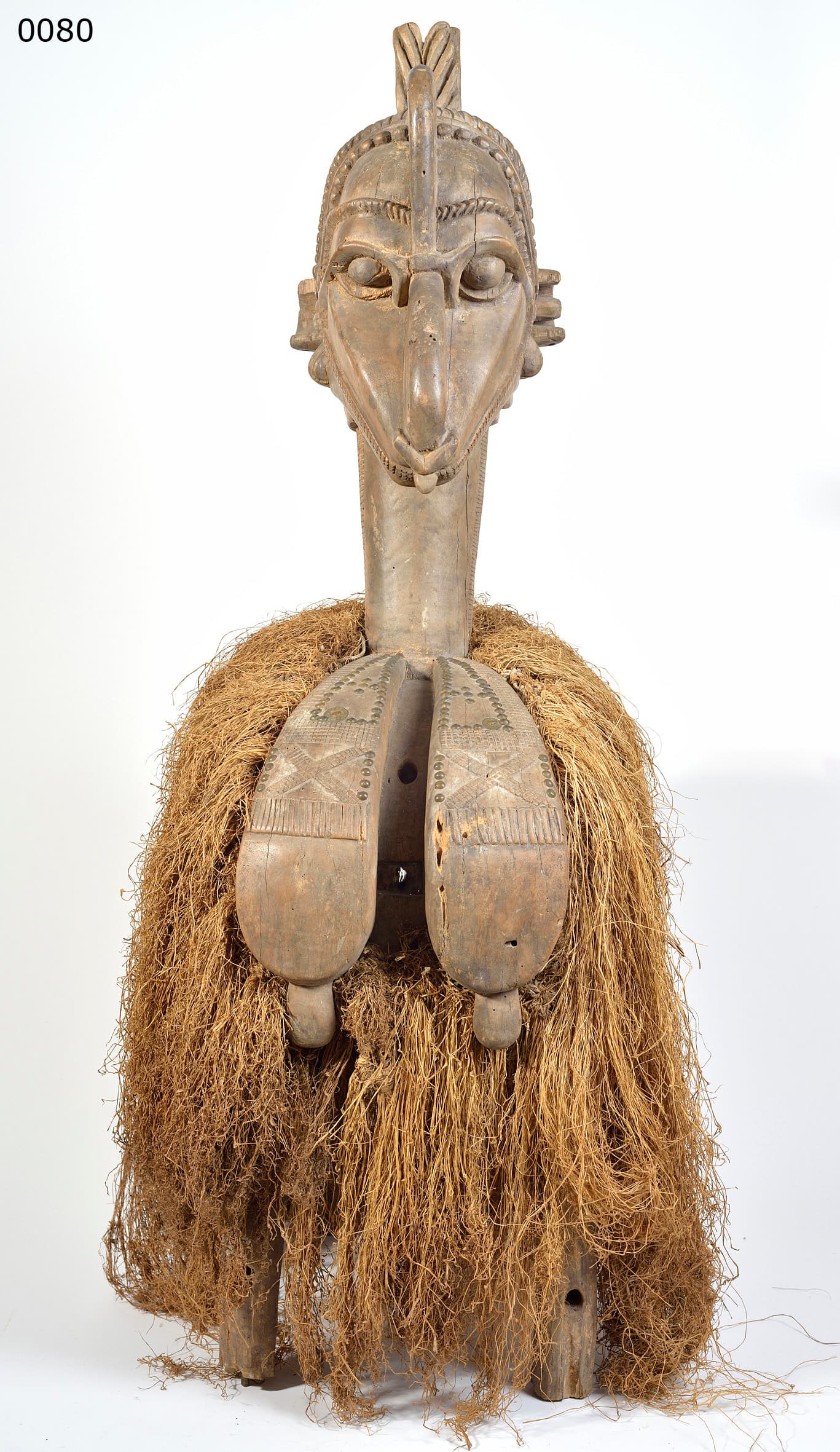
Eine Baga A-Tshol Altarfigur (zugeschrieben: 1. Hälfte 20. Jh., 105 cm) aus Guinea - ein stark stilisierter hybrider Vogel-/Menschenkopf mit einem ausgeprägt langen, scharf zugespitzten Schnabel und einem gewölbten Schädel, der mit tiefen, geometrischen, blattähnlichen Einschnitten bedeckt ist, montiert auf einer hockerartigen Basis. Das oxidierte Holz weist eine trocken gealterte Patina mit verblassten Spuren von roten und weißen Pigmenten auf.
1. Zoomorphe Hybridität und kinetische Geometrie
Der A-Tshol (auch Elek) gilt in der Literatur als eine der komplexesten und visuell eindringlichsten Formen der Baga-Kunst.
- Menschlicher Schädel + Nashornvogelschnabel: Die Gestaltung verbindet einen menschlichen Schädel mit dem geschwungenen Schnabel eines Nashornvogels oder einer Krokodilschnauze – die massive 105 cm lange Struktur zeigt eine bemerkenswerte kinetische Geometrie.
- Der lange, ausladende Schnabel erzeugt eine nach vorne gerichtete Dynamik, die durch den schweren, zylindrischen, hockerartigen Sockel ausbalanciert wird. Die komplizierten chevron- und blattähnlichen Einschnitte, die den Schädel bedecken, zeigen das für Baga-Objekte typische zweidimensionale grafische Design, angewandt auf ein dreidimensionales Volumen.
2. Die Simo-Gesellschaft und der Hexenjäger
Der A-Tshol ist keine Maske, sondern ein ritueller Altaraufsatz, der von den Ältesten der Simo-Geheimgesellschaft verwendet wird.
- Allwissende Anti-Hexerei-Waffe: Er repräsentiert eine traditionell als allwissend geltende Entität, die dafür verantwortlich ist, das Geschlecht vor bösartiger Hexerei zu schützen - ein zentrales spirituelles Schutzobjekt des Baga-Volkes.
- Schnabelhieb gegen verborgene Zauberer: Bei Beerdigungen oder Einweihungen konnte der A-Tshol aus seinem Schrein entfernt werden und auf dem Kopf eines Darstellers tanzen, wobei er seinen massiven Schnabel nach vorne stieß, was der Überlieferung nach dem symbolischen Aufspüren verborgener Zauberer in der Menge diente.
3. Austrocknung und verblasste Polychromie
Die Patina spricht für eine Entstehung in der ersten Hälfte des 20. Jahrhunderts.
- Trockene matte Oxidation: Das Holz ist trocken und stark zu einem dunklen, matten Braun oxidiert und weist natürliche Altersrisse entlang des Schnabels auf.
- Eigene Pigmentspuren: Die Vertiefungen der geometrischen Schnitzereien behalten verblasste Reste von roten und weißen Pigmenten – was auf eine Verwahrung in einem geschützten Schrein hindeuten kann, ohne Hinweise auf moderne kommerzielle Lacke.
Zusammenfassung
Dieses massive A-Tshol ist eine ausdrucksstarke Ausführung der hybriden Abstraktion aus Guinea, konzipiert als ritueller Schutz gegen Hexerei. Seine schwungvolle geometrische Architektur und die charakteristisch verwitterte, verblichene polychrome Patina machen es zu einem bedeutenden Zeugnis der Schnitzkunst der Simo-Gesellschaft.
KI-unterstützt erstellt aus Sammlungsgutachten, Objektfotografie und eigener Recherche, redaktionell geprüft. Fehler sind möglich — Hinweise darauf sind uns willkommen. Zum Verfahren →

Cresthead Schlangenmaske

Zoomorphe Schreinfigur (wird bei rituellen Zeremonien verwendet)
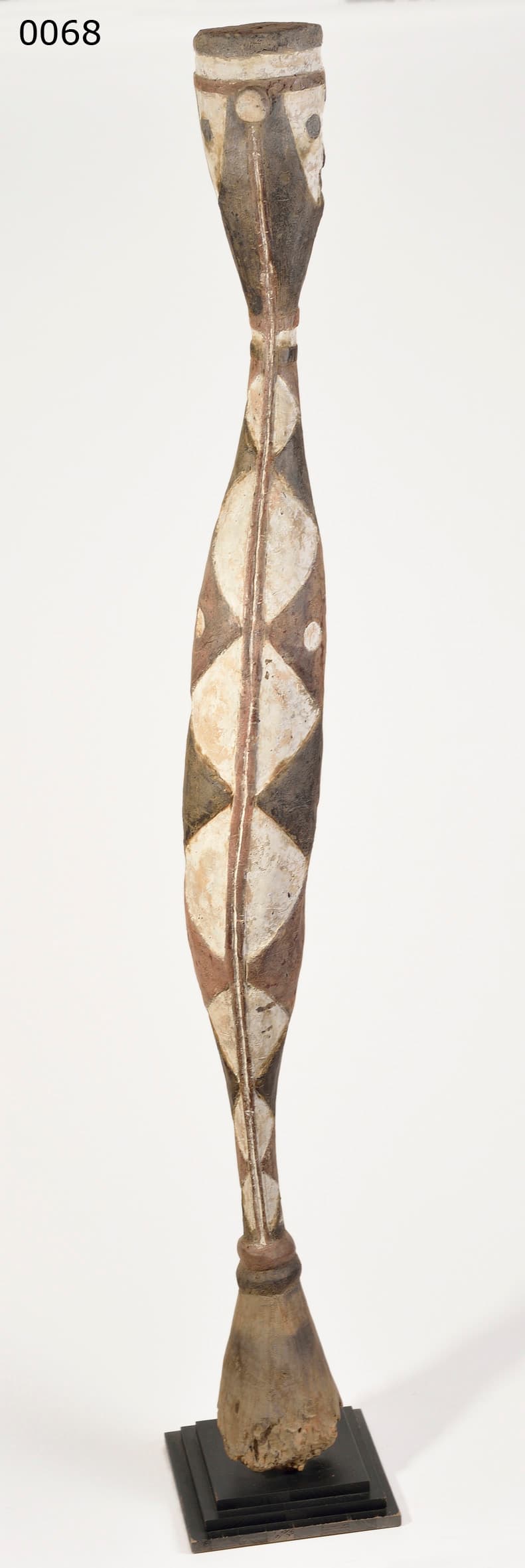
Schlangenkopfwappen