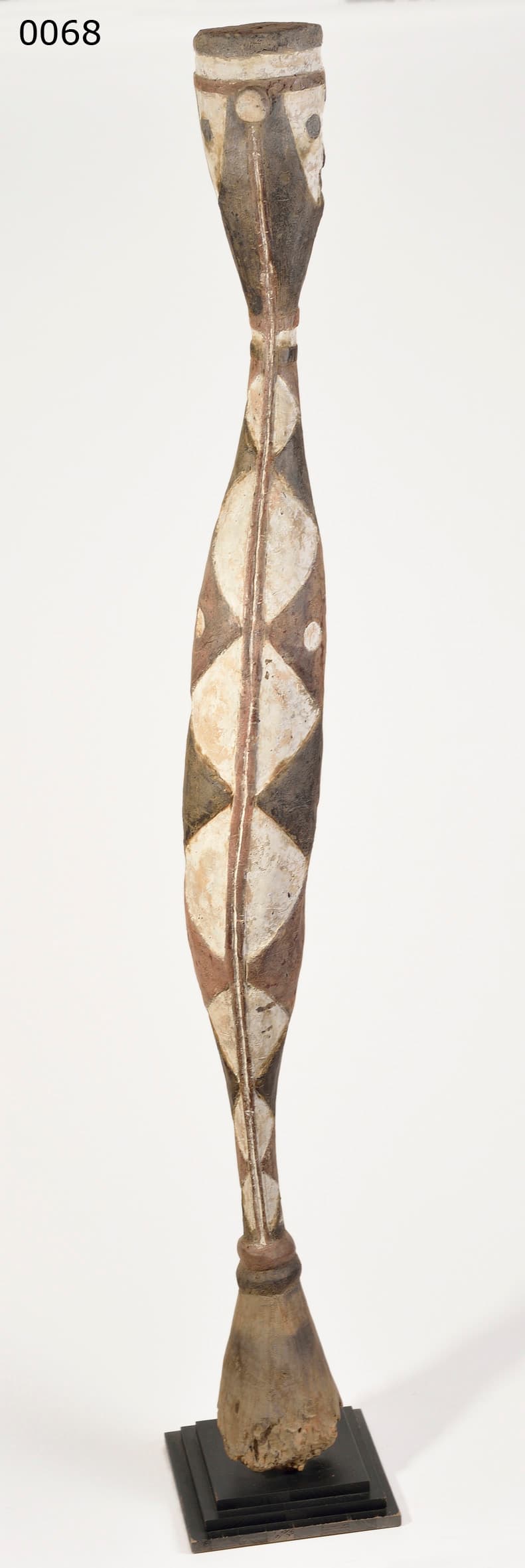
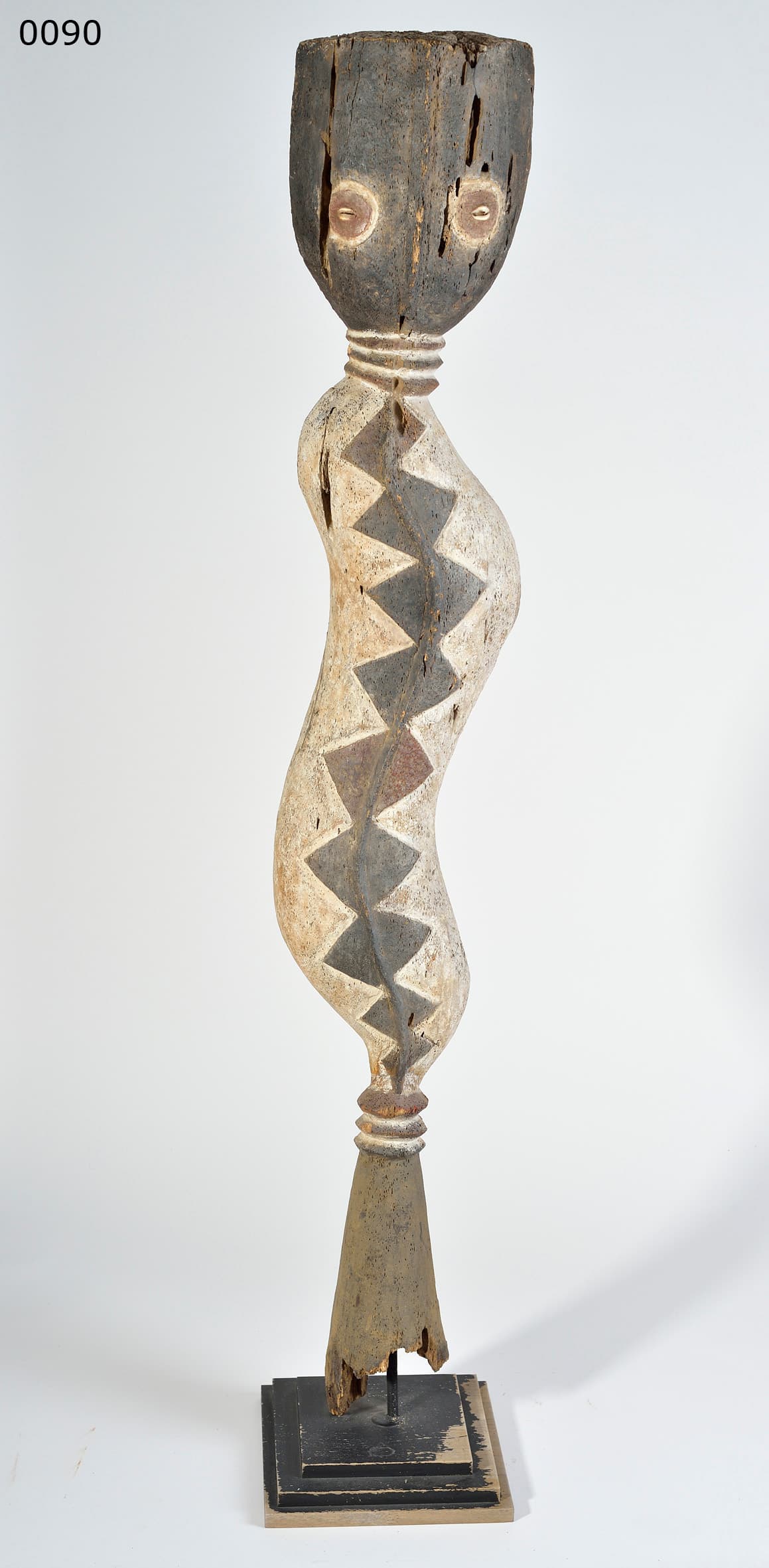
Eine monumentale Holzbüste (wohl 1. Hälfte 20. Jh., 130 cm) aus der Baga von Guinea - ein massiver, ausladender Kopf mit markanter Hakennase, flachen Hängebrüsten und einem dicken Rock aus Raphiabast, der das untere Gerüst bedeckt.
1. Die Universalmutter (D'mba)
Die Nimba (korrekt D'mba genannt) gilt als eine der bekanntesten Maskenformen der Baga-Kultur und der afrikanischen Kunstgeschichte.
- Das Ideal der Mutterschaft: Sie stellt keine Göttin dar, sondern gilt als ein Ideal der Baga-Frau - eine Mutter, die viele Kinder geboren und gestillt hat, verkörpert durch die langen, flachen Brüste. Sie steht traditionell für Fruchtbarkeit, Anmut und landwirtschaftlichen Reichtum.
2. Eine Meisterleistung der kinetischen Performance
- Die Schulterhalterung: Die Nimba ist ungeheuer schwer. Sie wird nicht auf dem Kopf getragen, sondern ruht auf den Schultern des Tänzers; der Tänzer sieht durch ein zwischen den Brüsten eingearbeitetes Loch hinaus.
- Der Tanz: Unter dem massiven Bastrock verborgen, dreht und beugt der männliche Tänzer den schweren Kopf der Maske in Richtung Boden. Er wird bei Erntefesten, Hochzeiten und Beerdigungen getanzt, um das Dorf zu segnen und den Fortbestand des Lebens zu sichern.
Zusammenfassung
Die Baga Nimba gilt als ein bedeutendes, ikonisches Werk. Mit ihren 130 cm nimmt diese massive Holzbüste eine zentrale Rolle in der Baga-Gesellschaft ein und projiziert die lebensspendende mütterliche Kraft der Ahnen über die Reisfelder und das Dorf.
KI-unterstützt erstellt aus Sammlungsgutachten, Objektfotografie und eigener Recherche, redaktionell geprüft. Fehler sind möglich — Hinweise darauf sind uns willkommen. Zum Verfahren →