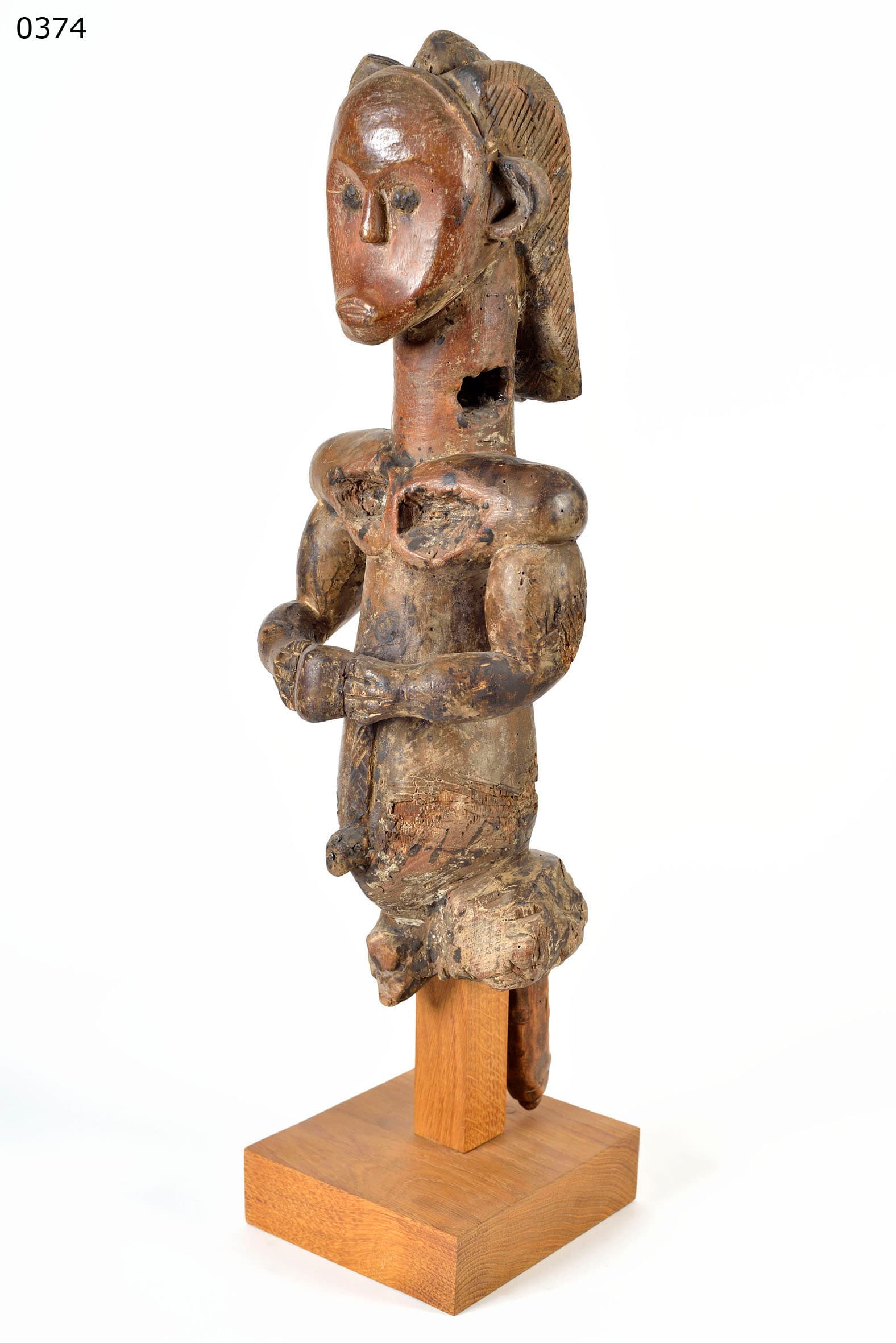
Eine hoch aufragende weibliche Ahnenstatue der Fang (1. Hälfte 20. Jh., 113 cm) aus Gabun - eine stehende Figur mit gebeugten Beinen und Händen, die auf ihrem aufgeblähten Bauch ruhen, mit einem ausladenden herzförmigen Gesicht und einer einfachen Kammfrisur. Das stark oxidierte Holz weist eine trockene, dunkelbraune Patina auf, mit deutlichen, über die gesamte Länge des Rumpfes verlaufenden Trocknungsrissen.
1. Monumentaler Maßstab und somatische Spannung
Die Reliquienfiguren der Fang Byeri sind zwar weltweit berühmt, werden aber in der Regel in kleinerem Maßstab (30-50 cm) geschnitzt, um auf Rindenkästen zu sitzen.
- Architektonischer Maßstab: Diese imposante 113 cm große Skulptur ist ein bemerkenswertes Beispiel für die volumetrische Schnitzkunst der Fang.
- Somatisches Gleichgewicht: Sie bewahrt die für die Fang typische somatische Spannung - das Gleichgewicht zwischen dem ausgeprägten kindlichen Nabelbruch und der kraftvoll gebeugten Muskulatur der erwachsenen Oberschenkel; die geschwungene herzförmige Gesichtsebene und der heiter beobachtende Ausdruck vermitteln eine Aura von unnachgiebiger, ewiger Ruhe.
2. Der Hüter der obersten Abstammungslinie
Eine Figur von dieser immensen Größe übersteigt den normalen Familienkult Byeri.
- Reliquienwächter auf Clanebene: Er diente wahrscheinlich als oberster Wächter für die Reliquien eines ganzen Dorfes oder einer großen Clan-Linie.
- Ehrfurcht der Melan-Initiation: Es wird angenommen, dass während der Melan-Initiationsriten, wenn die Schädel der Ahnen aus ihren Kisten genommen wurden, eine Statue dieses großen Ausmaßes verwendet wurde, um die jungen Eingeweihten zu beeindrucken – sie stand über einen Meter hoch im flackernden Feuerlicht und repräsentierte im rituellen Kontext eine bedeutende Matriarchin des Fang-Volkes.
3. Tiefe Austrocknung und Heiligtumsalterung
Im Gegensatz zu den stark harzigen "schwitzenden" Patinas, die man bei kleineren, häufig gesalbten Byeri-Figuren findet, weist diese massive Skulptur eine tiefgreifende umweltbedingte Austrocknung auf.
- Dark Initiation Sanctuary Aging: Vermutlich im dunklen, trockenen Inneren eines Initiationsheiligtums aufbewahrt, ist das dichte Holz wohl im Laufe des 20. Jahrhunderts zu einem tiefen, matten Holzkohlebraun oxidiert.
- Deutliche Längsrisse: Die massiven stabilisierten Austrocknungsrisse, die den Rumpf und die Beine spalten, sind charakteristische Merkmale, die auf die natürliche Alterung eines massiven Blocks aus äquatorialem Hartholz hindeuten.
Zusammenfassung
Mit einer Höhe von über einem Meter ist diese Fang-Ahnenstatue eine eindrucksvolle monumentale Ausführung der gabunischen Volumenspannung. Ihre schweren, durch Trockenheit und Verwitterung entstandenen Risse und ihr großer Umfang machen sie zu einem bedeutenden Zeugnis der Byeri-Verehrung auf Clan-Ebene.
KI-unterstützt erstellt aus Sammlungsgutachten, Objektfotografie und eigener Recherche, redaktionell geprüft. Fehler sind möglich — Hinweise darauf sind uns willkommen. Zum Verfahren →