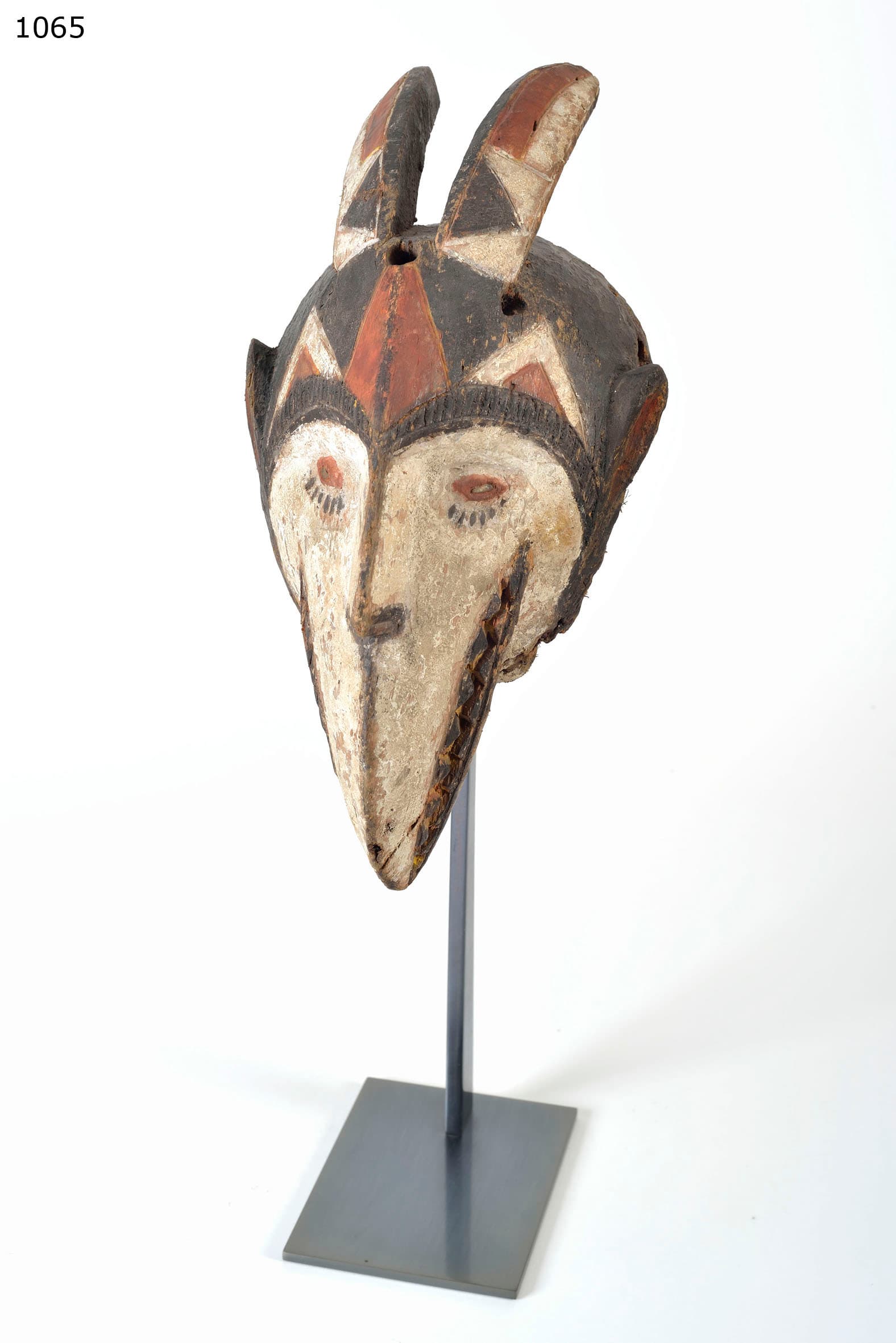
Eine detailreich gestaltete Boki-Kopfbedeckungsmaske (wohl 1. Hälfte 20. Jh., 36 cm) aus Nigeria - ein breites Gesicht mit gewölbten Augenbrauen, offenem Mund und markanten seitlichen Ohransätzen, eingerahmt von einem dicken Rand aus gewebten Fasern und Haaren. Die Oberfläche ist stark nachgedunkelt und weist eine tief verkrustete Patina auf, die auf eine intensive organische Salbung und Oxidation hindeutet.
1. Cross River Naturalismus und volumetrische Kraft
Die Boki, die in der Cross-River-Region an der Grenze zu Kamerun leben, haben tiefe stilistische Verwandtschaft mit ihren Ekoi/Ejagham-Nachbarn und sind für ihre ausdrucksstarken, realistischen Porträtdarstellungen bekannt.
- Fleischig anschwellende Volumen: Die Schnitzerei zeigt ausgeprägte Wangen, eine fein gezeichnete Nase und einen offenen Mund, was der Maske eine lebendige Physiognomie verleiht.
- Hybridität aus Fasern und Holz: Die Integration von dicken organischen Fasern um den Scheitel unterstreicht die für die Cross-River-Region typische hybride Materialität.
2. Nkanda und Geheimbund Prestige
Diese Aufsätze, die bei Maskeraden waagerecht auf dem Kopf getragen werden, gelten als Insignien elitärer männlicher (und teils weiblicher) Geheimgesellschaften wie der Nkanda.
- Ahnenporträts: Sie stellen traditionell idealisierte Vorfahren, Krieger oder Schutzgeister des Waldes dar.
- Aufführungskontexte: Die Maske wird bei Beerdigungen übergeordneter Häuptlinge, bei hochrangigen Einweihungen und bei großen Erntefesten getanzt, um den sozialen Zusammenhalt zu stärken und die weitreichende Autorität des Geheimbundes gegenüber den nicht eingeweihten Dorfbewohnern zu demonstrieren.
3. Dunkle Oxidation und Faserkonservierung
Die extrem dunkle, fast geschwärzte Oberfläche gilt als bemerkenswertes ethnografisches Merkmal.
- Glänzend gesalbte Kruste: Dies spricht für eine wiederholte rituelle Salbung mit Palmöl, Ruß und Rotholzpulver, die im Laufe des 20. Jahrhunderts zu einer harten, dunklen Kruste oxidierte.
- Nachher konservierte Fasern: Die Erhaltung des zerbrechlichen organischen Faserbesatzes am Scheitel ist bemerkenswert - was auf eine sorgfältige Kuration in den trockenen, rauchgefüllten Dachsparren einer bestimmten Schreinhütte zwischen den Aufführungen hindeutet.
Zusammenfassung
Diese Boki-Kopfbedeckung spiegelt den ausgeprägten Naturalismus der Cross-River-Region wider und kann als ausdrucksstarkes Ahnenporträt verstanden werden. Seine tiefe, organisch verkrustete Patina und die erhaltenen Faserelemente legen eine Verwendung als prestigeträchtiges Geheimbundabzeichen nahe.
KI-unterstützt erstellt aus Sammlungsgutachten, Objektfotografie und eigener Recherche, redaktionell geprüft. Fehler sind möglich — Hinweise darauf sind uns willkommen. Zum Verfahren →