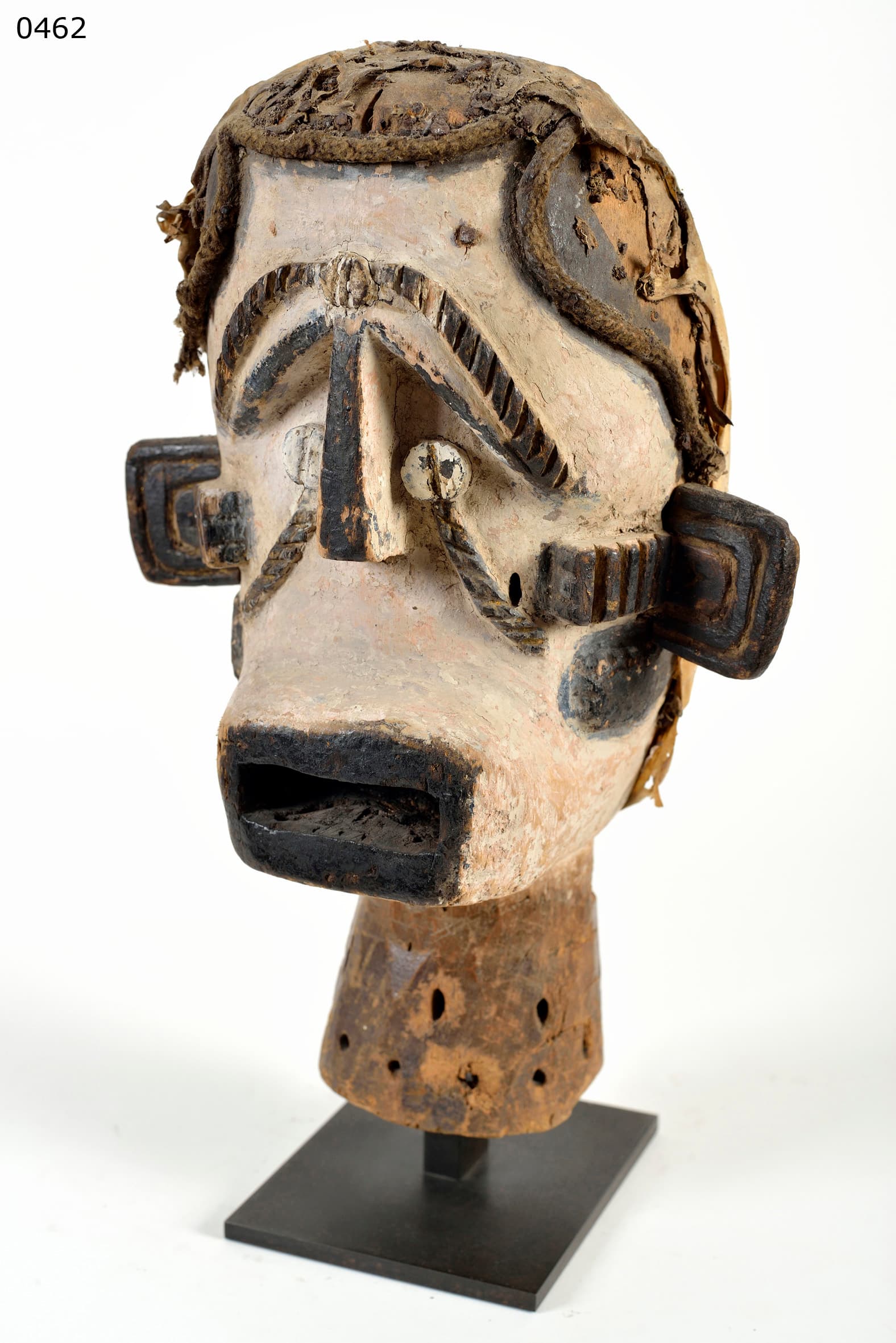
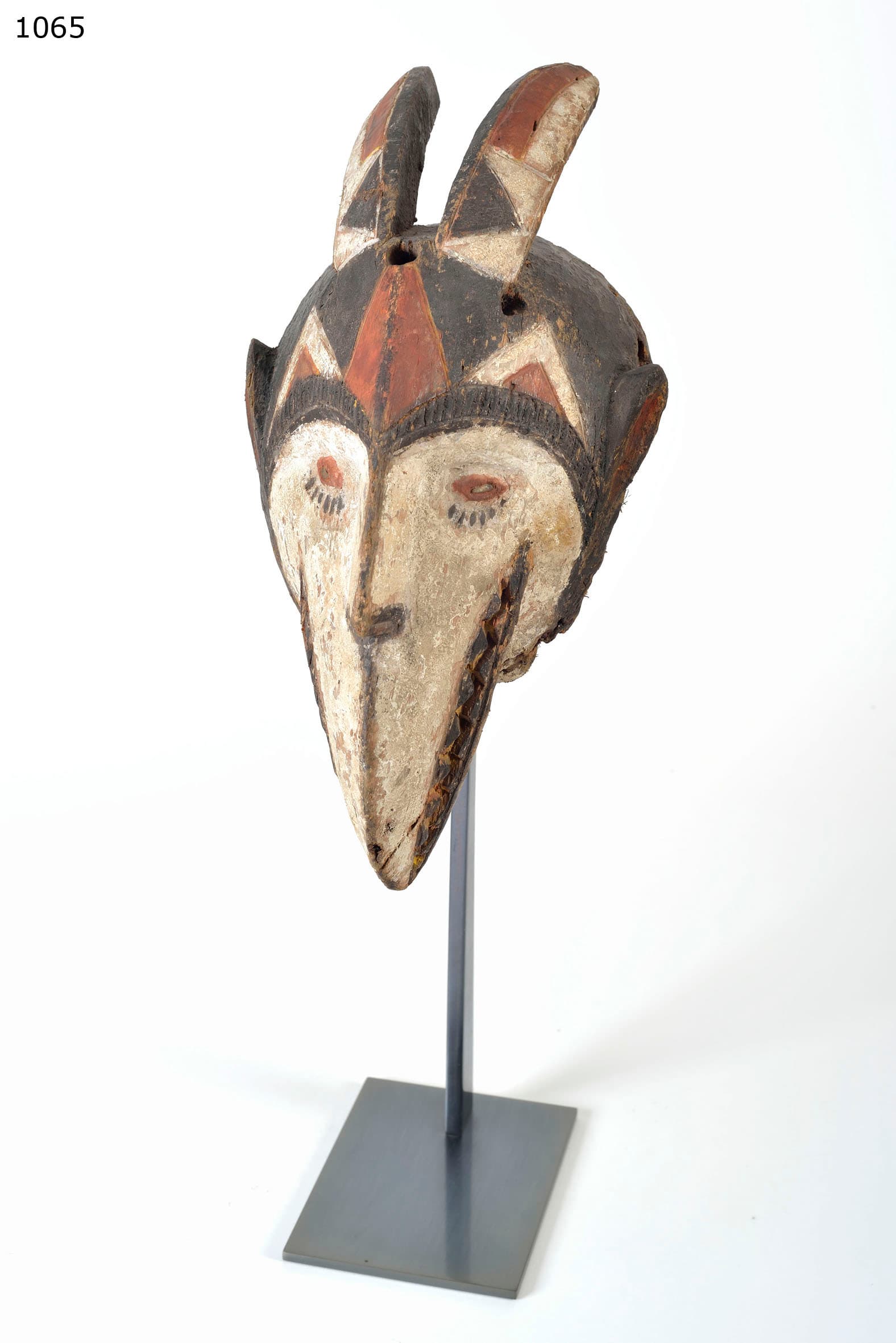
Diese furchterregende hölzerne Gesichtsmaske zeigt einen aggressiven, asymmetrischen Ausdruck mit tief ausgehöhlten Augen (eines davon mit stark weißem Pigment umrandet), geschnitzten vertikalen Wangenskarifikationen und einem massiven, klaffenden Mund. Das stark oxidierte Holz ist mit einer dichen, verkrusteten Schicht aus Ruß, verblichenen Pigmenten und ritueller Materie überzogen.
1. Ästhetischer Stil und regionale Merkmale
Das Volk der Boki (oder Bokyi), das in den dichten Regenwäldern der Cross-River-Region zwischen Nigeria und Kamerun beheimatet ist, stellt einige der sinnlichsten und psychologisch intensivsten Masken in Afrika her. Dieses Stück gilt als ein markantes Beispiel ihres rohen Expressionismus. Der Schnitzer hat eine bewusste Asymmetrie eingesetzt - er hat nur ein Auge weiß gemalt - um ein Gefühl von chaotischer, unberechenbarer Energie zu erzeugen. Der riesige, klaffende Mund und die tiefen Narben entziehen sich jeglichem Sinn für raffinierte Schönheit und vermitteln stattdessen die furchterregende, ungezähmte Kraft eines flüchtigen Buschgeistes oder eines verstorbenen Kriegers.
2. Rituelle Funktion und Geheimbund-Kontext
Masken dieser wilden Art sind ausschließlich das Eigentum elitärer männlicher Regulierungsgesellschaften wie der Nkpe (Leoparden)-Gesellschaft. Diese Gruppen sind die absoluten Autoritäten in der Boki-Kultur. Bei Verstößen gegen gesellschaftliche Gesetze oder bei Beerdigungen von hochrangigen Häuptlingen wurde diese Maske getanzt, um die Ordnung physisch durchzusetzen. Die furchteinflößende Gestalt in Verbindung mit chaotischen, aggressiven Tänzen sollte Uneingeweihten absolute Angst einjagen und die tödlichen Folgen eines Verstoßes gegen die Gesetze der Vorfahren physisch demonstrieren.
3. Physische Patina und Altershinweise
Eine Datierung dieser Maske in das 19. Jahrhundert ist mit ihrer ausgeprägten, ungestörten Oberfläche vereinbar. Das Holz ist mit einer dicken, brüchigen und geschwärzten Rußkruste gesättigt, die von der jahrzehntelangen Lagerung über Schreinfeuern herrührt. Das weiße Kaolinpigment um das Auge und in den Ritzungen ist alt, pulverförmig und tief in die Holzmaserung eingebettet. Darüber hinaus weist der innere Rand der Maske tiefe, glatte Reibungsabnutzung und Schweißflecken auf, was auf eine intensive Nutzung über einen längeren Zeitraum hinweg hindeutet.
Zusammenfassung
Diese Boki-Maske ist ein kompromissloses, furchterregendes Gefäß der spirituellen Durchsetzung des Cross River. Ihr aggressiver, asymmetrischer Expressionismus und ihre tiefgründige Ruß- und Opferkruste, die für ein hohes Alter sprechen, machen sie zu einem eindrucksvollen Zeugnis der Geheimbundjustiz.
KI-unterstützt erstellt aus Sammlungsgutachten, Objektfotografie und eigener Recherche, redaktionell geprüft. Fehler sind möglich — Hinweise darauf sind uns willkommen. Zum Verfahren →