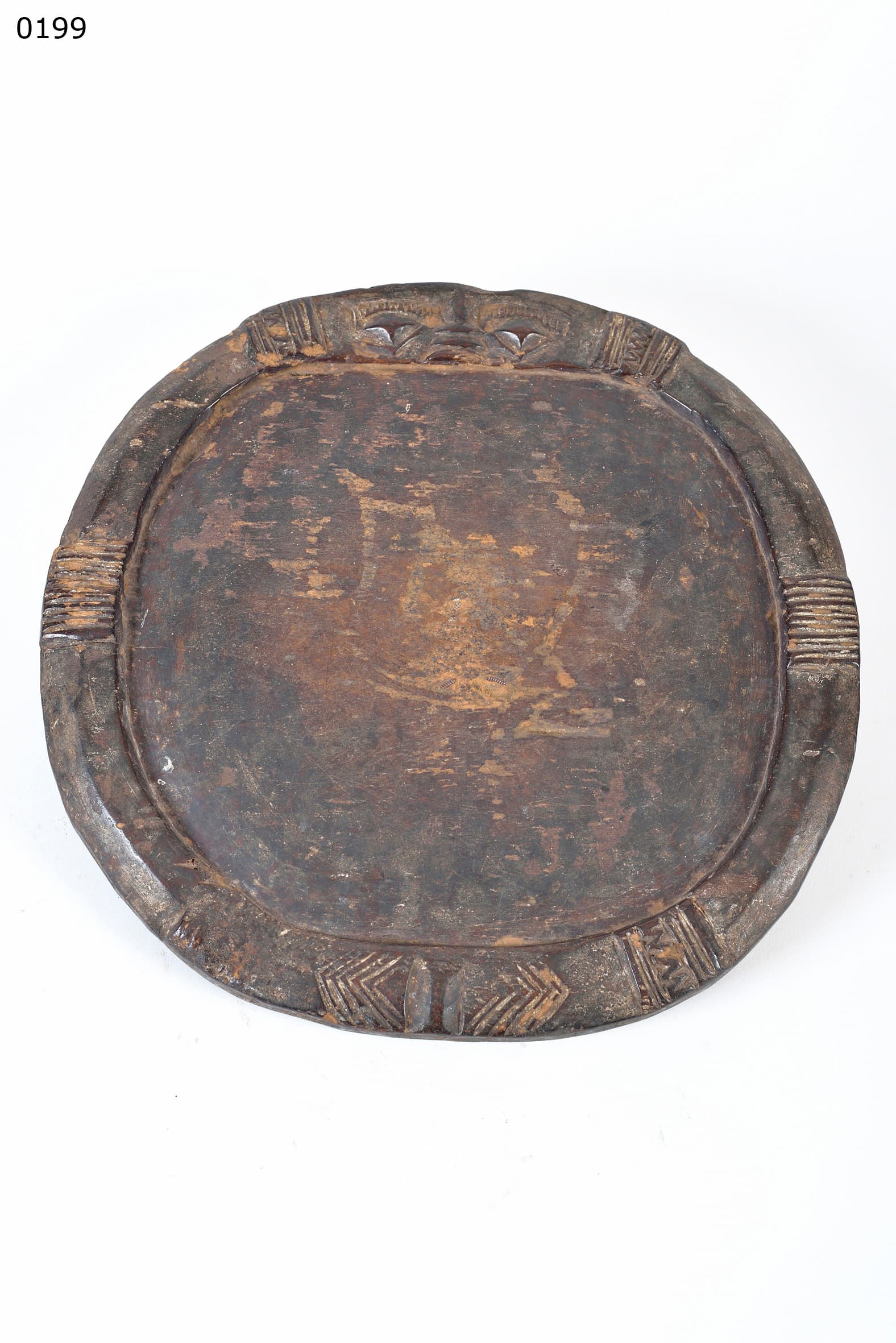
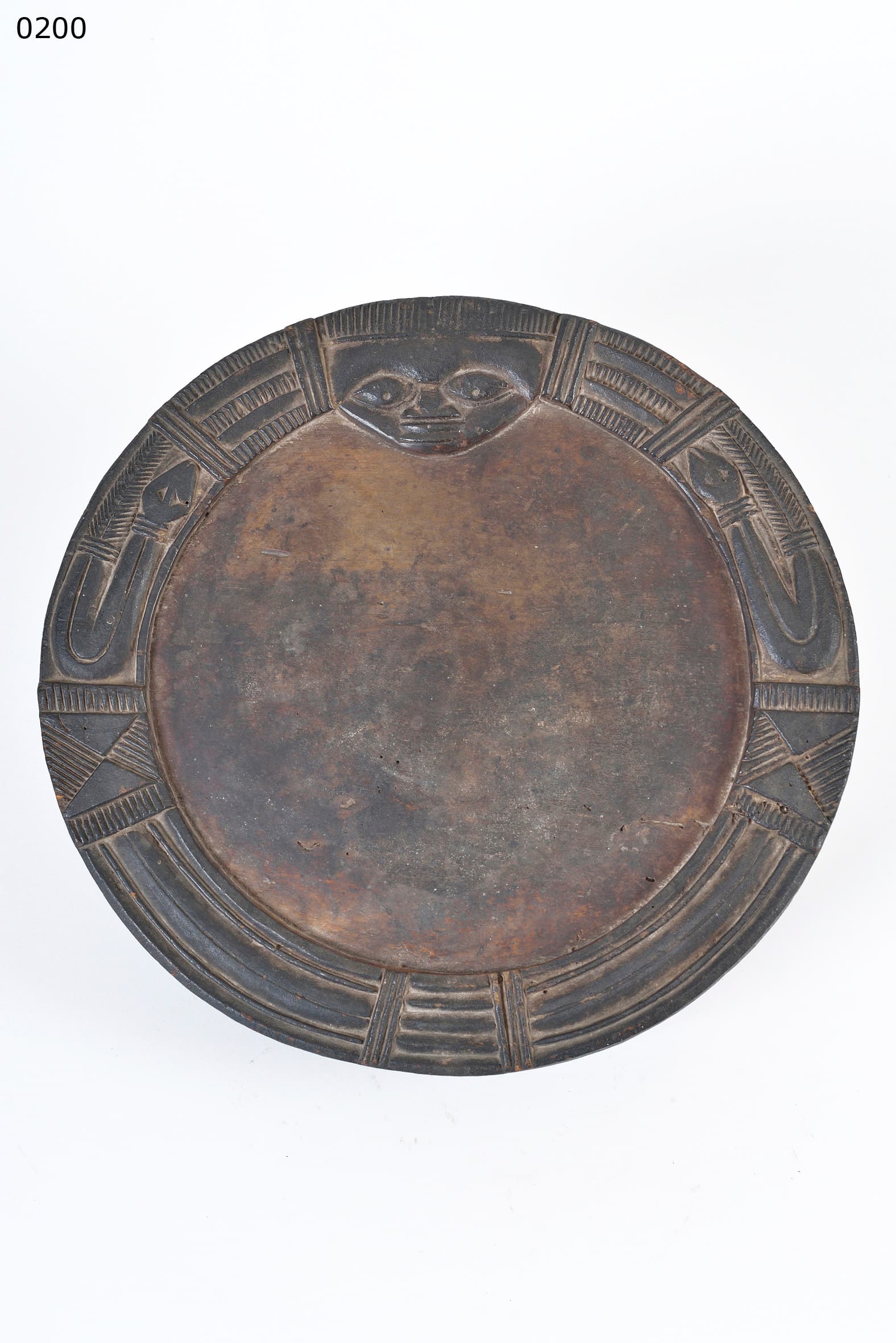
Eine hochkomplexe, mehrstöckige Yoruba-Altar-Kraftfigur (1. Hälfte 20. Jh., 55 cm) aus Nigeria - eine Basis aus drei geschnitzten menschlichen Köpfen, die eine zentrale rechteckige Platte mit einem Glasspiegel tragen und von geometrischen Schnitzereien flankiert werden. Die Spitze wird von einer Tierfigur gekrönt, die eine stehende menschliche Figur mit erhobenen Armen trägt. Das Ganze ist mit einer warmen, tief oxidierten Patina überzogen.
1. Architektonische Dreiteilung und kosmische Geometrie
Diese komplizierte Skulptur gilt als ein bemerkenswertes Beispiel der Yoruba-Erzählung und der strukturellen Architektur.
- Drei kosmische Zonen: Bewusst in drei verschiedene kosmische Zonen unterteilt - die drei Köpfe an der Basis repräsentieren das Fundament der Ahnen und die Unterwelt; die zentrale geometrisch geschnitzte rechteckige Platte stellt die irdische Ebene dar; die obere Ebene (Tier + flehender Mensch) reicht in das himmlische Reich der Orishas.
- Ästhetisches Ideal des Didon: Die strenge vertikale Symmetrie und die kunstvollen dreieckigen Reliefmuster demonstrieren das ästhetische Ideal der Yoruba des Didon - leuchtende Glätte und Ausgewogenheit.
2. Divination und das Portal des Spiegels
Das zentrale Merkmal ist der eingesetzte Glasspiegel, der eine tiefgreifende esoterische Funktion hat.
- Nicht Eitelkeit - spirituelles Portal: In der magischen Praxis der Yoruba dienen Spiegel nicht der Eitelkeit - sie sind spirituelle Portale und Verteidigungswaffen, die mit Esu (Trickster-Bote) oder Orunmila (Gott der Weissagung) in Verbindung stehen.
- Rückspiegelung von Hexerei: Der Spiegel wirft bösartige Kräfte und den "bösen Blick" von Hexen (aje) auf sich selbst zurück; ein Babalawo würde in den Spiegel blicken, um physische Grenzen zu überschreiten und Blitze der Erkenntnis direkt aus der Geisterwelt zu empfangen.
3. Zusammengesetzte Materialien und Heiligtumspflege
Der physische Zustand stützt eine Datierung in das frühe 20. Jahrhundert.
- jahrhunderts. Importiertes Prestige-Material: Die Integration von importiertem europäischem Spiegelglas war im Nigeria der Kolonialzeit ein deutlicher Ausdruck von Reichtum und Prestige, der die rituelle Bedeutung des Objekts unterstrich.
- Oil-Rubbed gesättigte Patina: Das Holz zeigt eine gesättigte Patina - eine tiefe glänzende braune Oxidation, die durch langanhaltendes Einreiben mit Palmöl und Rotholz-Pulver entstanden sein dürfte; die Erweichung der dreieckigen Hochrelief-Schnitzereien spricht für eine über Generationen hinweg erfolgte taktile Verehrung.
Zusammenfassung
Dieser mehrstöckige Yoruba-Altar zeigt eine komplexe architektonische Landkarte des Kosmos, die einen Spiegel als spirituelles Portal nutzt. Seine vielschichtige dreiteilige Schnitzerei und die ausgeprägte Patina aus Öl machen ihn zu einem bedeutenden Zeugnis der nigerianischen Esoterikkunst.
KI-unterstützt erstellt aus Sammlungsgutachten, Objektfotografie und eigener Recherche, redaktionell geprüft. Fehler sind möglich — Hinweise darauf sind uns willkommen. Zum Verfahren →